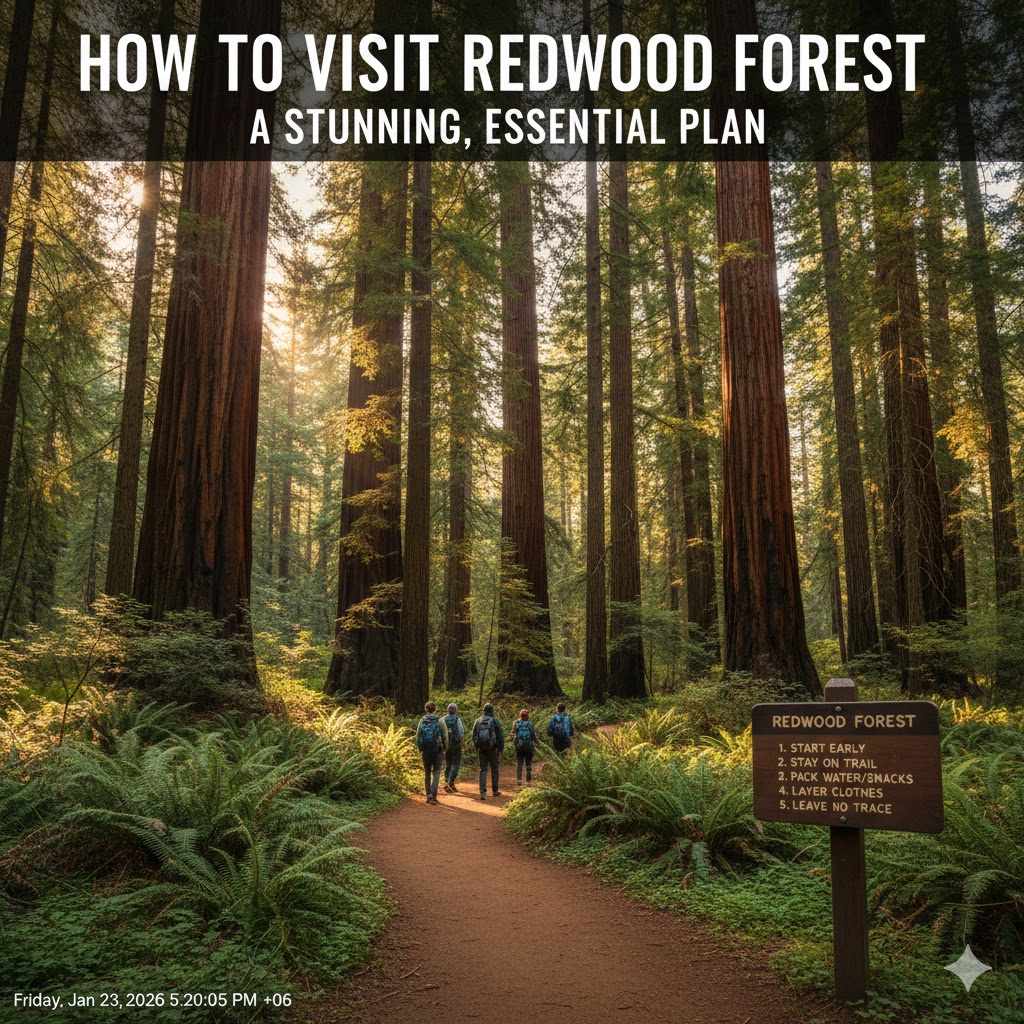
How to Visit Redwood Forest: A Stunning, Essential Plan
To visit the Redwood Forest, fly into Eureka/Arcata (ACV) or Crescent City (CEC), rent a car, and explore the connected Redwood National and State Parks along Highway 101. Plan for 3-5 days. Focus on must-see spots like Fern Canyon and the Stout Grove trail, and be sure to book your lodging and any required permits well in advance.
Planning a trip to see the giant redwood trees can feel like a huge task. The area is massive, with many different parks and trails. It’s easy to feel lost before you even start. You might wonder where to begin, what to see, or how to fit it all into one trip. It can be frustrating to sort through all the information.
But don’t worry. I am here to help you. We will break it down into simple, easy steps. Think of me as your guide, making sure you have a clear plan. Together, we will build a trip that is both amazing and stress-free. This guide will show you exactly how to visit the Redwood Forest with confidence. Let’s create a plan for an unforgettable adventure.
First, Understand the Redwood Parks
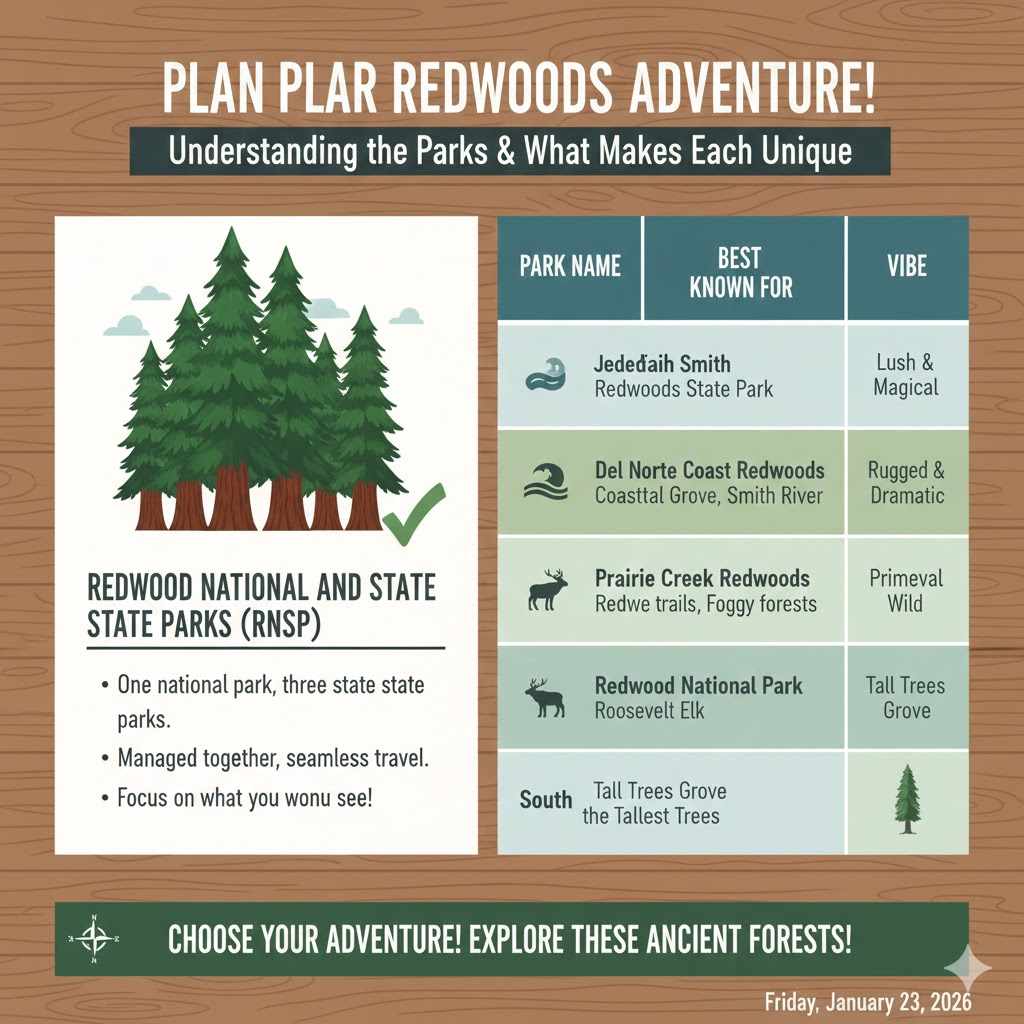
One of the most confusing parts of planning is realizing it’s not just one park. Redwood National and State Parks (RNSP) is a unique partnership. It includes one national park and three California state parks, all managed together. You can drive between them seamlessly, and one pass often covers them all.
Knowing the four main parks helps you decide where to focus your time. Each one offers something a little different. Think of them as different rooms in one giant, beautiful house.
| Park Name | Location | Best Known For | Vibe |
|---|---|---|---|
| Jedediah Smith Redwoods State Park | North (Near Crescent City) | Stout Memorial Grove, Smith River | Lush, dense, and magical |
| Del Norte Coast Redwoods State Park | Coastal (South of Crescent City) | Coastal trails, fog-draped forests | Rugged, moody, and dramatic |
| Prairie Creek Redwoods State Park | Central (Near Orick) | Fern Canyon, Roosevelt Elk herds | Primeval and full of wildlife |
| Redwood National Park | South (Near Orick/Klamath) | Tall Trees Grove, Lady Bird Johnson Grove | Home of the tallest trees |
You don’t need to visit all four to have a great trip. Most visitors pick a home base and explore the parks nearest to them. The key is knowing which highlights you want to see most.
When Is the Best Time to Visit?
You can visit the redwoods any time of year, but the experience changes with the seasons. Your choice depends on whether you prefer sunny weather with more people or a quieter trip with a chance of rain.
Summer (June – August)
This is the most popular season. The weather is generally warm and dry, making it ideal for hiking. However, the coast often has a layer of morning fog that burns off by the afternoon. This fog is actually vital for the redwoods! Be prepared for crowds at popular spots like Fern Canyon. You will need to book lodging and any permits months in advance.
Fall (September – October)
Many locals consider this the best time to visit. The summer crowds have thinned, but the weather is often sunny and clear. Daytime temperatures are pleasant, and the forests are quiet and peaceful. It’s a fantastic time for photography as the light is softer.
Winter (November – February)
Winter is the rainy season. This is when the forest feels most alive and vibrant. The rain brings out the deep green colors of the moss and ferns. It’s the least crowded time, so you may have trails all to yourself. Just be sure to pack excellent rain gear and check for road or trail closures.
Spring (March – May)
Spring is a beautiful time of transition. Rhododendrons and other wildflowers bloom, adding spots of color to the forest floor. The weather can be a mix of sunny days and spring showers, so pack for everything. It’s a great shoulder season with fewer crowds than summer.
| Season | Typical Weather | Pros | Cons |
|---|---|---|---|
| Summer | Warm, dry inland; foggy on the coast | Best weather for hiking; all roads/trails open | Very crowded; accommodations book up fast |
| Fall | Clear, mild, and sunny | Fewer crowds; pleasant temperatures | Services may have reduced hours |
| Winter | Cool and rainy | Fewest visitors; lush, green scenery | Frequent rain; potential for trail closures |
| Spring | Mild, with a mix of sun and rain | Wildflowers; fewer crowds than summer | Unpredictable weather |
Getting There and Around: Your Travel Plan
The Redwood Coast is remote, which is part of its charm. Planning your transportation is a key step. You will absolutely need a car to explore the area.
Flying to the Redwoods
The closest airports are small, regional ones. They make getting there much faster than driving from a major city.
- California Redwood Coast-Humboldt County Airport (ACV): Located in McKinleyville, this is the most central airport. It’s a great starting point for exploring Prairie Creek and the southern part of the parks.
- Del Norte County Regional Airport (CEC): Located in Crescent City, this airport is perfect if you want to focus on Jedediah Smith and the northern parks.
- Rogue Valley International-Medford Airport (MFR): This airport in Oregon is another option, about a 2-hour drive from Jedediah Smith park. It’s larger and may offer more flight options.
Driving Through the Parks
A car is non-negotiable. The parks are spread out over a 50-mile stretch of coastline. Highway 101 is the main artery that connects everything. But the real magic happens when you turn off onto the smaller scenic parkways.
Be sure to drive these scenic routes:
- Newton B. Drury Parkway: A stunning 10-mile alternative to Highway 101 that runs through the heart of Prairie Creek Redwoods State Park. It’s a must-do.
- Howland Hill Road: A beautiful, unpaved road that takes you deep into Jedediah Smith Redwoods State Park. It’s suitable for regular cars when dry, but drive slowly.
- The Avenue of the Giants: While technically just south of the main RNSP area, this 31-mile scenic drive is world-famous and worth the trip if you have time.
Remember, there is very limited cell service in the parks. Download your maps from Google or an app like AllTrails before you go. Having a paper map from a visitor center is also a great backup.
Your Essential 3-Day Redwood Itinerary Framework
A 3 to 5-day trip is perfect for a first-time visitor. This plan gives you a great taste of the parks without feeling rushed. Here is a simple framework you can adapt. We’ll base this plan out of the central town of Orick or the southern town of Trinidad.
Day 1: Prairie Creek and the Giants of the South
Today is all about classic redwood experiences.
- Morning: Drive the Newton B. Drury Parkway. Stop at the Big Tree Wayside to see one of the park’s largest trees. Hike the easy 1-mile loop. Keep an eye out for Roosevelt Elk, as they are often seen grazing in the meadows here.
- Afternoon: Head south to the Lady Bird Johnson Grove Trail. This is a lovely 1.5-mile loop on a high ridge, known for its beautiful old-growth forest and blooming rhododendrons in the spring.
- Late Afternoon: If you secured a permit in advance, visit the Tall Trees Grove. This requires a drive down a locked service road and a moderately strenuous hike, but it is home to some of the world’s tallest trees, including the former record holder. For detailed permit information, visit the National Park Service website.
Day 2: Ferns, Coastlines, and a Legendary Canyon
Get ready for a touch of prehistoric magic and stunning coastal views.
- Morning: The main event today is Fern Canyon. You will likely need a permit to access the road in the summer and fall. This canyon, with walls covered in ancient ferns, was used as a filming location for Jurassic Park. You’ll be wading through a creek, so wear waterproof shoes or sandals.
- Afternoon: Explore the coastal side of the park. Hike a portion of the Coastal Trail from the Fern Canyon parking area, or drive to the Klamath River Overlook for a chance to spot whales during migration season (winter and spring).
- Evening: Enjoy a relaxing dinner in the charming coastal town of Trinidad. The sunset from Trinidad Head is a perfect way to end the day.
Day 3: Northern Wonders in Jedediah Smith
Head to the northernmost park for a completely different but equally breathtaking experience.
- Morning: Drive up to Jedediah Smith Redwoods State Park. Your first stop is the Stout Memorial Grove. This grove is considered by many to be the most beautiful in the world. An easy half-mile trail loops through a perfect stand of massive old-growth redwoods next to the crystal-clear Smith River.
- Afternoon: Take a scenic drive on Howland Hill Road. This unpaved road puts you right in the middle of the giants. It’s a slow, careful drive, but the views are incredible. Find a pull-off for a short walk among the trees.
- Late Afternoon: Before heading home, take a short walk along the Simpson-Reed Trail, an accessible and gorgeous loop that showcases the park’s lush undergrowth.
What to Pack for Your Redwood Adventure
Packing for the redwoods is all about layers. The weather can change quickly, shifting from sunny to foggy and cool in just a few minutes. Being prepared will make your trip much more comfortable.
Clothing Essentials:
- Waterproof Rain Jacket: This is the most important item, even in summer. Drizzle and fog are common.
- Layers of Clothing: Bring t-shirts, long-sleeved shirts, and a fleece or warm mid-layer. You will add and remove layers all day long.
- Sturdy Hiking Shoes: You need footwear with good grip. Waterproof shoes are a huge bonus, especially for Fern Canyon.
- Comfortable Pants: Hiking pants are great. Avoid jeans, as they get heavy and cold when wet.
- Socks: Pack extra pairs of wool or synthetic socks to keep your feet dry and happy.
Gear and Other Items:
- Daypack: To carry your water, snacks, and extra layers on hikes.
- Water Bottle: Stay hydrated. There are places to refill at visitor centers.
- Snacks: Food options are limited inside the parks. Bring plenty of snacks for the trail.
- Sunscreen and a Hat: Even on foggy days, the sun can be strong.
- Bug Spray: Mosquitoes can be present, especially near water.
- Camera: You will want to capture the scale of these massive trees.
- Portable Power Bank: With limited cell service, your phone battery can drain faster as it searches for a signal.
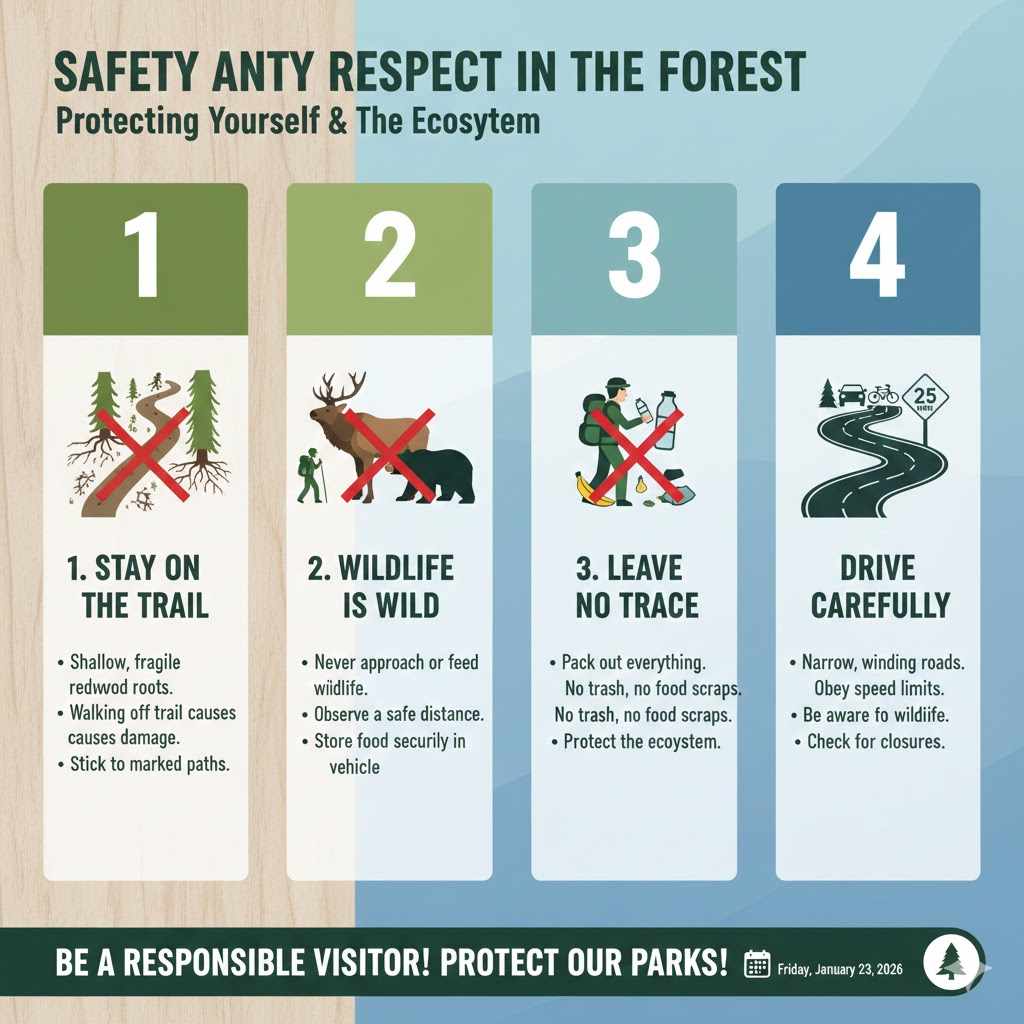
Safety and Respect in the Forest
The Redwood Forest is a wild and precious place. Following a few simple rules keeps you safe and protects the ecosystem for generations to come.
- Stay on the Trail: The soil around redwood trees is very sensitive. Walking on their shallow roots can cause serious damage. Stick to the marked trails to protect these ancient giants.
- Wildlife is Wild: Never approach or feed the Roosevelt elk, bears, or any other wildlife. Observe them from a safe distance. Store your food securely in your vehicle.
- Leave No Trace: Pack out everything you pack in. This includes all trash, even food scraps. For more information, you can review the official Leave No Trace principles.
- Check for Closures: Always check the official park website for the latest updates on trail and road conditions before you go. Weather can cause temporary closures.
- Drive Carefully: Park roads are narrow and winding. Obey speed limits and be aware of wildlife crossing the road.
Frequently Asked Questions (FAQ)
Is there an entrance fee for Redwood National Park?
No, there is no single entrance fee for Redwood National Park itself. However, the three state parks within its boundaries (Jedediah Smith, Del Norte, and Prairie Creek) do charge day-use fees at developed campgrounds and trailheads. A state or national park pass will often cover these fees.
Do I need a permit to visit the redwoods?
For most areas, you do not need a permit. However, for two very popular destinations—the Tall Trees Grove and Fern Canyon (during the summer/fall)—you must apply online for a free permit in advance. These permits are limited and get claimed quickly, so plan ahead.
How long does it take to drive through the Redwood Highway?
The main section of Highway 101 that runs through Redwood National and State Parks is about 50 miles long. You could drive it in about 1-2 hours without stopping. But to truly experience it, you should plan to spend at least a full day stopping at viewpoints and trails.
Can you still drive through a redwood tree?
The famous drive-thru trees are all privately owned tourist attractions located just outside the national and state park boundaries. The Chandelier Tree in Leggett is the most well-known. The national park does not have any drive-thru trees as the practice is harmful to the trees.
What is the closest major city to the Redwood Forest?
The Redwood Coast is quite remote. There are no major cities nearby. The largest towns in the area are Eureka and Crescent City. San Francisco is about a 5-6 hour drive to the south, and Portland, Oregon, is about a 6-7 hour drive to the north.
Are dogs allowed in the Redwood parks?
Dogs are allowed in campgrounds, picnic areas, and on paved roads, but they are generally not permitted on park trails. This rule is in place to protect wildlife and the delicate ecosystem. Always check specific park regulations before bringing your pet.
Is it cold in the Redwood Forest?
The climate is mild year-round. Summers rarely get very hot, with coastal temperatures often in the 60s Fahrenheit (15-20°C). Winters are cool and wet, with temperatures in the 40s and 50s (4-12°C). It’s best to always bring layers and a rain jacket, no matter the season.
Your Unforgettable Journey Awaits
Visiting the Redwood Forest is more than just a trip; it’s an experience that can stay with you forever. Standing next to a tree that has lived for over a thousand years is a deeply moving and humbling moment. It connects you to a timeless, powerful piece of the natural world.
With this simple plan, you are now ready to embark on your own adventure. You know where to go, what to see, and how to prepare. The intimidating task of planning has been broken down into easy, achievable steps. So go ahead, book that flight, reserve your car, and get ready to walk among giants. The forest is waiting for you.