Sam Maloof Craftsman Style: The Design Philosophy Behind His Legacy
Sam Maloof’s “Craftsman style” furniture isn’t the Gustav Stickley Mission furniture that name usually brings to mind – it’s closer to sculpture that happens to be sittable. Working almost entirely alone in Alta Loma, California from 1949 until his death in 2009, Maloof shaped rocking chairs, dining tables, and cradles by hand, guided by a philosophy that put comfort and joinery ahead of decoration. This guide breaks down what actually defines his design language, the joint that made his chairs famous, and where his influence and his real, physical workshop still exist today.
Who Was Sam Maloof?
Recommended Reading
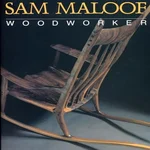 |
Sam Maloof, Woodworker – $50.00 Maloof’s own account of his working process, in his words and photographs – the primary source most museum write-ups of his work draw from.
|
Sam Maloof was born in 1916 in Chino, California, to Lebanese immigrant parents. He had no formal design or woodworking training. Before he ever built furniture for a living, he worked as a graphic artist, served in the U.S. Army during World War II, and worked as a studio assistant to the artist-designer Millard Sheets in nearby Claremont. He didn’t start making furniture full-time until 1949, when he was already in his early thirties – his wife Alfreda’s encouragement is generally credited with pushing him to leave graphic design behind.
In 1985, Maloof received a MacArthur Fellowship – the so-called “genius grant” – a rare honor for a working furniture maker rather than a painter, writer, or scientist. By the time he died in 2009 at age 93, he had built an estimated several thousand pieces, nearly all of them by hand in the same Southern California workshop.
“Craftsman Style” vs. Studio Craft: The Label Most Sites Get Wrong
Here’s the correction most articles on this topic skip: the historic “Craftsman” or “Mission” style – the dark quartersawn oak, exposed joinery, and slatted armchairs Gustav Stickley mass-produced starting around 1900 – is a different movement from what Maloof actually made. Stickley’s Craftsman furniture was designed for factory production and a national furniture catalog. Maloof’s furniture was one-of-a-kind, made by one man’s hands, decades later, as part of the postwar American studio craft movement alongside contemporaries like George Nakashima and Wharton Esherick.
Both movements share real DNA – visible joinery, honest materials, a rejection of ornament for ornament’s sake – which is exactly why the two get conflated in casual writing. But Stickley built furniture lines; Maloof built individual chairs, one at a time, and rarely built the same piece twice. The New York Times described him as “a central figure in the postwar American crafts movement,” not the earlier Arts and Crafts movement Stickley belonged to. If you’re searching for his work expecting flat-paneled Mission oak, you’re looking for the wrong silhouette entirely.
Design Philosophy: Comfort Before Ornament
Maloof described his own approach as putting art in service of utility – a piece’s shape had to come from what it needed to do before it earned any decoration. A rocking chair’s arm wasn’t curved because curves looked pleasant; it was curved because a forearm rests more comfortably on a surface that follows its natural angle. That’s a subtly different design principle than the Arts and Crafts idea of “truth to materials,” and it’s the reason his chairs are sat in for decades rather than displayed and avoided.
The clearest expression of that philosophy is the joint now generally called the “Maloof joint” by other woodworkers – a sculpted, doweled connection between a rocker’s seat and its back legs that lets the whole chair flex slightly as someone leans back, instead of relying on a rigid right-angle joint. It’s one of the few pieces of furniture design where the structural joint and the visual signature are literally the same element.
Materials and Joinery Techniques
Maloof favored walnut above every other species, along with cherry, maple, and occasionally ebony accents for contrast. Wood selection wasn’t just aesthetic – he insisted on wood dried and seasoned long enough that a finished chair wouldn’t crack or shift years later, since each piece represented weeks of hand-shaping that couldn’t be redone.
Structurally, his work relies on dowel joints and sculpted mortise-and-tenon connections rather than screws, nails, or hidden metal hardware – every joint is meant to be load-bearing on its own. What sets his joinery apart from typical mortise and tenon joinery is that the joints themselves were carved into compound curves, not left as flat mating surfaces, which is part of why his furniture is difficult to reproduce by machine.
Signature Pieces
The low-back rocking chair is the piece most associated with Maloof, and it’s the one you’ll find in the Smithsonian American Art Museum and the White House’s permanent collection. Its low, curved back and hand-sculpted rockers made it as much a display of joinery as a functional chair. If you’re specifically comparing real auction and replica prices for that chair, our Maloof rocking chair pricing guide covers current market values in detail.
His dining tables and settees followed the same rules – flowing, organic lines with no applied trim, built to be used daily rather than admired from across a room. If you want to attempt the shapes yourself rather than buy an original, our guide to real Maloof chair templates walks through where to find buildable full-scale patterns for the curves.
Recognition: Presidents, Museums, and the Renwick Show
Both Jimmy Carter and Ronald Reagan owned rocking chairs Maloof built – Carter reportedly signed a photograph for Maloof reading “to my woodworking hero” after visiting his home. In 1995, Maloof’s furniture was formally added to the White House Collection of Arts and Crafts. His work also sits in the permanent collections of the Metropolitan Museum of Art, the Los Angeles County Museum of Art, the Philadelphia Museum of Art, and the Smithsonian American Art Museum, whose Renwick Gallery mounted a full retrospective of 65 original Maloof pieces in 2001-2002.
That level of institutional recognition for a self-taught furniture maker with no design degree is unusual, and it’s part of why “Sam Maloof” functions almost as its own design category rather than just an example of a broader style – the work is catalogued and studied on its own terms, separate from either the Stickley Craftsman lineage or the wider studio craft movement it technically belongs to.
Legacy: Where His Workshop Actually Is Today
Here’s a detail most write-ups on Maloof leave out entirely: his actual home and two workshops in Alta Loma no longer sit where he built them. When the CA-210 freeway extension was routed directly through his property in the late 1990s, his historic house, both studios, a guesthouse, and twenty mature trees were physically disassembled and moved roughly three miles to a new site, a project that ran from 1998 to 2001. The relocated compound – now at 5131 Carnelian Street in Alta Loma, part of Rancho Cucamonga – operates today as the Sam and Alfreda Maloof Foundation for Arts and Crafts, which offers docent-led tours of the historic home on Thursdays and Saturdays.
Modern studio furniture makers still cite Maloof’s joinery and his insistence on making every piece by hand, without factory shortcuts, as a direct influence. If you want to understand the philosophy well beyond what any single article can cover, his own book – recommended above – walks through his working process in his own words and photographs, and is the primary source most museum descriptions of his work draw from.
Frequently Asked Questions
Was Sam Maloof’s Craftsman Style the Same as Gustav Stickley’s Craftsman Furniture?
No. Stickley’s Craftsman/Mission furniture was factory-produced around 1900 as part of the Arts and Crafts movement. Maloof’s furniture was individually hand-shaped decades later as part of the postwar American studio craft movement, alongside makers like George Nakashima. The two share visible joinery and honest materials as design values, but not the same production method or era.
What Is the “Maloof Joint”?
It’s the sculpted, doweled connection Maloof developed between a rocking chair’s seat and its back legs, shaped into a compound curve rather than a flat right angle. It lets the chair flex slightly under weight and has become a recognized joinery technique other woodworkers reference by his name.
What Materials Did Sam Maloof Use?
Primarily walnut, along with cherry, maple, and occasional ebony accents. He required wood that was fully dried and seasoned so finished pieces wouldn’t crack or shift years later.
Did Any U.S. Presidents Own a Sam Maloof Chair?
Yes. Both Jimmy Carter and Ronald Reagan owned rocking chairs Maloof built, and his furniture was formally added to the White House Collection of Arts and Crafts in 1995. His work is also held by the Smithsonian American Art Museum, the Metropolitan Museum of Art, LACMA, and the Philadelphia Museum of Art.
Can You Still Visit Sam Maloof’s Workshop?
Yes. His original property was relocated roughly three miles between 1998 and 2001 to make way for the CA-210 freeway extension. The relocated home and workshops, now in Alta Loma (Rancho Cucamonga, California), operate as the Sam and Alfreda Maloof Foundation for Arts and Crafts and offer public tours on Thursdays and Saturdays.
Conclusion
Sam Maloof’s “Craftsman style” is really a studio-craft design philosophy built around comfort-first joinery, not the Stickley Mission look the name suggests. His MacArthur Fellowship, his relocated Alta Loma workshop, and the joint that carries his name are the real substance behind the label. If you’re chasing an actual chair, see our pricing guide; if you’d rather build one yourself, start with our template sourcing guide.
Sponsored / affiliate links. As an Amazon Associate I earn from qualifying purchases. I may earn additional commission from eligible campaigns.