Is Japanese Maple Good Firewood Or Not
Figuring out what wood burns well can seem tricky, especially for newcomers. You might wonder, Is Japanese Maple Good Firewood or Not? This question pops up because Japanese maples are beautiful trees, and people want to know if their wood is useful after the tree’s life. Don’t worry, it’s simpler than you think!
We’ll walk through it step-by-step so you can easily find out.
Japanese Maple Wood For Fireplace Burning
Many people wonder if Japanese maple wood makes good fuel for their homes. This is a common question because Japanese maples are often grown for their ornamental beauty rather than for timber. Their unique shapes and colorful leaves make them garden stars, so their potential as firewood isn’t always the first thing people consider.
This can lead to confusion for those who have a fallen tree or are considering planting one and want to use its wood. We will explore the characteristics of Japanese maple wood and how they relate to its burning qualities.
Burning Properties Of Japanese Maple Wood
When we talk about firewood, we usually look at a few key things: how easily it starts, how hot it burns, how long it lasts, and how much smoke it makes. These factors help determine if a wood is good for a cozy fire. Japanese maple wood has specific traits that affect these properties.
Understanding these traits is key to knowing if it’s a good choice for your wood stove or fireplace.
Heat Output
Japanese maple wood is known to produce a moderate amount of heat. It’s not as high-energy as some hardwoods like oak or hickory, but it’s also not as low-energy as softwoods like pine. This means you’ll get a decent warmth from it, but you might need to burn more of it compared to denser woods to achieve the same level of heat.
Burn Time
The burn time of Japanese maple wood is generally moderate. It tends to burn down faster than very dense hardwoods. This is because its wood structure is not as tightly packed. For a sustained, long-lasting fire, you might find yourself adding more logs sooner than you would with oak.
Smoke Production
Japanese maple wood produces a moderate amount of smoke when burned. It’s not excessively smoky, but it’s not the cleanest burning wood either. Proper seasoning, or drying, of the wood is very important to reduce smoke. Wet or green wood will always produce more smoke, regardless of the type of tree.
Ash Content
The ash content of burned Japanese maple wood is typically moderate. This means you will need to clean out your fireplace or stove reasonably often. It’s not as low as some woods that leave very little ash, but it’s also not as high as woods that create a lot of ash, which can require more frequent ash removal.
Seasoning Japanese Maple Firewood
For any wood to burn well, it must be properly seasoned. Seasoning is the process of drying out the wood so it contains less moisture. Green wood, fresh from the tree, has a lot of water inside.
Burning wet wood is inefficient; it smolders, produces a lot of smoke, and generates less heat. Japanese maple wood is no different; it needs to be seasoned.
The seasoning process usually takes about six to twelve months for hardwoods like maple. It involves splitting the logs, stacking them in a way that allows air to flow through, and protecting them from rain while keeping them exposed to sun and wind. Properly seasoned Japanese maple will have cracks at the ends of the logs, feel lighter, and make a clear ringing sound when two pieces are knocked together, rather than a dull thud.
Is Japanese Maple Good Firewood Or Not For Different Uses
When we ask Is Japanese Maple Good Firewood Or Not?, we should think about what we want the firewood for. If you’re looking for firewood for a large, open fireplace that you want to burn all night long, Japanese maple might not be your top choice. Its moderate burn time means you’ll need to refuel it more often.
However, for a smaller wood stove or for starting a fire, it can be quite suitable. It lights reasonably well and provides a decent amount of heat. For someone who enjoys the process of tending a fire and doesn’t mind adding logs periodically, Japanese maple can be a good option.
It’s important to manage your expectations based on the wood’s properties.
Comparing Japanese Maple To Other Firewood Types
To truly understand if Japanese maple is good firewood, it helps to compare it to other common types of wood used for burning. This comparison can highlight its strengths and weaknesses, giving you a clearer picture. Many people have preferences based on experience with well-known firewood species.
Hardwoods vs Softwoods For Burning
Japanese maple is a hardwood. In general, hardwoods are denser and burn longer and hotter than softwoods. Softwoods, like pine or fir, have less dense wood.
They ignite quickly and burn fast, producing more flames but less sustained heat and often more creosote, which can be a fire hazard.
Hardwoods like oak, hickory, and ash are usually considered the best for firewood because of their density. They offer a long, hot burn with less ash. Japanese maple falls into the hardwood category, but it’s on the lighter side of hardwoods.
So, while it’s better than softwoods, it doesn’t quite match the performance of the densest hardwoods for long-lasting fires.
Specific Hardwood Comparisons
Let’s look at how Japanese maple compares to a few popular hardwoods.
| Wood Type | Heat Output (BTU per cord) | Burn Time | Ease of Splitting | Ash Content |
|---|---|---|---|---|
| Oak | ~26 million | Long | Moderate | Low |
| Hickory | ~28 million | Very Long | Moderate | Low |
| Maple (Sugar) | ~24 million | Long | Easy | Moderate |
| Japanese Maple | ~20-22 million (estimated) | Moderate | Moderate | Moderate |
| Pine | ~15 million | Short | Easy | Low |
As you can see from the estimated values, Japanese maple wood is projected to have a heat output that is lower than the most sought-after hardwoods like oak and hickory. Its burn time is also expected to be shorter than these dense woods. However, it’s still significantly better than softwoods like pine in terms of heat and burn duration.
Its ease of splitting is similar to sugar maple, which is good.
Real-Life Example: A Backyard Fire Pit
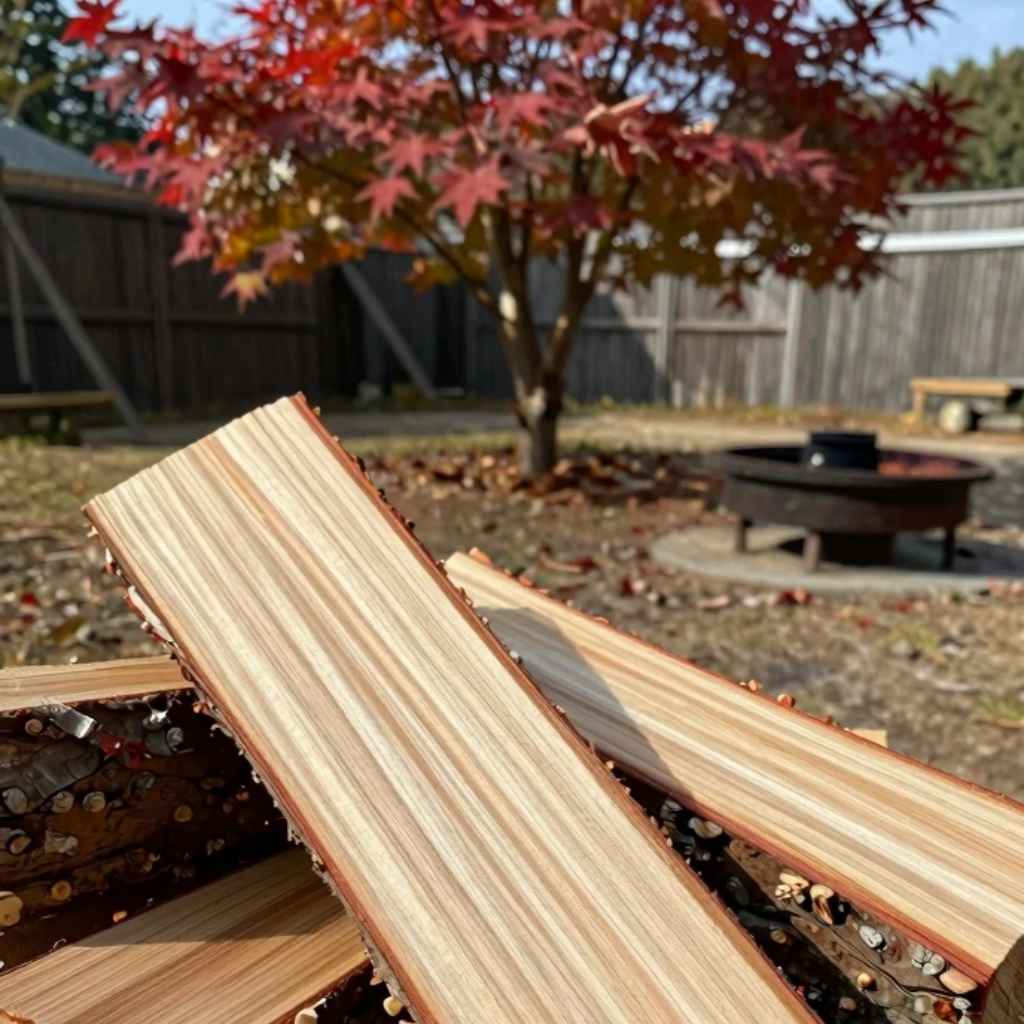
Imagine Sarah lives in a neighborhood where backyard fires are common for social gatherings. She has a Japanese maple in her yard that recently fell in a storm. She decides to cut it up and use it for her fire pit.
Sarah finds that the wood seasons relatively quickly once split and stacked properly.
When she burns it, she notices it lights up nicely, giving off a pleasant aroma. It produces a good amount of heat for about an hour before she needs to add more logs. Compared to the pine she used to use, which burned very fast and sparked a lot, the Japanese maple is a better experience.
However, she knows if she wanted a fire to last for several hours without much attention, she might mix it with some seasoned oak she gets from a neighbor.
Factors Affecting Japanese Maple Firewood Quality
The quality of any firewood, including Japanese maple, isn’t just about the type of tree. Several other factors play a big role in how well it burns and how much heat it provides. Thinking about these will help you get the best results.
Moisture Content and Seasoning
This is the most critical factor for any firewood. As mentioned before, wood needs to be dry. When you buy firewood, ask how long it has been seasoned.
If you are processing it yourself, understand the time and methods needed for drying. For Japanese maple, aiming for a moisture content of 15-20% is ideal. This typically means letting it dry for at least six months to a year after splitting.
A moisture meter can be a very useful tool for any firewood user. You simply insert the probes into the end of a log. A reading above 20% means the wood is not yet ready to burn efficiently.
Below 20% indicates it’s well-seasoned and ready to go.
Log Size and How It’s Split
The size of the logs you burn affects how fast they burn. Smaller, thinner pieces of wood will ignite faster and burn quicker. Larger, thicker logs will burn longer.
When using Japanese maple, you might find that splitting it into slightly smaller pieces than you would for oak helps achieve a more consistent burn rate.
How you split the wood also matters. Tightly grained hardwoods can sometimes be difficult to split, but Japanese maple is usually manageable. Well-split pieces with more surface area exposed to air will burn more efficiently.
Pest Infestations and Rot
If a Japanese maple tree has been diseased or infested with pests before it was cut down, this can affect the wood’s quality. Wood that is rotten or infested may burn poorly. It could also contain more ash or produce unpleasant odors.
Always inspect your firewood for signs of rot, insect tunnels, or mold before bringing it into your home.
Wood that is already soft and crumbly is likely too far gone to be good firewood. You’ll want wood that is still solid and dense. Sometimes, only a portion of a tree might be affected, so you can salvage the good parts.
Age and Growth Conditions
Like most trees, the age and growing conditions of the Japanese maple can influence the density and composition of its wood. A tree that has grown in poor soil or has been under stress might have wood that is less dense. Conversely, a healthy, mature tree will likely produce denser, harder wood.
While it’s hard to know the exact conditions a tree grew in without being there, generally, mature trees will yield better firewood. However, even younger, fast-growing Japanese maples can provide usable firewood once properly seasoned.
Safety Considerations When Burning Japanese Maple Wood
Burning any type of wood comes with safety responsibilities. Japanese maple is no different. Knowing these safety tips ensures you can enjoy your fire without worry.
Creosote Buildup
Creosote is a black, tar-like substance that forms when wood smoke cools and condenses. It can build up in your chimney and is highly flammable, leading to chimney fires. Woods that burn at lower temperatures or produce more smoke tend to create more creosote.
While Japanese maple isn’t known for producing excessive creosote if burned properly and seasoned well, it’s still important to have your chimney cleaned regularly, at least once a year. This is standard practice for all wood burning.
Ash Management
The ash produced from burning Japanese maple needs to be managed carefully. Ash can remain hot for a long time, even after the coals appear dead. Always remove ashes from your fi
Never put ashes in a plastic bucket or on a wooden floor. Wait at least 24 hours before disposing of them outside, preferably on a non-combustible surface like gravel or concrete, and away from your house and any dry vegetation.
Airflow and Ventilation
Proper airflow is essential for safe and efficient burning. Your fireplace or wood stove needs enough air to feed the fire. Too little air can lead to smoldering fires and increased creosote.
Too much air can make the fire burn too quickly.
Ensure your chimney damper is open when you are burning a fire. If you have a modern wood stove, learn how to adjust the air vents for optimal burning. Good ventilation also ensures that smoke and carbon monoxide are properly vented outside and not into your living space.
Carbon Monoxide Dangers
Carbon monoxide (CO) is a colorless, odorless gas that can be deadly. It is produced by incomplete combustion, which can happen with any fire. Ensure you have working carbon monoxide detectors in your home, especially on each level and near sleeping areas.
Regular maintenance of your chimney and stove, proper seasoning of wood, and ensuring adequate ventilation will help minimize the risk of carbon monoxide buildup.
Frequently Asked Questions
Question: Is Japanese Maple Wood Hardwood or Softwood?
Answer: Japanese Maple wood is classified as a hardwood. Hardwoods come from deciduous trees, which lose their leaves annually, and generally have a denser structure than softwoods.
Question: How long does Japanese Maple wood need to season?
Answer: Japanese Maple, like most hardwoods, generally needs to season for six to twelve months after being split and stacked properly. Proper drying is crucial for efficient and clean burning.
Question: Does Japanese Maple produce a lot of smoke?
Answer: When properly seasoned, Japanese Maple wood produces a moderate amount of smoke. It is not considered excessively smoky, but always ensure your wood is dry to minimize smoke production.
Question: Can I mix Japanese Maple with other firewood?
Answer: Yes, you can mix Japanese Maple with other hardwoods. This can help balance its moderate burn time with the longer burn of denser woods like oak or hickory.
Question: Is burning Japanese Maple safe for my chimney?
Answer: Burning seasoned Japanese Maple wood is generally safe for your chimney when proper precautions are taken. Regular chimney cleaning is essential for all wood burning to prevent creosote buildup.
Final Thoughts
So, Is Japanese Maple Good Firewood Or Not? Yes, it can be. It burns moderately hot and for a decent amount of time when well-seasoned. While not the top performer like oak, it’s a usable hardwood that lights well and provides warmth.
Just make sure it’s dry, and you’ll enjoy a pleasant fire.