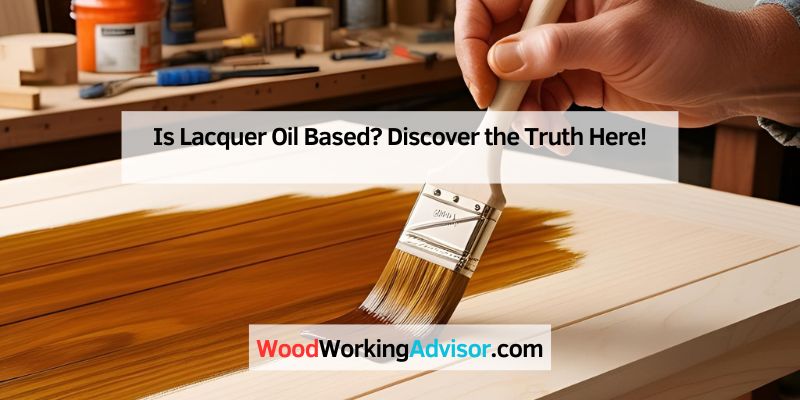
Is Lacquer Oil Based? Discover the Truth Here!
No, lacquer is not oil-based. Lacquer is a solvent-based product that dries quickly and creates a hard, durable finish.
It differs from oil-based finishes, which dry slower and penetrate the wood. Understanding the properties of lacquer can help you choose the right finish for your project. Lacquer has a long history and is popular in woodworking and furniture making.
Its quick-drying nature and high-gloss finish make it a favorite for many. But, it’s important to know how it differs from other finishes, like oil-based ones. This knowledge ensures you select the best product for your needs. In this post, we will explore what makes lacquer unique and how it compares to other finishes. This will help you make informed decisions for your projects.

Credit: www.woodguide.org
Introduction To Lacquer
Lacquer is a popular finish for wood and metal. It is typically oil-based. This gives it durability and a glossy look.
What Is Lacquer?
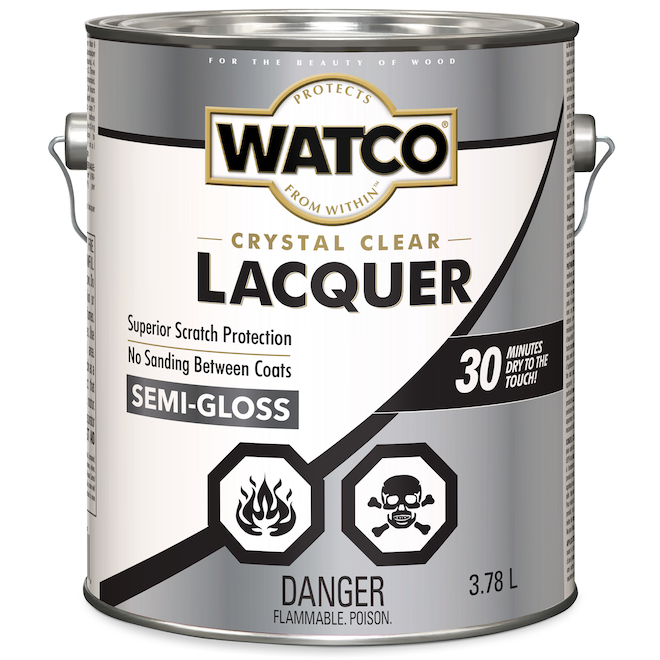
Lacquer is a clear or colored varnish. It dries quickly and provides a hard, durable finish. People often use it on wood and metal surfaces. The finish can be glossy or matte. Lacquer is known for its smooth, shiny appearance. It can protect surfaces from damage.
Common Uses Of Lacquer
Lacquer is common in furniture making. It gives a sleek, polished look to wood. It is also used in musical instruments. Guitars and violins often have lacquer finishes. Car manufacturers use lacquer too. It provides a shiny coat that protects the car’s paint. Artists use lacquer for their paintings. It helps preserve the artwork.
Credit: www.rona.ca
Types Of Lacquer
This type of lacquer is very popular. It is known for its quick drying time. It offers a high-gloss finish. It is used in furniture and musical instruments. Nitrocellulose lacquer is easy to apply. It can be sprayed or brushed on. It is also easy to sand and polish. It provides a beautiful finish. It is not oil based.
Acrylic lacquer is a modern type of lacquer. It is made from acrylic resin. It is durable and resistant to yellowing. Acrylic lacquer is often used in cars and furniture. It offers a clear finish. It is also not oil based. It dries quickly and can be polished. Acrylic lacquer is easy to work with. It provides a smooth finish. It is also water resistant.
Composition Of Lacquer
Lacquer can be oil-based or water-based. Oil-based lacquer provides a durable finish and a deep, rich color. It often requires more time to dry compared to water-based options.
Main Ingredients
Lacquer has some main ingredients. Resins are very important. They help in forming a hard film. Nitrocellulose is another key part. It helps the lacquer dry fast. Plasticizers make the lacquer flexible. They stop it from cracking.
Additives And Solvents
Additives give special properties to lacquer. They can make it shiny or dull. Solvents are used to thin the lacquer. They help in spreading it evenly. Common solvents include acetone and toluene. These make the lacquer easy to apply. Solvents also help in drying the lacquer quickly.
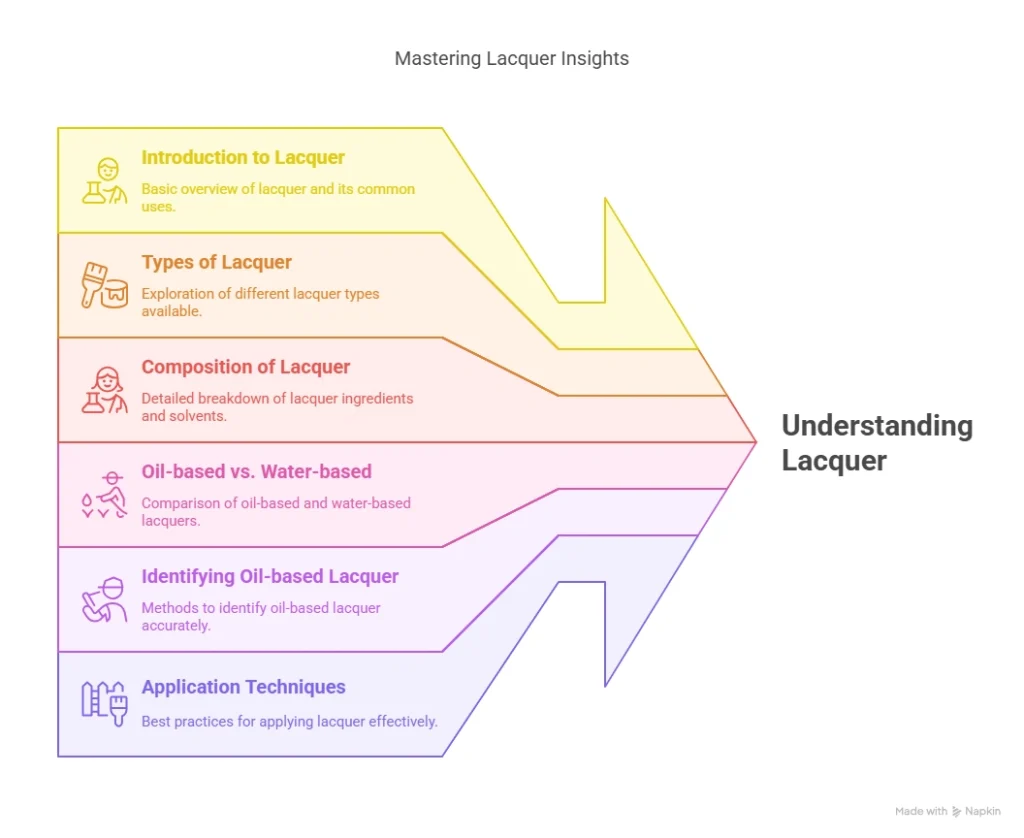
Oil-based Vs. Water-based Lacquer
Oil-based lacquer is made with solvents. Water-based lacquer is made with water. Oil-based lacquer gives a smooth, durable finish. Water-based lacquer dries faster. Oil-based lacquer has a strong smell. Water-based lacquer has a milder odor. Oil-based lacquer can yellow over time. Water-based lacquer stays clear. Oil-based lacquer requires more ventilation. Water-based lacquer is safer to use indoors.
| Oil-Based Lacquer | Water-Based Lacquer |
|---|---|
|
|
Identifying Oil-based Lacquer
Oil-based lacquer has a thicker texture. It dries slower than water-based lacquer. The finish is smooth and glossy. Colors appear deeper and richer. It may have a yellow tint over time. The smell is strong and lasting. This can help in identification.
Apply a drop of alcohol to a small area. If the lacquer softens, it is not oil-based. Oil-based lacquer remains hard. Another method is to sand a small area. A fine, white powder indicates oil-based lacquer. These simple tests can help determine the type.
Application Techniques
Clean the surface well. Remove all dust and dirt. Sand the surface lightly. Use fine sandpaper. Wipe the surface with a damp cloth. Let it dry completely. Apply a primer if needed. Follow the instructions on the primer.
Brushes are common tools. Use a good quality brush. Choose a brush with soft bristles. Rollers can be used too. Select a roller for smooth finishes. Spray guns are another option. They can give a professional look. Use a mask and gloves for safety.
Safety And Environmental Concerns
Lacquer can be dangerous to health. Breathing its fumes can cause headaches. It can also irritate the skin. Some people might feel dizzy. Others may get eye irritation. Always use lacquer in a well-ventilated area. Use gloves and masks for safety. Keep it away from children.
Lacquer can harm the environment. It contains volatile organic compounds (VOCs). These compounds pollute the air. They can also harm plants and animals. Dispose of lacquer waste properly. Never pour it down the drain. Follow local disposal rules. Reduce use to protect nature.
Frequently Asked Questions
Is Lacquer An Oil Based Finish?
No, lacquer is not an oil-based finish. It is a solvent-based finish that dries quickly, creating a durable, glossy surface.
Is It Better To Use Lacquer Or Polyurethane?
Polyurethane offers better durability for high-traffic areas. Lacquer provides a smoother finish but is less resistant. Choose based on your needs.
What Are The Disadvantages Of Lacquer?
Lacquer can be toxic and flammable. It requires proper ventilation. It might yellow over time and is prone to chipping.
Can Lacquer Be Water-based?
Yes, lacquer can be water-based. Water-based lacquer offers a safer, low-VOC alternative to traditional solvent-based lacquer. It provides a durable, clear finish and is easy to clean up with water.
Conclusion
Lacquer is a versatile finish for wood and other surfaces. It is often oil-based, providing a durable and attractive sheen. Choosing lacquer depends on your project’s needs. Oil-based options offer great protection and a smooth finish. Remember to apply in a well-ventilated area for safety.
Always read labels to confirm the type of lacquer you are using. With proper application, lacquer can enhance the beauty and longevity of your projects.