Polyurethane vs Tung Oil: Which Wood Finish Wins for Your Project?
Polyurethane builds a hard shell on top of the wood. Tung oil soaks in and becomes part of it. That single difference is what decides which one is right for your project.
Almost every other difference between the two finishes traces back to that one fact: how many coats you need, how the wood looks and feels afterward, whether it’s safe on a cutting board, and how the piece holds up to spills and daily use. Below is a side-by-side breakdown across the factors that actually decide the choice, plus the cure-time numbers that most comparisons get wrong by quoting “dry time” instead.
Polyurethane vs Tung Oil: Side-by-Side Comparison
Here’s how the two finishes stack up on the six factors that matter most for picking between them.
Best All-Around Finish for Most Wood Projects
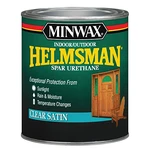 |
Minwax Helmsman Indoor/Outdoor Spar Urethane, Satin – $24.88 If you’re leaning toward polyurethane for the durability this comparison covers, this is the one we’d actually buy: a real film finish with UV blockers, rated for both indoor furniture and outdoor projects.
|
| Factor | Polyurethane | Tung Oil |
|---|---|---|
| Durability | Hard film builds a scratch-resistant shell over the wood | Soaks into the wood itself; wears in slowly rather than chipping off |
| Water resistance | Watertight film in 2-3 coats | Water-resistant only, even after 5-7 coats, not waterproof |
| Application difficulty | Brush or wipe, sand lightly between coats, needs a dust-free space | Wipe on with a cloth, no sanding between coats, more forgiving for beginners |
| Look and sheen | Gloss, semi-gloss, satin, or matte; visible film on the surface | Matte to low-satin; wood grain and texture stay tactile |
| Cure time | Dry to touch in hours; fully cured in 2-4 weeks depending on oil- or water-based formula | Dry to touch in about 24 hours; fully cured roughly 30 days after the last coat |
| Food safety | Only specific formulas labeled food-safe once fully cured | 100% pure tung oil is food-safe once fully cured; oil “finishes” with additives often aren’t |
Durability and Water Resistance: Why Polyurethane Usually Wins
Polyurethane’s whole job is to sit on top of the wood and form a shell. Two to three coats create a film that’s genuinely hard to scratch, and that film is also what makes it watertight rather than just water-resistant. Spilled coffee beads up on the surface and wipes away instead of soaking into the wood underneath.
Tung oil works the opposite way. It soaks into the wood’s pores and hardens there, so there’s no separate layer sitting on top to chip or peel. That makes it more forgiving of dents, since there’s no film to crack, but it also means water can still reach the wood. Even after 5 to 7 coats, tung oil is water-resistant rather than fully waterproof, unlike a true film finish. For anything that sees standing water regularly, a bathroom vanity or an uncovered outdoor bench, polyurethane’s watertight film matters more than tung oil’s deeper penetration.
Cure Time: The Number Most Comparisons Get Wrong
Most articles quote a single “dry time” for each finish, and that number is almost always the dry-to-touch time, not how long the finish actually takes to harden fully. Those two numbers are not the same, and mixing them up is the mistake that causes the most damage after a refinishing project. Tung oil feels dry to the touch in about 24 hours, but it isn’t fully cured until roughly 30 days after the last coat. Polyurethane feels dry within a few hours for oil-based formulas, or as little as 90 minutes for water-based ones, but oil-based poly still needs about a month to cure fully, and water-based poly typically needs around two weeks.
In practice, that means don’t judge either finish as “ready for hard use” just because it feels dry. A tung oil cutting board that feels dry after a day can still carry a faint oily residue for weeks. A polyurethane tabletop that’s dry to the touch overnight can still show a water ring or a soft dent if something wet or heavy sits on it during that first month. Build the full cure time into your project schedule, not just the time between coats.
Applying Each Finish: What the Process Actually Looks Like
Polyurethane needs a clean, dust-free space, thin coats, and light sanding between each one. Skip the sanding and brush marks or dust nibs get locked under the final coat permanently. Oil-based poly has a strong solvent smell that needs real ventilation to work with comfortably; water-based dries faster and smells much milder, but it’s less forgiving of uneven brush strokes.
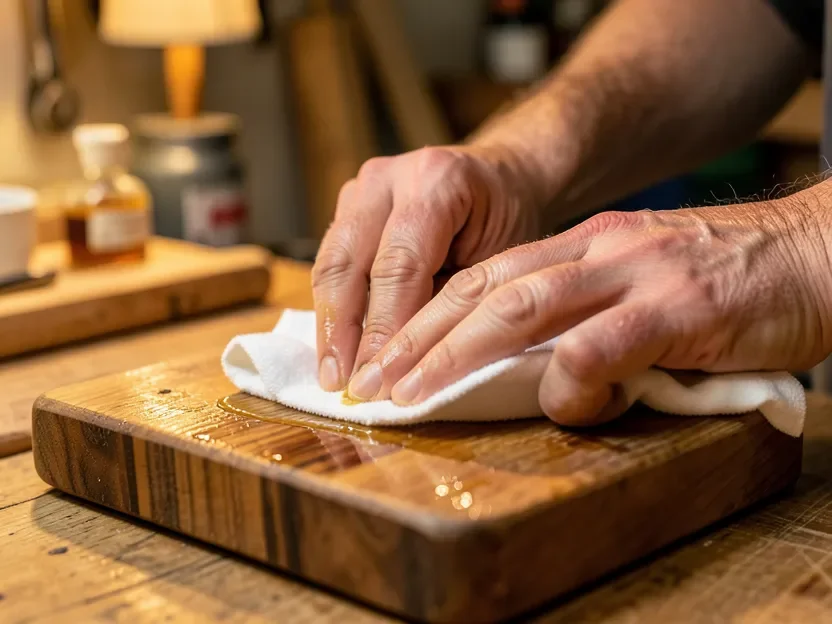
Tung oil is closer to wiping on furniture polish than painting. Flood a thin coat on with a cloth, let it soak in for 20 to 30 minutes, then wipe off whatever hasn’t absorbed. No brush, no sanding between coats, no dust-free room required. The tradeoff is coat count: real protection from tung oil usually takes 5 to 7 coats over as many days, compared to 2 to 3 coats of polyurethane over a single weekend. If you’re layering tung oil over an existing stain, the stain needs to be fully dry first or the oil won’t absorb evenly.
Look and Feel: Glossy Film vs. Natural Penetrating Finish
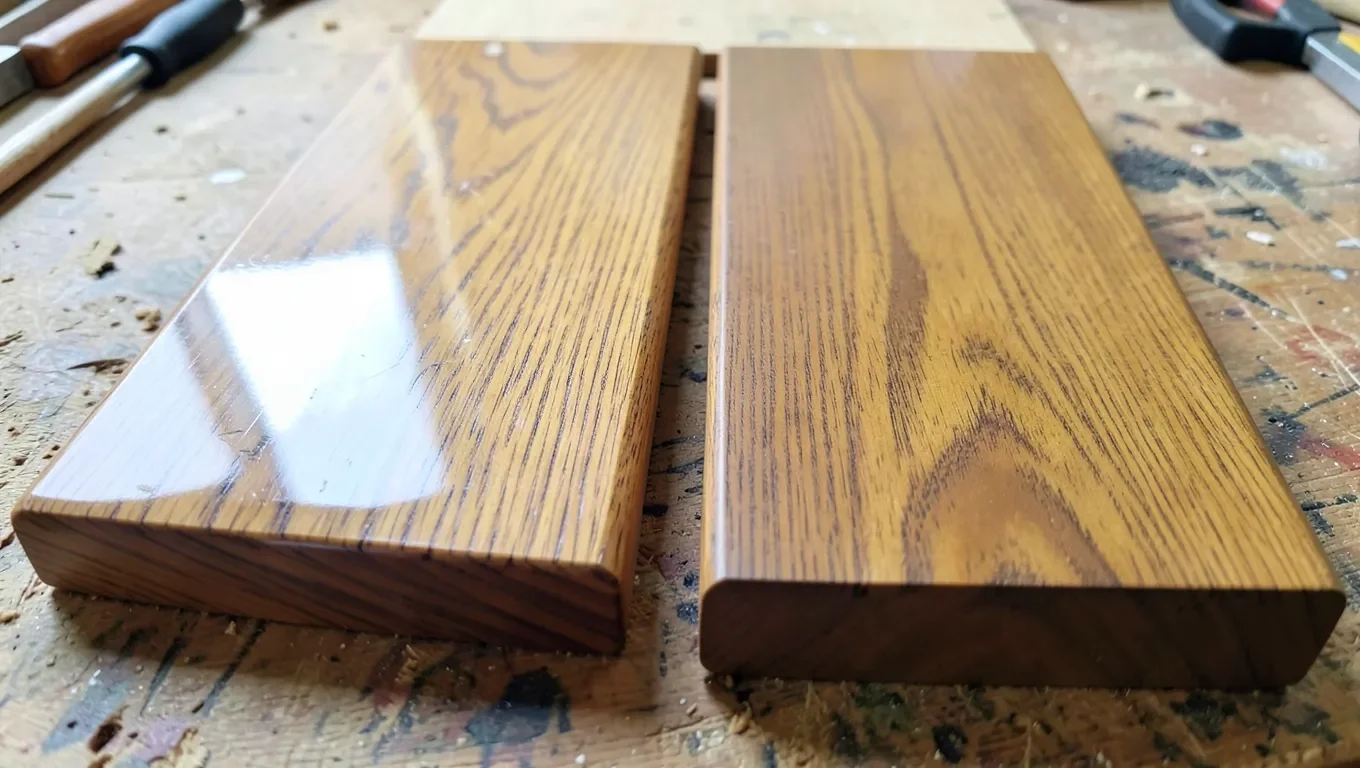
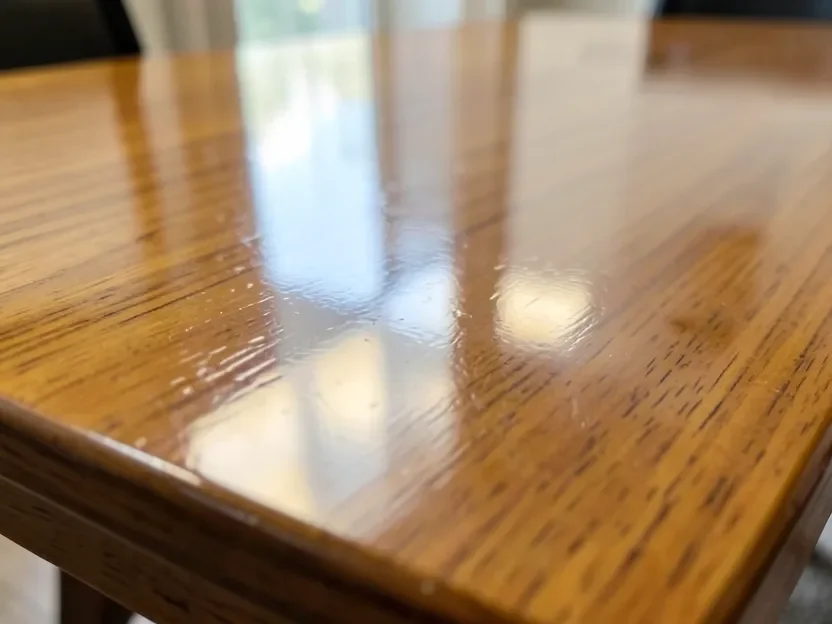
Polyurethane creates a visible surface layer. Even in a satin or matte sheen, you can feel a slight plastic-like film when you run a hand across it, and that film is what gives polyurethane its glossy, glass-like look at higher sheens. It also adds a bit of amber depth to the wood color underneath, especially with oil-based formulas.
Tung oil doesn’t sit on top of anything. Because it soaks in rather than coating over, you’re touching the actual wood surface, just sealed. The sheen tops out at a soft, low-luster glow rather than true gloss, and the wood grain and texture stay tactile in a way film finishes can’t replicate. That’s why tung oil shows up so often on furniture where the wood itself is the selling point.
Food Safety: Cutting Boards and Butcher Block
Pure, 100% tung oil is food-safe once fully cured, which is why it’s a common pick for cutting boards and butcher block countertops. The catch is the label: many products sold as “tung oil finish” are actually blends cut with solvents and metallic drying agents, and those aren’t food-safe even after curing. Check for “100% pure tung oil” on the label before using it on anything that will touch food.
Polyurethane isn’t automatically off the table either. Several water-based formulas are labeled food-safe once fully cured, since the resins that remain after curing are inert. But a general-purpose poly bought for furniture or floors typically isn’t rated for food contact, so it shouldn’t be the default choice for a cutting board without checking the can first.
Which Finish Should You Actually Use? A Decision Guide by Project
The comparison above is useful, but most people just want the answer for their specific project. Here’s how it usually shakes out:
- Dining table or desk in daily use: Polyurethane. The watertight film handles spills, coasters-forgotten mugs, and daily wiping down better than an oil finish will.
- Cutting board or butcher block: 100% pure, food-grade tung oil, or a polyurethane explicitly labeled food-safe once cured.
- Antique or heirloom furniture restoration: Tung oil. It keeps the original look, and scratches can be spot-repaired with more oil instead of a full strip-and-recoat.
- Outdoor bench or deck furniture: Neither a standard interior poly nor plain tung oil holds up well long-term outdoors. A UV-blocking spar urethane, like the pick above, or a dedicated outdoor oil formula is the better call.
- Hardwood floors or other high-traffic surfaces: Polyurethane, for the same watertight, scratch-resistant reasons as a dining table.
- Small hand-carved or turned pieces: Tung oil. Wiping on a finish is far more practical than brushing polyurethane into tight curves and corners.
If neither finish fits, it’s worth comparing the closer alternatives too. Teak oil vs polyurethane and Danish oil vs polyurethane cover two other oil finishes that split the difference differently than tung oil does, and Deft’s wipe-on formulas are worth a look if you want an oil-like look without tung oil’s long cure schedule.
Frequently Asked Questions
Is Polyurethane Better Than Tung Oil?
For sheer durability and water resistance, yes. Polyurethane’s film finish handles daily wear and spills better than an oil that soaks into the wood. Tung oil wins if you want a natural, non-plastic look, an easier spot-repair process instead of a full strip-and-recoat, or a food-safe finish for something like a cutting board.
Can You Put Polyurethane Over Tung Oil?
Yes, but only after the tung oil has fully cured, about 30 days after the last coat, not just dry to the touch. Applying polyurethane over tung oil that’s still curing traps solvents underneath and can leave the topcoat tacky or cause it to peel later.
How Many Coats of Tung Oil Equal One Coat of Polyurethane?
There’s no exact 1:1 ratio, but as a rule of thumb it takes 5 to 7 thin coats of tung oil to build protection comparable to 2 to 3 coats of polyurethane, since tung oil is soaking into the wood rather than building a separate surface film.
Is Tung Oil Food Safe for Cutting Boards?
Pure, 100% tung oil is food-safe once fully cured. Many products labeled “tung oil finish” are actually blends with solvents and metallic driers that aren’t food-safe, so check the label for “100% pure tung oil” before using it on anything that touches food.
What’s the Best All-Around Finish If I Only Want to Buy One?
For most general woodworking, a versatile polyurethane like Minwax Helmsman Spar Urethane covers the widest range of projects, since it handles both indoor and outdoor use and both horizontal and vertical surfaces. Keep a small can of pure tung oil on hand separately for cutting boards and anything that needs a food-safe finish.
Conclusion
There’s no single winner here, only the wrong finish for a given project. Polyurethane wins whenever the surface needs to survive daily wear, standing water, or UV exposure: dining tables, floors, outdoor furniture. Tung oil wins whenever the goal is for the wood itself to look and feel like wood, or whenever the piece will touch food.
Match the finish to how the piece will actually be used, respect the full cure time instead of the dry-to-touch time, and either one will protect the wood for years.
Sponsored / affiliate links. As an Amazon Associate I earn from qualifying purchases. I may earn additional commission from eligible campaigns.