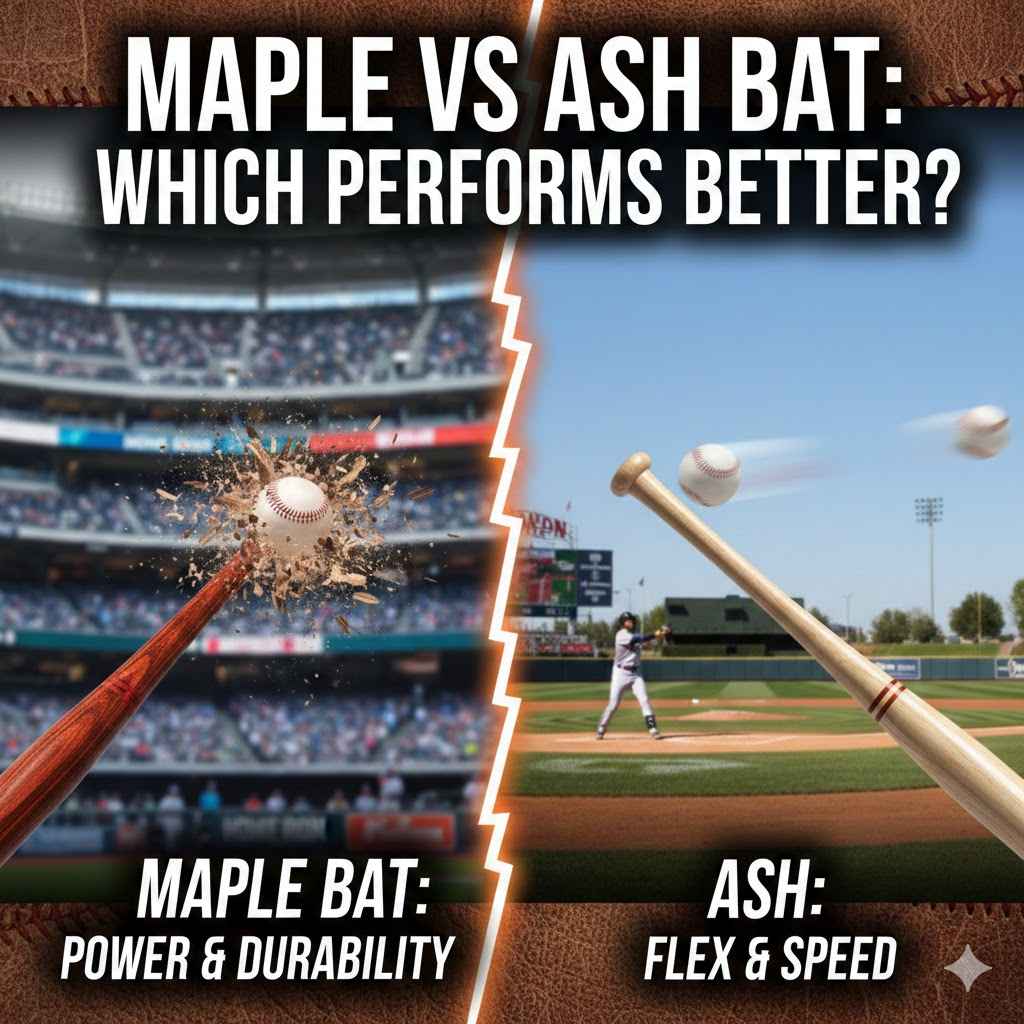
Maple vs Ash Bat: Which Performs Better?
Choosing the right baseball bat can feel tricky when you’re starting out. Many players wonder about Maple vs Ash Bat: Which Performs Better?. It’s a common question because both wood types are popular, and the differences aren’t always obvious.
This guide makes it simple. We will break down what makes each bat great, helping you pick the perfect one for your game. Get ready to learn how to make a smart choice.
Maple vs Ash Bat Performance Breakdown
When baseball players talk about bats, wood types are a big topic. For many years, ash was the go-to for professional players. Then, maple bats started showing up and quickly gained popularity.
Understanding the core differences between Maple vs Ash Bat: Which Performs Better? helps players choose what fits their swing and style best. This section looks at what makes each wood distinct and how those traits affect performance on the field.
Understanding Wood Properties
Wood for baseball bats comes from trees. The type of tree affects how the bat behaves. Different woods have different strengths and weaknesses.
These properties influence how much power a bat can deliver and how long it lasts. Think of it like choosing a tool; you want the one that does the job best for what you need.
Density and Hardness
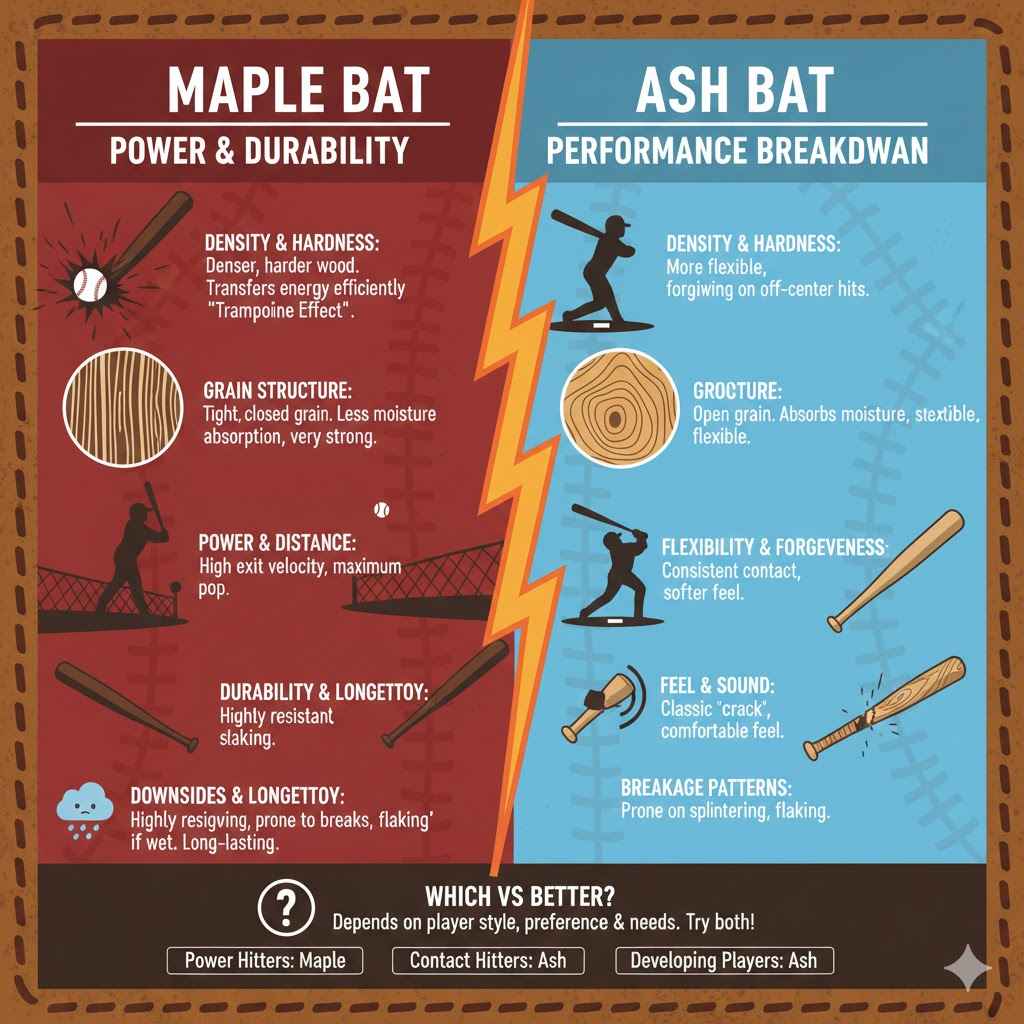
The density of wood refers to how much mass is packed into a certain space. Denser wood is usually harder. Harder wood can transfer energy more effectively from the bat to the ball.
This means more power behind your hits. Maple is generally denser and harder than ash. This can lead to a trampoline effect, sending the ball further.
Ash wood is known for being a bit more flexible. This flexibility can make it feel more forgiving. If you don’t hit the ball perfectly on the sweet spot, an ash bat might still give you a good result.
Maple’s hardness means it’s less forgiving on off-center hits. But when you hit it right, maple can be incredibly powerful.
Grain Structure
The grain of wood refers to the lines and patterns within it. Ash has a more open grain structure. This means the wood has more pores.
These pores can absorb moisture, which can sometimes weaken the wood over time. However, this open grain also allows ash bats to be more flexible.
Maple, on the other hand, has a much tighter, closed grain structure. There are fewer pores. This makes maple wood very strong and less likely to absorb moisture.
The tight grain also contributes to maple’s hardness and its ability to sustain its shape and power.
Maple Bat Characteristics
Maple bats have become a favorite for many players. Their performance benefits are clear, but they also have some unique aspects to consider. Let’s explore what makes maple bats stand out and how they can help your game.
Power and Distance
Maple bats are famous for their power. Their hardness and density mean they transfer energy very efficiently. This can result in the ball traveling further off the bat.
Many players feel they get more “pop” when hitting with maple.
The tight grain of maple creates a very solid hitting surface. When a ball connects with the sweet spot of a maple bat, the energy transfer is immense. This is why many power hitters prefer maple.
They can generate more exit velocity with a maple bat compared to an ash bat of similar weight.
Durability and Longevity
One of the biggest advantages of maple is its durability. The tight grain and natural hardness make it resistant to breaking. Maple bats tend to last longer, especially for players who don’t consistently break bats.
Unlike ash, maple is less prone to flaking or chipping. Its solid structure holds up well to repeated impacts. This means a good maple bat can be a reliable partner for an entire season or even longer.
This longevity is a key factor in its popularity and value.
The “Trampoline Effect”
Maple bats are known for a phenomenon sometimes called the “trampoline effect.” This is not like a real trampoline, but it’s a way to describe how the bat can send the ball flying. When a maple bat hits a ball, the wood flexes and then springs back. This spring-like action adds extra speed to the ball as it leaves the bat.
This effect is possible because of maple’s hardness and dense grain. The bat face acts like a tightly strung string. When the ball hits it, the bat deforms slightly and then returns to its original shape very quickly.
This rapid return propels the ball with greater force. It’s a key reason why maple bats often hit the ball farther.
Potential Downsides
While maple bats are powerful and durable, they do have a couple of drawbacks. One is that they are less forgiving. If you don’t hit the ball right on the sweet spot, you might not get the same result as with ash.
Also, maple bats can be more prone to “cupping” if they get wet. Cupping is when the end of the bat starts to hollow out. This can weaken the bat.
Proper care, like keeping bats dry, is important for maple.
Ash Bat Characteristics
Ash bats have a long history in baseball. They were the standard for a reason. Their unique qualities offer a different kind of performance that many players still appreciate.
Flexibility and Forgiveness
Ash wood is known for its flexibility. This means it has a bit more give when you swing it. This flexibility translates into a more forgiving feel, especially on off-center hits.
If you don’t catch the ball perfectly on the sweet spot, an ash bat can still send it with decent speed.
This forgiveness is a big plus for developing players or those who don’t always hit the ball squarely. It can help prevent “stingers” and still produce a good hit. The slight flex can absorb some of the impact, making it feel more comfortable.
Feel and Sound
Many players describe ash bats as having a distinct feel. The flexibility can create a softer contact point. This is a matter of personal preference; some players love it, while others prefer the firmer feel of maple.
The sound of an ash bat hitting a ball is also unique. It often has a more classic “crack” sound. This sound is part of the tradition of baseball and is a pleasing sensation for many hitters.
It’s a subtle but important aspect of the batting experience.
Breakage Patterns
Ash bats are more prone to breaking than maple bats. Their open grain structure means they can be more susceptible to impact fractures. When an ash bat breaks, it often does so cleanly.
A common way ash bats break is by “splintering” or “flaking.” This happens because the grain is not as tight. Over time, moisture can also affect ash, making it less sturdy. Because they can break more easily, players often go through more ash bats than maple bats.
Cost-Effectiveness
Historically, ash bats have often been less expensive than maple bats. This is partly due to the availability of ash wood and the manufacturing processes. For players on a budget, ash can be a more cost-effective choice.
While initial cost is a factor, players should also consider the lifespan of the bat. If an ash bat breaks more frequently, the cost of replacement can add up. Maple bats, while sometimes pricier upfront, might offer better long-term value due to their durability.
Maple vs Ash Bat Which Performs Better in Different Situations
Deciding between Maple vs Ash Bat: Which Performs Better? really depends on what you want from your bat and how you play. There’s no single “best” choice.
Instead, the ideal bat is the one that matches your strengths and playing style. Let’s look at how each bat type might perform in various baseball scenarios.
For Power Hitters
If you are a power hitter who aims for home runs, maple is often the preferred choice. Its hardness and density lead to maximum energy transfer. This means higher exit velocities and the potential for greater distance.
Maple’s “trampoline effect” can give those extra few feet needed for balls to clear the fence. A solid, well-timed swing with a maple bat can be devastating. The consistent performance of maple also appeals to players who rely on their bat speed and strength.
For Contact Hitters
Contact hitters, who focus on getting on base with singles and doubles, might find ash more suitable. The flexibility of ash offers more forgiveness on hits that aren’t perfectly placed. This can help reduce strikeouts and increase the frequency of solid contact.
Ash bats can provide a more consistent feel for players who prioritize making contact over raw power. The slight flex can feel good in the hands and allow for adjustments during the swing. Players who want to put the ball in play consistently might prefer ash.
For Developing Players
For young players who are still developing their swing mechanics, ash bats can be a great starting point. The forgiveness of ash can help build confidence by rewarding even slightly imperfect contact. This helps players learn to hit without getting discouraged by frequent hard misses.
As players get stronger and refine their swings, they might transition to maple to maximize their power potential. However, for a beginner, the consistency and feel of an ash bat can be very beneficial. It allows them to focus on hitting the ball well without worrying too much about breaking their equipment.
For Durability Needs
If you are someone who goes through bats quickly, maple is likely the better investment. Its superior durability means it will likely last much longer than an ash bat. This can save money in the long run, even if the initial purchase price is higher.
The resistance of maple to splintering and flaking makes it ideal for players who hit many balls or play frequently. A durable bat means less downtime and more consistent performance throughout the season. It provides reliability you can count on.
Choosing Your Bat
Picking the right bat comes down to personal preference, playing style, and what you want to achieve on the field. Consider these points as you make your decision between maple and ash.
Personal Preference and Feel
Ultimately, how a bat feels in your hands is incredibly important. Some players love the solid, firm feel of maple. Others prefer the slightly softer, more flexible sensation of ash.
Take time to swing both types if possible. Feel the balance, the weight, and how the bat reacts when you connect with a ball. What feels good to you will likely lead to better performance.
Don’t underestimate the power of your own intuition.
Swing Speed and Bat Weight
Bat weight plays a role in how well you can swing. Lighter bats allow for faster swing speeds, which can increase bat velocity. Heavier bats require more strength but can lead to more power if swung effectively.
Both maple and ash bats come in various weights and lengths. You can find bats made from either wood that suit your preferred swing speed. A bat that is too heavy will slow you down, while one that is too light might not have enough mass to drive the ball.
Bat Care and Maintenance
Proper bat care is essential for any wood bat. Keep your bats dry and avoid extreme temperatures. This is especially true for ash, which can be more sensitive to moisture.
For maple bats, ensure they are not left out in the elements. Protecting your investment will help it last longer. Checking for any cracks or signs of damage before each use is also a good practice.
Maple vs Ash Bat: Which Performs Better for Your Swing
The question of Maple vs Ash Bat: Which Performs Better? is a central one for many baseball players. The performance of a bat isn’t just about the wood; it’s about how that wood interacts with your unique swing.
This section focuses on how your individual hitting mechanics and approach can influence which bat is the optimal choice for you.
Analyzing Your Swing
To truly know which bat performs better for you, you need to look at your swing. Are you someone who generates a lot of bat speed through quick wrists and a fast rotation? Or do you rely more on raw strength and a more deliberate swing?
A fast swing speed can benefit from the hardness of maple. The bat’s dense structure can handle high velocities and transfer energy efficiently. If your swing is very fast, you might experience the full power of a maple bat.
This can translate into a significant increase in batted ball speed.
If your swing is more about timing and control, the forgiveness of ash might be a better fit. It can help you make solid contact more often, even if your timing is slightly off. Ash’s flexibility can offer a more forgiving swing, allowing for consistent results.
The Importance of the Sweet Spot
Every bat has a “sweet spot”—the ideal place to make contact with the ball for maximum performance. With maple bats, hitting the sweet spot is critical. Because maple is so hard, off-center hits can feel dead and might not travel as far.
Ash bats, due to their flexibility, tend to be more forgiving around the sweet spot. A hit slightly off-center might still carry a good distance. This makes ash a more reliable option if you’re working on hitting the sweet spot consistently.
For players who have mastered hitting the sweet spot consistently, maple offers the potential for greater rewards. The energy transfer is superior when contact is made precisely where intended. This precision allows for the bat’s full power potential to be realized.
Impact on Ball Exit Speed
Ball exit speed is a key metric in baseball performance. It measures how fast the ball travels off the bat after contact. Maple bats are generally known for generating higher exit speeds due to their hardness and the “trampoline effect.”
A study by found that maple bats, on average, produced a 2-3% higher exit velocity compared to ash bats when hits were made on the sweet spot. This might seem small, but it can translate into several extra feet of distance for a batted ball.
Ash bats, while potentially producing slightly lower maximum exit speeds, offer more consistency across different contact points. This means a more predictable outcome for a wider range of hits. For players who value consistency, ash can be a strong contender.
Case Study: Pro Player Transitions
Many professional baseball players have transitioned from ash to maple bats over the years. This shift highlights the perceived performance advantages of maple for elite athletes.
For instance, during the late 1990s and early 2000s, there was a noticeable trend of players switching to maple. They reported feeling a significant increase in power and distance. This anecdotal evidence, combined with the wood’s properties, has driven its popularity.
However, not all players make the switch. Some veteran players remain loyal to ash, preferring its feel and predictability. They have honed their swings over years with ash and found success.
This shows that personal preference and established comfort play a huge role.
Example Scenario:
- Player A, a strong hitter with excellent bat speed, switches from ash to maple. He notices an immediate increase in the distance of his line drives and a few more balls clearing the fence. He attributes this to the maple’s ability to transfer more energy on solid contact.
- Player B, a contact hitter known for his ability to hit to all fields, tries a maple bat but finds it less forgiving. He misses more balls he would normally square up with his ash bat. He decides to stick with ash for its consistency.
Comparing Key Features Maple vs Ash Bat
When thinking about Maple vs Ash Bat: Which Performs Better?, it’s useful to see their features side-by-side. This comparison helps highlight the distinct advantages each wood type offers to players on the baseball diamond.
Durability Comparison Table
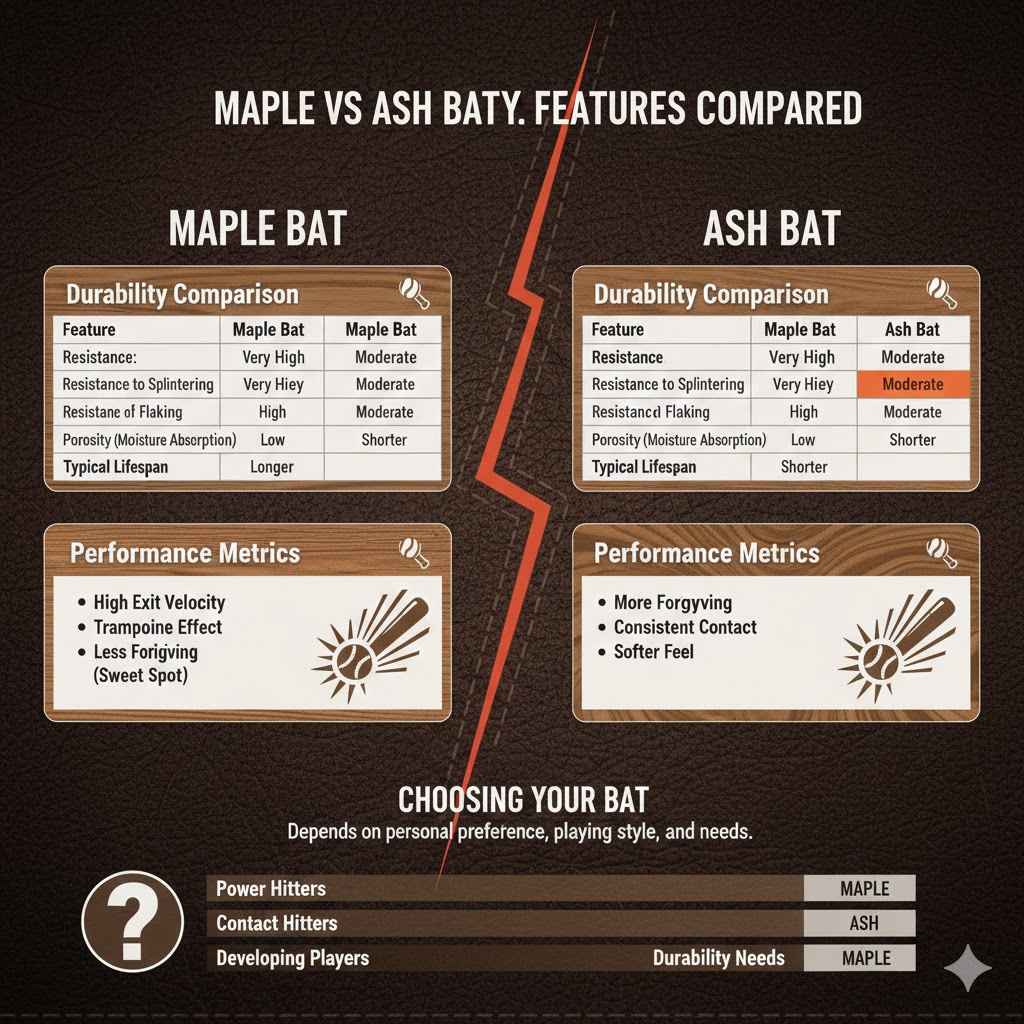
Durability is a major factor for any baseball player. Bats take a beating, and knowing which wood lasts longer can influence purchasing decisions. Maple is generally considered more durable, but ash has its own strengths.
| Feature | Maple Bat | Ash Bat |
|---|---|---|
| Resistance to Splintering | Very High | Moderate |
| Resistance to Flaking | Very High | Moderate |
| Porosity (Moisture Absorption) | Low | High |
| Typical Lifespan | Longer | Shorter |
The table shows that maple’s tight grain makes it inherently more resistant to the types of damage that commonly occur with wood bats. This means a maple bat is less likely to splinter or flake. Ash, with its more open grain, is more susceptible to these issues.
The porosity of ash also means it can absorb moisture more readily. This can weaken the wood over time and make it more prone to breaking. Maple’s low porosity helps it maintain its integrity for longer periods, contributing to its overall durability.
Performance Metrics Comparison
When we look at performance, we’re often talking about how well the bat helps a player hit the ball. This includes factors like exit velocity and the sweet spot’s impact.
Maple’s hardness and density contribute to higher potential exit velocities. This is especially true when a player connects perfectly with the ball. The “trampoline effect” amplifies this, sending the ball away with great force.
Ash, with its flexibility, offers a more forgiving performance. While it may not reach the absolute peak exit velocities of maple on perfect hits, it provides more consistent results on a wider range of contact. This can lead to fewer weak ground balls and more solid hits.
Sample Scenario: A player is deciding between a maple and an ash bat. They have a moderate swing speed and sometimes hit the ball slightly off-center.
- Test swing with maple: Hits a line drive that feels great, but a slightly mishit ball feels dead and doesn’t go far.
- Test swing with ash: All hits feel reasonably good, and even the mishit balls have decent carry.
- Decision: The player chooses ash because its forgiveness provides more consistent results for their swing type.
Cost and Value Analysis
The cost of a bat is an important consideration for many players and parents. Generally, maple bats can be more expensive than ash bats. This is due to factors like wood quality, availability, and manufacturing processes.
However, the value proposition is not always straightforward. While ash bats might be cheaper upfront, their shorter lifespan due to breakage can lead to higher replacement costs over time. If a player goes through multiple ash bats in a season, the total expense could exceed the cost of a single, more durable maple bat.
For a player who is very hard on their equipment or plays in a league where bat breakage is common, investing in a durable maple bat can offer better long-term value. Players who are gentler with their bats or play less frequently might find ash to be a more budget-friendly option.
When to Choose Maple
You should consider a maple bat if:
- You are a power hitter looking to maximize distance and exit velocity.
- You value extreme durability and want a bat that lasts longer.
- You have a consistent swing and can reliably hit the sweet spot.
- You prefer a firm, solid feel at contact.
Maple’s strengths lie in its ability to deliver maximum power and withstand significant wear and tear. If these are your priorities, maple is likely the superior choice for your game. It rewards precise hitting with exceptional results and offers a reliable, long-lasting performance.
When to Choose Ash
You should consider an ash bat if:
- You are a contact hitter who prioritizes consistency and getting on base.
- You are a developing player still refining your swing mechanics.
- You prefer a more forgiving bat that offers good results on off-center hits.
- You enjoy the traditional feel and sound of an ash bat.
Ash offers a blend of flexibility and forgiveness that can be invaluable for many players. Its ability to perform well even when contact isn’t perfect makes it a reliable choice for those who value consistency and feel. For many, the traditional baseball experience includes the distinct characteristics of an ash bat.
Frequently Asked Questions
Question: Is maple wood always harder than ash wood for bats?
Answer: Yes, generally maple wood is denser and harder than ash wood. This is due to its tighter grain structure, which allows it to transfer energy more efficiently when hitting a ball.
Question: Which type of wood bat is more likely to break?
Answer: Ash bats are more likely to break than maple bats because ash has a more open grain structure and can be more susceptible to impact fractures and moisture damage.
Question: Does the “trampoline effect” happen with ash bats?
Answer: The trampoline effect is much more pronounced with maple bats due to their hardness and tight grain. Ash bats have more flexibility but do not exhibit the same degree of energy return to the ball.
Question: Can a beginner player use a maple bat?
Answer: Yes, a beginner can use a maple bat, but an ash bat might be more forgiving as they develop their swing. Maple bats require more precise contact to perform at their best.
Question: Which bat wood is generally more expensive?
Answer: Maple bats are typically more expensive than ash bats, reflecting their superior durability and performance characteristics sought by many players.
Final Thoughts
Maple vs Ash Bat: Which Performs Better? ultimately depends on your individual needs. Maple offers more power and durability for consistent hitters.
Ash provides forgiveness and a classic feel for developing players and contact hitters. Choose the wood that best fits your swing and game.