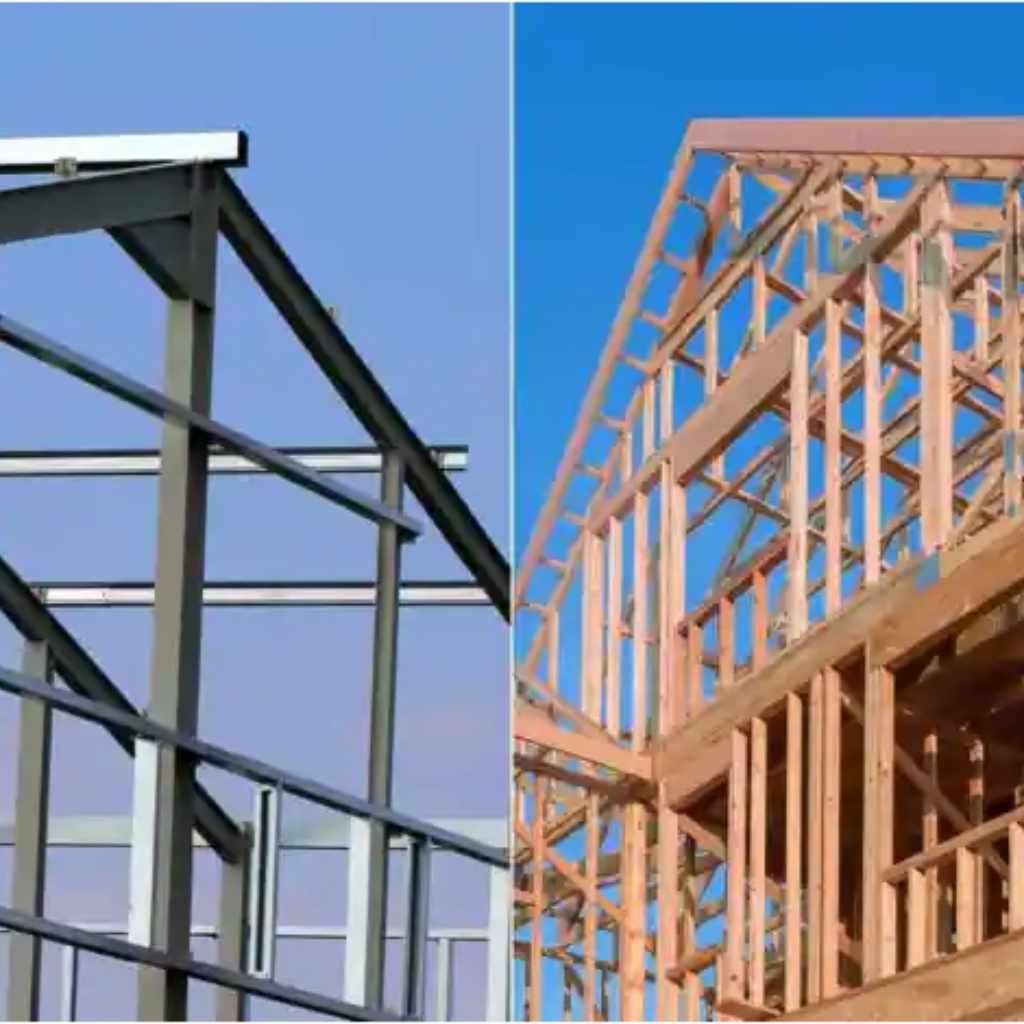
Metal Frame vs Wood Frame: Pros and Cons
Choosing between a metal frame and a wood frame can feel like a big decision, especially if you’re new to building or DIY projects. Many people wonder about the Metal Frame vs Wood Frame: Pros and Cons, and it’s perfectly normal to feel a bit unsure. But don’t worry!
We’re here to make it super simple. Think of this as your easy guide to figuring out which is best for what you need. We’ll break it all down step-by-step so you can move forward with confidence.
Let’s see what each has to offer.
When you’re planning a project, whether it’s building a small shed, a furniture piece, or even part of a larger structure, you’ll often run into a choice: should you use metal framing or wood framing? This decision matters because each material has its own strengths and weaknesses. What works perfectly for one situation might not be the best fit for another.
Let’s explore what makes each one tick and help you see the differences clearly.
What is Metal Framing
Metal framing, most commonly steel framing, is a construction method that uses prefabricated metal components, typically steel studs and tracks, to build the structural framework of a building or other structure. These components are usually manufactured in factories to precise specifications and then assembled on-site. Steel is known for its strength and durability.
It’s a material that has been used in construction for a long time, especially for larger commercial buildings and high-rises. Its consistent quality and predictable performance make it a reliable choice for many applications.
Pros of Metal Framing
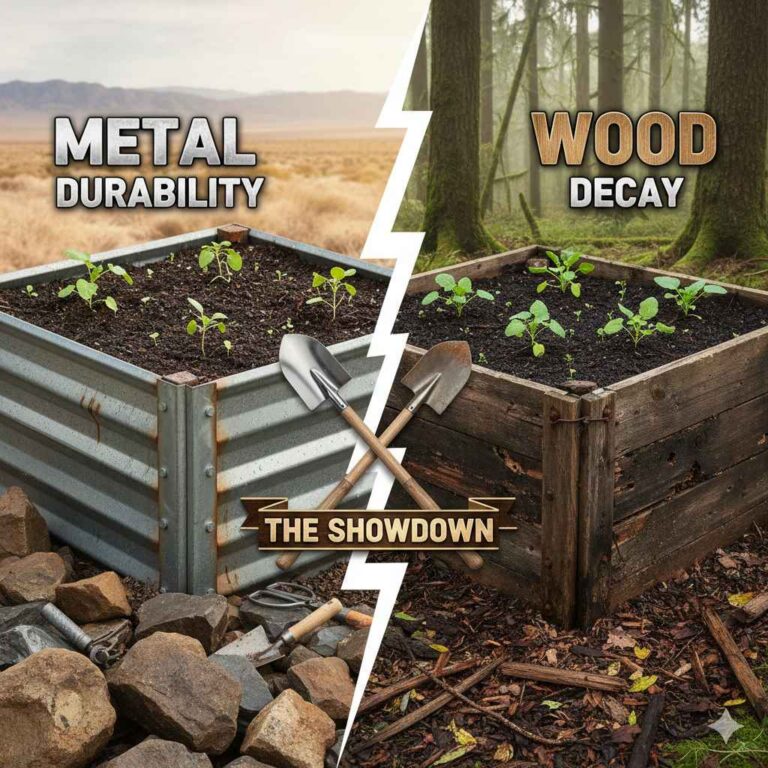
- Strength and Durability: Metal frames, especially steel, are incredibly strong. They can support heavy loads and are resistant to warping, rotting, and insect damage that can affect wood.
- Lightweight (Compared to some woods): While steel is strong, it can be surprisingly lightweight for its strength, making it easier to transport and handle on-site.
- Fire Resistance: Steel is non-combustible, which can be a significant advantage in fire safety regulations and insurance.
- Dimensional Stability: Metal doesn’t expand or contract much with changes in humidity or temperature, meaning your structure will remain stable over time.
- Speed of Construction: Prefabricated metal components can often lead to faster assembly on-site, reducing labor time and costs.
- Sustainability and Recyclability: Steel is highly recyclable, making it an environmentally friendly choice for many projects.
- Pest Resistance: Unlike wood, metal frames are not susceptible to termites, wood borers, or other wood-destroying insects.
- Consistency: Manufactured metal components have uniform dimensions and quality, ensuring a predictable outcome.
Cons of Metal Framing
- Thermal Conductivity: Metal conducts heat and cold easily. This means metal frames can create thermal bridging, potentially leading to energy loss if not properly insulated.
- Cost: In some cases, the initial cost of metal framing materials might be higher than wood, especially for smaller projects or residential use.
- Corrosion/Rusting: If not properly treated or protected, steel can rust, especially in damp or corrosive environments.
- Complex Repairs: Repairing or modifying metal frames can sometimes be more challenging and require specialized tools or techniques compared to wood.
- Noise Transmission: Metal frames can sometimes transmit sound more easily than wood, which might be a concern for residential applications where soundproofing is important.
- Requires Specialized Tools: While handling can be easier, cutting and connecting metal frames often requires power tools designed for metal, which might not be readily available to all DIYers.
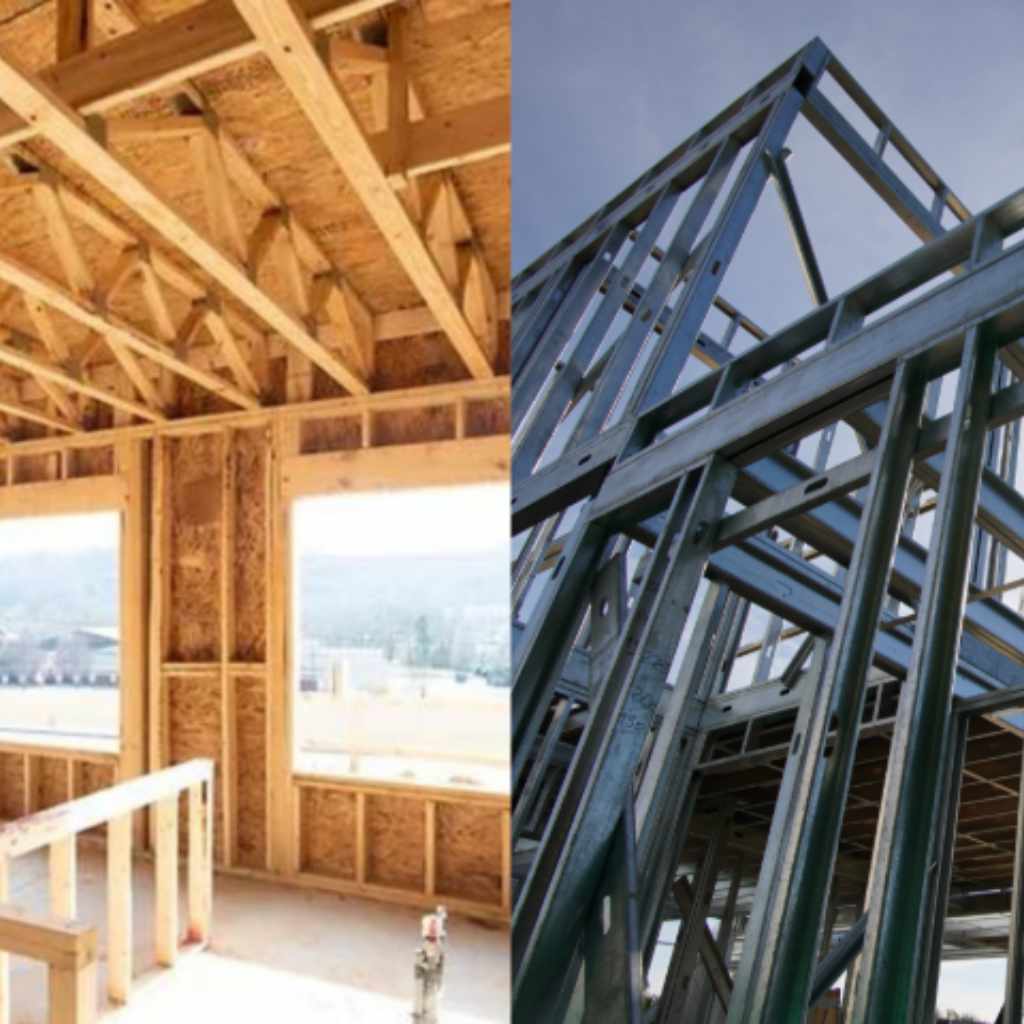
What is Wood Framing
Wood framing is the traditional method of building the structural skeleton of a house or other structure using pieces of lumber, typically dimensional lumber like 2x4s or 2x6s. These pieces are cut and assembled on-site to create walls, floors, and roofs. Wood is a natural, renewable resource that has been used for centuries in construction.
Its ease of use, affordability, and familiarity make it a popular choice for a wide range of projects, from small furniture to entire homes.
Pros of Wood Framing
- Cost-Effectiveness: Wood is often more affordable than steel, especially for residential construction and smaller projects.
- Ease of Use and Modification: Wood is easy to cut, shape, and fasten with basic tools, making it very DIY-friendly. It’s also simple to make changes or repairs later on.
- Good Insulator: Wood naturally provides better insulation than metal, helping to keep buildings warmer in winter and cooler in summer, potentially reducing energy bills.
- Aesthetic Appeal: Wood has a natural warmth and aesthetic that many people find appealing, especially in homes and furniture.
- Availability: Wood is readily available in most areas, making it easy to source materials for any project.
- Renewable Resource: When sourced responsibly from sustainable forests, wood is a renewable and environmentally friendly building material.
- Sound Absorption: Wood structures tend to absorb sound better than metal, offering a quieter living or working environment.
Cons of Wood Framing
- Susceptibility to Pests and Decay: Wood can be damaged by termites, carpenter ants, and other insects. It can also rot if exposed to moisture, leading to structural weakness.
- Flammability: Wood is a combustible material, which can be a concern regarding fire safety and may require specific fire-retardant treatments.
- Dimensional Instability: Wood can warp, twist, shrink, or expand with changes in humidity and temperature, which can lead to structural issues or cosmetic problems over time.
- Not as Strong Per Unit Weight: Compared to steel, wood is generally not as strong for its weight, meaning thicker pieces might be needed for the same load-bearing capacity.
- Inconsistency in Quality: Natural variations in wood mean that strength and quality can differ between pieces, requiring careful selection.
- Maintenance Requirements: Depending on the application and exposure, wood may require more maintenance, such as sealing or painting, to protect it from the elements.
Comparison Table Metal vs Wood Frame
To help you visualize the key differences, here’s a simple table comparing metal and wood framing:
| Feature | Metal Frame | Wood Frame |
|---|---|---|
| Strength | Very High | Good to High (depends on wood type and size) |
| Durability | Excellent (resistant to rot, pests) | Moderate (can be affected by pests, moisture) |
| Cost (Initial) | Can be higher, especially for residential | Often lower, particularly for residential |
| Ease of Use (DIY) | Requires specialized tools for some tasks | Easy to cut and work with basic tools |
| Insulation Properties | Poor (conducts heat/cold) | Good natural insulator |
| Fire Resistance | Excellent (non-combustible) | Combustible |
| Environmental Impact | Highly recyclable | Renewable resource (if managed sustainably) |
| Weight | Can be lighter for equivalent strength | Variable, generally heavier for same strength |
| Resistance to Warping/Shrinking | Excellent | Can warp, shrink, or expand |
What is Metal Framing
The best choice between a metal frame and a wood frame really depends on your specific project and what’s most important to you. For building sturdy, long-lasting structures like commercial buildings, sheds designed to withstand harsh weather, or projects where fire resistance is a top priority, metal framing often shines. Its ability to resist pests and decay means less worry about maintenance over the years.
If you are building something that needs to be incredibly precise and stable, metal is a great option.
On the other hand, if you’re working on a home renovation, a residential extension, or building furniture where cost is a significant factor and you want something easy to work with yourself, wood framing is usually the go-to. Its natural insulating qualities are a big plus for living spaces, and it’s much simpler to make adjustments or add to a wood structure later. The familiar feel and ease of use make wood a favorite for many DIYers and professional builders alike.
Think about the location too. In areas prone to termites or extreme humidity, the pest and rot resistance of metal can be a major advantage. For projects where aesthetics are key and you want a warm, natural look, wood might be preferred.
Ultimately, weigh the pros and cons against your budget, skill level, desired lifespan of the project, and any local building codes or environmental considerations.
Frequently Asked Questions
Question: Is metal framing more expensive than wood framing
Answer: Generally, the initial cost of metal framing materials can be higher than wood framing, especially for smaller residential projects. However, the overall cost can depend on factors like labor, transportation, and long-term maintenance. Metal frames might save money over time due to their durability and lower maintenance needs.
Question: Which frame is better for home construction
Answer: For typical home construction, wood framing is still the most common and often preferred choice due to its cost-effectiveness, ease of use, and good natural insulation properties. However, metal framing is increasingly used, especially for certain structural elements or in areas with specific building code requirements.
Question: Can you easily add to a metal frame structure
Answer: Adding to a metal frame structure can be more complex than adding to a wood frame. It often requires specialized tools and knowledge to cut and connect new metal components securely and ensure structural integrity. Wood framing typically allows for easier modifications and expansions.
Question: Which frame is more environmentally friendly
Answer: Both materials have environmental considerations. Wood is a renewable resource when sourced from sustainably managed forests. Steel is highly recyclable, and many steel products contain recycled content.
The “better” choice can depend on the sourcing, manufacturing processes, and end-of-life disposal of the materials.
Question: Are metal frames more prone to rust
Answer: Steel frames can rust if they are not properly protected with coatings or finishes, especially when exposed to moisture or corrosive elements. However, modern steel framing often comes with protective treatments to resist corrosion. Wood frames are prone to rot and insect damage if exposed to moisture.
Final Thoughts
When you’re deciding between a metal frame and a wood frame, it’s all about matching the material’s strengths to your project’s needs. Metal frames offer incredible strength, stability, and resistance to things like fire, pests, and warping, making them ideal for demanding applications where longevity is key. They are precise and can speed up construction in some scenarios.
On the other hand, wood frames provide a familiar, cost-effective, and easily workable solution. Their natural insulating qualities and aesthetic appeal make them a staple in residential building and DIY projects. You can easily cut and adapt wood, which is a big plus for many.
Both have their place, and understanding these differences will help you pick the best material for what you want to build. Think about your budget, the environment the structure will be in, and how easy you need it to be to work with. Making an informed choice now will lead to a better result later on.