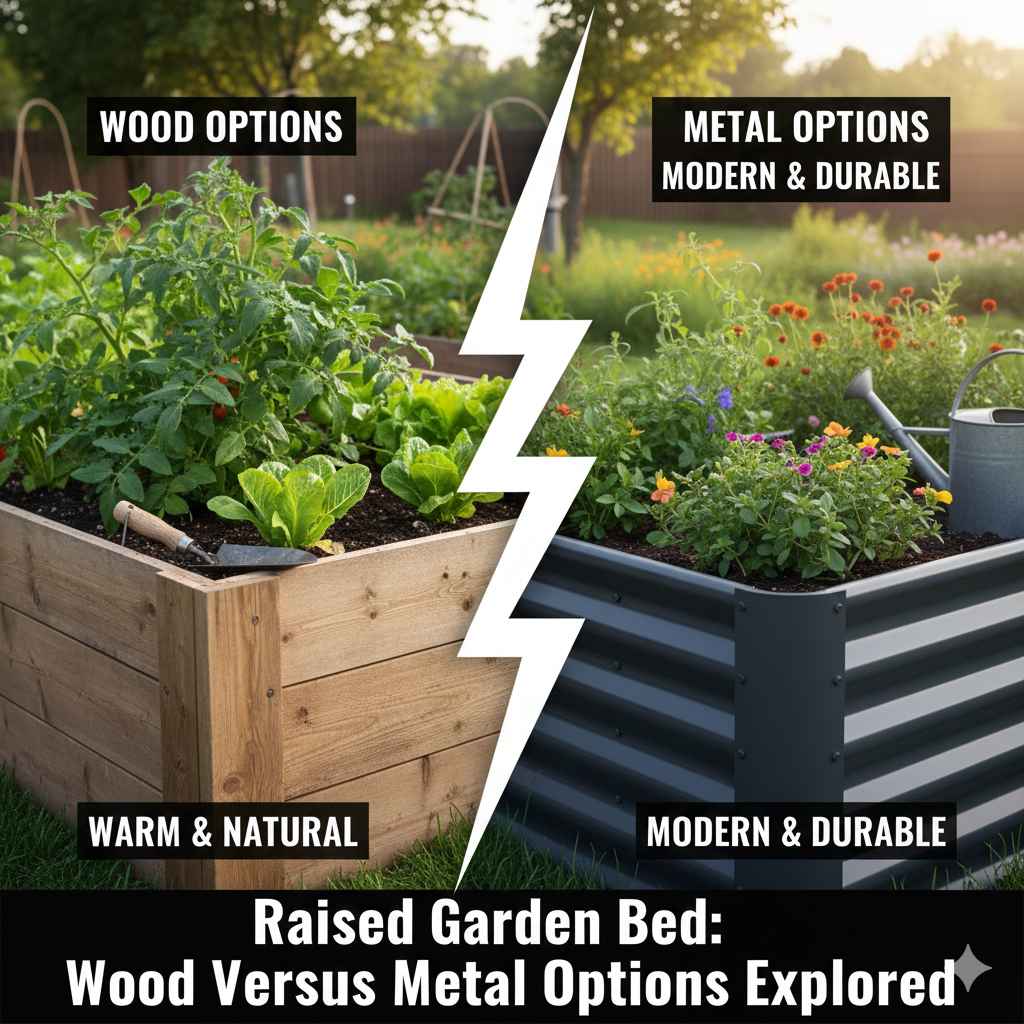
Raised Garden Bed: Wood vs Metal (Real Cost & Lifespan Data)
Cedar and redwood raised beds typically last 10 to 20 years, while galvanized steel runs 15 to 20+ years with almost no upkeep – but steel heats up fast in full sun. Picking the wrong material means rebuilding a wood bed in under five years, or fighting overheated soil on a 95-degree afternoon. This guide compares real lifespan, cost, and safety data, plus the right depth for tomatoes, greens, and root crops.
Quick Answer
Cedar or redwood wins on natural looks and lower kit prices for a small bed; galvanized steel wins on lifespan (15-20+ years vs. 10-20) and maintenance. Choose wood if you don’t mind rebuilding once, and metal if you want to build it once – just add extra watering in hot climates, since metal soil runs hotter than wood.
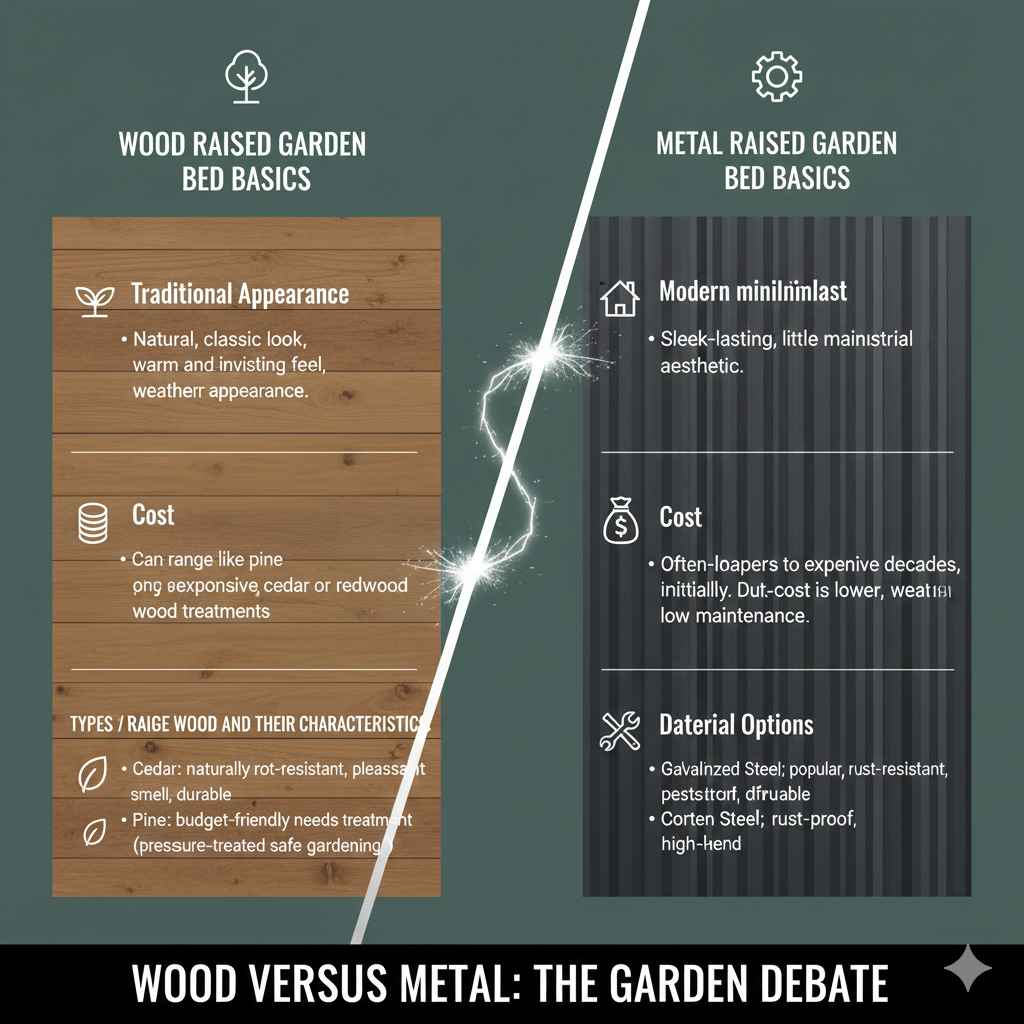
Wood vs Metal Raised Garden Beds at a Glance
Every wood-vs-metal comparison you’ll find repeats the same claim: metal costs more upfront. Live Amazon pricing pulled for this guide in August 2026 shows the opposite for comparable kits – an 8×4-foot galvanized steel bed currently runs $60-$100, while a similarly sized cedar kit runs $220-$290. Wood still wins on looks and DIY flexibility; metal currently wins on price and lifespan both.
| Factor | Cedar / Redwood Wood | Galvanized Steel |
|---|---|---|
| Starter kit price (about 32 sq ft) | $220-$290 | $60-$100 |
| Typical lifespan | 10-20 years (cedar/redwood); 3-5 years for untreated pine | 15-20+ years |
| Maintenance | Occasional sealing or staining | Hose off, minimal upkeep |
| Soil heat in full sun | Insulates, more stable temperature | Warms fast, can overheat roots above 90 F |
| Best for | Natural look, budget builds, DIY customization | Long-term low-maintenance beds, humid or pest-heavy yards |
Wood Raised Garden Bed Basics
Wood is still the default choice for most home gardeners because it’s easy to cut, easy to customize, and looks right in nearly any yard. The tradeoff is that every wood species ages differently, so the type of wood you pick matters more than the fact that it’s wood.
Types of Wood and Their Characteristics
Cedar is the most popular choice for raised beds because it’s naturally rot- and insect-resistant without any chemical treatment, and it can help repel roaches and other pests thanks to its natural oils. A well-built cedar bed commonly lasts 10-20 years with no sealant at all, though a coat of food-safe oil every few years slows the graying – it’s the same reason cedar shows up so often in cedar deck builds right next to the garden.
Redwood matches cedar for rot resistance and lasts just as long, with a richer color that many gardeners prefer. It’s typically the most expensive standard option; if you’re weighing it against other outdoor wood, our guide to treating redwood for outdoor use covers sealants that extend it further.
Pine is the budget option, but untreated pine rots in as little as 3-5 years in contact with wet soil. Pressure-treated pine lasts 10-15 years, but older treatments used arsenic-based preservatives; for anything growing food, only use lumber labeled safe for garden or agricultural contact.
Douglas fir is a less common but genuinely solid alternative – it’s not naturally as rot-resistant as cedar, but a sealed, well-drained bed can still hold up for years; see our breakdown of whether Douglas fir is rot-resistant for the specifics. For a wood most competitors skip entirely: black locust is documented by Oregon State University Extension as outperforming even cedar for rot and insect resistance in ground contact, though it’s harder to source and more expensive where available.
Whatever wood you choose, carpenter bees and other wood-boring insects are the most common long-term threat to a wood bed – untreated end grain and exposed corners are where they start.
Best Raised Garden Bed Kit Pick
Greenes Fence Premium Cedar Raised Garden Bed, 4′ x 8′ x 17.5″
3/4-inch North American cedar boards with tool-free dovetail corner joints – 17.5 inches deep, enough for every plant in our depth guide below.
- Best for: gardeners who want one deep, all-purpose cedar bed for tomatoes and root vegetables without building one from scratch
- Why we picked it: dovetail tool-free assembly and 17.5″ of depth clears our fruiting-plant minimum with room to spare
- Main drawback: no bottom or liner included, and cedar still needs occasional oiling to slow natural graying
Compare more raised garden bed kit options
 Option 1 Land Guard 8x4x2ft Galvanized Raised Garden Bed Kit
|
 Option 2 Infinite Cedar Deep Root Cedar Raised Bed Garden Kit
|
 Option 3 Greenes Fence Classic Cedar Raised Garden Bed, 2′ x 8′ x 10.5″
|
As an Amazon Associate we earn from qualifying purchases.
Metal Raised Garden Bed Options
Metal raised beds trade DIY flexibility for durability. They resist rot and pests completely, need almost no maintenance, and – based on current kit pricing – are often cheaper to buy than a comparable cedar bed.
Metal Material Types
Galvanized steel is the standard choice – a zinc coating protects the steel from rust. Powder-coated steel adds a colored finish over that same zinc layer, mainly for looks; if the coating ever chips, our guide on sealing metal from rust covers touch-up options for either. Aluminum is lighter and naturally corrosion-resistant without any coating at all, though it costs more per bed than galvanized steel. Corrugated steel is just galvanized steel formed into ridges for extra strength against bowing – it’s the look most “metal raised bed” product photos show.
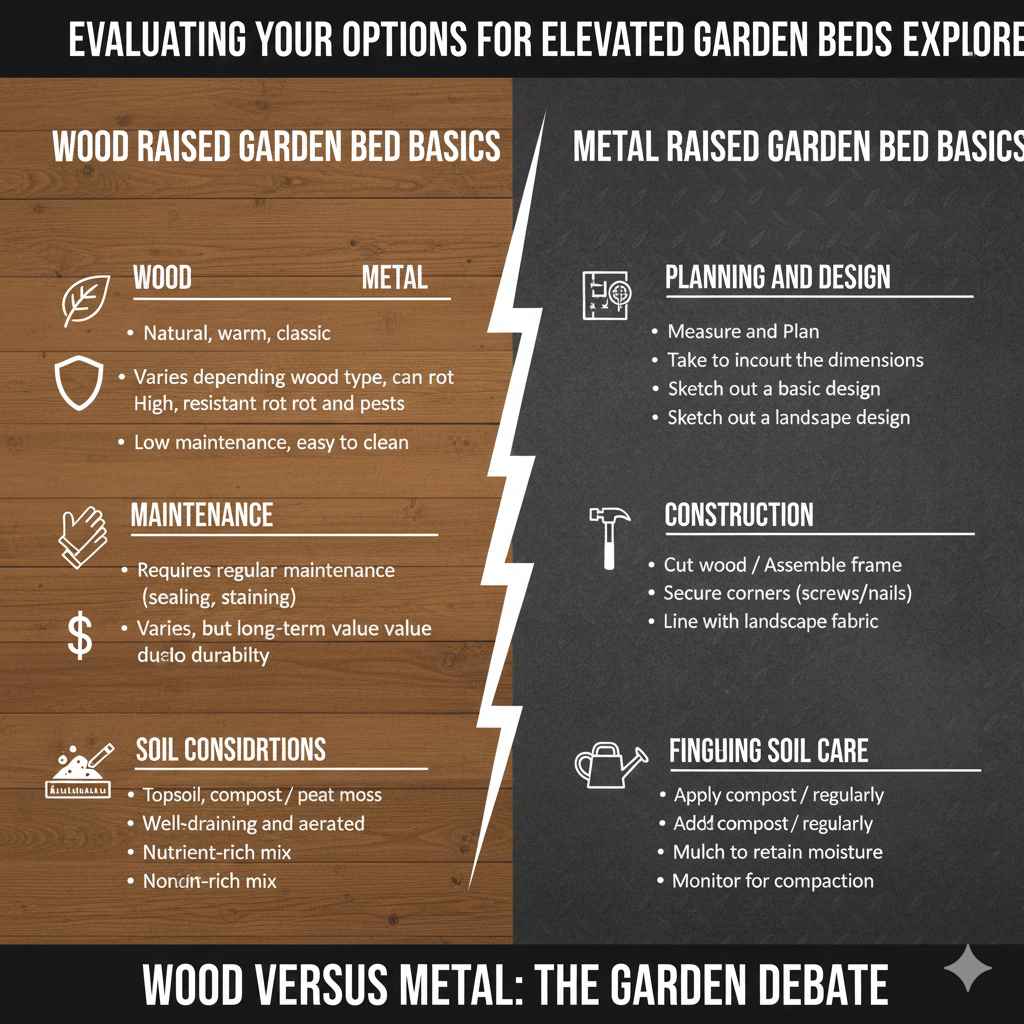
How Deep Should Your Raised Bed Be?
Depth is the detail most wood-vs-metal comparisons skip entirely, but it matters more than the material – a bed that’s too shallow limits root growth no matter what it’s built from.
| What you’re growing | Minimum depth |
|---|---|
| Herbs and leafy greens (lettuce, spinach, basil) | 6 inches |
| Root vegetables and peppers (carrots, beets, radishes) | 12 inches |
| Tomatoes, cucumbers, and squash | 15-18 inches |
| Pumpkins and sprawling vines | 24 inches |
| If you only build one depth | 12 inches covers most vegetables |
Building a Raised Garden Bed
Both materials follow roughly the same build sequence, whether it’s one of our outdoor woodworking projects from scratch or a pre-cut kit.
- Plan the size and depth: Use the depth table above to match your bed to what you’re growing, and measure the site before buying materials.
- Cut and assemble the frame: For wood, cut boards to length and screw the corners together (exterior-grade screws only); for metal kits, bolt the panels together per the included instructions.
- Reinforce the corners: Add corner brackets or braces on beds longer than 6 feet or taller than 12 inches – this is where most beds fail first, not the walls.
- Line the bottom: Lay landscape fabric (not solid plastic) over the ground to block weeds while still letting water drain through.
- Level and fill: Set the frame level on the ground, then fill with your soil mix.
“Stagger the joints when you stack boards for a taller bed – if every seam lines up at the same height, that’s the first spot to rack loose once wet soil starts pushing outward. It’s the same reason you’d stagger seams on a fence or a deck.”
Soil Considerations
A good raised bed mix is roughly 60% topsoil, 30% compost, and 10% other amendments (perlite or vermiculite for drainage, peat moss or coco coir for moisture retention). Fill to just below the top edge, leaving room for mulch and watering without soil spilling over. Top off with fresh compost each season and test the soil every year or two, especially in a galvanized bed.
3 Mistakes That Cut a Raised Bed’s Life Short
Skipping the fabric liner and drainage layer. Wood or metal, a bed set directly on hard-packed soil holds water against the bottom edge – that’s where rot and rust both start first, not the sides.
Using old treated lumber for food crops. Pre-2004 CCA-treated lumber (often with a greenish tint) contained arsenic compounds now banned for residential use. If you’re reusing old boards for anything you plan to eat, don’t guess – replace them with cedar, redwood, or current-generation ACQ-treated lumber labeled safe for garden use.
Placing a metal bed in full afternoon sun without adjusting watering. A dark galvanized or corrugated bed can push soil temperature well above the air temperature on a hot day. It’s not a reason to avoid metal – just water earlier in the day and consider a light-colored or powder-coated finish in hot climates.
Frequently Asked Questions
Is wood or metal cheaper for a raised garden bed?
As of August 2026, comparably sized galvanized steel kits are often cheaper to buy than cedar kits – roughly $60-$100 versus $220-$290 for an 8×4-foot bed. Wood can still be cheaper if you build it yourself from basic pine, but pine needs replacing every few years, while metal and cedar both last a decade or more.
How long do wood raised garden beds actually last?
It depends heavily on the wood. Untreated pine lasts only 3-5 years in contact with wet soil. Pressure-treated pine can reach 10-15 years. Cedar and redwood are the longest-lasting standard options at 10-20 years, and black locust can outlast even cedar according to Oregon State University Extension research.
Are galvanized metal raised beds safe for growing vegetables?
Yes. Purdue University Extension reports that zinc leaching from galvanized steel is very slow under normal garden conditions and stays well within safe levels for edible plants. Risk only rises in highly acidic soil or after many years of heavy use without soil testing – a fabric liner and periodic testing address both.
How deep should a raised garden bed be?
12 inches is the sweet spot if you’re only building one depth – it covers root vegetables, peppers, and most greens. Tomatoes, cucumbers, and squash do better with 15-18 inches, and pumpkins need up to 24 inches. Herbs and lettuce can get by with as little as 6 inches.
What’s the best wood for a raised garden bed?
Cedar and redwood are the best standard choices because both resist rot and insects naturally, with no chemical treatment needed. If pressure-treated wood is your only budget option, confirm the label says it’s rated safe for garden or agricultural contact before using it near food crops.
Do metal raised beds get too hot for plant roots?
They can, in direct summer sun. Dark galvanized or corrugated steel absorbs heat quickly and can push soil temperature above what roots prefer on the hottest days. Watering earlier in the day, mulching the surface, or choosing a lighter powder-coated finish all reduce the effect – it’s a real tradeoff for metal’s durability, not a dealbreaker.
Final Thoughts
Cedar and redwood still win on natural appearance and DIY customization. Galvanized steel now wins on both lifespan and, based on current kit pricing, cost – a reversal from what most buying guides still repeat. Match the depth to what you’re growing, line the bottom either way, and factor in extra watering if you go with metal in a hot climate.