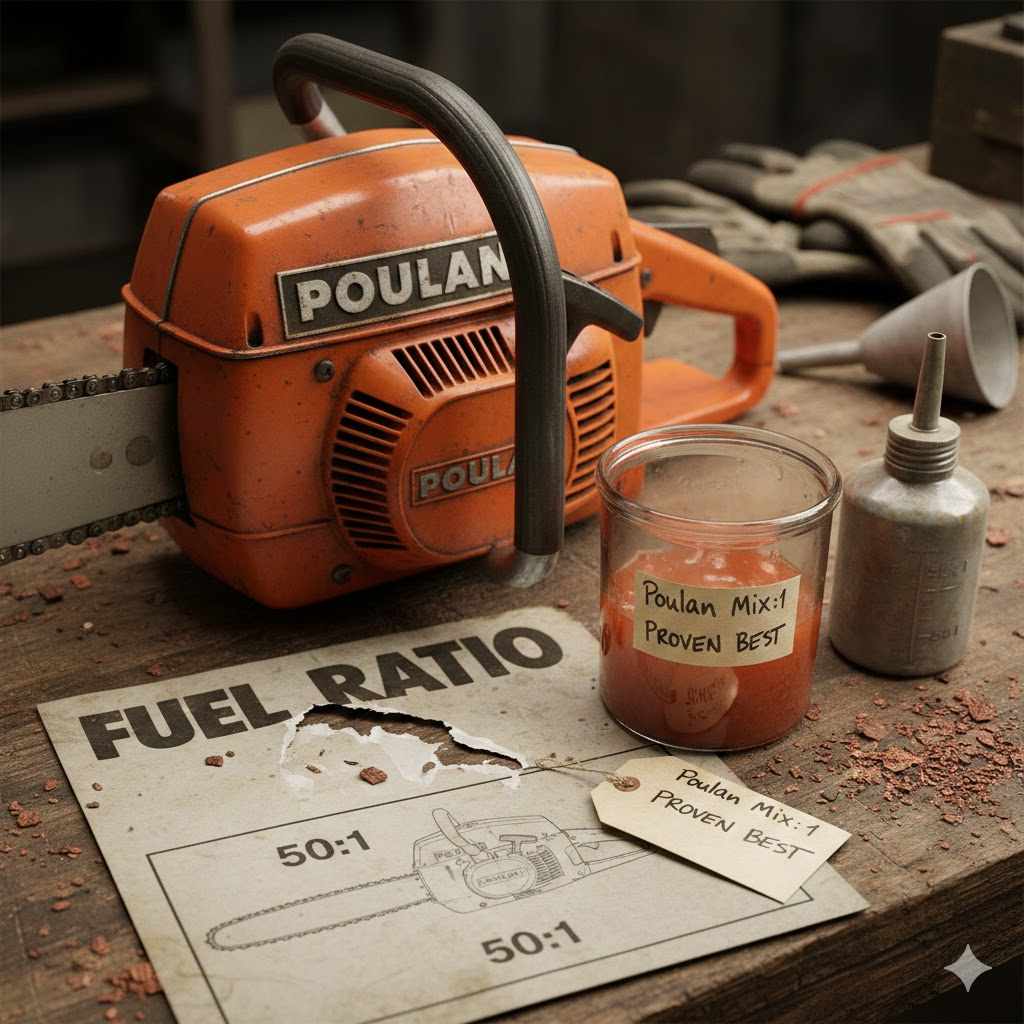
Poulan Chainsaw Fuel Ratio: The Proven, Best Mix
The proven, best Poulan chainsaw fuel ratio is 40:1. This means you should mix 3.2 fluid ounces of high-quality, 2-cycle engine oil with exactly 1 gallon of fresh, unleaded gasoline (87 octane or higher). Using this precise mix ensures your chainsaw runs smoothly, performs powerfully, and lasts for years to come.
Hello there, fellow creator! Md Meraj here, your friendly guide in the workshop. If you’ve ever stood in your garage with a gas can in one hand and a small bottle of 2-cycle oil in the other, feeling a bit like a mad scientist, you’re not alone. Figuring out the right fuel mix for your Poulan chainsaw can feel tricky. A little too much oil, and you’ve got a smoky, sluggish mess. Too little, and you risk serious engine damage. It’s a common frustration that can stop a weekend project in its tracks.
But don’t you worry! Today, we’re going to clear up all that confusion. I’m going to walk you through the simple, proven formula for mixing the perfect fuel for your Poulan chainsaw every single time. We’ll cover everything you need, from the right ingredients to a step-by-step mixing guide. By the end of this, you’ll be mixing fuel with complete confidence, keeping your trusty chainsaw happy and ready for any job.
Why Getting the Poulan Fuel Mix Right Is So Important
Before we dive into the “how,” let’s quickly cover the “why.” Your Poulan chainsaw has a 2-cycle engine. Unlike the engine in your car, it doesn’t have a separate oil system for lubrication. Instead, it relies on the oil you mix directly into the gasoline. This oil-fuel mixture does two critical jobs at once: it provides the power to run the engine and lubricates all the moving parts, like the piston and cylinder.
Think of the oil as the engine’s lifeblood. Without it, you’d have metal grinding against metal at thousands of revolutions per minute. The friction and heat would quickly destroy the engine, leading to a costly repair or even a replacement.
What Happens with the Wrong Fuel Ratio?
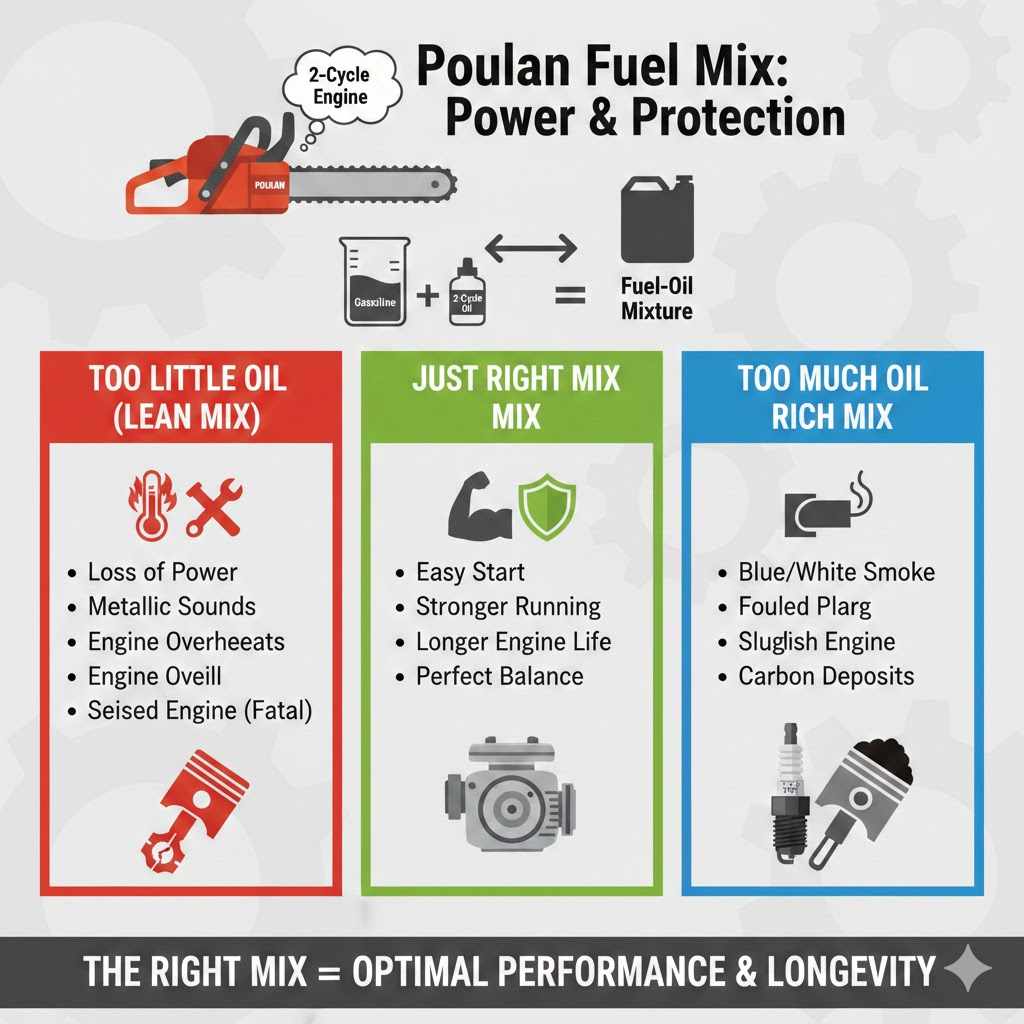
- Too Little Oil (A “Lean” Mix): This is the most dangerous mistake. Without enough lubrication, the engine overheats. You’ll notice a loss of power, and you might hear unusual metallic sounds. Continued use will lead to a seized engine, which is often a death sentence for a chainsaw.
- Too Much Oil (A “Rich” Mix): While not as immediately catastrophic, a rich mix causes its own set of problems. Your chainsaw will produce excessive blue or white smoke, the spark plug will get fouled with oily residue, and the engine will run sluggishly. Over time, carbon deposits can build up, hurting performance and efficiency.
Getting the ratio just right ensures a perfect balance of power and protection. Your chainsaw will start easier, run stronger, and have a much longer, healthier life.
The Magic Number: What Is the Poulan Chainsaw Fuel Ratio?
For almost all modern Poulan and Poulan Pro chainsaws, the manufacturer recommends a fuel-to-oil ratio of 40:1. It’s the gold standard for these tools.
But what does 40:1 actually mean? It’s simple! It means you need 40 parts of gasoline for every 1 part of 2-cycle oil. To make it even easier, here are the exact measurements you’ll need:
- For 1 gallon of gasoline, you need 3.2 fluid ounces of 2-cycle oil.
- For 2.5 gallons of gasoline, you need 8 fluid ounces of 2-cycle oil.
Always double-check your chainsaw’s user manual if you have it. While 40:1 is the standard for nearly all recent models, a much older vintage model might have a different recommendation. But if you own a Poulan chainsaw made in the last couple of decades, 40:1 is your number.
Gathering Your Supplies: What You’ll Need for the Perfect Mix
Mixing fuel is a simple task when you have the right tools on hand. You don’t need anything fancy, just a few basic items. Let’s get our workbench organized.
The Essential Ingredients & Tools:
- Fresh Gasoline: This is more important than people think! Use regular unleaded gasoline with a minimum octane rating of 87. The key word here is “fresh.” Gasoline can start to go bad in as little as 30 days. Old gas can leave gummy deposits that clog up your carburetor. For best results, buy gas in small quantities you know you’ll use soon. Try to use gasoline that contains no more than 10% ethanol (labeled as E10). Ethanol-free gas is even better if you can find it, as ethanol can attract moisture and damage fuel system components over time.
- High-Quality 2-Cycle Engine Oil: Do not use regular motor oil for your car! You must use oil specifically designed for air-cooled 2-cycle engines. Look for brands that meet JASO FD or ISO-L-EGD performance standards. These oils contain special additives that help them burn cleanly and provide superior lubrication. Poulan offers its own brand of 2-cycle oil, which is a great choice, but other high-quality brands work just as well.
- A Clean, Approved Fuel Can: Use a dedicated gas can for your mixed fuel. Never use an old milk jug or soda bottle. A proper, government-approved can is designed to handle gasoline safely. Make sure it’s clean and completely dry on the inside before you start.
- A Measuring Device: Precision is key. Many 2-cycle oil containers come with a built-in measuring chamber. If yours doesn’t, a simple, clean measuring cup with fluid ounce markings will work perfectly. Don’t guess or “eyeball” the amount of oil!
Easy Poulan Chainsaw Fuel Mix Chart (40:1 Ratio)
Sometimes it’s just easier to see the numbers laid out. I’ve created this simple chart to help you mix the right amount of fuel, whether you’re working with gallons or liters. Feel free to print this out and hang it up in your workshop!
| Amount of Gasoline | Amount of 2-Cycle Oil to Add |
|---|---|
| 1 US Gallon (128 fl oz) | 3.2 fl oz (95 ml) |
| 2 US Gallons (256 fl oz) | 6.4 fl oz (189 ml) |
| 2.5 US Gallons (320 fl oz) | 8.0 fl oz (237 ml) |
| 5 US Gallons (640 fl oz) | 16.0 fl oz (473 ml) |
A Quick Note for Metric Users
If you prefer working with liters, the 40:1 ratio is just as easy. For every 1 liter of gasoline, you will need 25 milliliters of 2-cycle oil. (1 Liter = 1000 ml. 1000 / 40 = 25).
Step-by-Step Guide to Mixing Your Poulan Chainsaw Fuel
Alright, you’ve got your supplies, you know your ratio, and you have the chart. Let’s mix some fuel! Follow these simple steps for a perfect batch every time.
- Start with an Empty, Clean Fuel Can: Before you add anything, make sure your fuel can is clean and dry. Any debris or water inside can cause engine problems down the road.
- Add Half of the Gasoline First: Pour about half of the total amount of gasoline you plan to mix into the can. For example, if you’re making 1 gallon of mix, pour in about half a gallon of gas. This helps the oil mix in more easily.
- Measure and Add the 2-Cycle Oil: Carefully measure the exact amount of 2-cycle oil needed for your total amount of gasoline. Refer to our chart above! For 1 gallon of gas, this will be 3.2 fluid ounces. Pour the oil directly into the can with the gasoline.
- Seal and Swirl Gently: Put the cap back on the fuel can and tighten it securely. Gently swirl the can for about 15-20 seconds. Don’t shake it violently! A gentle swirl is all you need to blend the oil and gas together.
- Add the Remaining Gasoline: Now, open the can and add the rest of your gasoline. This second pour will further help to thoroughly mix the oil into the solution.
- Seal and Swirl One Last Time: Cap the can again and give it one final, gentle swirl to ensure everything is perfectly blended.
- Label Your Fuel Can: This is a simple but crucial step! Use a permanent marker to clearly label the can. Write “Chainsaw Mix 40:1” and the date you mixed it. This prevents you from accidentally putting it in a 4-cycle engine (like a lawnmower) and reminds you how old the fuel is.
That’s it! You now have a perfect batch of fuel, ready to power your Poulan chainsaw safely and effectively.
What About Pre-Mixed Fuel? Is It a Good Choice?
When you walk into a hardware or home improvement store, you’ll often see cans of pre-mixed, ready-to-use fuel. These products are typically a blend of high-octane, ethanol-free gasoline and high-quality synthetic 2-cycle oil, already mixed to a specific ratio (like 40:1 or 50:1). So, are they worth it?
For many homeowners and casual users, the answer is yes. They offer some significant benefits, but they come at a higher price. Let’s break it down.
| Pros of Pre-Mixed Fuel | Cons of Pre-Mixed Fuel |
|---|---|
| Ultimate Convenience: No measuring, no mixing, no mess. Just open the can and pour. It’s foolproof. | Much Higher Cost: You’ll pay significantly more per gallon compared to mixing your own fuel. |
| Ethanol-Free Gas: The fuel is engineered to be stable and won’t attract moisture, which is great for your engine and carburetor. | Less Practical for Heavy Use: If you use your chainsaw frequently, the cost can add up very quickly. |
| Extremely Long Shelf Life: Unopened, these cans can last for years. Even after opening, the fuel stays stable for a very long time, which is perfect if you only use your saw occasionally. | Smaller Quantities: They are typically sold in smaller quart or gallon cans, which may not be enough for a big job. |
My take: Pre-mixed fuel is an excellent option for homeowners who only use their chainsaw a few times a year. The convenience and long-term stability can be worth the extra cost, as it prevents problems associated with old, self-mixed fuel. For those of us who are cutting wood more regularly, mixing your own is far more economical.
Common Mistakes to Avoid When Mixing Poulan Chainsaw Fuel
Even with the best intentions, it’s easy to make a small mistake that could harm your equipment. Here are the most common slip-ups I see and how to avoid them.
- Using Old, Stale Gasoline: As mentioned before, gasoline breaks down over time. Using gas that’s been sitting in your garage for six months is a recipe for a clogged carburetor. According to the U.S. Energy Information Administration, gasoline has a shelf life of about three to six months. Only buy what you can use in a 30-60 day period.
- “Eyeballing” the Measurements: A little extra oil “for good luck” is not a good idea. Precision is your friend. Always use a proper measuring cup or the markings on the oil bottle to get the 40:1 ratio exactly right.
- Using the Wrong Type of Oil: Never, ever use 4-cycle motor oil (like the kind for your car) in a 2-cycle engine. It’s not designed to be mixed with gas and will not burn correctly. It will foul your spark plug and create heavy deposits, and it won’t lubricate your engine properly. Stick to air-cooled 2-cycle engine oil only.
- Mixing in the Chainsaw Tank: It might seem convenient to just pour some gas and a splash of oil directly into the saw’s tank, but this is a terrible idea. You will never get a proper, consistent mixture. The oil and gas won’t blend correctly, and you’ll end up running pockets of straight gasoline through your engine—a quick way to destroy it.
- Forgetting to Swirl the Can Before Each Use: Even after mixing, the oil can slowly settle over time. It’s a good habit to give your fuel can a gentle swirl before each time you refuel your chainsaw.
Safety First: Handling Fuel with Care
We’re talking about gasoline here, so safety is our top priority. Always treat fuel with respect. It’s highly flammable and the vapors are harmful to breathe.
Here are some non-negotiable safety rules for handling and mixing fuel:
- Work Outdoors or in a Well-Ventilated Area: Never mix fuel in an enclosed space like a basement. The fumes can build up to dangerous levels. Your garage with the door wide open or a spot outside is best.
- No Open Flames or Sparks: This is an obvious one. Stay far away from anything that could ignite the fuel, including pilot lights (like on a water heater), cigarettes, grinders, or any electrical device that could spark.
- Wear Protective Gear: It’s smart to wear safety glasses to protect your eyes from splashes and nitrile gloves to keep fuel off your skin.
- Use a Funnel: When pouring fuel into your chainsaw tank, use a clean funnel to prevent spills. Spilling fuel on a hot engine is a serious fire hazard.
- Store Fuel Properly: Store your mixed fuel in its approved, clearly labeled container. Keep it in a cool, dry, well-ventilated area away from living spaces and heat sources. For more guidance on fuel handling, resources like the U.S. Environmental Protection Agency (EPA) provide best practices for managing volatile substances.
- Clean Up Spills Immediately: If you do spill some fuel, clean it up right away with rags or an absorbent material and dispose of them properly.

Frequently Asked Questions About Poulan Chainsaw Fuel
What happens if I use a 50:1 mix in my Poulan chainsaw?
While some brands recommend a 50:1 ratio, your Poulan is designed for 40:1. A 50:1 mix has less oil per gallon of gas. Using it would create a lean condition, providing less lubrication than your engine needs. This increases heat and friction, which can lead to premature wear and potential engine failure over time. It’s always best to stick with the manufacturer’s 40:1 recommendation.
Can I use regular car oil in my Poulan chainsaw?
No, absolutely not. Car motor oil (4-cycle oil) is completely different from 2-cycle engine oil. It’s not designed to mix with gasoline or to burn during combustion. Using it will fail to lubricate the engine correctly and will foul your spark plug and exhaust system with heavy deposits.
How long does mixed chainsaw fuel last?
Once you’ve mixed gas and oil, the fuel’s shelf life decreases. It’s best to use your mixed fuel within 30 days. After that, the volatile compounds in the gasoline can start to degrade, and the oil can begin to separate, leading to poor engine performance and potential damage. Only mix as much fuel as you think you’ll use in the near future.
What kind of gasoline is best for a Poulan chainsaw?
The best gasoline is fresh (less than 30 days old), regular unleaded with a minimum octane rating of 87. If you can find ethanol-free gasoline, that is the premium choice for any small engine, as it prevents the moisture-related problems that ethanol can cause. If not, stick to fuel with no more than 10% ethanol (E10).
My chainsaw is smoking a lot. Is the fuel mix wrong?
Excessive blue or white smoke is a classic sign of a fuel mix that is too “rich”—meaning it has too much oil. Double-check your measurements to ensure you’re sticking to the 40:1 ratio. A tiny bit of smoke on startup is normal, but constant, thick smoke indicates a problem with your fuel mix.
Does the brand of 2-cycle oil matter?
Yes, to some extent. While you don’t have to use the Poulan-branded oil, you should always use a high-quality oil from a reputable brand that is specifically made for air-cooled 2-cycle engines. Look for oils that are certified by JASO (Japanese Automotive Standards Organization) or ISO (International Organization for Standardization). Cheap, low-quality oils don’t protect as well and can leave more carbon deposits.
Conclusion: Mix with Confidence and Get Back to Building
And there you have it! The mystery of the Poulan chainsaw fuel ratio is solved. The magic number is 40:1—that’s 3.2 fluid ounces of quality 2-cycle oil for every gallon of fresh gasoline. By following the simple steps we’ve outlined today, you can mix the perfect fuel every time, ensuring your chainsaw runs with the power and reliability you depend on.
Remember to always put safety first, use fresh ingredients, and measure carefully. Taking a few extra moments to do it right will pay off in the long run with a tool that lasts for years and performs beautifully whenever you need it. Now you can fuel up your saw with confidence and get back to what really matters—turning that pile of wood into your next great project. Happy cutting!