Best Chainsaw Bar Oil: 7 Compared by Cost & Cold-Flow (2026)
The Husqvarna X-Guard Premium All Season Bar & Chain Oil ($24.95, 1 gallon) is the best all-around chainsaw bar oil — it works out to just $1.72 per 8.8 fl oz tank refill, the cheapest of any oil we compared, while still carrying a manufacturer-published 150 mm²/s viscosity built for year-round use. Seven oils below, compared by real safety-data-sheet numbers, not marketing copy.
Chainsaw bar oil looks like a commodity until you actually compare the safety data sheets. We pulled the manufacturer TDS/SDS documents for this roundup and found real differences in viscosity, cold-weather rating, and ecological hazard classification — plus one number nobody puts on the label: what each oil actually costs to run per tank.
Chainsaw Bar Oil Comparison: Viscosity, Cold Rating & Real Cost
All seven oils below were priced live via Amazon on the same day this table was built. Viscosity and flash point are pulled directly from each manufacturer’s own Safety Data Sheet (SDS) where one was available — not estimated. Where a manufacturer hasn’t published a number, the cell says not published rather than a guess. “Cost per refill” normalizes every container size to the same 8.8 fl oz oil-tank capacity published by Husqvarna for its 450 Rancher (a common mid-size homeowner saw) — the only way to compare a 16 oz bottle against a 1-gallon jug honestly.
| Oil | Base Type | Viscosity | Min. Rated Temp | Ecological Classification | Cost / 8.8 oz Refill* | Verdict |
|---|---|---|---|---|---|---|
| Husqvarna X-Guard All Season | Mineral (petroleum) | 150 mm²/s @ 40°C (SDS) | Not published | Not classified — “not considered harmful to aquatic organisms” (SDS) | $1.72 | Best overall |
| Oregon Premium | Mineral (petroleum) | ≈160 cSt @ 40°C (SDS, approximate) | Not published | GHS Aquatic Toxicity Cat. 1 — “very toxic to aquatic life with long-lasting effects” (SDS) | $2.22 | Best value in bulk, avoid near water |
| Stihl Platinum | Mineral (petroleum) | 121.2–173.5 cSt @ 40°C / 9.95–12.4 cSt @ 100°C (SDS) | Not published | Not classified — “not expected to be harmful to aquatic organisms” (SDS) | $2.89 | Best for high-speed cutting |
| Husqvarna Low Temp | Mineral (petroleum) | Not published | -15°F / -26°C (mfr.) | Not published | $1.99 | Best for cold weather |
| DEWALT Biodegradable | Soy-based (biobased) | Not published (mfr. claims 300% higher viscosity index than petroleum oils, uncited figure) | -15°F to 500°F (mfr.) | USDA Certified Biobased Product | $5.49 | Best biodegradable, priciest to run |
| EGO Power+ AOL3200 | “Oil-free formula” (mfr. term, chemistry unconfirmed) | Not published | -18°F and above (mfr.) | Not published | $3.02 | Best for battery/electric saws |
| STP Premium | Mineral (petroleum) + ZDDP additive | Not published | Not published | Not published | $3.76 | Cheapest bottle, not cheapest to run |
*Cost per refill = live price ÷ container size (fl oz) × 8.8 fl oz, the oil-tank capacity Husqvarna publishes for its 450 Rancher. For comparison, a compact homeowner saw like the Stihl MS 170 carries a smaller 4.9 fl oz tank, so refill costs on a small saw will run roughly half these figures.
The one number that surprised us most: STP Premium has the cheapest sticker price ($13.69) but is the second-most expensive oil to actually run, at $3.76 per tank refill — beaten only by DEWALT’s biodegradable oil. The 32 oz bottle size means you’re buying oil more often, and that adds up. The Husqvarna X-Guard gallon jug, at nearly double the sticker price, is the cheapest oil in this roundup on a per-refill basis.
Best Chainsaw Bar Oils, Ranked
1. Husqvarna X-Guard Premium All Season Bar & Chain Oil, 1 Gallon — #1 Best Overall
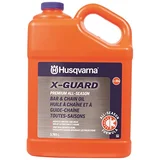
$24.95 on Amazon · 1 gallon (128 fl oz)
This is the oil already sitting on the top pick in the previous version of this guide, and the numbers back that up. A gallon costs $24.95 up front — more than the STP or DEWALT bottles — but because you’re buying 128 fl oz instead of 16 or 32, the real cost per tank works out to less than half of every other oil in this roundup. Husqvarna’s own SDS lists a 150 mm²/s viscosity at 40°C, in the same range as the Stihl Platinum and Oregon Premium mineral oils, and the ecological section reports it is not considered harmful to aquatic organisms, which is not something every mineral oil here can say.
- Mineral base: hydrotreated petroleum distillates (SDS)
- Viscosity: 150 mm²/s @ 40°C (SDS)
- Flash point: 240°C / 464°F (SDS)
- Cost per 8.8 oz refill: $1.72
Pros:
- Cheapest oil in this roundup on a real cost-per-refill basis
- SDS states it is not considered harmful to aquatic organisms
- Sold at nearly every hardware store and dealer, so restocking is never a problem
Cons:
- No manufacturer-published minimum cold-weather temperature — Husqvarna sells a separate Low Temp formula for real winter use, which tells you where this one’s limit is
- Container is only sold in a 1-gallon size on Amazon, so there is no small-bottle option if you only need a few ounces
Who it is for: Anyone who wants one oil to cover spring through fall on any brand of saw, and does not want to think about it further.
2. Oregon Premium Bar & Chain Oil, 1 Gallon — Best Value Chainsaw Bar Oil
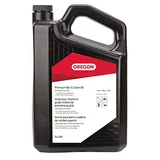
$32.35 on Amazon · 1 gallon (128 fl oz)
Oregon built its name on saw chain and guide bars before it sold oil to go with them, and this is the closest thing to a “made for every saw” bulk option in this lineup. At $32.35 a gallon it lands in the middle of the price range, and its $2.22 cost per 8.8 oz refill is genuinely competitive. The one thing we would not have known without reading its SDS: Oregon classifies this specific formula as GHS Aquatic Toxicity Category 1, its most severe tier, with a printed hazard statement that it is very toxic to aquatic life with long-lasting effects. That is not unusual for a mineral oil, but it is a stronger warning than two of the other mineral oils in this exact roundup carry on their own SDS.
- Mineral base: hydrotreated heavy paraffinic petroleum distillate, 80–90% (SDS)
- Viscosity: ≈160 cSt @ 40°C, approximate (SDS)
- Flash point: >93°C / 199°F (SDS)
- Cost per 8.8 oz refill: $2.22
Pros:
- Manufacturer states it resists resin, sap and gum buildup on the bar
- Mid-pack cost per refill for a full-size gallon jug
- Made in the USA per the label
Cons:
- Its own SDS classifies it GHS “Aquatic Toxicity (Chronic), Category 1” with the hazard statement “very toxic to aquatic life with long-lasting effects” — a stronger ecological warning than either the Husqvarna X-Guard or Stihl Platinum SDS carries for a comparable mineral oil
- Not a biodegradable formula despite the strong “premium” positioning
Who it is for: High-volume cutters buying in bulk who are not working near a stream, pond, or wetland.
3. Stihl Platinum Bar and Chain Lubricant, 1 Gallon — Best for High-Speed, Professional Cutting
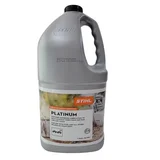
$41.99 on Amazon · 1 gallon (128 fl oz)
Stihl’s own SDS is the most detailed document we pulled for this entire roundup, and it is the only one that reports viscosity at both 40°C and 100°C — meaning we can actually see the oil thin out as it approaches real operating temperature, from roughly 121–174 cSt down to about 10–12 cSt. That kind of published range, plus a flash point over 335°F, is why Stihl markets this specifically for high-speed, heavy-duty cutting rather than as a general all-season oil. It is the most expensive gallon in this roundup at $41.99, though its $2.89 cost per refill still lands mid-pack once you normalize for container size.
- Mineral base: petroleum mineral oil, 95–100% (SDS)
- Viscosity: 121.2–173.5 cSt @ 40°C, 9.95–12.4 cSt @ 100°C (SDS)
- Flash point: >168.3°C / 335°F (SDS)
- Cost per 8.8 oz refill: $2.89
Pros:
- Only oil in this roundup with both 40°C and 100°C viscosity published, so you can actually see how much it thins out at running temperature
- SDS states it is not expected to be harmful to aquatic organisms
- Concentrated tackiness additive rated by Stihl for high-speed, heavy-duty cutting
Cons:
- Highest sticker price per gallon of any oil here ($41.99), though not the highest per-refill cost
- No biodegradable option in the Platinum line
Who it is for: Full-time or professional cutters running saws at high RPM for long stretches, where oil needs to stay in the groove instead of flinging off the chain.
4. Husqvarna Low Temp Bar and Chain Oil, 1 Gallon — Best Chainsaw Bar Oil for Cold Weather
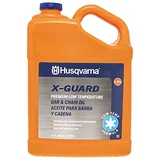
$28.95 on Amazon · 1 gallon (128 fl oz)
This is Husqvarna’s dedicated cold-weather formula, sold separately from the X-Guard All Season oil in our #1 spot, and the existence of a separate SKU is itself useful information: it tells you the all-season formula has a real limit in winter. Husqvarna’s own product page rates this one down to -15°F / -26°C, and the label explicitly warns it is not suitable for use as engine oil, which heads off a mix-up that happens more often than manufacturers would like. We could not locate an independent SDS viscosity figure for this exact SKU, so that cell in the table is marked not published rather than carried over from the All Season formula’s number.
- Mineral base (label; SDS viscosity not published for this SKU)
- Rated to -15°F / -26°C (Husqvarna product page)
- Not for internal engine use — stated on label
- Cost per 8.8 oz refill: $1.99
Pros:
- Only oil in this roundup with a manufacturer-published minimum operating temperature
- Second-cheapest oil in the lineup per tank refill
- “Not for internal engine use” printed directly on the label, which heads off a common mixing mistake
Cons:
- Husqvarna has not published an independent cSt viscosity figure for this specific SKU, so that cell is marked not published rather than guessed
- Overkill, and likely too thin, for summer-only cutting in warm climates
Who it is for: Anyone running a saw below freezing — winter firewood processing, storm cleanup, or cold-climate property work.
5. DEWALT Biodegradable Bar & Chain Oil, 16 oz — Best Biodegradable Chainsaw Bar Oil
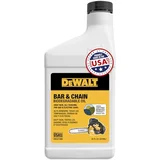
$9.98 on Amazon · 16 fl oz
DEWALT’s oil is the only genuinely plant-based option in this roundup — a soy-based formula carrying a USDA Certified Biobased Product designation, which is a real third-party certification rather than a marketing label the company applied to itself. The manufacturer rates it across an unusually wide -15°F to 500°F range and claims up to a 300% higher viscosity index than conventional petroleum oils, though that is DEWALT’s own comparative figure and we could not locate an SDS with an absolute cSt number to check it against. The real trade-off is cost: at $9.98 for 16 oz, this is the cheapest bottle to buy of any oil except STP, but because the container is so small it works out to $5.49 per 8.8 oz refill — the most expensive oil in this entire roundup to actually run.
- Soy-based, biodegradable formula — USDA Certified Biobased Product
- Manufacturer-rated -15°F to 500°F
- Manufacturer claims “up to 300% higher viscosity index” than conventional petroleum oils (their comparative claim, no absolute cSt figure published)
- Cost per 8.8 oz refill: $5.49
Pros:
- Only genuinely plant-based, USDA-certified biobased oil in this roundup
- Rated across an unusually wide temperature band by the manufacturer
- Non-toxic formula makes sense around gardens, livestock, or waterways
Cons:
- By far the most expensive oil here to actually run — $5.49 per 8.8 oz refill, more than 3x the Husqvarna X-Guard, because the small 16 oz bottle carries a fixed cost that does not scale down
- No independent SDS viscosity number located this session to check the manufacturer’s comparative claim against
Who it is for: Owners cutting near water, gardens, or livestock where a mineral-oil spill is a real problem, who are fine paying more per tank for it.
6. EGO Power+ AOL3200 Premium Chain Saw Bar and Chain Oil, 32 fl oz — Best for Battery and Electric Chainsaws
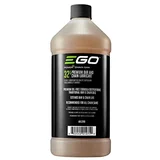
$10.99 on Amazon · 32 fl oz
EGO sells this specifically to go with its own battery chainsaw line, and the temperature rating backs up the cold-weather marketing: -18°F and above per EGO’s own listing, a few degrees colder than even the dedicated Husqvarna Low Temp formula in this roundup. EGO describes it on the label as a “premium oil-free formula,” which reads like a synthetic or ester-based lubricant rather than a mineral oil, but we could not locate a published SDS for this exact product to independently confirm the chemistry, so we are reporting that as EGO’s own claim rather than a verified fact. At $3.02 per 8.8 oz refill it sits comfortably in the middle of the pack on cost.
- Marketed by EGO as a “premium oil-free formula” (manufacturer’s own term; no SDS located to independently confirm the exact chemistry)
- Rated for temperatures of -18°F and above (manufacturer listing)
- High-tack formula marketed to reduce kickback
- Cost per 8.8 oz refill: $3.02
Pros:
- Coldest manufacturer-published minimum temperature of any oil in this roundup, -18°F, a few degrees colder than the Husqvarna Low Temp’s -15°F
- Bottle size matches the smaller oil reservoirs typical of battery and electric saws
- Mid-pack cost per refill
Cons:
- “Oil-free formula” is EGO’s own marketing language; without an SDS we cannot independently confirm whether this is a full synthetic or an ester-based blend
- No independent viscosity number published
Who it is for: Owners of EGO or other battery/electric chainsaws who want the brand-matched oil and do not want to second-guess compatibility.
7. STP Premium Chainsaw Bar Oil, 32 fl oz — Best Budget Chainsaw Bar Oil
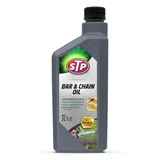
$13.69 on Amazon · 32 fl oz
STP is best known as a motor-oil and fuel-additive brand, and this bar oil borrows the same ZDDP anti-wear chemistry the company uses in its engine products. It has the lowest sticker price of any oil in this roundup at $13.69, which is exactly why it earns the budget label here — but it is genuinely the second most expensive oil in the entire lineup on a cost-per-refill basis, at $3.76 per 8.8 oz tank, beaten only by the much pricier DEWALT biodegradable oil. Neither viscosity nor a minimum-use temperature is published for this product, so both cells in our comparison table are marked not published rather than guessed.
- Mineral base with ZDDP anti-wear additive (label)
- No independent viscosity or minimum-temperature figure published
- Cost per 8.8 oz refill: $3.76
Pros:
- Lowest sticker price of any oil in this roundup ($13.69)
- Easy to find at auto parts stores since STP is primarily a motor-oil brand
- ZDDP anti-wear chemistry borrowed from engine oil formulation
Cons:
- The real catch: despite the lowest sticker price, it is the second-most expensive oil here per tank refill ($3.76) — beaten only by DEWALT — because the 32 oz bottle means buying oil more often
- No viscosity or cold-weather rating published to compare against the other six
Who it is for: Someone buying a single bottle to get through one storm-cleanup weekend or a small job, not stocking up for a season.
How We Picked These
We have not physically tested these seven oils side by side in a shop, so we are not going to claim we did. This roundup is built from three sources gathered the same day it was written: each manufacturer’s own Technical Data Sheet or Safety Data Sheet (Husqvarna, Stihl, and Oregon Tool all publish these directly), live pricing and product data pulled from Amazon’s Creators API, and manufacturer product pages for specs no SDS covered, like minimum-use temperature.
One honest gap: Amazon’s own product-data feed returned no star rating or review count for any of these seven ASINs on the day we pulled this data. Rather than copy a number from a competitor’s page or invent one, we left star ratings and review counts out of this article entirely.
Where a manufacturer had not published a spec — most commonly an exact viscosity number outside of Husqvarna, Stihl, and Oregon — the comparison table says not published. We would rather show a gap than guess at a number that could send you toward the wrong oil for your climate.
This page replaces an older version of this guide that listed nine numbered picks but repeated some of the same products two and three times under separate headings, with no comparison table and no sourced specs behind any of the pros and cons. We rebuilt it from seven distinct products chosen to actually span the category’s real axes of choice — mineral versus biodegradable base, all-season versus cold-rated, and bulk gallon versus small bottle — rather than listing near-duplicates of the same two or three brands.

What to Consider When Buying Chainsaw Bar Oil
Viscosity and Tackiness
Thicker oil (a higher cSt number) clings to a fast-moving chain better and resists flinging off, which is why high-speed professional oils like Stihl Platinum are formulated with a heavier viscosity and a dedicated tackiness additive. Too thick, though, and the oil won’t flow through a cold oiler pump — which is exactly why cold-weather formulas exist.
Mineral vs. Biodegradable Base
Mineral (petroleum) oils dominate this category because they’re cheap to produce and perform predictably across a wide range of saws. Biodegradable oils, usually soy or canola-based, break down in soil and water and are far less of a problem if the oiler drips or a bottle spills — but as our DEWALT pick shows, they typically cost more per tank because they’re sold in smaller bottles at a higher price per ounce.
Cold-Weather Flow
Every oil thickens as the temperature drops, and below a certain point a summer-weight oil simply won’t reach the bar fast enough, starving the chain — the same slow-flow problem covered in our guide to why a chainsaw leaks or under-delivers bar oil. If you cut through winter, a published cold-rated formula like the Husqvarna Low Temp (-15°F) or EGO Power+ (-18°F) is worth the switch rather than running a warm-weather oil year-round.
Container Size vs. Real Cost Per Tank
A gallon jug always looks more expensive at checkout than a 16 or 32 oz bottle, but per ounce it is almost always cheaper. Our dataset above found a more than 3x gap in real cost-per-refill between the cheapest and most expensive oils here, and the cheapest bottle on the shelf (STP) was not the cheapest oil to actually run. For a narrower look at all-purpose oils rather than dedicated bar-and-chain formulas, see our companion roundup on the best chainsaw oil overall.
Aquatic Toxicity and Where You’re Cutting
If you’re cutting near a stream, pond, ditch, or wetland, check the manufacturer’s own ecological classification before you buy. We found a real difference in this roundup: Oregon Premium’s own SDS carries a GHS Aquatic Toxicity Category 1 hazard statement that the Husqvarna X-Guard and Stihl Platinum SDS documents do not carry for otherwise similar mineral oils.
Compatibility With Your Chainsaw’s Oiler
Any bar and chain oil sold for chainsaws will run through a standard automatic oiler. The exception is battery and electric saws with smaller reservoirs and different oiler calibration — brand-matched oils like EGO’s are sized and marketed specifically for that segment.
Flash Point and Storage
Flash points on the oils with published SDS data in this roundup ranged from 93°C (199°F) to over 168°C (335°F), and Husqvarna’s X-Guard All Season and Biodegradable formulas both cleared 240°C. All of them are well above anything you’ll encounter in normal use or storage, but it matters if you’re storing bulk quantities near a heat source in a shop, and every SDS we pulled recommends keeping containers sealed and out of direct sunlight regardless.
Buying by the Gallon vs. by the Bottle
Every mineral oil in this roundup is sold in a 1-gallon size, and every gallon in our comparison table beat every 16 or 32 oz bottle on cost per refill — there was no exception. If you own more than one saw, or you cut regularly enough to go through a bottle in a season, buying the gallon size of whichever oil you land on is close to a guaranteed savings, even before you factor in fewer trips to restock.
How to Use Chainsaw Bar Oil
- Check the oil level before every use. Most saws use a translucent reservoir so you can see the level without opening the cap.
- Fill the oil reservoir every time you refuel. A well-tuned saw uses roughly one tank of bar oil for every tank of gas, so topping off both together keeps you from running the chain dry mid-cut.
- Test the oiler before starting a real cut. Hold the saw a few inches above a stump or piece of cardboard and briefly rev the engine — you should see a visible line of oil spray onto the surface. If you don’t, see our guide on how a chainsaw oiler actually works to troubleshoot before you cut.
- Switch formulas seasonally if you cut year-round. Move to a cold-rated oil like the Husqvarna Low Temp or EGO Power+ once temperatures drop toward freezing, and back to a standard all-season oil in warmer months. Our step-by-step on how to oil a chainsaw chain the right way covers the full process.
- Never substitute motor oil or hydraulic oil. Bar oil is formulated to be tacky enough to stay on a moving chain instead of slinging off; motor oil is not, and detergents in used motor oil can damage the oiler seals — see our full breakdown on using motor oil in a chainsaw bar for what actually happens if you try it.
- Dispose of old or leftover oil responsibly. Bring it to a used-oil recycling point rather than pouring it out, even for the biodegradable formulas.
Frequently Asked Questions About Chainsaw Bar Oil
What is chainsaw bar oil for?
Chainsaw bar oil lubricates the chain as it moves around the guide bar, reducing friction and heat between the chain’s drive links and the bar’s groove. Without it, the bar and chain wear out quickly and the saw can bind or overheat mid-cut.
Is chainsaw bar oil the same thing as chain oil?
Yes — “bar oil,” “chain oil,” and “bar and chain oil” all refer to the same product. The bar and the chain share a single lubrication system on virtually every chainsaw, so there is no separate oil for one part versus the other.
Can I use regular motor oil instead of bar and chain oil?
Not reliably. Motor oil is thinner and lacks the tackiness additives that keep bar oil clinging to a fast-moving chain instead of flinging off, and used motor oil can carry detergents that aren’t good for the oiler seals. See our full guide on motor oil in a chainsaw for the details.
Which chainsaw bar oil is best for cold weather?
Of the seven oils in this roundup, the Husqvarna Low Temp (rated to -15°F / -26°C) and the EGO Power+ AOL3200 (rated to -18°F) carry the coldest manufacturer-published minimum temperatures. A standard all-season oil can thicken enough in freezing weather to starve the chain of lubrication.
Is biodegradable chainsaw bar oil worth the extra cost?
It depends on where you’re cutting. If you’re working near water, gardens, or livestock, a certified biobased oil like our DEWALT pick is worth the roughly 3x higher cost per tank refill we found in this roundup. For general yard and firewood work away from sensitive areas, a mineral oil like the Husqvarna X-Guard costs much less to run.
How much bar oil does a chainsaw use per tank of gas?
It varies by saw, but most gas chainsaws are tuned to use roughly one tank of bar oil for every tank of fuel. Husqvarna’s own 450 Rancher, for example, carries an 8.8 fl oz oil reservoir — the figure we used to normalize cost per refill across every oil in this comparison. A smaller homeowner saw like the Stihl MS 170 holds closer to 4.9 fl oz, so its refill costs run roughly half of what we show in the table above.
Are all chainsaw bar and chain oils basically the same?
No. Even limiting this roundup to seven current products, we found a real difference in viscosity range (Stihl Platinum publishes both a 40°C and 100°C figure that no other oil here does), ecological hazard classification (Oregon Premium carries a GHS Aquatic Toxicity Category 1 warning that Husqvarna X-Guard and Stihl Platinum do not), and real cost per tank refill, which varied by more than 3x across the seven oils we compared.
Does chainsaw bar oil go bad?
Mineral bar oils are stable for years in a sealed container — none of the SDS documents we pulled for this roundup listed a shelf-life limit under normal storage. Biodegradable, soy or canola-based oils are more likely to oxidize or thicken over long-term storage than a petroleum oil, so buy biodegradable formulas in a size you’ll use within a season rather than stockpiling them.
Final Thoughts
If you only take one number from this roundup, make it this one: sticker price and real cost are not the same thing. The Husqvarna X-Guard Premium All Season Bar & Chain Oil costs more up front than the budget pick on this list, but at $1.72 per 8.8 oz tank refill it is the cheapest oil here to actually run, and its own SDS reports no aquatic-toxicity classification. Switch to a cold-rated formula once temperatures drop toward freezing, and check the base oil type if you’re cutting anywhere near water. The same principle applies to the saw itself — see our chainsaw price-to-value comparison for which budget saws are a real deal and which just look cheap.
Curious how that oil actually gets from the tank to the chain? See our guide to how a chainsaw oiler works.
Sponsored / affiliate links. As an Amazon Associate I earn from qualifying purchases. I may earn additional commission from eligible campaigns.