Why Won’t My Chainsaw Stay Running? (Idle Screw Fix)
A chainsaw that starts and then dies within seconds is almost always a lean fuel mixture at idle, not a failing engine — check the carburetor’s L or LA screw before you replace any part. Skipping straight to a new carburetor or ignition coil wastes money on a problem a screwdriver usually fixes in minutes. This guide covers the fuel, spark plug, carburetor, airflow, and ignition checks in order, plus the H/L/LA idle screw adjustment most troubleshooting guides skip entirely.
Most Common Reasons a Chainsaw Won’t Stay Running
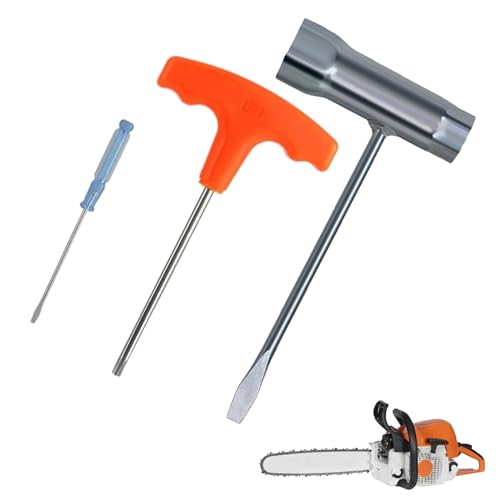
Best Carb Adjustment Tool Pick

Carb Adjustment Screwdriver & Cleaning Kit – $12.66
The pac-man and D-shaped bits in this kit fit the H/L/LA idle screws on most Poulan, Husqvarna, Echo, and Craftsman saws — the exact screws covered in the idle-adjustment section below.
- Best for: adjusting the idle and high-speed screws without a factory tool
- Why we picked it: covers nearly every common carb-screw shape in one kit
- Main drawback: generic bits fit most saws but not every proprietary Stihl shape
Compare more chainsaw tune-up parts
 Option 1 STIHL Air/Fuel Filter & Spark Plug Kit – $10.99
|
 Option 2 Stens Universal Spark Plug – $6.87
|
 Option 3 14-Pc Carb & Ignition Tool Kit – $20.99
|
As an Amazon Associate we earn from qualifying purchases.
Most stalling problems trace back to one of three systems: fuel delivery, air intake, or ignition. Work through them in that order before assuming you need a new part — and browse our full chainsaw troubleshooting hub if this guide doesn’t match your exact symptom. Note that everything below applies to gas-powered saws; if your chainsaw runs on a battery instead, the fuel and carburetor sections don’t apply — see our battery chainsaw troubleshooting guide instead, and if you’re still deciding between the two, our gas vs. cordless chainsaw comparison breaks down why gas saws are more prone to this specific problem.
Fuel System Problems
Fuel problems are the single most common cause of a chainsaw that starts and then stalls — either the engine isn’t getting enough fuel, or it’s getting fuel that’s stale, contaminated, or mixed wrong. Watch for these symptoms:
- The chainsaw starts, runs for a few seconds, then stops
- The engine runs but the chain barely cuts or bogs down under load
- The chainsaw idles roughly or surges up and down on its own
If any of these match, check the fuel filter first and replace it if it looks dirty or has hardened. Check the fuel lines for cracks or kinks, and confirm the carburetor is actually adjusted for your saw (covered in detail further down this page).
Dirty Air Filter or Blocked Air Intake
A clogged air filter starves the engine of the air it needs to burn fuel cleanly, which produces the same symptoms as a fuel problem — starts fine, then stalls or runs unevenly once it’s working under load.
Pull the air filter and hold it up to a light. If you can’t see light through it clearly, clean it in warm soapy water and let it dry completely before reinstalling — a damp filter will cause the same stalling problem all over again. Check the intake screen behind the filter for sawdust packed into the mesh, too.
Fuel Mix and Ethanol Problems
If the fuel system checks out mechanically, the fuel itself is the next place to look — the wrong ratio or old ethanol-blend gas causes exactly the same stall-after-starting symptom as a dirty carburetor.
Getting the Fuel-to-Oil Ratio Right
Most gas chainsaws run 2-stroke engines, which means the oil has to be mixed directly into the gasoline — there’s no separate oil reservoir like a car engine has. Too much oil in the mix fouls the spark plug and chokes the engine with smoke; too little oil starves the internal parts of lubrication and can cause the engine to seize. The correct ratio varies by brand and model — for example, Poulan saws typically call for a different ratio than Stihl or Husqvarna, so check your specific model’s fuel ratio rather than guessing from a saw you used to own.
Use a marked mixing bottle rather than eyeballing it — a $6 bottle with clear ratio markings removes the single biggest source of mixing error.
Signs of Bad or Stale Fuel
Even a correctly mixed fuel goes bad on the shelf. Watch for these three signs:
- Contamination: visible particles, debris, or water sitting in the fuel means it needs to be drained and replaced, not just topped off.
- Stale fuel: gas that’s sat too long loses its combustibility, causing hard starts and stalling under load even with everything else working correctly.
- Ethanol separation: ethanol-blend fuel absorbs moisture from the air over time; once it separates, the water-heavy layer gets pulled into the carburetor first and causes rough running or a stall right after starting.
📊 Both STIHL and Husqvarna tell owners not to store ethanol-blend (E10) fuel longer than 30 days — beyond that window the ethanol starts pulling in enough moisture to affect carburetor performance. If a saw has sat over a month with fuel in the tank, drain it and start with a fresh mix before troubleshooting anything else. Source: STIHL USA Fuel FAQ
Spark Plug Problems
A worn or fouled spark plug can’t generate a strong enough spark to keep the engine firing once it’s under load, even if it fires fine at start-up. It’s one of the cheapest parts on the saw to check and replace.
How to Tell the Spark Plug Is Bad
Look for these signs before you replace anything else on the saw:
- Difficulty starting the chainsaw
- Intermittent or visibly weak spark when tested
- Inconsistent engine performance under load
- Increased fuel consumption for the same amount of cutting
- Black, sooty deposits coating the electrode
These same symptoms can point to other issues too, but a fouled or worn spark plug is cheap enough that it’s worth ruling out first.
Replacing the Spark Plug
- Make sure the chainsaw is off and the engine has fully cooled.
- Disconnect the spark plug wire from the top of the plug.
- Loosen and remove the old plug counterclockwise with a spark plug wrench or socket.
- Check that the replacement plug is the correct type and gap for your saw’s make and model — this is printed in the owner’s manual, not universal across brands.
- Thread the new plug in by hand first so you don’t cross-thread it.
- Tighten with the wrench until snug — don’t overtighten.
- Reconnect the spark plug wire.
- Start the saw and let it run under light load to confirm the stalling is gone.
Carburetor Clogging and Idle Screw Adjustment
A dirty or poorly adjusted carburetor is the most common reason a chainsaw won’t stay running, because it directly controls the fuel-to-air ratio the engine needs at idle and under load.
How a Dirty Carburetor Causes Stalling
Varnish and debris inside the carburetor block the small fuel passages and jets, which starves the engine of fuel at exactly the moment it needs a steady supply — usually right as you let off the throttle back to idle. That’s what produces the classic pattern: the saw revs fine, then dies the instant you ease off the trigger.
Cleaning the Carburetor
- Remove the air filter and inspect it for dirt or debris.
- Locate the carburetor and carefully disassemble it, noting the position of each part as you go.
- Spray carburetor cleaner through the jets and passages until they run clear.
- Reassemble the carburetor and reinstall the air filter before testing the saw.
Adjusting the H, L, and LA Idle Screws (Without Guessing)
Most gas chainsaw carburetors have up to three adjustment screws, and mixing up what each one does is how people make a stalling problem worse instead of better:
- L (Low-speed) screw: controls the fuel-to-air mixture at idle and just above idle — this is usually the one causing a “dies when I let off the trigger” stall.
- H (High-speed) screw: controls the mixture when the saw is at full throttle and under cutting load — if the saw dies or bogs down when you give it gas, this is usually the culprit.
- LA (Idle speed) screw: a simple stop screw that sets how fast the engine idles; it doesn’t change the fuel mixture at all, just the idle RPM.
Start from a baseline of both the H and L screws lightly seated (turned in until they just touch, never forced) and then backed out 1 to 1.5 turns — that’s the safe starting point most small-engine techs use before fine-tuning by ear. From there, make adjustments in no more than a quarter-turn at a time: turning a screw clockwise leans the mixture, counter-clockwise richens it. If the saw stalls when you release the throttle, richen the L screw slightly; if it bogs or dies under a full cut, richen the H screw slightly. Never crank a screw more than a quarter turn between test runs — overshooting either direction can flood the engine or run it dangerously lean.
Airflow Problems
Beyond the air filter itself, restricted airflow anywhere between the intake and the cylinder produces the same stalling symptoms as a fuel problem.
Checking for Air Filter Obstructions
- Locate and remove the air filter cover.
- Inspect the filter for visible dirt, dust, or sawdust buildup.
- Tap it gently on a hard surface to knock loose particles free.
- If it’s still dirty, wash it in warm soapy water and let it dry completely.
- Reinstall the filter and secure the cover tightly.
What Happens If You Ignore It
A consistently dirty air filter doesn’t just cause stalling — it compounds into other problems over time:
- Harder starting every time
- Reduced power under load
- More frequent stalling
- Higher fuel consumption for the same work
- Excess smoke from a too-rich mixture compensating for restricted air
- Faster wear on internal engine components
Exhaust and Muffler Blockages
A blocked exhaust path traps spent gases in the cylinder, which disrupts the fresh fuel-air charge coming in and can stall the engine or make it run rough.
The Muffler’s Role
The muffler quiets the engine and directs exhaust away from the operator, filtering out larger particles and cooling the gases before they’re released. When carbon buildup clogs it, the engine can’t expel exhaust efficiently, which leads to stalling and rough running.
Clearing a Blocked Exhaust
Inspect the muffler for visible blockages or carbon buildup, then remove it and clean it with a brush and compressed air. Check the exhaust port and spark arrestor screen for obstructions while you’re in there, then reassemble everything and test the saw for smoother running.
Ignition System Problems
If fuel, air, and spark plug all check out, the ignition coil or module itself may be failing. The ignition coil generates the high voltage that fires the spark plug, and the module controls the timing of that spark.
Coil and Ignition Module Failures
A failing coil or module tends to cause intermittent stalling rather than a total no-start — the saw runs fine when cold, then loses spark and dies once the coil heats up. That heat-related pattern is the biggest tell that points to the ignition system instead of fuel or carburetor issues.
Testing and Replacing Ignition Components
Use a multimeter to check the ignition coil for continuity and proper resistance against the manufacturer’s spec — a reading well outside that range means the coil needs to be replaced. Ignition coils aren’t user-serviceable beyond swapping the whole unit, so if the meter confirms a bad coil, replacement is the only fix.
Maintenance Tips for Prolonged Chainsaw Life
Regular Cleaning Regimens
Brush debris and dirt off the chain and bar after every use, and check the air filter every few tanks of fuel rather than waiting for a problem to show up. This is also a good time to check your bar oil level and reservoir — a dry bar strains the same engine that’s already working to stay running.
Proper Storage Practices
Let the saw cool completely before storing it, keep it in a dry place to prevent rust and corrosion, and use a case or cover to keep dust and moisture out between uses.
“The number one mistake I see in the shop is someone chasing a carburetor rebuild or a new coil when the real problem is a spark plug that’s been in there for three seasons, or gas that’s been sitting in the tank since last fall. Start with the cheap parts and the fuel before you touch anything else.”
Frequently Asked Questions
Why Does My Chainsaw Keep Stalling During Use?
Chainsaw stalling can result from fuel issues, air filter blockage, or a worn-out spark plug. Regular maintenance, proper fuel mixture, and clean air filters can help prevent stalling.
How Can I Troubleshoot a Chainsaw That Won’t Start?
Check the spark plug, fuel filter, and air filter for clogs. Ensure proper fuel mixture and try priming the engine. If issues persist, seek professional inspection.
What Are Common Reasons for Chainsaw Engine Flooding?
Chainsaw engine flooding often occurs due to over-priming, carburetor issues, or a faulty spark plug. Allow the saw to sit, then try starting with the throttle open to clear excess fuel.
Why Does My Chainsaw Die When I Give It Gas?
A chainsaw that dies or bogs down when you open the throttle usually has a lean high-speed (H) carburetor screw or a partially clogged high-speed jet. Richen the H screw in quarter-turn increments and retest under load before assuming it’s a bigger mechanical problem.
How Many Turns Should I Adjust a Chainsaw’s Idle Screw?
Start with the H and L screws lightly seated, then backed out 1 to 1.5 turns as a baseline. Make further adjustments in quarter-turn increments only, testing between each one — larger adjustments risk flooding the engine or running it too lean to stay running.
Conclusion
Troubleshooting a chainsaw that won’t stay running works best in order: fuel, spark plug, carburetor and idle screws, airflow, exhaust, then ignition. Most stalls trace back to the first three and get fixed with a spark plug, fresh fuel, or a quarter-turn on the L screw — not a full rebuild. If a saw genuinely needs replacement parts, our breakdown of Chinese chainsaw carburetors, ignition coils, and filters compares real options by cost and claimed fit.
Sponsored / affiliate links. As an Amazon Associate I earn from qualifying purchases. I may earn additional commission from eligible campaigns.