Pros and Cons of Cedar Hot Tubs Honest Review
Choosing a hot tub can seem like a big decision, and looking into the Pros and Cons of Cedar Hot Tubs: Honest Review is a smart place to start. Sometimes, all the details can make it hard for folks who are new to this. But don’t worry, we’ll break it down step-by-step to make it super clear.
We’ll look at what makes cedar tubs great and where they might fall short so you can decide if one is right for you. Let’s get started on understanding these beautiful tubs.
Exploring Cedar Hot Tubs Pros and Cons
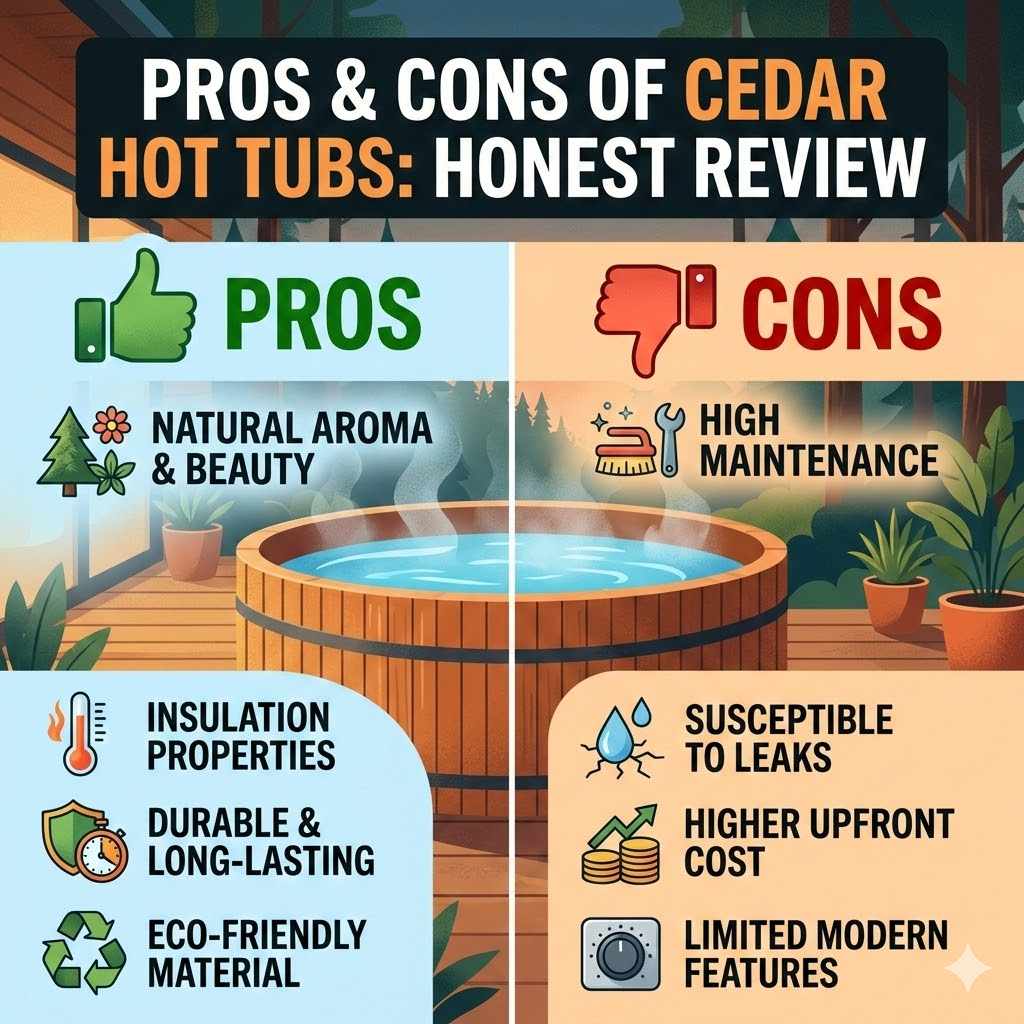
This section will give you a clear picture of why cedar hot tubs are a popular choice and what you need to think about before buying. We’ll cover the good stuff, like how they look and feel, and also the not-so-good aspects, like how much care they need. Understanding these points will help you make an informed choice about bringing a cedar hot tub into your life.
It’s all about seeing the whole story so you can enjoy your hot tub experience to the fullest.
The Natural Beauty and Feel of Cedar
Cedar wood is famous for its stunning looks. It has a warm, natural color that can make any backyard look more inviting. The smell of cedar is also really pleasant and adds to the relaxing spa experience.
It feels smooth and natural to the touch, unlike the hard materials some other hot tubs use. This makes sitting in a cedar tub feel extra special and connected to nature. Many people choose cedar just for its amazing aesthetic appeal and the sense of calm it brings.
- Aesthetic Appeal
Cedar hot tubs are often seen as very beautiful. Their natural wood grain and warm color blend well with outdoor settings, from gardens to patios. This look can really enhance your outdoor living space, making it a more attractive place to relax and entertain.
Unlike acrylic or plastic tubs, cedar tubs offer a rustic charm that many find more appealing and less industrial. The visual warmth of the wood itself contributes to a feeling of tranquility before you even step into the water.
- Natural Aroma
The distinct, pleasant aroma of cedarwood is a significant draw for many hot tub owners. This natural scent is released when the wood is heated by the water, creating an aromatherapy-like experience. It’s a calming and refreshing smell that enhances the overall relaxation and therapeutic benefits of using a hot tub.
This sensory element can elevate your soak from just a warm bath to a full sensory retreat, making your downtime more restorative.
- Smooth Touch
The surface of a well-finished cedar hot tub is naturally smooth and inviting. This tactile quality makes spending time in the tub a very pleasant experience. The wood feels warm and organic under your hands and feet, unlike the sometimes slick or cold feel of synthetic materials.
This natural texture can contribute to a feeling of comfort and groundedness, making your hot tub a sanctuary of natural comfort and peace.
Durability and Longevity
Cedar is a strong wood, and when it’s taken care of, a cedar hot tub can last a very long time. It’s naturally resistant to bugs and rot, which is great for something that’s always around water. This means you won’t have to worry as much about damage from pests or the elements.
The wood can also handle temperature changes well. With the right maintenance, your cedar tub can be a source of relaxation for many years.
- Natural Resistance to Pests and Rot
Cedarwood possesses natural oils that make it highly resistant to rot, decay, and insect infestation. This is a major advantage for outdoor structures like hot tubs, which are constantly exposed to moisture and potential pests. Unlike some other woods, cedar doesn’t easily succumb to the conditions that cause material breakdown.
This inherent durability means a cedar hot tub is less likely to suffer damage from termites, carpenter ants, or fungal growth, contributing to its long lifespan and reducing repair needs.
- Thermal Properties
Cedar is a good insulator. This means it helps to keep the water in your hot tub warm. It can reduce heat loss to the outside air, so your heater might not have to work as hard.
This can save you energy and money on your electricity bills. The wood’s natural insulation properties also contribute to a more stable water temperature, making your soaking experience more consistent and enjoyable without sudden drops in warmth.
- Structural Integrity
When properly constructed and maintained, cedar hot tubs can be very sturdy. The wood itself is strong, and traditional joinery methods, if used, can create a robust structure. This means the tub can hold water safely and withstand the stresses of use.
A well-built cedar tub feels solid and reliable, giving you peace of mind that it will serve you well for many years, supporting both the water and its occupants securely.

The Flip Side Cedar Hot Tub Considerations
While cedar hot tubs offer many great benefits, there are also some downsides to consider. These are important points to understand so you know what you’re getting into. It’s not just about how pretty they are; it’s also about the work they might need.
We’ll look at the costs, the upkeep, and how cedar reacts to constant water exposure. Knowing these aspects helps you make a well-rounded decision.
Maintenance Requirements
Cedar tubs need regular care to stay looking good and last long. This means cleaning them often and treating the wood. You might need to reapply sealants or stains every so often to protect the wood from sun and water damage.
If you don’t keep up with the maintenance, the wood can start to fade, crack, or even get mold. It’s a commitment to keep it in top shape, so be ready for that.
- Regular Cleaning Schedule
Cedar hot tubs require a consistent cleaning routine to prevent buildup of algae, soap scum, and other debris. This involves draining and cleaning the tub itself, as well as cleaning the water filter regularly. Skipping these cleanings can lead to water quality issues, and a dirty tub can also encourage mold and mildew growth on the wood.
A proactive cleaning approach is key to preserving both the water and the tub’s structure.
- Wood Treatment and Sealing
The exterior wood of a cedar hot tub needs protection from the elements. This usually involves applying a sealant or stain at least once a year, or sometimes more often depending on your climate and the product used. These treatments help prevent the wood from drying out, cracking, fading, and being damaged by UV rays from the sun.
Without this protection, the beautiful cedar color will gray and the wood’s integrity could be compromised over time.
- Potential for Cracking and Fading
Despite its natural resilience, cedar wood can still be affected by prolonged exposure to sunlight and water. Over time, especially if not properly maintained, the wood can begin to fade to a silvery-gray color. It can also develop small cracks, known as checks, as it expands and contracts with changes in moisture.
While these are often just cosmetic, significant cracking could potentially compromise the tub’s structure or lead to leaks if not addressed.
Cost Considerations
Cedar hot tubs can be more expensive upfront than tubs made from synthetic materials. The cost of the wood itself, plus the craftsmanship involved in building a solid wood tub, adds to the price. You also need to factor in the cost of regular maintenance products, like sealants and cleaners, which will be an ongoing expense.
While they can last a long time, the initial investment is something to consider carefully.
- Initial Purchase Price
The upfront cost of a cedar hot tub is often higher than comparable acrylic or plastic models. This is due to the cost of high-quality cedar lumber, the skilled labor required for its construction, and the intricate joinery that often goes into these tubs. Cedar tubs are seen as a premium product, and their price reflects the natural materials and artisanal approach to their creation.
This higher initial investment is a significant factor for many buyers.
- Ongoing Maintenance Costs
Beyond the purchase price, expect to spend money on regular maintenance supplies. This includes specialized wood sealants, cleaners, and possibly UV protectants to keep the cedar looking its best and to prevent damage. The frequency of these treatments, often annual or even semi-annual, means these costs add up over the lifespan of the tub.
It’s important to budget for these recurring expenses when considering a cedar hot tub.
Water Management and Wood Interaction
Keeping the water clean and balanced in a cedar hot tub is crucial. The chemicals you use to sanitize the water need to be managed carefully. Some strong chemicals can affect the wood over time, potentially causing discoloration or weakening it.
It’s important to use products that are safe for both your skin and the wood. This careful balance ensures your hot tub stays hygienic and your cedar remains in good condition.
- Chemical Balance Importance
Maintaining the correct pH and sanitizer levels in your hot tub water is essential for both bather health and the longevity of the cedar. If the water is too acidic or alkaline, it can damage the wood, causing it to break down faster or become discolored. Similarly, improper sanitizer levels can lead to the growth of mold and bacteria, which can affect the water quality and the wood itself.
Regular water testing and adjustments are a must.
- Sanitizer Compatibility
Certain types of sanitizers are better suited for cedar hot tubs than others. For example, high levels of chlorine can sometimes be harsh on wood, leading to drying and cracking. Many owners opt for bromine, which is generally considered gentler on wood and less likely to cause fading.
Ozone generators can also be a good option as they reduce the need for chemical sanitizers. Choosing compatible sanitizers is key to protecting your investment.
- Wood Swelling and Shrinking
Cedar wood, like all natural wood, will expand when it absorbs water and contract as it dries. This natural process is inherent to cedar hot tubs and is part of what makes them watertight. However, extreme or rapid changes in moisture levels can sometimes lead to minor issues like small leaks or checks in the wood.
Proper soaking and maintenance help to manage this natural behavior, ensuring the tub remains structurally sound and functional.
Comparing Cedar to Other Hot Tub Materials
When you’re looking at hot tubs, you’ll see different materials. Comparing cedar to acrylic and even some metal options helps show where cedar shines and where it might not. Each material has its own set of pros and cons, and knowing them will help you pick the best fit for your needs.
We’ll look at how they stack up in terms of looks, care, and how long they last.
Cedar vs. Acrylic Hot Tubs
Acrylic hot tubs are made from a smooth, molded shell, often with jets built in. They are very easy to clean and typically require less frequent deep cleaning than cedar tubs. Acrylic is non-porous, which helps resist bacteria.
However, acrylic tubs can sometimes look less natural and may be more prone to scratches or chips if not treated carefully. Their look is often described as more modern and less rustic than cedar.
| Feature | Cedar Hot Tubs | Acrylic Hot Tubs |
|---|---|---|
| Aesthetics | Natural, rustic, warm wood | Smooth, modern, various colors |
| Maintenance | Requires regular wood treatment, sealing, careful water balance | Easy to clean, non-porous surface, less frequent deep cleaning |
| Durability | Naturally resistant to pests/rot, can last long with care | Durable shell, resistant to cracks, can be prone to scratches |
| Cost | Higher initial cost, ongoing maintenance costs | Varies, generally moderate to high initial cost, lower ongoing |
| Feel | Warm, natural, organic | Smooth, sometimes slick, can feel less natural |
One real-life example of choosing between these materials could be a homeowner who values a natural, spa-like aesthetic and is willing to put in the effort for maintenance. They might choose a cedar tub for its beauty and the calming ambiance it creates. On the other hand, a busy family looking for a low-maintenance, easy-to-clean option that can withstand heavy use without constant attention might lean towards an acrylic model.
The decision often comes down to personal priorities regarding appearance versus convenience.
Cedar vs. Metal or Other Wood Hot Tubs
Other wood hot tubs might use different types of wood, each with its own characteristics. Some woods are harder and more resistant to decay but might be more expensive or harder to work with. Metal hot tubs, like stainless steel or copper, offer a very modern, industrial look and are extremely durable, but they can be very costly and don’t offer the same warm, natural feel as cedar.
They also might not insulate as well as wood, leading to higher energy costs.
- Type of Wood
While cedar is popular for its natural properties, other woods like redwood or cypress are also used for hot tubs. Redwood is known for its beauty and excellent resistance to decay and insects, often considered even more durable than cedar but usually at a higher price point. Cypress also offers good durability and a lovely aesthetic.
The choice of wood impacts not just the look but also the longevity and maintenance needs of the hot tub.
- Metal Hot Tubs
Metal hot tubs, such as those made from stainless steel or copper, present a stark contrast to wood. They are exceptionally durable and can last for decades with minimal upkeep, often being more resistant to damage from chemicals or the elements than wood. However, their appearance is very different – modern, industrial, and sometimes perceived as cold.
They also tend to be more expensive upfront than cedar tubs and can be less insulating, leading to higher heating costs if not well-designed.
Installation and Placement of Your Cedar Hot Tub
Setting up your cedar hot tub correctly is key to its performance and longevity. Where you put it and how it’s installed can make a big difference. We’ll cover the best spots to place your tub and what kind of base it needs.
Getting this part right means your tub will be safe, stable, and enjoyable for years to come. It’s an important step before you can even start to relax.
Choosing the Right Location
Think about where you’ll put your cedar hot tub. It needs a flat, stable surface that can handle a lot of weight when filled with water and people. Consider privacy, as you’ll want to feel relaxed.
Also, think about access to electricity for the heater and pump, and if you want it close to your house for easy access. Wind protection can also help keep the water warmer.
- Weight Bearing Surface
A hot tub filled with water and people is extremely heavy. It’s crucial to place it on a surface that can support this significant weight. A reinforced concrete pad is often recommended, or at least a very sturdy, level deck designed to handle such loads.
Placing it on soft ground or an inadequate surface can lead to the tub settling unevenly, causing structural damage and potential leaks. Proper site preparation is non-negotiable.
- Privacy and Accessibility
Consider how secluded you want your hot tub experience to be. Placing it away from direct view from neighbors or public areas can enhance relaxation. Also, think about how easily you can get to it from your house, especially in colder weather.
Easy access makes using the tub more convenient, encouraging more frequent use. Proximity to utilities like electricity for the heater and pump is also a practical consideration.
- Protection from Elements
While cedar itself is durable, protecting your tub from harsh sun and wind can prolong its life and maintain water temperature. Placing it under a covered patio, pergola, or in a location with some natural windbreak can help. Excessive direct sunlight can heat the water too much and potentially fade or dry out the wood faster.
Wind can cool the water and the tub’s cover, making the heater work harder.
Foundation and Support
The base your hot tub sits on is vital. It needs to be perfectly level and strong enough to support the entire weight. A common recommendation is a concrete pad, about 4-6 inches thick, reinforced with rebar.
If you’re putting it on a deck, ensure the deck was built to code and can handle the load. An uneven base can cause stress on the tub’s frame and shell, leading to serious problems down the road.
- Concrete Pad
A poured concrete pad is often considered the gold standard for a hot tub foundation. It provides a stable, level, and incredibly strong base that can handle the immense weight of a filled hot tub. The pad should be at least 4 inches thick and ideally reinforced with steel rebar to prevent cracking.
It’s essential that the pad is perfectly level to avoid stressing the hot tub’s structure.
- Deck Support
If placing a hot tub on a wooden deck, it’s critical that the deck is specifically engineered to support the load. Standard decks may not be sufficient. A qualified contractor or structural engineer should assess the deck or design a specialized support system, often involving extra joists, beams, and possibly additional pilings.
Under-deck bracing is crucial to prevent sagging or failure.
Plumbing and Electrical Needs
Your cedar hot tub will need power for its heater, pump, and any lights or features. This work should be done by a qualified electrician to ensure safety and compliance with local codes. The plumbing needs to be set up correctly for filling, draining, and circulating the water efficiently.
Proper installation here prevents issues with water flow and keeps your system running smoothly.
- Professional Electrical Installation
Hot tubs require dedicated electrical circuits with proper grounding to prevent electrical hazards. This is not a DIY job for most people. A licensed electrician will ensure the wiring is safe, meets all local building codes, and is appropriately sized for the hot tub’s power requirements.
Incorrect electrical work can be dangerous and may void your hot tub’s warranty.
- Water Circulation System
The plumbing for a hot tub includes the intake for filling, the outflow for draining, and the circulation system that moves water through the heater and filter. A properly designed circulation system ensures the water is heated efficiently and kept clean by the filter. This system needs to be robust and leak-free to prevent water loss and maintain optimal operating conditions.
Conclusion
Cedar hot tubs offer a beautiful, natural soaking experience. Their aesthetic appeal and pleasant aroma are big draws. However, they do require consistent care, from regular cleaning to wood treatments, and can have a higher upfront cost.
Weighing these pros and cons honestly helps you decide if the charm and feel of cedar are the right fit for your relaxation space and lifestyle.
Frequently Asked Questions
Question: Are cedar hot tubs hard to maintain
Answer: Cedar hot tubs require more maintenance than some other types. You’ll need to clean them regularly, treat the wood with sealants, and carefully manage water chemistry to keep them looking good and lasting long.
Question: How long do cedar hot tubs typically last
Answer: With proper care and maintenance, a cedar hot tub can last for many years, often 15 to 20 years or even longer. The natural resistance of cedar to rot and insects helps with its longevity.
Question: Can cedar hot tubs be left outside year-round
Answer: Yes, cedar hot tubs are designed for outdoor use and can be left outside year-round. However, in very cold climates, you may need to take extra steps to protect them during freezing temperatures or consider winterizing them if not in use.
Question: What is the main advantage of a cedar hot tub
Answer: The main advantage is their natural beauty and the organic, spa-like feel they provide. The aroma of cedar also enhances the relaxation experience.
Question: Are cedar hot tubs more expensive than acrylic ones
Answer: Generally, cedar hot tubs have a higher initial purchase price compared to similar-sized acrylic hot tubs. This is due to the cost of the wood and the craftsmanship involved.
Wrap Up
You’ve learned about the great looks and feel of cedar hot tubs, along with the commitment needed for their upkeep. Cedar tubs offer natural beauty but require regular attention to wood treatment and water balance. Making an informed choice means understanding both the joys and responsibilities.
Now you can decide if a cedar hot tub is the perfect addition to your home.