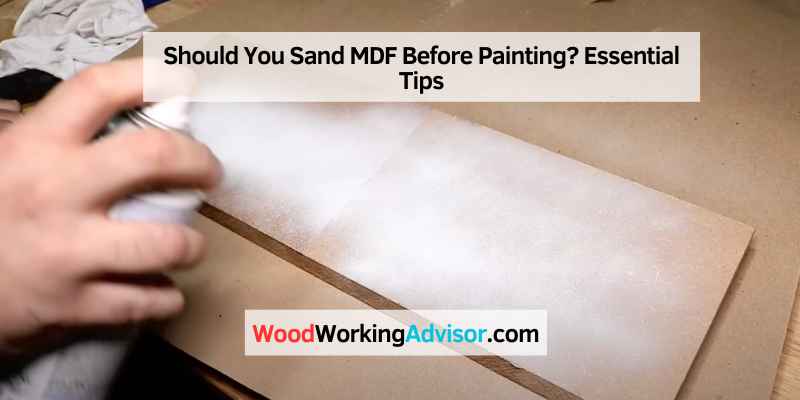
Should You Sand MDF Before Painting? Yes (120–220 Grit)
Yes, MDF needs a light 120-to-220-grit sanding pass before painting — but always dry-sand, since MDF fibers swell permanently the moment they absorb standing water, unlike solid wood. Skip this step, or sand it wet, and paint sits on a slick, resin-glazed surface that peels or shows a fuzzy, raised-fiber texture within months. This guide covers the right grit sequence and sandpaper type, how sanding fits with primer and sealer, and how to fix MDF that’s already been painted without sanding first.
Why MDF Needs Sanding Before Paint
Best MDF Primer-Sealer Pick
Zinsser B-I-N Shellac Primer-Sealer – $26.00
A shellac-base sealer that locks down sanded MDF fibers and raw edges fast — exactly the sealing step this guide covers before the first coat of paint.
- Best for: sealing raw or freshly-sanded MDF edges before priming
- Why we picked it: dries in under an hour and blocks moisture from re-absorbing into sanded fibers
- Main drawback: strong solvent odor, needs good ventilation indoors
Compare more MDF prep options
 Option 1 Zinsser Cover-Stain Primer-Sealer – $7.97
|
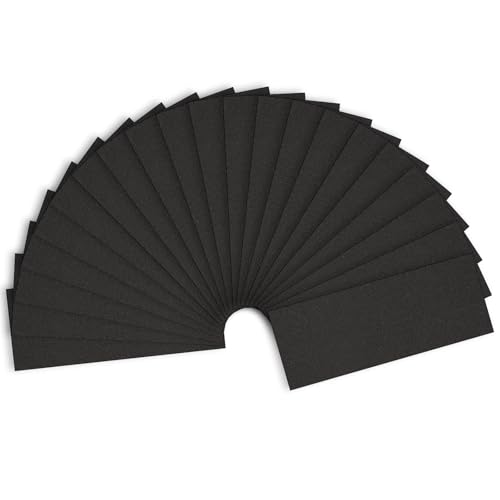
 Option 2 Silicon Carbide Sandpaper Assortment – $14.99
|
 Option 3 3M N95 Respirator, 2-Pack – $8.44
|
As an Amazon Associate we earn from qualifying purchases.
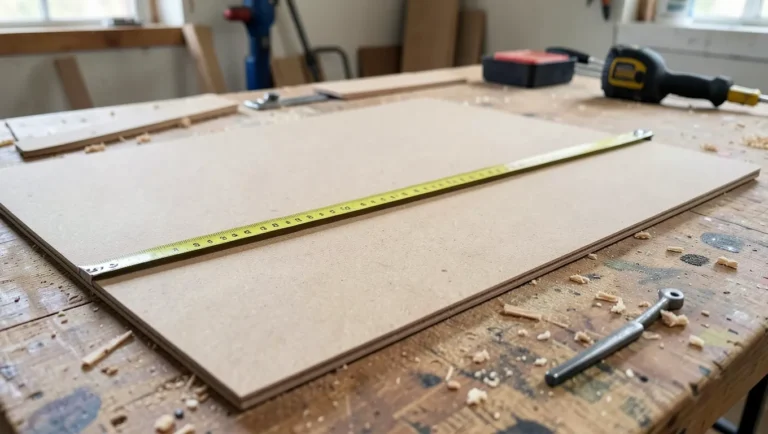
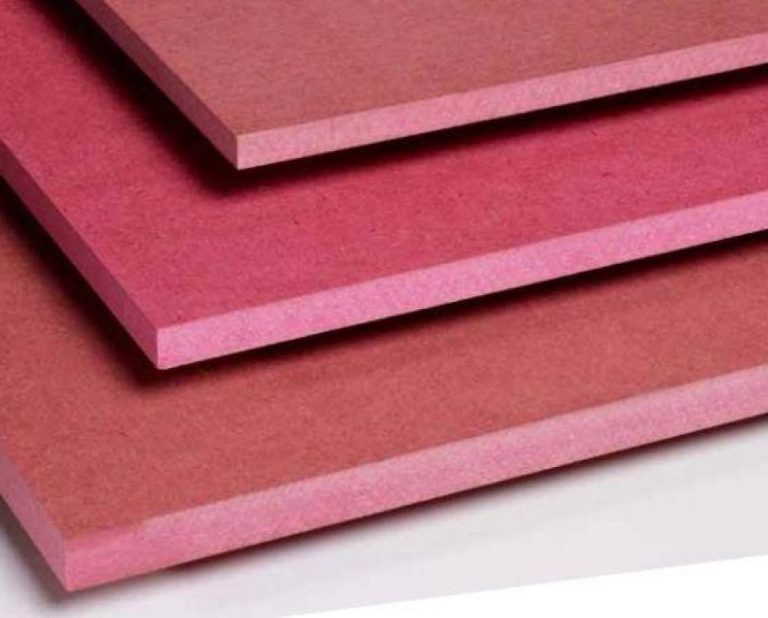
MDF (medium density fiberboard) is a manufactured panel made of compressed wood fibers and resin — it has no wood grain, and its factory faces come out of the press with a mildly resin-glazed surface. That glaze is smooth to the touch but not something paint bonds to well on its own. A light scuff-sanding pass breaks the glaze just enough to give primer something to grip, which is why every real MDF-painting guide starts here, not with the paint itself. See our full MDF hub for how it compares to plywood and particle board for painted builds.
Skipping this step doesn’t always fail outright — a good bonding primer can partially make up for it — but the difference shows up over time: unsanded MDF paint jobs are the ones that chip at corners and peel in sheets a year or two later, while a sanded, primed surface holds for years. See our guide on whether you have to what actually happens if you skip priming for the cases where sanding alone genuinely isn’t enough.
The Right Grit Sequence and Sandpaper Type
Use 120-grit first to knock down the glazed surface and any rough patches, then follow with 220-grit for a smooth, paint-ready finish. Going straight to a fine grit skips the leveling step; going coarser than 120 on the flat face risks gouging the soft core underneath the harder outer layer.
Grit progression matters less than abrasive type on MDF. Silicon carbide sandpaper is the better choice over standard aluminum oxide — MDF’s resin-bound fibers generate fine, sticky dust that loads up (clogs) an abrasive fast, and silicon carbide’s sharper, more friable grain sheds that buildup better and keeps cutting instead of skating over a clogged sheet.
Never wet-sand MDF. Wet-sanding is standard practice on solid wood and many finishes because water lubricates the paper and cuts clogging — but MDF is compressed wood fiber with no grain structure to shed moisture, so any standing water it absorbs makes the fibers swell, and that swelling does not reverse once it happens. Sand dry, vacuum or brush off the dust, then wipe with a tack cloth.
📊 MDF’s dimensional movement is tightly capped by spec — ANSI A208.2-2016 (Grade 155-F11) limits linear expansion to under 0.3% across a 50%-to-90% relative-humidity swing. That standard covers normal humidity movement, not direct water contact from wet-sanding, which is why sanding dust and water don’t mix on this material — Source: ANSI A208.2-2016, Composite Panel Association (standard document not reliably link-accessible; cited by standard number)
Step-by-Step: Sanding MDF Before Painting
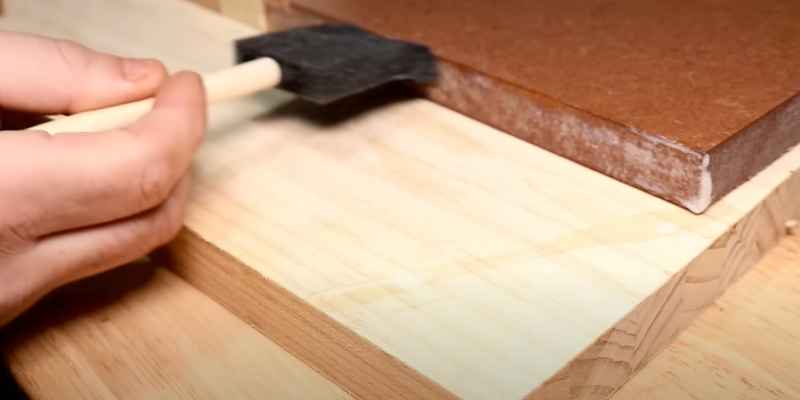
- Fill and seal cut edges: MDF edges are the most porous part of the board — fill any dents or screw holes with wood filler, then seal raw edges with a sanding sealer or primer before the first sanding pass.
- First pass, 120-grit: Sand the flat faces with silicon carbide 120-grit in the direction you’ll be painting, using light, even pressure — let the grit do the work rather than pressing hard.
- Wipe with a tack cloth: Remove all dust before switching grits; leftover dust just gets trapped under the next pass.
- Second pass, 220-grit: Finish with 220-grit for a smooth, uniform surface ready for primer.
- Prime within a day: Apply primer soon after the final sanding pass — a freshly sanded surface picks up ambient moisture and dust the longer it sits bare.
Sanding vs. Liquid Sandpaper and Sealers
Sanding isn’t the only way to prep MDF for paint. A liquid sandpaper deglosser or a sealer/primer coat can substitute for some or all of the mechanical sanding step, and each trades off time against durability differently.
| Method | Prep Time | Adhesion Result | Best For |
|---|---|---|---|
| 120–220 grit sanding | 15–25 min per panel | Best — mechanical bite, most durable | Furniture, cabinet doors, anything handled often |
| Liquid sandpaper (deglosser) | 5–10 min per panel | Good, not as durable as sanding | Touch-ups, tight corners sanding can’t reach |
| Sealer/primer coat alone | 10 min + dry time | Adequate on raw MDF, weak over a factory glaze | Edges and end grain, never a substitute on flat faces |
Applying Primer and Paint to MDF
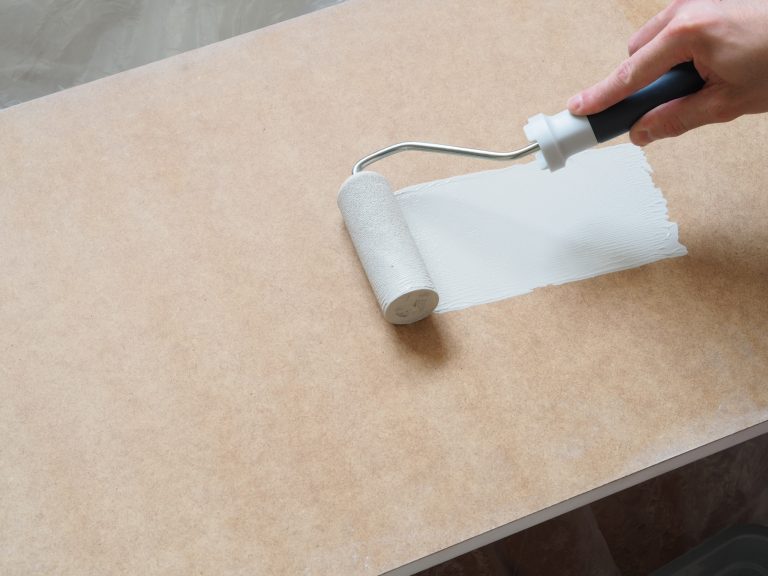
Once sanded, MDF needs two coats of primer — oil-based or shellac-based primer-sealers seal the exposed fibers better than water-based options, which can make raw MDF swell before the paint ever goes on. Let each primer coat dry 2–4 hours before recoating, and lightly sand between coats with 220-grit to knock down any raised fibers. See our full primer picks for MDF for how Zinsser BIN and Cover-Stain compare on this exact job.
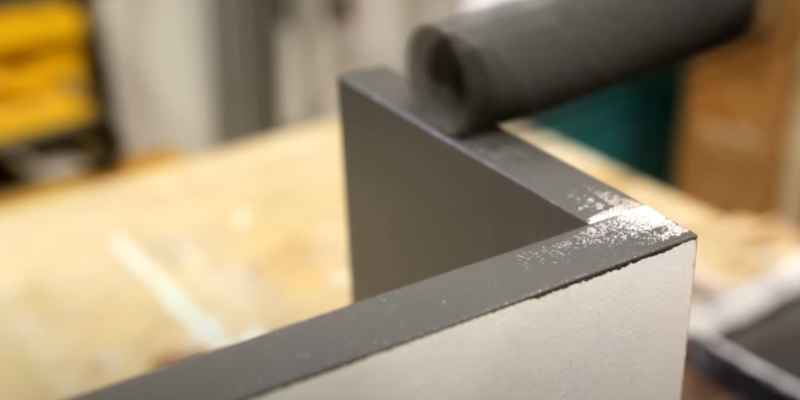
For the topcoat, thin the first paint coat by roughly 10–15% so it soaks in evenly rather than sitting on top, then apply 2–3 full-strength coats. Acrylic and oil-based paints both work on primed MDF; water-based paint straight onto unprimed MDF is the combination most likely to cause swelling. Rollers leave a slight texture and are fastest for flat panels; brushes give more control on edges and detail.
“I’ve sanded MDF cabinet doors that skipped a sealer coat on the cut edges first — the fibers fuzz up right along that raw edge no matter how fine a grit you finish with on the face. Sealing the edge before the final sanding pass is the only fix I’ve found that actually holds up.”
Common Mistakes When Sanding or Painting MDF
- Sanding wet or over-wetting the tack cloth: introduces the exact moisture MDF can’t recover from — keep the whole process dry.
- Using regular aluminum-oxide paper: clogs fast on MDF dust; silicon carbide lasts longer and cuts cleaner.
- Skipping edge sealing: raw cut edges are the most porous part of the board and the first place paint fails.
- Rushing dry time between primer coats: trapped solvent under a second coat causes bubbling and an uneven finish later.
- Using water-based paint straight on unprimed MDF: the moisture in the paint itself can raise the fibers before it even dries.
Caring for Painted MDF
Clean painted MDF with a soft cloth and mild detergent, and dry it right away — standing water at a seam or edge is still the one thing that can undo a good paint job. Wipe up spills immediately rather than letting them sit. For small chips, touch up with matching paint and a fine brush; for bigger damage, fill with wood filler, sand smooth, then re-prime that spot before touching up the color.
Frequently Asked Questions
Can you paint MDF without sanding it first?
Yes, if you use a dedicated bonding or shellac-base primer built for slick surfaces — it can grip the factory glaze without a sanding pass. Results are less durable than sanded-and-primed MDF, though, so sanding is still the safer default for anything handled often, like cabinet doors or furniture.
Why do MDF edges look rough or fuzzy after painting?
Cut edges are the most porous part of an MDF panel, and paint’s moisture raises the loose fibers there before it dries, leaving a fuzzy texture. Sealing raw edges with a sanding sealer or primer before painting, then lightly sanding once dry, prevents this.
Do you need to sand between primer and paint coats?
Yes, a light pass with 220-grit between primer coats knocks down any fibers the primer raised and gives the next coat a smoother surface to grip. It’s a quick step — a few light passes by hand, wiped clean before the next coat.
Can you paint straight over MDF?
Yes, but prime it first. Skipping primer on raw MDF lets paint soak unevenly into the exposed fibers, causing blotchy color and a rough finish. A sanded, primed surface is what gives an even, lasting result.
How do you prepare MDF for painting?
Fill and seal raw edges, sand faces with 120-grit then 220-grit silicon carbide paper, wipe clean with a tack cloth, then apply two coats of oil-based or shellac primer, sanding lightly between coats before the final paint.
Conclusion
Sanding MDF before painting — dry, with silicon carbide paper, 120-grit then 220-grit — is what gives paint something to actually grip on a material with no natural grain. Seal the edges first, prime twice, and the finish holds up for years instead of chipping within one.
Sponsored / affiliate links. As an Amazon Associate I earn from qualifying purchases. I may earn additional commission from eligible campaigns.