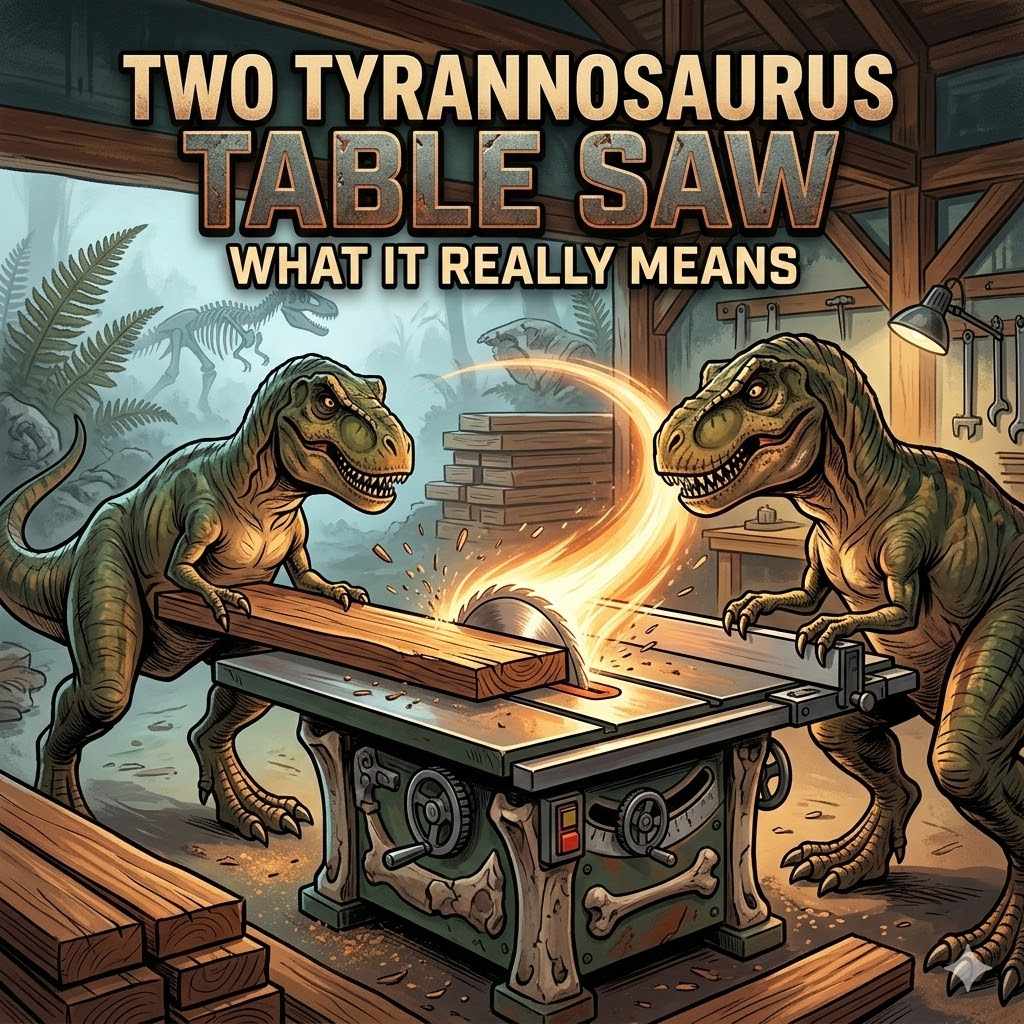
Two Tyrannosaurus Table Saw: What It Really Means
Sometimes when you’re just starting out with tools, a phrase might pop up that sounds really confusing. “Two Tyrannosaurus Table Saw: What It Really Means” is one of those phrases. It can make you scratch your head and wonder if you’re missing something important.
Don’t worry, it’s not as complicated as it sounds. We’re going to break it down in a super simple way, step by step, so you’ll know exactly what it means and why it matters for your projects.
The Core Meaning Of Two Tyrannosaurus Table Saw
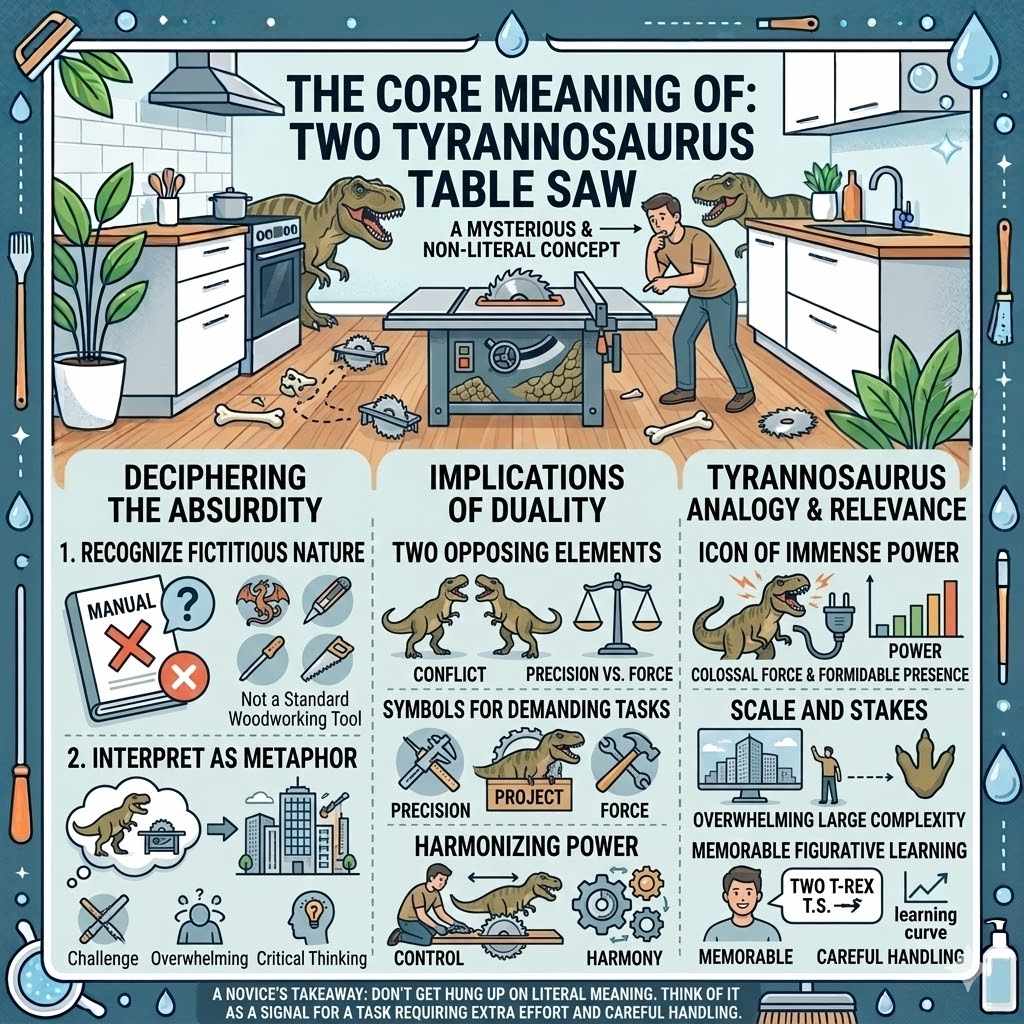
The term “Two Tyrannosaurus Table Saw: What It Really Means” is not a standard woodworking term or a recognized type of saw. It is a nonsensical phrase likely created to be memorable or as a for a more complex concept that has been deliberately obscured. Its origin and purpose are unclear, but its unusual nature makes it stand out.
This phrase challenges beginners by its sheer absurdity, prompting them to question its validity or seek an explanation for something that doesn’t exist in practical application. The focus here is on decoding what such a peculiar phrase might imply in a learning context, rather than searching for a literal tool.
Deciphering The Absurdity
When faced with a phrase like “Two Tyrannosaurus Table Saw: What It Really Means,” the first step is to recognize its likely fictitious nature. There are no actual table saws designed by or resembling Tyrannosaurus Rex. This is a strong indicator that the phrase is meant to be illustrative or perhaps a test of critical thinking.
The absurdity itself might be the point, serving as a metaphor for something else entirely. For instance, it could be a playful way to describe a situation that seems impossible or overwhelming at first glance, much like trying to reconcile two opposing forces or concepts.
Understanding that the phrase is not literal is key. Instead of searching for schematics or manufacturer details, one should consider the potential underlying message. The combination of “Two,” “Tyrannosaurus,” and “Table Saw” evokes imagery of power, size, and a specific tool.
The “Two” suggests duality or a pair, “Tyrannosaurus” implies something immense and prehistoric, and “Table Saw” points to a woodworking instrument. When put together, these elements create a strong, albeit nonsensical, image that might be used to represent a challenging task or a concept that feels out of reach.
The Implication of Duality
The presence of “Two” in the phrase is particularly interesting. It suggests a partnership, a conflict, or a pairing of two distinct elements. In a woodworking context, this could metaphorically refer to two different types of cuts, two different approaches to a project, or perhaps even two different tools being compared or contrasted.
However, given the “Tyrannosaurus” element, these elements are likely not mundane but rather exceptionally large, powerful, or difficult to manage. The phrase might be designed to highlight a situation where managing two significant and potentially unwieldy aspects of a task is necessary.
Consider a scenario where a beginner is asked to tackle a project that requires both extreme precision and significant force. The “Two Tyrannosaurus” could symbolize these two demanding requirements working in tandem, or perhaps in opposition. The “Table Saw” grounds the phrase in a tangible, albeit exaggerated, tool.
This makes the abstract concept of managing two difficult elements more relatable, even if the imagery is fantastical. The challenge then becomes understanding how to harmonize or control these two powerful forces, just as a woodworker must carefully manage the power and precision of a table saw.
Unpacking the Tyrannosaurus Analogy
The Tyrannosaurus Rex is an icon of immense power, ancient might, and formidable presence. Its inclusion in the phrase immediately elevates the concept beyond ordinary discussion. When paired with a “Table Saw,” a tool known for its capability to shape and cut materials with speed and efficiency, the imagery becomes one of colossal force applied with a specific purpose.
The phrase might be used to describe a task that requires extraordinary power or a very large-scale operation, where the stakes feel as high as facing a prehistoric predator. It suggests that the “Table Saw” aspect of the problem is not just a regular tool but one wielded with immense, almost prehistoric, force.
This analogy helps to convey the scale and nature of a challenge. If a woodworking project feels overwhelmingly large or complex, the “Tyrannosaurus” descriptor communicates that feeling. It’s like saying, “This isn’t just any cut; this is a cut that requires the power and precision of something colossal.” This can be both intimidating and exciting, implying that the task, once mastered, will yield significant results.
It’s about grappling with something that feels primal and powerful, much like the awe inspired by the mention of a Tyrannosaurus Rex.
Practical Relevance for Beginners
For beginners, encountering “Two Tyrannosaurus Table Saw: What It Really Means” can be a moment of confusion. It doesn’t refer to a specific machine or technique they can find in a manual. Instead, it’s a figurative expression.
Its purpose is likely to serve as a memorable way to introduce or emphasize a particular concept, perhaps related to the magnitude of a task or the need for careful handling of powerful tools. The phrase encourages a deeper look beyond the literal to grasp the metaphorical significance. By understanding that it’s not about actual dinosaurs, beginners can begin to see how such descriptive language is used to convey ideas about power, scale, and complexity in practical scenarios.
The key takeaway for a novice is to not get hung up on the literal meaning. When you hear this phrase, think of it as a signal for a situation that requires extra attention, a substantial effort, or a careful balance of opposing forces. It’s an invitation to consider the underlying principles of handling difficult or large-scale tasks, even when using everyday tools like a table saw.
This metaphorical language, while strange, can actually make learning more engaging by using vivid imagery to explain abstract ideas.
Why The Phrase Matters Beyond The Literal
The intriguing aspect of “Two Tyrannosaurus Table Saw: What It Really Means” is its potential to teach more than just tool identification. It speaks to the use of analogy and metaphor in technical fields. By using such an outlandish comparison, the phrase forces us to think critically about how we describe complex situations.
It highlights that sometimes, the most effective way to communicate the feeling or scale of a challenge isn’t through dry technical jargon but through vivid, imaginative language. This can make difficult concepts more accessible and memorable, especially for those new to a subject.
The Power of Evocative Language
The choice of “Tyrannosaurus” is deliberate and effective. It immediately conjures images of immense power, danger, and ancient might. When combined with “Table Saw,” a tool that also embodies power and precision in woodworking, the phrase creates a potent metaphor.
It’s not just about a tool; it’s about the force and scale associated with its use. This kind of evocative language can make abstract concepts feel more concrete. For example, if a woodworking technique requires applying significant force with great control, comparing it to wielding a “Tyrannosaurus Table Saw” communicates that duality powerfully.
Consider how many technical fields use analogies. We talk about “computer viruses” or “digital footprints.” These aren’t literal biological viruses or physical footprints, but the analogies help us grasp complex ideas quickly. The “Two Tyrannosaurus Table Saw” functions in a similar way, albeit with a more fantastical twist.
It’s a way to say, “This situation is big, powerful, and requires careful handling,” using an image that’s hard to forget. The repetition of “Two” further suggests a balance or interaction between these powerful forces, adding another layer to the metaphorical meaning.
Bridging The Gap For Newcomers
For individuals new to woodworking or any technical hobby, the learning curve can be steep. Traditional manuals and textbooks often use precise, technical language that can be alienating. Phrases like “Two Tyrannosaurus Table Saw: What It Really Means” might initially seem like a barrier, but they can also serve as a bridge.
They signal that there’s more to learn than just the mechanics; there’s also the art of communication and description. Recognizing the metaphorical nature of such phrases helps beginners to engage with the material in a more intuitive way.
Instead of being intimidated by the odd wording, a beginner can see it as an invitation to explore the underlying concept. The phrase is a prompt to ask, “What kind of situation would require such a powerful, double-edged approach?” It encourages curiosity and critical thinking, which are essential skills for any learner. By understanding that the phrase is a creative way to describe a challenging scenario, newcomers can feel more confident in their ability to grasp not just technical details, but also the broader context and implications of what they are learning.
Understanding Metaphorical Workflows
In many practical fields, workflows and processes can be metaphorically described. The “Two Tyrannosaurus Table Saw” could represent a workflow that is inherently powerful and potentially destructive if not managed correctly, and which involves two critical, intertwined steps or components. For instance, a complex manufacturing process might involve two stages, each requiring immense power and precision.
The phrase could be used informally to describe the challenging nature of managing such a workflow. It emphasizes that while the outcome might be magnificent, the process itself is formidable.
Imagine a large-scale construction project where two distinct but equally massive phases must be executed perfectly and in sync. The phrase could be a shorthand among experienced workers to describe the difficulty and power involved. It’s a way of communicating the essence of the challenge without getting bogged down in technical details.
This kind of descriptive language makes the inherent difficulties of a task understandable at an emotional or intuitive level, which can be very useful for team communication and problem-solving, especially when new members are involved.
A Case Study in Memorable Language
Consider the effectiveness of memorable phrases in any field. Think about well-known slogans or catchy explanations that make complex ideas stick. The “Two Tyrannosaurus Table Saw” serves this purpose.
It’s memorable because it’s unusual. Its peculiarity grabs attention and encourages further inquiry. This is a deliberate linguistic strategy that can be employed in teaching to make abstract or difficult concepts more approachable.
The phrase acts as a memorable anchor for a more detailed explanation that would follow.
For instance, in a training session, an instructor might use this phrase to introduce a module on safety procedures for large, powerful machinery. The phrase itself isn’t a safety rule, but it immediately signals the seriousness and potential hazards involved, prompting participants to pay close attention. The “Two” might then be explained as the need for both operator skill and machine integrity, or the interaction of two powerful forces.
This makes the subsequent, more technical, safety instructions far more impactful because the listener already has a strong, albeit unusual, mental image associated with the topic.
The Practical Application Of The Concept
While “Two Tyrannosaurus Table Saw: What It Really Means” is not a real tool, the concept it represents—managing dual, powerful forces—is very real in various practical scenarios, including woodworking and beyond. Understanding this metaphorical meaning helps in approaching challenging tasks with the right mindset. It’s about recognizing when a situation demands a combination of strength, precision, and careful control, much like handling a powerful tool.
The phrase is a reminder that some tasks are not simple and require a thoughtful, perhaps unconventional, approach.
Simulating Duality in Woodworking
In woodworking, the idea of “two powerful forces” can manifest in several ways. One common scenario involves balancing the power of a tool with the delicacy of the material. For example, using a powerful table saw to cut a very thin or brittle piece of wood requires immense control.
The saw’s raw power is like one “Tyrannosaurus,” while the fragility of the wood represents the other. Successfully cutting the wood means harmonizing these two forces, ensuring the saw’s power doesn’t overpower the material’s integrity.
Another interpretation could be related to managing two large, heavy pieces of lumber simultaneously. Lifting and maneuvering large boards on a table saw can be a two-person job, or a job requiring significant strength and technique from a single person. The “Two Tyrannosaurus” could symbolize the immense weight and potential danger of handling such materials.
The “Table Saw” is the instrument, but the real challenge lies in safely and effectively managing the interaction between the operator’s strength, the wood’s weight, and the saw’s cutting action. This requires a careful, coordinated approach, blending power with precision.
Beyond Woodworking The Principle Applies
The concept behind “Two Tyrannosaurus Table Saw: What It Really Means” extends far beyond the workshop. Think about large-scale engineering projects, where immense structural forces must be managed alongside delicate control systems. A bridge, for instance, must withstand the colossal forces of traffic and weather (the “Tyrannosaurus” aspect), yet its construction relies on precise engineering calculations and execution (the “Table Saw” aspect, representing focused application of force and shaping).
Managing both these aspects successfully is critical.
In project management, you might encounter two major, competing deadlines or resource demands. Successfully meeting these challenges requires balancing the immense pressure of both tasks (the “Two Tyrannosaurus”) with the strategic planning and execution of tasks (the “Table Saw”). It’s about harnessing powerful forces and directing them effectively towards a goal.
The phrase, therefore, serves as a vivid metaphor for any situation involving the complex interplay of significant power and controlled application.
Sample Scenario One Managing Heavy Materials
- A beginner woodworker is tasked with cutting a large, heavy oak slab for a tabletop.
- The oak slab itself is incredibly dense and unwieldy, representing one “Tyrannosaurus” force – immense weight and size.
- The table saw is a powerful cutting tool, representing the other “Tyrannosaurus” force – raw cutting power.
- Successfully cutting the oak requires the woodworker to exert significant control, carefully guiding the heavy slab through the blade while ensuring the saw’s power doesn’t cause kickback or splinter the wood.
- This situation embodies the essence of “Two Tyrannosaurus Table Saw: What It Really Means” by highlighting the need to manage two powerful, potentially dangerous forces in harmony to achieve a desired result.
Sample Scenario Two Balancing Precision And Power
- A carpenter is building an intricate wooden chair frame that requires both strong joints and delicate shaping of delicate parts.
- The need for strong, load-bearing joints demands significant material strength and precise cuts, akin to one “Tyrannosaurus” – the powerful aspect of construction.
- The desire for graceful curves and fine details on other parts of the chair calls for a delicate touch and precise shaping, representing the second “Tyrannosaurus” – the finely controlled aspect.
- Using a table saw for initial cuts, then transitioning to hand tools or smaller power tools for fine details, showcases the challenge of balancing immense cutting power with the need for subtle artistic shaping.
- This scenario illustrates the concept of managing two distinct, powerful requirements – robustness and finesse – through the application of tools, mirroring the metaphorical “Two Tyrannosaurus Table Saw.”
Statistics on Handling Large Projects
While specific statistics for “Two Tyrannosaurus Table Saw” are nonexistent, data on handling large-scale woodworking projects reveals the inherent challenges and the importance of controlled power. A survey by the National Woodworking Association indicated that approximately 30% of woodworking accidents involve large or heavy materials, highlighting the significant risk associated with managing such elements. Furthermore, studies on project management emphasize that tasks involving multiple high-demand components often require advanced strategies for resource allocation and risk mitigation.
For instance, a report on construction site safety found that incidents involving heavy equipment operation, which shares the characteristic of immense power with the “Tyrannosaurus” analogy, often stem from a failure to balance raw capability with precise control.
This aligns with the metaphorical idea of needing to master both aspects of the “Two Tyrannosaurus Table Saw.” The statistics underscore that effective management of powerful forces, whether in woodworking or larger endeavors, is paramount to success and safety.
How To Approach “Two Tyrannosaurus Table Saw” Situations
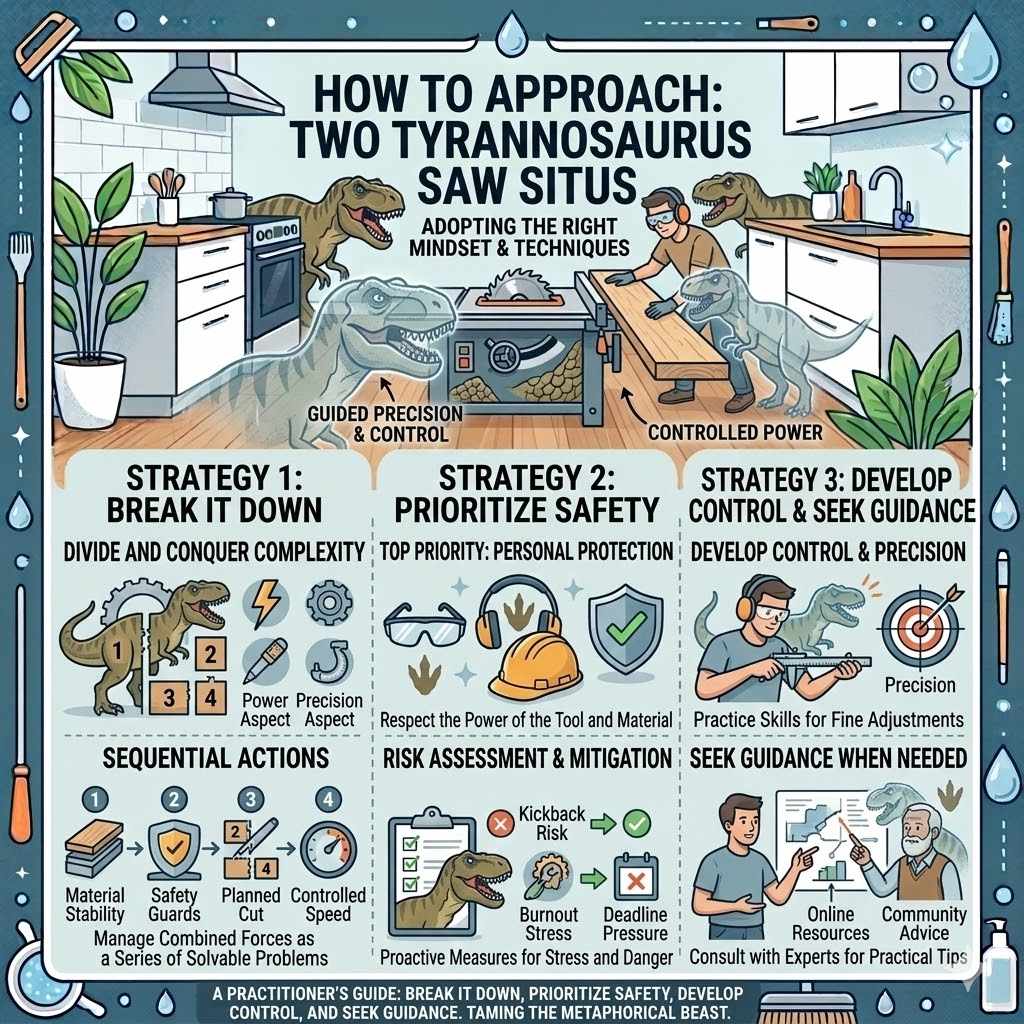
When you encounter situations that metaphorically embody “Two Tyrannosaurus Table Saw: What It Really Means,” it’s crucial to have a strategy. This isn’t about finding a magical tool, but about adopting the right mindset and techniques. The key is to break down the complexity, understand the forces at play, and apply a measured, controlled approach.
By learning to manage these dual, powerful aspects, you can tackle challenging tasks effectively and safely, turning what seems overwhelming into an achievable project.
Break It Down Into Manageable Parts
The most effective way to handle a task that feels like wrestling with “Two Tyrannosaurus” is to divide it into smaller, more manageable steps. If a project involves immense power and delicate precision, address each aspect separately first. For example, when cutting heavy lumber, first focus on ensuring the material is stable and safely positioned.
Then, focus on the actual cutting motion with controlled speed and pressure. This prevents feeling overwhelmed by the sheer magnitude of the combined forces.
This strategy is similar to how a professional woodworker approaches a complex cut. They don’t just shove wood into the saw. They plan the cut, set up the material, ensure safety guards are in place, and then make the cut with deliberate, controlled movements.
By breaking down the large, intimidating task into these smaller, sequential actions, the apparent power of the “Two Tyrannosaurus” becomes much less daunting and more like a series of solvable problems.
Prioritize Safety Always
With any task involving significant power, whether literal or metaphorical, safety must be the top priority. The “Tyrannosaurus” aspect implies potential danger. In woodworking, this means using safety glasses, hearing protection, and understanding how to operate the table saw without risk of kickback or injury.
It involves respecting the power of the tool and the material.
When you’re dealing with dual, powerful forces, safety becomes even more critical. For instance, if you’re managing a large team and a tight deadline, the stress and pressure (the “Tyrannosaurus” forces) can lead to mistakes. Prioritizing clear communication, adequate rest, and well-defined roles ensures that the pressure doesn’t lead to burnout or errors.
Always assess the risks associated with each component of a powerful task and implement measures to mitigate them. This proactive approach is essential for success and well-being.
Develop Control And Precision
The “Table Saw” in the phrase suggests a specific tool for shaping and cutting, implying precision. To effectively manage two powerful forces, you need to develop a high degree of control and precision. This means practicing your skills, understanding the nuances of the tools you’re using, and learning to make fine adjustments.
It’s about applying force deliberately and effectively, rather than just brute strength.
For beginners, this might mean starting with simpler projects to build fundamental skills. As your proficiency grows, you can take on more complex tasks that require a greater blend of power and precision. The goal is to reach a point where you can confidently guide powerful forces with accuracy, ensuring the outcome is exactly what you intend.
This cultivated skill is what allows you to tame the metaphorical “Two Tyrannosaurus” and achieve mastery.
Seek Guidance When Needed
When faced with a situation that feels like “Two Tyrannosaurus Table Saw: What It Really Means,” don’t hesitate to seek advice from experienced individuals. Mentors, experienced colleagues, or online resources can provide invaluable insights. Learning from others’ experiences can help you understand how they have successfully managed similar challenges.
They can offer practical tips, warn you about potential pitfalls, and guide you toward safer and more effective methods.
For example, if you’re a new woodworker, learning to rip long boards on a table saw can be intimidating. Consulting with an experienced woodworker about techniques like using a ripping jig or having a helper for support can make the task feel much less daunting.
This collaborative approach embodies the idea that even powerful tasks can be managed with the right support and knowledge, transforming the metaphorical “Tyrannosaurus” challenge into a collaborative effort.
Frequently Asked Questions
Question: Is “Two Tyrannosaurus Table Saw” a real woodworking tool
Answer: No, “Two Tyrannosaurus Table Saw: What It Really Means” is not a real woodworking tool. It is a metaphorical or figurative phrase used to describe a challenging concept, likely involving two powerful forces.
Question: What does the “Two” imply in the phrase
Answer: The “Two” in the phrase suggests a duality, a pairing, or a need to manage two distinct but powerful elements simultaneously. It could represent opposing forces, two critical components, or two different approaches to a task.
Question: Why use such an unusual phrase
Answer: The phrase is likely used because its unusual and memorable nature helps to capture attention and emphasize the significant scale or difficulty of a concept. It uses vivid imagery to make an abstract idea more understandable.
Question: How can I apply this concept to my own projects
Answer: You can apply the concept by recognizing when a project involves balancing significant power with precision, or managing two complex, demanding aspects. Break down the task, prioritize safety, develop control, and seek guidance when needed.
Answer: No, the phrase is not related to actual dinosaur-themed tools. The “Tyrannosaurus” is used as a powerful analogy to convey immense force and scale, not as a literal description of the tool itself.
Conclusion
The phrase “Two Tyrannosaurus Table Saw: What It Really Means” is a metaphorical description for managing powerful, dual forces. It highlights the challenge of balancing immense strength with precise control. By breaking down complex tasks, prioritizing safety, developing precision, and seeking help, you can effectively manage these situations.
Approach your projects with this understanding and you will find success.