How Much Are Table Saws? Real Price Guide by Type (2026)
Table saws run from about $150 for a basic benchtop model to $4,000+ for a full cabinet saw. Most home woodworkers land in the $300–$1,000 range for a jobsite, contractor, or hybrid saw — but the sticker price is only part of what you’ll actually spend. Blades, a mobile base, and dust collection routinely add another $150–$400 on top.
Table Saw Prices at a Glance
Best Jobsite/Contractor-Tier Value Pick
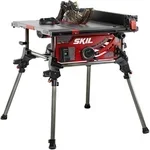 |
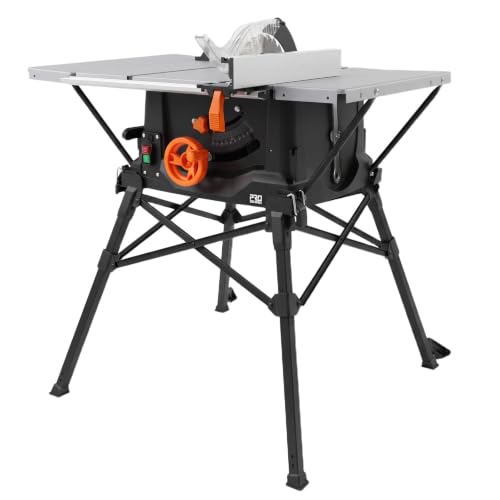
SKIL TS6307-00 15 Amp 10-Inch Table Saw – $302.68 A real example of the $300–$700 jobsite tier below: a 25-1/2 in. rip capacity saw with a folding stand, right at the price point most first-time buyers land on.
|
Table saw prices aren’t random — they track size, motor power, and build quality in a fairly predictable way. Here’s how the market actually breaks down by tier.
1. Benchtop/Portable Table Saws — $100–$300
The lightest and cheapest category, built to sit on a workbench or fold onto a small stand. Motors are smaller and rip capacity is narrow, so these are best for thin stock and occasional cuts rather than daily use.
- Who they’re for: DIYers with limited space, hobbyists doing small projects, or anyone who needs to carry the saw somewhere.
- What to expect: A universal motor that’s louder and can bog down in hardwood, a narrower rip capacity, and a lighter, less rigid table.
2. Jobsite Table Saws — $300–$700
A step up in durability and cutting capacity, built around a folding rolling stand so contractors can move them between sites. This is also where fence quality starts to matter a lot more — the DeWalt table saw Home Depot sells is a good example, pairing a foldable rolling stand with the rack-and-pinion fence rails this tier is known for.
- Who they’re for: Serious DIYers, remodelers, and contractors who need real power and capacity but still have to haul the saw around.
- What to expect: Better dust collection than benchtop models, a sturdier fence, and a larger table surface.
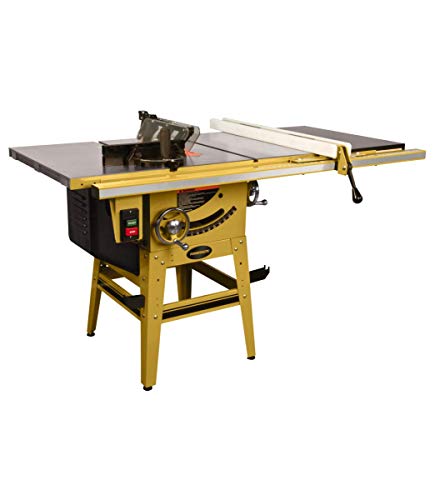
3. Contractor Table Saws — $500–$1,000
The classic sweet spot for a dedicated home workshop: enough power and stability for regular use, without the weight or price of a cabinet saw. These stay put in one spot rather than folding up for transport.
- Who they’re for: Home woodworkers tackling furniture, cabinetry, or frequent larger projects.
- What to expect: A 1.5–2 HP induction motor, a cast-iron (or cast-iron-topped) table, and cast trunnions that hold calibration better than the stamped-steel parts on cheaper saws.
4. Hybrid Table Saws — $800–$1,500
Hybrids borrow the enclosed cabinet base of a cabinet saw but keep the lighter belt-drive of a contractor saw, landing in between on both price and weight.
- Who they’re for: Woodworkers who want cabinet-saw stability and dust collection without the full cabinet-saw footprint or price.
- What to expect: A 2–3 HP motor, an enclosed base that channels dust far better than an open contractor stand, and a noticeably stiffer fence.
5. Cabinet Table Saws — $1,500–$4,000+
The heaviest, most powerful category, built for shops that run a saw daily for years. Some residential cabinet saws use single-phase power, though shop-grade models can run 3-phase.
- Who they’re for: Professional woodworkers, cabinet shops, and serious hobbyists who need the highest precision and longest service life.
- What to expect: Cabinet-mounted trunnions, the most accurate fences on the market, and dust collection systems rated for continuous use.
What Actually Drives the Price Difference
Two saws can look similar in photos and cost $600 apart. Here’s what you’re actually paying for as the price climbs:
- Motor power and type: Belt-drive induction motors (contractor tier and up) run quieter and smoother than the direct-drive universal motors in benchtop saws, and hold up better under sustained cuts in hardwood.
- Fence system: Budget saws cut costs on the fence first. A cheap fence that isn’t perfectly parallel to the blade turns every rip cut into a fight; rack-and-pinion fences on jobsite-tier-and-up saws stay locked and accurate.
- Trunnion design: The trunnion is the bracket that holds the blade assembly and lets it tilt. Stamped-steel trunnions flex and drift out of calibration; cast-iron trunnions (contractor tier and up) hold their setting.
- Table size and material: A bigger rip capacity needs a bigger table and longer fence rails, which adds material and manufacturing cost.
- Dust collection: An open contractor stand leaks dust everywhere; the enclosed cabinets on hybrid and cabinet saws capture far more of it, which requires more engineering.
- Brand and extras: Established brands charge a premium for reliability and support, and features like soft-start motors and tool-free blade-height adjustment add to the price on top of the base mechanicals.
Table Saw Price Breakdown by Type (Summary)
A quick reference for the ranges above:
| Table Saw Type | Typical Price Range (USD) | Best For |
|---|---|---|
| Benchtop/Portable | $100 – $300 | Light DIY, small projects, limited space |
| Jobsite | $300 – $700 | Serious DIY, contractors, portability needs |
| Contractor | $500 – $1,000 | Home workshops, enthusiast hobbyists |
| Hybrid | $800 – $1,500 | Dedicated woodworkers, diverse projects |
| Cabinet | $1,500 – $4,000+ | Professional shops, maximum precision |
What You Actually Get at Each Price Point
Under $300: Entry Level
Basic benchtop or lightweight portable saws powered by universal motors that get louder and hotter under heavy use.
- Pros: Very affordable, easy to move, fine for occasional light tasks.
- Cons: Limited power and cutting capacity, a less precise fence, more noise and dust.
- Ideal projects: Small shelves, basic repairs, cutting thin plywood or pine.
$300–$700: The Jobsite Workhorse
A sturdier foldable stand, a real fence system, and a motor that can handle more demanding work while staying portable.
- Pros: Good balance of power and portability, better dust collection than benchtop, more durable build.
- Cons: Still noisy, rip capacity can be tight for very wide boards.
- Ideal projects: Framing, decks, larger DIY projects, on-site lumber cutting.
$500–$1,000: The Contractor’s Choice
Cast-iron tops and trunnions, quieter induction motors, and a real jump in fence quality over the jobsite tier.
- Pros: Excellent value for a home workshop, stable cutting, enough power for most hardwoods.
- Cons: Heavier and less portable, some models want a 240V circuit.
- Ideal projects: Furniture making, cabinetry, larger renovation work.
$800–$1,500: The Hybrid Performer
An enclosed cabinet base, stronger dust collection, and usually more motor than a contractor saw — a smoother, more professional feel without the full cabinet-saw price.
- Pros: Very stable, powerful, good dust collection, excellent precision.
- Cons: A real investment, needs dedicated space and usually a 240V circuit.
- Ideal projects: Advanced woodworking, detailed cabinetry, work that needs repeatable precision.
$1,500+: The Professional Cabinet Saw
Heavy, powerful saws built for years of daily use, with cast trunnions, high-capacity fences, and the best dust management on the market.
- Pros: Unmatched power, precision, and durability.
- Cons: Expensive, needs real shop space and often 240V or 3-phase power, not portable.
- Ideal projects: Professional furniture making, production-volume woodworking.
The Real Total Cost: What the Sticker Price Leaves Out
Most price guides stop at the saw itself. In practice, the saw is the start of the budget, not the whole thing. Take a $300 jobsite saw as an example — here’s what a realistic first-year setup actually costs:
- Blades: The stock blade is fine for general cuts, but a quality ripping or fine-crosscut blade runs $30–$100+, and most shops end up owning at least two.
- Zero-clearance insert: The stock throat plate leaves a wide gap around the blade that causes tear-out on plywood and veneered panels; a proper insert (often model-specific, like the ones covered in our SKIL zero-clearance insert guide) is a $15–$40 fix most buyers don’t budget for.
- Push sticks and safety gear: Safety glasses, hearing protection, a dust mask, and push sticks/blocks: $20–$50.
- Dust collection: A shop vac hose and dust port adapter to actually use the saw’s dust port: $50–$200+.
- Mobile base: If the saw doesn’t already fold, a rolling base for a stationary saw: $100–$200.
- Dado stack (optional): Needed for grooves and rabbets: $100–$200.
Add it up and a “$300 saw” is realistically a $450–$650 purchase once you can actually use it safely and accurately — before you’ve bought any lumber. Budgeting for that up front avoids the common mistake of maxing out the saw budget and then being unable to afford a decent blade or dust collection.
Should You Buy New or Used?
Buying used can get you a meaningfully better saw for the same money, but it comes with real risk if you don’t know what to check.
Buying New
- Pros: A warranty, a known history, current safety standards, and easier financing.
- Cons: Higher upfront cost, and the saw depreciates the moment it leaves the store.
Buying Used
- Pros: A higher-quality saw for your budget, potentially a discontinued model with better specs than current saws at the same price, and less depreciation to absorb.
- Cons: No warranty, possible hidden damage, and it takes some knowledge to judge condition accurately.
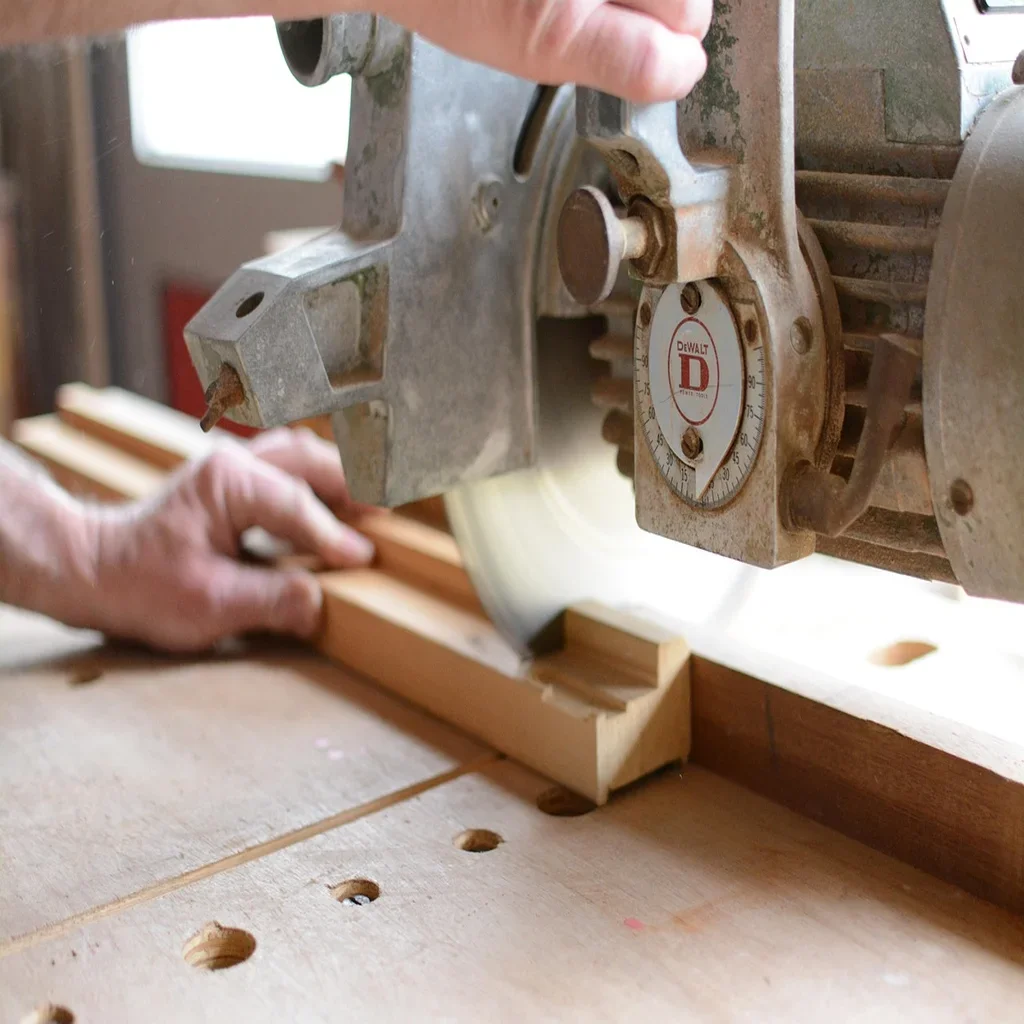
If you go the used route, see the saw run before buying. Check for blade wobble, listen for grinding or straining in the motor, and confirm the fence and trunnions move smoothly without excess play. Reputable dealers like Rockler and Woodcraft sometimes carry used or open-box units, and local classifieds are another common source. For safety background on older saws, the Consumer Product Safety Commission (CPSC) has useful guidance, especially for saws built before modern blade-guard standards.
Non-Negotiable Features on a Budget
Even on the tightest budget, a few things shouldn’t be cut:
- A fence that actually locks: It has to glide smoothly and lock parallel to the blade every time, or every rip cut becomes a guessing game.
- A riving knife or splitter: A riving knife moves with the blade and is meaningfully better at preventing kickback than a fixed splitter — don’t buy a saw without one or the other.
- At least 1.5 HP: Enough to get through common hardwoods without bogging down mid-cut.
- A cast-iron table, if the budget allows it: More stable and better at damping vibration than stamped steel, which shows up as cleaner cuts.
- A standard 10-inch blade: Keeps replacement-blade options wide open and affordable.
Tips for Choosing Your First Table Saw
- Assess your space: How much room do you have, and does the saw need to fold up or roll away when you’re done?
- Match it to your projects: Small crafts and furniture-scale work need different capacity than framing or full sheet goods.
- Budget for accessories, not just the saw: See the total-cost section above — a slightly cheaper saw with a decent blade and dust setup beats a maxed-out saw with none of that.
- Read real reviews, not just star ratings: Our own SKIL 15 Amp Table Saw review is a good example of what to look for — real rip-capacity numbers and an honest drawback list, not just marketing copy.
- Never skip the safety features: A riving knife and a real blade guard are worth more than any convenience feature.
- Think about longevity: A slightly pricier saw now can save you from a mid-project upgrade later.
Still deciding which saw to buy first? Our saw price guide by type compares hand saws, jigsaws, circular saws and miter saws with dated prices.
Frequently Asked Questions
What is the cheapest type of table saw I can buy?
Benchtop and portable models are the cheapest, typically $100–$300. They’re fine for light-duty tasks but lack the power, rip capacity, and fence precision of larger saws.
Is a contractor saw a good starting point for a home workshop?
Yes — a contractor saw is the sweet spot for most home workshops, usually $500–$1,000, with enough power, stability, and fence quality for regular furniture and cabinetry work.
Why do two table saws with the same horsepower cost so differently?
Horsepower is only one factor. Fence quality, trunnion design (cast iron versus stamped steel), table material, and dust collection all add cost independently of motor size, which is why a 1.5 HP contractor saw can cost far more than a 1.5 HP benchtop saw.
Do I need a 240V outlet for a table saw?
Most benchtop, jobsite, and contractor saws run on a standard 120V outlet. Some hybrid and most cabinet saws are wired for 240V for the extra motor power, so check the electrical requirements before buying if you don’t already have a 240V circuit in your shop.
Sponsored / affiliate links. As an Amazon Associate I earn from qualifying purchases. I may earn additional commission from eligible campaigns.