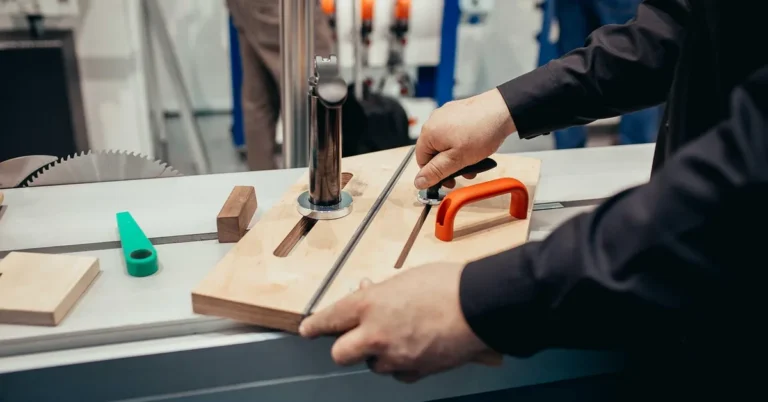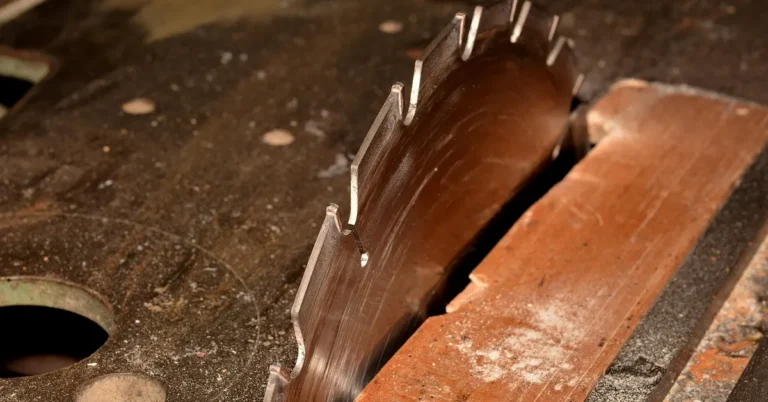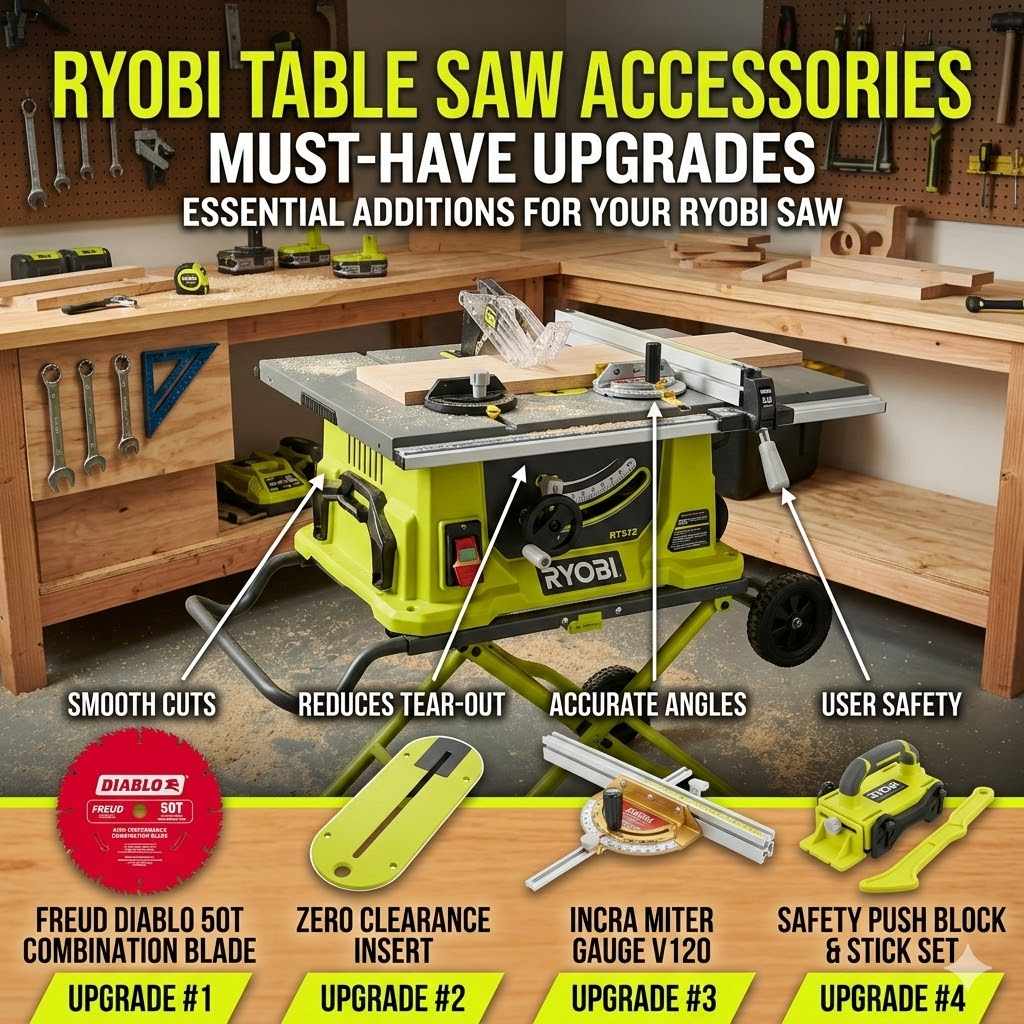
Ryobi Table Saw Accessories: Must-Have Upgrades
The Ryobi table saw accessories worth buying first are a riving knife or splitter setup, push sticks/push blocks, and a zero-clearance insert – in that order, since the first two are safety equipment and the third is what actually improves your cut quality. Everything else (fences, dust collection, mobility) is a genuine upgrade, but it’s optional in a way that safety gear isn’t.
Here’s what each category actually does, what it costs to add, and which ones matter most depending on how you use your saw.
Safety Accessories: Not Optional
Best Push Block for Ripping
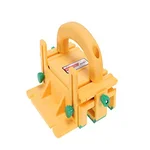 |
MICROJIG GRR-RIPPER GR-100 – $48.00 Grips the workpiece from three directions at once, keeping fingers well clear of the blade on narrow rip cuts a basic push stick struggles with.
|
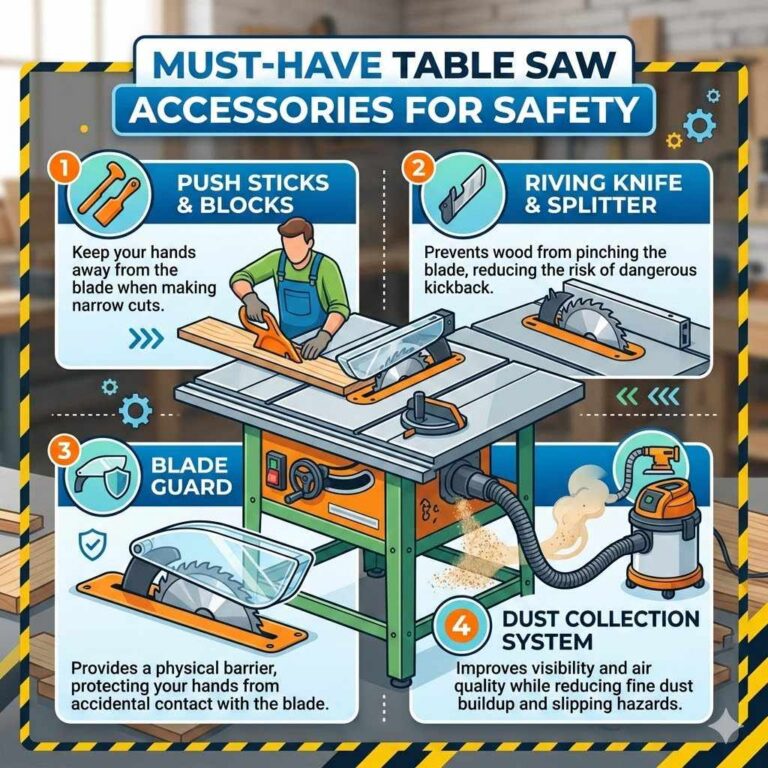
A table saw is responsible for tens of thousands of ER visits in the U.S. every year, and the two most common causes – kickback and hand contact with the blade – are exactly what these accessories are built to prevent. A riving knife is a curved metal piece that follows the blade up and down and sits directly behind it in the kerf. Its job is to keep the freshly-cut wood from pinching back against the blade, which is what causes kickback in the first place. If your Ryobi model shipped with only a basic splitter (a fixed piece rather than one that rises and falls with the blade), upgrading to a proper riving knife is the single highest-value safety accessory you can add.
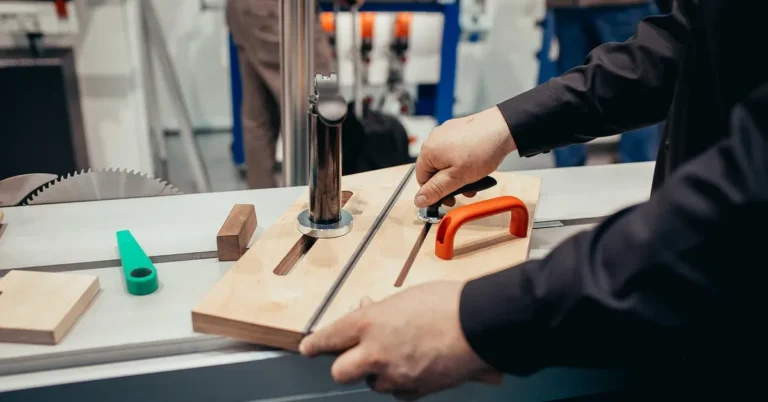
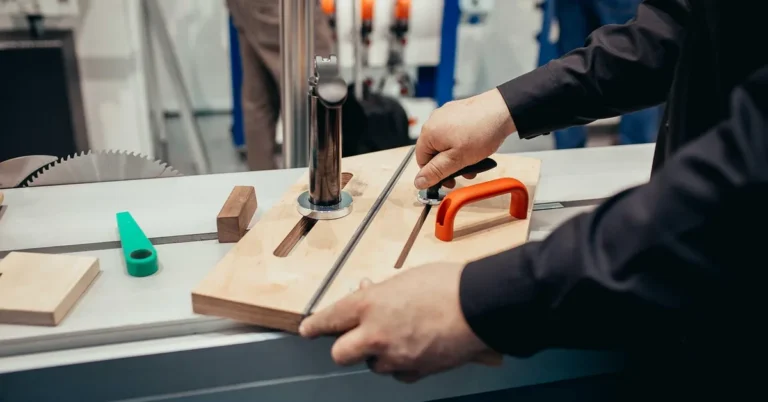
Push sticks and push blocks keep your hands at a safe distance from the blade, especially on narrow rip cuts where your fingers would otherwise end up within a few inches of it. A basic push stick handles most cuts, but a 3D pushblock system (which grips the workpiece from three directions at once) gives you far more control on thin or awkward pieces and is worth the higher price if you rip a lot of narrow stock. Featherboards clamp to the table or fence and use spring tension to hold the workpiece firmly against the fence throughout the cut, which prevents the wood from wandering or binding – both of which can trigger kickback on their own.
Dust Collection
Fine sawdust is both a visibility problem (it obscures your cut line) and a health problem (prolonged exposure to airborne wood dust is a respiratory irritant). Most Ryobi table saws have a dust port at the rear of the blade housing that a shop vacuum hose connects to directly; this alone captures a large share of the dust before it becomes airborne, since it’s collecting right at the source instead of after the fact. A standard shop vacuum is enough for occasional use, but if you’re cutting for hours at a stretch, a dedicated dust collector with a larger canister and finer filtration will keep both your lungs and your saw’s internal mechanism cleaner – built-up sawdust inside the housing is a real contributor to premature motor wear.
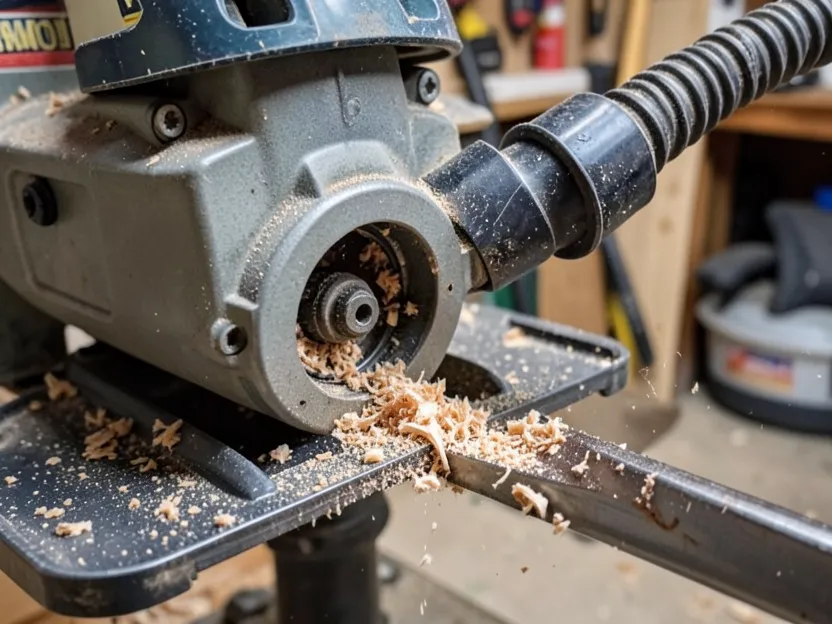
Some upgraded blade guards also include their own dust extraction point above the blade, which catches the portion of dust that a below-table port alone can’t reach. Combined with a below-table connection, this two-point setup is about as clean as a benchtop table saw gets without a full cabinet enclosure.
Fence and Measurement Upgrades
The stock fence on entry-level Ryobi saws is functional but not always dead-accurate, and any play in how it locks down translates directly into inconsistent rip widths. An aftermarket T-square-style fence rides on a track that keeps it parallel to the blade no matter where you lock it, which removes the most common source of taper in rip cuts. If you want to skip the tape-measure-and-squint approach entirely, a magnetic digital readout mounted to the fence rail shows the blade-to-fence distance to a fraction of a millimeter, which matters most when you need several pieces to come out exactly the same width – shelving, drawer parts, or anything with repeated identical cuts. For crosscuts specifically, a shop-built or aftermarket crosscut sled squares the workpiece against the miter slot instead of the fence, which is the more accurate method for anything that isn’t a straight rip. For a full rundown of specific parts by fitment and price, see our Ryobi table saw parts comparison.
Zero-Clearance Inserts
The metal throat plate that ships with most table saws has a wide gap around the blade to accommodate different blade widths and tilt angles. That gap is also exactly where thin offcuts and veneer edges catch and tear out as the blade exits the cut. A zero-clearance insert is cut (or comes pre-cut) to hug the blade closely, so the wood fibers are supported right up to the edge of the kerf instead of flexing into open space. The difference shows up most on plywood, melamine, and anything with a delicate face veneer – a zero-clearance insert is one of the cheapest upgrades on this list and arguably delivers the most visible improvement in cut quality per dollar spent.
Mobility and Storage
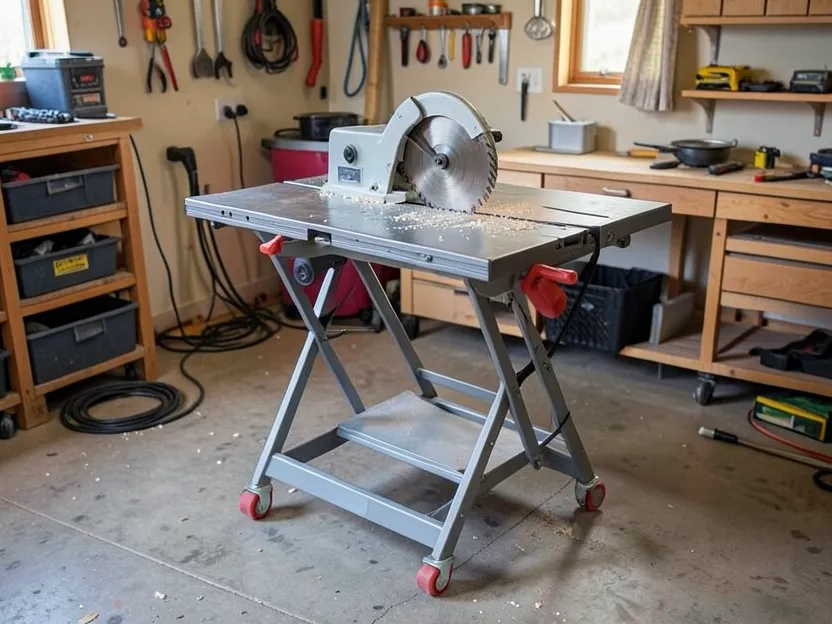
If your shop doubles as a garage or a one-car space, a mobile base that bolts to the saw’s stand and lifts it onto locking casters turns a saw you have to wrestle into position into one you roll out of the way in seconds. Most mobile bases adjust to fit different saw footprints and are rated to carry the saw’s full weight without tipping. On the storage side, accessories like blades, dado stacks, push sticks, and wrenches are easy to lose track of if they don’t have a dedicated spot – a wall-mounted tool board or a drawer built into an outfeed table solves this cheaply. An outfeed table itself is worth adding if you regularly cut long boards or sheet goods; it supports the workpiece as it exits the back of the saw so it doesn’t tip, bind, or need a second person to catch it.
Frequently Asked Questions
Question: What is the most important accessory for a Ryobi table saw beginner
Answer: A good set of push sticks or a 3D pushblock, plus a functioning riving knife or splitter. Both are inexpensive and directly reduce the two most common ways table saw injuries happen – blade contact and kickback.
Question: Can I use accessories from other brands on my Ryobi table saw
Answer: Generally yes for universal items like push sticks, featherboards, and most mobile bases. For fit-specific parts like fences, miter bars, or insert plates, check the dimensions against your exact Ryobi model before buying, since table saw throat and miter slot sizes vary between models.
Question: How often should I replace my table saw blade
Answer: There’s no fixed schedule – replace it when you notice more resistance while cutting, increased tear-out, or burn marks on the wood. Hobbyist use might mean a blade lasts a year or more; frequent ripping of hardwood or manufactured sheet goods will dull one faster.
Question: What is kickback and how can I prevent it
Answer: Kickback is when the workpiece is thrown back toward the operator, usually because it pinched against the back of the blade or bound against the fence. A riving knife, keeping the stock flat against the table and fence, using push sticks instead of your hands, and keeping the blade sharp and at the correct height all reduce the risk.
Question: Is a zero clearance insert worth the investment
Answer: Yes for most woodworkers – it’s one of the least expensive accessories on this list and produces a noticeable drop in tear-out, especially on plywood and veneered panels, while also improving dust collection around the blade.
Bottom Line
If you’re only adding accessories in order of priority, safety comes first (riving knife, push blocks, featherboards), a zero-clearance insert comes second because it’s cheap and immediately improves cut quality, and fence upgrades, dust collection, and mobility solutions come after – genuinely useful, but quality-of-life rather than safety-critical.
Sponsored / affiliate links. As an Amazon Associate I earn from qualifying purchases. I may earn additional commission from eligible campaigns.