RIDGID Table Saws at Home Depot: R4514 vs R4520 vs R4560 Compared
RIDGID sells three distinct table saws through Home Depot: the R4514 portable jobsite saw, the R4520 hybrid saw (largely discontinued, clearance-only now), and the R4560 cast-iron contractor saw. Picking the wrong one means hauling 232 lbs to a jobsite or under-powering a cabinet shop. This guide compares real specs and pricing, and explains what RIDGID’s Lifetime Service Agreement actually covers.
R4514 vs R4520 vs R4560: Quick Comparison
Recommended Blade Upgrade Pick
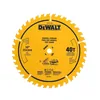 |
DEWALT 10″ 40-Tooth Table Saw Blade (DWA11040) – $22.97 All three RIDGID saws in this guide take a standard 10″ blade with a 5/8″ arbor — the stock blade that ships with most jobsite saws is a basic combo blade, and this is the upgrade most owners make first.
|
As an Amazon Associate we earn from qualifying purchases.
Prices below are approximate and change with Home Depot sales — check the current listing before buying. The R4520 has largely been discontinued from regular retail; where it still shows up is clearance events and secondary markets.
| Model | Type | Weight | Fence / Table | Typical Price |
|---|---|---|---|---|
| R4514 | Portable jobsite saw | Lightweight, folding stand | Integrated T-slot fence | ~$329–$379 |
| R4520 | Hybrid (contractor/cabinet) | 232 lbs | 13-amp TEFC motor | $375–$500 (clearance/secondary market only) |
| R4560 | Contractor saw, cast iron top | Rolling stand, foot-pedal casters | 3-point StaySquare fence | ~$685 |
RIDGID R4514: Portable Jobsite Table Saw
The R4514 is built for hauling to a jobsite, not staying in one shop. Its folding stand uses a single-point release for one-step setup and breakdown, and the 10″ blade can rip a 4×4 in a single pass thanks to integrated T-slots in the fence rail. Maximum cut depth is 2-1/4 in. at 45° and 3-1/2 in. at 90°.
Like every current RIDGID table saw, it’s backed by RIDGID’s Lifetime Service Agreement — more on what that actually covers below. If you mostly cut sheet goods and framing lumber on-site, this is the model built for that job; it isn’t the one to buy for fine cabinetry.
RIDGID R4520: Hybrid Table Saw (Mostly Discontinued)
The R4520 sits between a contractor saw and a cabinet saw in both capability and price, running a 13-amp TEFC (totally enclosed, fan-cooled) induction motor. At 232 lbs, it’s not something you load into a truck for jobsite work — it’s meant to stay in one place.
Important if you’re shopping for one: the R4520 has been discontinued from Home Depot’s regular retail lineup. It still turns up at clearance events and on secondary markets, typically $375–$500, but availability is inconsistent. If you find one in good condition, its motor and weight class make it a genuine value — just confirm it’s still covered under an active Lifetime Service Agreement registration before relying on that as a selling point.
RIDGID R4560: Contractor Saw With Cast Iron Top
The R4560 is RIDGID’s current 10 in. contractor saw, built around a cast iron top and trunnion assembly for smoother, more stable cuts than a stamped-steel table. A 15-amp motor and a 3-point StaySquare one-hand fence system handle most cabinet and furniture work, and foot-pedal engaged caster wheels let you reposition it around a shop without a hand truck.
It accepts 8-inch dado blade stacks up to 13/16 in. wide, and ships with a rolling stand, miter gauge, 3-point fence, blade wrenches, a tool-free blade guard system, and a 40-tooth carbide blade. At around $685, it’s priced well above the R4514 but positioned as a contractor table saw that can handle shop work the portable models aren’t built for.
What RIDGID’s Lifetime Service Agreement Actually Covers
RIDGID markets the Lifetime Service Agreement (LSA) as a key reason to buy over other brands at the same price point, but the fine print matters more than the headline.
- You must register the tool within 90 days of purchase (online or by mail) — missing this window forfeits the LSA entirely
- Once registered, RIDGID covers free parts and free service for as long as you own the tool, for defects and normal wear items
- It does not cover damage from misuse, accidents, or modifications — it’s a service/parts warranty, not accidental-damage insurance
- You’ll need your original receipt and registration confirmation on file if you ever need to make a claim
In practice, this matters most on the R4560 and other shop-based saws you plan to keep for years — a jobsite saw that gets sold or traded in two years rarely benefits as much from a lifetime clause.
Setting Up Your RIDGID Table Saw
Unbox and lay out all components before starting, and follow the included manual’s assembly order rather than guessing — the stand and fence rails on both the portable and cast-iron models are easy to misalign if assembled out of sequence.
- Check blade-to-miter-slot alignment (parallelism) before the first cut — this is the single most common factory-shipping issue on any table saw
- Square the fence to the blade, then verify with a test cut on scrap before working with real material
- Confirm the riving knife and blade guard are installed and move freely — some are shipped detached for the box to close
Safety Checklist Before You Cut
- Blade sharp, correctly heighted, and free of pitch buildup
- Rip fence aligned and locked square to the blade
- Riving knife, anti-kickback pawls, and blade guard in place and functioning
- Work area clear of offcuts, cords, and debris
- Push stick or push block within reach for any cut narrower than 6 inches
- Safety glasses, hearing protection, and a dust mask on before the saw goes on
Never reach over or behind a spinning blade, never force material through faster than the motor wants to cut it, and stop immediately if you notice new vibration or noise — that’s usually an early warning of a loose arbor nut or a damaged blade, not something to push through.
Table Saw vs. Miter Saw vs. Circular Saw
A table saw excels at long, straight rip cuts and repeatable widths, but it isn’t the only saw worth owning. A miter saw makes faster, more precise angled cuts — picture frames, crown molding, baseboards — without the setup a table saw needs for the same angle. A circular saw with a straightedge guide handles sheet goods too wide for a jobsite table saw’s rip capacity, and a jigsaw covers curved or plunge cuts neither saw can make.
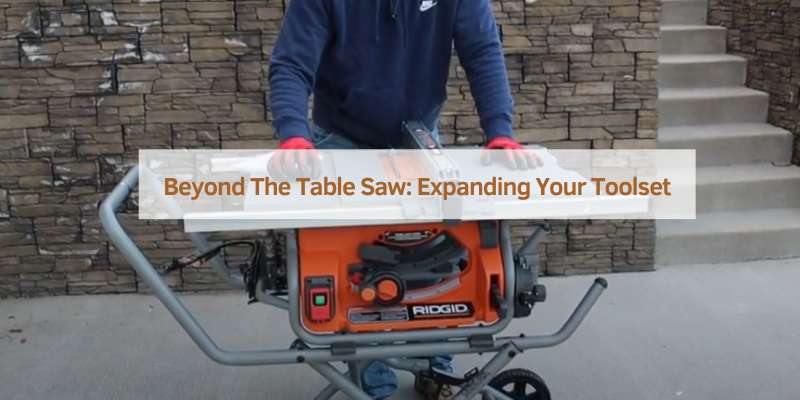
Watch: R4514 Unboxing and Setup
Maintenance and Blade Care
Clear sawdust from the table, blade, miter gauge, and fence rails after every use — buildup on the fence rails is the most common cause of a fence that stops tracking square over time. Keep the blade clean of pitch and resin buildup with a blade cleaner or mineral spirits, and inspect carbide teeth for chips before starting a new project. Compare this against a similarly priced Grizzly table saw if you’re still deciding between brands, or see the previous-generation R4512 if you find one used.
Frequently Asked Questions
Is the RIDGID R4520 Still Available at Home Depot?
Not as a standard, regularly stocked item — the R4520 has been discontinued from Home Depot’s regular retail lineup. It still appears occasionally at clearance events and on secondary markets like eBay, typically priced $375–$500, but stock is inconsistent and not guaranteed at any given store.
How Powerful Is a 13-Amp Table Saw?
A 13-amp motor, like the one in the R4520, is on the higher end for a benchtop or hybrid table saw and can rip hardwood and thick sheet goods without bogging down. It’s a meaningful step up from the smaller motors on entry-level jobsite saws, though it’s still below the horsepower of a true cabinet saw’s induction motor.
What’s the Difference Between a Contractor Table Saw and a Cabinet Table Saw?
A contractor table saw like the R4560 is less expensive and more portable, with the motor typically hanging off the back of the saw. A cabinet saw fully encloses the motor and trunnion, uses heavier castings, and holds a more accurate fence system over time — it’s the better long-term investment for a dedicated shop, but it costs more and is far less portable.
Do I Need to Register My RIDGID Saw to Get the Lifetime Service Agreement?
Yes. You must register within 90 days of purchase, either online or by mail, or the Lifetime Service Agreement is forfeited. Keep your original receipt, since RIDGID may require proof of purchase to process a future parts or service claim.
Conclusion
Choose the R4514 if the saw needs to travel with you, the R4560 if it’s staying in a shop and cutting cabinet-grade material, and only chase down an R4520 if you find one at a good clearance price and don’t need factory-fresh stock. Whichever model you pick, register it within 90 days — the Lifetime Service Agreement is the real long-term value RIDGID offers over competitors at the same price point.
Sponsored / affiliate links. As an Amazon Associate I earn from qualifying purchases. I may earn additional commission from eligible campaigns.
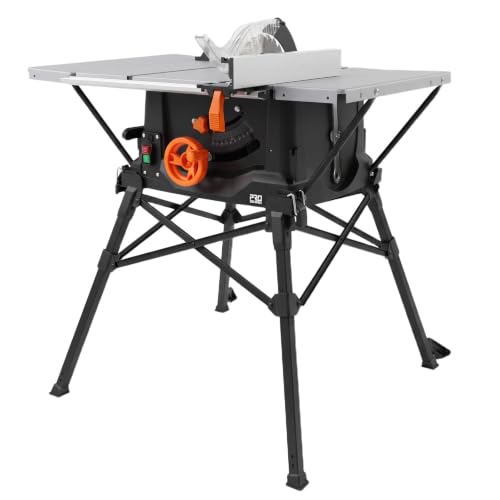 10-Inch Portable Table Saw with Folding Stand, 0-45° Bevel Cut, 15A 5000RPM, Adjustable Blade Height, Multifunctional Benchtop Wood Saw for DIY & Woodworking
 Ageanbri 4" 110V Mini Table Saw Top Cut Off Miter Saw 4500 RPM Multifunctional Desktop Saws w/ 3 Bladesfor Precision Cut Metal Wood Frame Molding