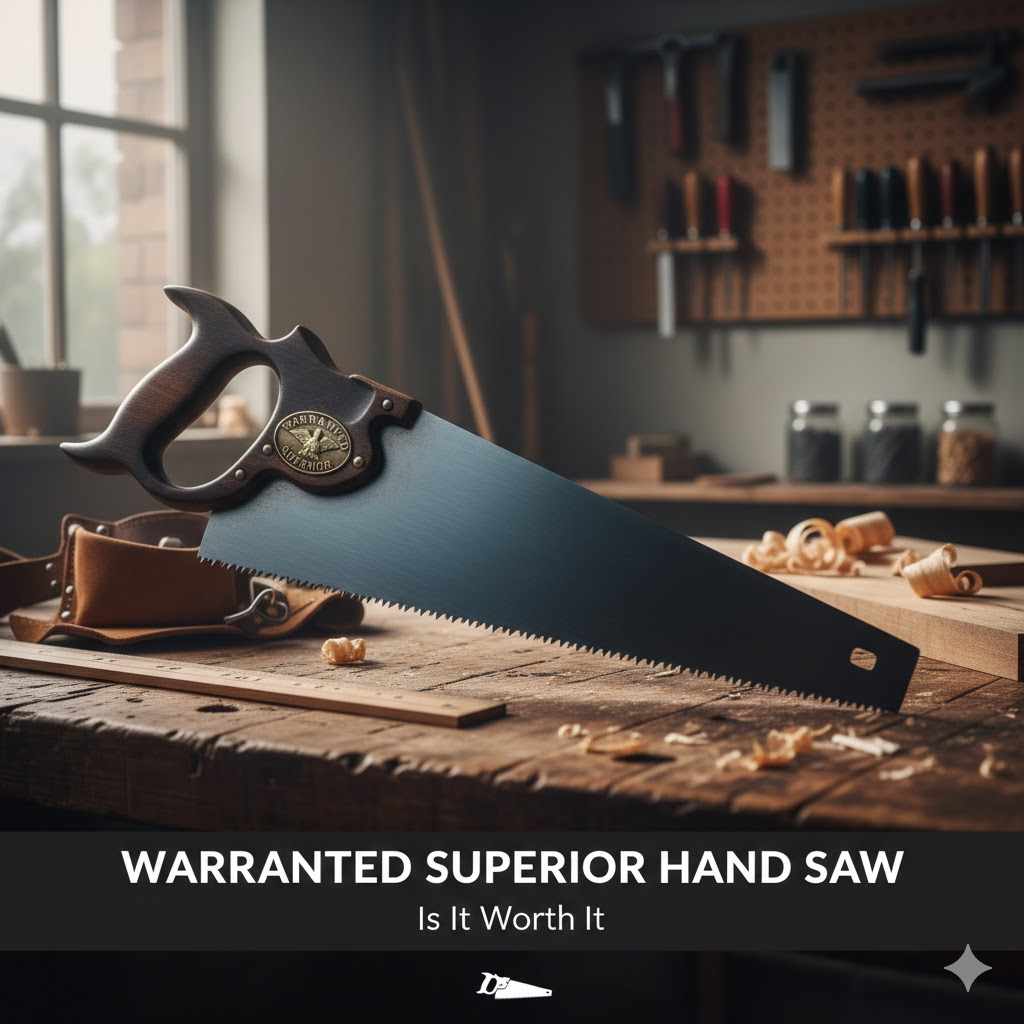
Warranted Superior Hand Saw Is It Worth It
Picking out the right tools can be tough, especially when you’re just starting out. The Warranted Superior Hand Saw: Is It Worth It? question pops up a lot for new woodworkers. It sounds fancy and maybe a bit much, but don’t worry.
We’ll break it down simply so you can decide if it’s the perfect saw for your projects. Get ready for an easy guide that will make things clear.
What Is a Warranted Superior Hand Saw
This section explains what makes a hand saw “warranted superior.” We’ll look at what that title means and why some saws get it. It’s not just a marketing term; it points to quality and how well the saw is made. We’ll cover the parts of a saw and what to expect from a top-tier one.
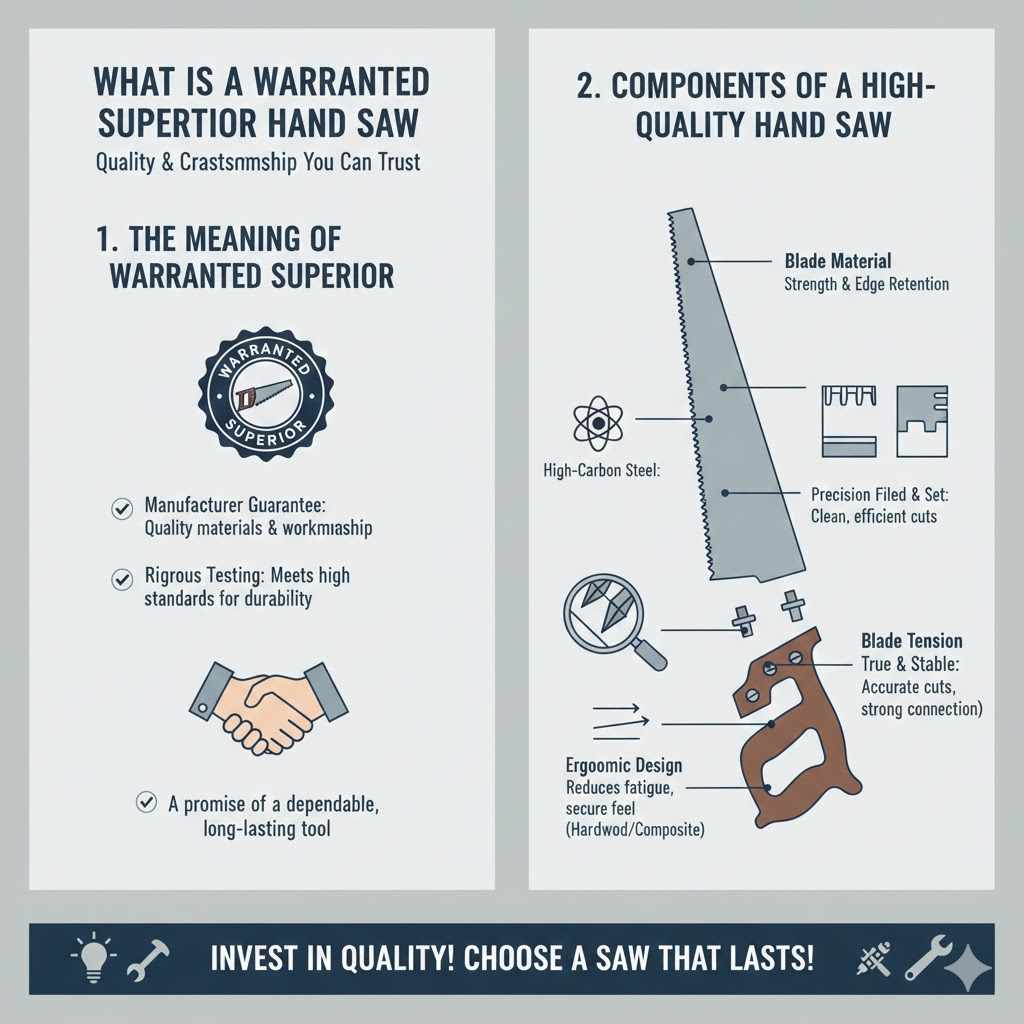
The Meaning of Warranted Superior
When a hand saw is called “warranted superior,” it signifies that the manufacturer stands behind its quality and performance. This isn’t just a general claim. It often means the saw has passed rigorous testing and meets specific standards for durability, cutting ability, and user comfort.
Companies that offer such warranties are typically confident in the longevity and effectiveness of their products. They are willing to offer a guarantee against defects in materials or workmanship.
This designation helps consumers identify tools that are built to last and perform reliably. It suggests a level of craftsmanship and attention to detail that goes beyond standard manufacturing. For someone looking for a tool that won’t fail them mid-project, this assurance is very valuable.
It’s like a promise that the saw is designed to be a dependable partner in your woodworking.
Components of a High-Quality Hand Saw
A truly superior hand saw is made up of several key parts, each contributing to its overall performance. The blade is the heart of the saw. It’s usually made from high-carbon steel for strength and edge retention.
The teeth are precisely filed and set, meaning they are bent slightly to create a kerf (the width of the cut) wider than the blade itself. This prevents binding and makes cutting easier.
The handle is also critical. It should be ergonomically designed to fit comfortably in your hand, reducing fatigue during long work sessions. Materials like hardwood or sometimes composite grips offer a secure and pleasant feel.
The connection between the blade and handle, often secured by bolts or a ferrule, must be strong and stable. A loose handle can be dangerous and inefficient.
- Blade Material: Look for high-carbon steel, which offers a good balance of hardness and toughness. This allows the saw to hold a sharp edge for a long time and resist bending or breaking.
- Tooth Geometry: The shape and spacing of the teeth are crucial. Different tooth patterns are suited for different tasks, like rip cuts (cutting with the grain) or crosscuts (cutting across the grain). Precision in tooth filing ensures clean and efficient cuts.
- Blade Tension: A properly tensioned blade is straight and true, which helps in making accurate cuts. Some higher-end saws might have features that allow for blade adjustment or replacement, further enhancing their longevity and versatility.
- Handle Comfort and Grip: An ergonomic handle reduces hand strain. Materials like beech or walnut are common for wooden handles, offering durability and a natural feel. The shape should complement the natural curve of your hand.
Benefits of a Warranted Superior Hand Saw
Investing in a warranted superior hand saw brings several advantages that enhance your woodworking experience. These saws are built with precision, offering better cutting accuracy and a smoother finish. They also tend to be more durable, meaning they can last for many years with proper care.
For beginners, a good hand saw can make learning much easier. It’s less frustrating to work with a tool that performs well. Experienced woodworkers appreciate the reliability and efficiency that these saws provide for detailed or demanding tasks.
The “warranted” aspect adds peace of mind, knowing you have a tool backed by the manufacturer.
Cutting Precision and Ease of Use
One of the biggest benefits of a warranted superior hand saw is its cutting precision. These saws are engineered with attention to detail. The blade is often thinner yet strong, allowing for a very narrow kerf.
This means less material is wasted, and cuts are cleaner and straighter. The teeth are sharpened to a fine point, gliding through wood with less resistance.
This precision makes a huge difference, especially for beginners. Instead of fighting a saw that wanders or binds, you get a tool that helps guide your cut. The balance of the saw is often excellent too.
This means it feels comfortable in your hand and is easy to control. Even complex cuts become more manageable, boosting confidence and improving the final result of your work.
For example, when cutting joints for furniture, like dovetails or tenons, a precise kerf is essential. A superior hand saw allows for these fine cuts. This leads to tighter-fitting joints that are not only strong but also aesthetically pleasing.
Without this precision, such joints might be loose or require significant fitting and filing later.
Durability and Longevity
A warranted superior hand saw is an investment in a tool that will serve you for a long time. The materials used are typically of higher quality. High-carbon steel blades resist wear and hold their edge longer than those made from softer metals.
This means you won’t have to sharpen or replace the blade as frequently.
The construction is also more robust. Handles are securely attached, and the blade is less prone to bending or breaking. This durability means the saw can withstand regular use, even in demanding situations.
For hobbyists, this translates to years of reliable service. For professionals, it means a trusted tool that contributes to their livelihood.
Consider a scenario where a carpenter uses a warranted superior hand saw for daily framing tasks. While other saws might dull quickly or develop bends, this high-quality saw maintains its sharpness and straightness. This reduces downtime spent on maintenance or replacement.
It ensures that the tool consistently performs at its best, project after project. A well-maintained superior saw can often outlast the user’s need for it.
Return on Investment
While a warranted superior hand saw may have a higher upfront cost, it offers a strong return on investment over time. Think about how often you might need to
Furthermore, the improved performance can save you time and effort on your projects. More precise cuts mean less rework and less material waste. This efficiency adds up, whether you’re working on a weekend hobby or a professional commission.
The peace of mind that comes with a warranty also contributes to its value, as it protects your purchase against defects.
- Reduced Replacement Costs: Cheaper saws might need replacing every few years due to wear, bending, or dulling. A superior saw can last decades, significantly cutting down on future expenses.
- Time Savings: A sharp, precise saw cuts faster and cleaner. This means less time spent on each cut and less time on finishing work to correct imperfections.
- Material Savings: Accurate cuts reduce the chance of mistakes that lead to wasted wood. This is especially important when working with expensive or rare lumber.
- Warranty Protection: The manufacturer’s warranty covers unexpected defects, protecting your initial investment. This can save you money if the saw has a manufacturing flaw.
Comparing Warranted Superior Saws to Standard Saws
Understanding the differences between a warranted superior hand saw and a standard one helps in making an informed choice. Standard saws are generally more affordable and widely available. They are suitable for light tasks and occasional use.
However, they often lack the fine-tuning and material quality of their superior counterparts.
The warranted superior saws stand out in terms of the quality of steel, the precision of the tooth grind, and the ergonomic design of the handle. They are built for performance and longevity. This comparison will help you see where the extra cost, if any, is justified for your needs.
Material Quality and Blade Construction
The primary distinction often lies in the materials used and how the blade is constructed. Standard hand saws might use a general-purpose steel that is adequate for basic cutting but can dull more quickly and may be more prone to bending. The teeth might be stamped rather than precisely filed, leading to a rougher cut.
Warranted superior saws, on the other hand, are typically forged from high-carbon steel alloys. This type of steel is heat-treated to achieve a superior hardness, which translates to exceptional edge retention. The teeth are often filed by hand or with precision machinery to very specific angles and patterns.
This ensures a sharp, aggressive bite into the wood and a clean removal of material.
Consider the blade thickness. Superior saws often have a thinner blade profile. This thinner kerf reduces the amount of wood that needs to be removed during a cut, requiring less effort from the user and resulting in a finer cut.
This precision in blade construction is a hallmark of a high-quality tool.
Handle Design and Ergonomics
The handle is where your hand meets the tool, and its design significantly impacts comfort and control. Standard saws often have basic, sometimes utilitarian, handles. They might be made of solid wood or plastic and may not be shaped for long periods of use.
This can lead to hand cramps or blisters during extended projects.
Warranted superior hand saws, however, feature ergonomically designed handles. These are shaped to fit the natural contours of the hand, providing a comfortable and secure grip. They are often made from premium materials like dense hardwoods or specially molded composites.
The goal is to distribute pressure evenly and minimize vibration, making the saw a pleasure to use.
A well-designed handle allows for better control over the saw’s movement. It reduces the need for excessive force, as the saw’s weight and balance work with your natural motions. For instance, when making long crosscuts on a wide board, an ergonomic handle prevents fatigue and allows you to maintain a steady stroke from start to finish.
This is crucial for achieving straight, clean lines.
| Feature | Standard Hand Saw | Warranted Superior Hand Saw |
|---|---|---|
| Blade Material | General Steel | High-Carbon Steel Alloy |
| Tooth Sharpening | Stamped or Rough Filed | Precision Filed, Often Hand Sharpened |
| Kerf Width | Wider, More Material Removed | Narrower, Less Material Removed |
| Edge Retention | Dulls Faster | Holds Edge Longer |
| Handle Comfort | Basic, Less Ergonomic | Ergonomic, Comfortable for Extended Use |
| Durability | Moderate | High, Built to Last |
| Price | Lower | Higher |
Performance Differences in Practice
When you pick up a warranted superior hand saw, the difference in performance is usually immediately noticeable. The blade glides through wood with less effort, almost as if it’s cutting through butter. The sharpness of the teeth means fewer strokes are needed to complete a cut.
Standard saws can often require more force, leading to a rougher cut and more splintering. They might also bind in the kerf, making the sawing motion jerky and difficult to control. This can result in uneven cuts that need a lot of sanding or planing to fix.
With a superior saw, the cut is often so clean that minimal finishing is required.
For example, when making a delicate cut on a thin piece of plywood, a standard saw might chip the veneer or create a ragged edge. A warranted superior saw, with its precise teeth and narrow kerf, will produce a clean, smooth cut. This level of performance is invaluable for detailed work or when accuracy is paramount.
It saves time and leads to better-looking projects.
Real-life Example:
- Sarah, a hobby woodworker, initially bought a cheap hand saw for small DIY projects around her home. She found that cutting even simple pine boards was a struggle. The saw often got stuck, and the cuts were jagged, requiring significant sanding. After purchasing a warranted superior hand saw, she was amazed at the difference. Cutting was smooth, fast, and the resulting edges were clean. This inspired her to take on more complex projects, knowing her tools wouldn’t hold her back.
- Mark, a carpenter, uses his hand saws for precise joinery work. He switched from standard saws to a warranted superior model for cutting tenons. The superior saw allowed him to achieve much tighter fits with his mortises. This meant less time spent adjusting joints and more professional-looking furniture. The durability also meant he didn’t have to replace his primary tenon saw for over ten years.
Choosing the Right Warranted Superior Hand Saw
Deciding on a warranted superior hand saw involves considering your specific woodworking needs. Not all superior saws are the same; they are designed for different types of cuts and materials. Think about the kind of projects you do most often.
This section will guide you through the different types of superior hand saws available and help you match them to your tasks. We’ll explore key features to look for and provide advice on making your final selection.
Types of Hand Saws for Different Cuts
Hand saws come in various forms, each optimized for a particular type of cut. For general-purpose cutting, a crosscut saw is a good choice. Its teeth are shaped like small knives, designed to sever wood fibers cleanly when cutting across the grain.
These are often what people think of as a “standard” hand saw but are available in superior models.
If you primarily work with lumber along its grain, a rip saw is better. Its teeth are more like chisels, designed to efficiently remove wood in strips. These cuts are typically rougher than crosscuts but much faster.
For more specialized tasks, there are other saws. A backsaw, with its reinforced spine, is ideal for precise joinery like tenons and dovetails. Its stiff blade prevents bending, ensuring very accurate cuts.
There are also coping saws and fret saws with very thin, flexible blades for intricate curves and internal cuts.
Understanding Tooth Pitch
The tooth pitch, or the number of teeth per inch (TPI), is a key factor in a saw’s performance. A higher TPI means smaller teeth and a finer cut. These are good for hardwoods and precise work where a smooth finish is important.
A lower TPI means larger teeth and a more aggressive cut. These are best for softwoods and for making faster cuts where a perfectly smooth finish isn’t the top priority. For a general-purpose superior hand saw, a TPI of around 7-10 is often a good balance.
Key Features to Look For
When examining warranted superior hand saws, pay attention to a few critical features. First, confirm the blade is made of high-carbon steel. This is essential for durability and edge retention.
Next, inspect the teeth. Are they uniformly sharp? Does the tooth pattern look suitable for your intended use (crosscut, rip, etc.)?
A good saw will have clearly defined, sharp points. The set of the teeth (how much they are bent outward) should be consistent, ensuring a kerf that prevents binding.
The handle is also important. It should feel comfortable and balanced in your hand. Look for a secure connection between the blade and the handle.
A well-fitted handle reduces vibration and makes the saw easier to control. Some high-end saws might offer interchangeable blades, adding versatility.
- Blade Material: Always prioritize high-carbon steel for its strength and ability to hold a sharp edge.
- Tooth Design: Ensure the teeth are sharp, precisely ground, and the spacing (TPI) matches your typical woodworking tasks.
- Blade Straightness and Tension: A good blade should be perfectly straight without any warps or bends. Proper tensioning is vital for accurate sawing.
- Handle Ergonomics: The handle should fit your grip comfortably, providing good control and minimizing fatigue during prolonged use.
Making Your Selection for Warranted Superior Hand Saw: Is It Worth It?
To answer the question Warranted Superior Hand Saw: Is It Worth It?, consider your current and future woodworking projects. If you do a lot of fine woodworking, joinery, or if you simply want a tool that makes cutting enjoyable and efficient, then yes, it is likely worth the investment.
If you only do very occasional, rough cuts, a standard saw might suffice. But even for beginners, a superior saw can significantly improve the learning experience by reducing frustration. Think about the longevity and the quality of the cuts you desire.
A warranted superior hand saw is a tool that can last a lifetime, making it a wise choice for many.
Sample Scenario
- Imagine you are building a small bookshelf. You need to cut several pieces of pine to length for the shelves and sides.
- You also need to cut some dadoes (grooves) for the shelf supports.
- If you use a basic saw, cutting the shelves might be manageable but could leave rough edges. Cutting the dadoes would be very difficult to do precisely and would likely require a lot of chisel work afterward.
- With a warranted superior hand saw, specifically a backsaw with a fine tooth pitch, you could cut the shelves very cleanly. For the dadoes, you could use the same saw or a dedicated grooving saw to create precise channels for the shelves to slot into. This would result in a much stronger, more attractive bookshelf with less effort.
Maintaining Your Warranted Superior Hand Saw
Once you’ve invested in a warranted superior hand saw, proper maintenance is key to ensuring it performs at its best for years to come. These saws are built to last, but they still require care. Neglecting maintenance can lead to dulling, rust, or damage, diminishing the saw’s effectiveness.
This section will cover the essential steps for keeping your hand saw in excellent condition. We’ll discuss cleaning, sharpening, and storage to preserve its quality and functionality.
Cleaning and Rust Prevention
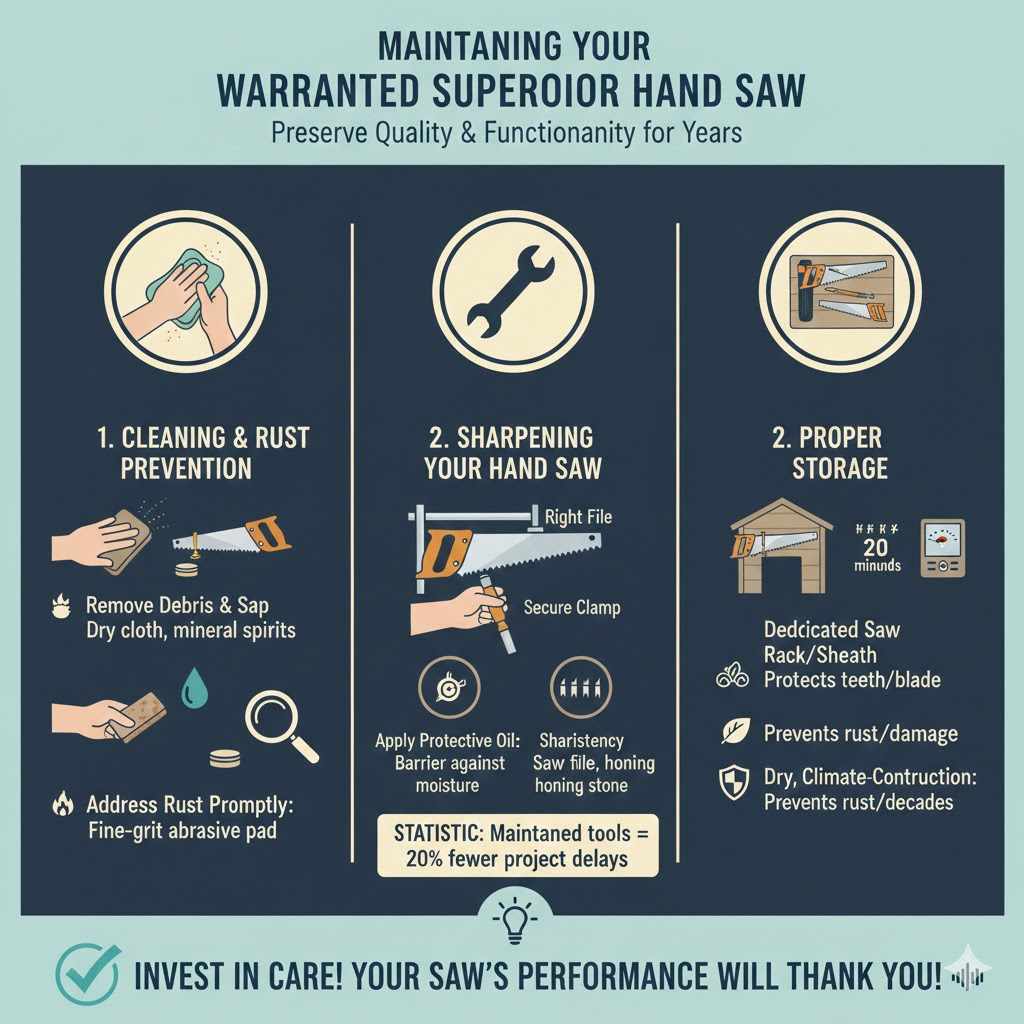
After each use, it’s important to clean your hand saw. Wood dust and sap can accumulate on the blade, making it less efficient. A dry cloth is usually sufficient for removing loose debris.
For sticky sap, a bit of mineral spirits on a cloth can help.
Rust is the enemy of any steel tool. To prevent rust, ensure the saw blade is completely dry before storing it. Some woodworkers apply a very light coating of oil, such as mineral oil or a specialized tool oil, to the blade.
This creates a barrier against moisture. Store your saw in a dry environment, away from humidity.
If rust does appear, it needs to be addressed promptly. Light rust can often be removed with a fine-grit abrasive pad or specialized rust remover. Be gentle to avoid scratching the blade’s surface.
After cleaning off any rust, reapply a light coat of oil.
Sharpening Your Hand Saw
Sharpening a hand saw is a skill that can be learned, and it significantly extends the life and performance of your tool. A dull saw requires more force, makes rougher cuts, and is more tiring to use.
The process typically involves using a specialized saw file. The type of file and the technique depend on the saw’s tooth pattern. For crosscut saws, you file each tooth individually, maintaining the original angle and bevel.
For rip saws, the approach is slightly different. It’s crucial to sharpen all teeth to the same height and angle to ensure an even cut.
Many superior hand saws come with instructions or guidance on how to sharpen them. There are also many online tutorials and videos that can guide you through the process. Learning to sharpen your own saw gives you greater control over its performance and saves money on professional sharpening services.
- Select the Right File: Use a file specifically designed for saw teeth, matching its size and type to your saw’s TPI and tooth geometry.
- Set the Saw: Clamp the saw securely so the blade is stable but not so tight that it deforms. Ensure it’s held at a comfortable working angle.
- Sharpen Each Tooth: File each tooth with consistent pressure and strokes, following the original bevel. Aim for sharp, clean points.
- Check for Consistency: After filing, inspect the teeth to ensure they are uniform in height and angle. A few passes with a honing stone can further refine the edge.
Proper Storage
Storing your warranted superior hand saw correctly is crucial for protecting it from damage and the elements. Avoid simply tossing it into a toolbox where it can get banged around. The fine teeth can be damaged, and the blade can get bent.
Ideally, store your hand saw in a dedicated saw rack or a sheath. A sheath protects the blade from accidental contact and prevents rust by keeping dust and moisture away. For saws stored in racks, ensure they are held securely and their teeth are not exposed to potential damage.
Keep your saws in a dry, climate-controlled area. Avoid storing them in damp basements or sheds where temperature and humidity fluctuate significantly. A stable environment will help prevent rust and maintain the integrity of the steel over time.
Some users even wrap their saws in oil-treated cloth for an extra layer of protection.
Statistic on Tool Maintenance:
Studies suggest that woodworkers who regularly maintain their hand tools report up to 20% fewer project delays due to tool failure. This highlights the practical impact of consistent cleaning, sharpening, and proper storage on overall productivity and project completion.
Frequently Asked Questions
Question: Are Warranted Superior Hand Saws good for beginners?
Answer: Yes, they can be very good for beginners because they are easier to use and provide cleaner cuts, which makes learning more enjoyable and less frustrating.
Question: How often do I need to sharpen a Warranted Superior Hand Saw?
Answer: This depends on how often you use it and the type of wood you cut. For regular hobby use, sharpening might be needed every few months to a year.
Question: Can I use any file to sharpen my Warranted Superior Hand Saw?
Answer: No, it’s best to use a file specifically designed for saw teeth. Using the wrong file can damage the teeth and ruin the saw’s cutting ability.
Question: What does the warranty on a Warranted Superior Hand Saw typically cover?
Answer: Warranties usually cover defects in materials and workmanship. They generally do not cover damage from misuse, neglect, or normal wear and tear.
Question: Is a Warranted Superior Hand Saw worth the higher price?
Answer: For many woodworkers, the increased durability, precision, and ease of use make the higher price a worthwhile investment for long-term satisfaction and better results.
Final Thoughts
Deciding if a warranted superior hand saw is worth it comes down to your woodworking goals. These saws offer exceptional precision, durability, and comfort that make projects more enjoyable and results better. They are an investment that pays off in longevity and performance.