Carcass Saw vs Tenon Saw: The Real Difference
Carcass and tenon saws look nearly identical at first glance, and old content on this exact comparison has gotten the details backwards before. Here’s what actually separates them, corrected against how these tools are really used.
The Real Difference: Tooth Setup, Not Size
A Real Western Backsaw
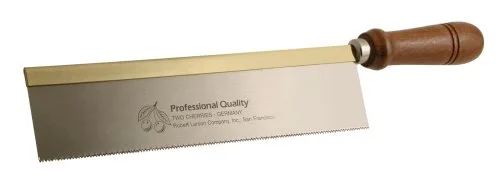 |
Two Cherries 10″ Brass Back Dovetail Saw – $42.92 A fine-tooth backsaw like this covers the crosscut work a carcass saw is built for — dovetails, tenon shoulders, and general joinery crosscuts.
|
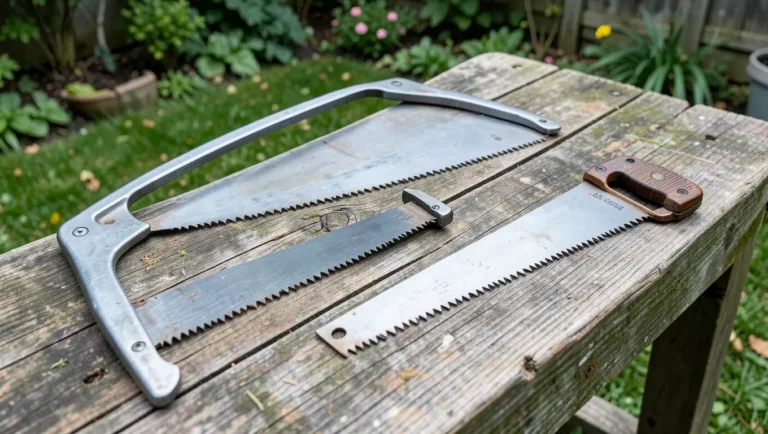
Both a carcass saw and a tenon saw are Western-style backsaws — a reinforced brass or steel spine along the top keeps the thin blade straight, and both cut on the push stroke, not the pull. The real difference is what the teeth are filed for: a carcass saw has fine, crosscut-filed teeth (typically 12-16 TPI) meant for cutting across the grain — dovetails, tenon shoulders, general small joinery. A tenon saw has coarser, rip-filed teeth (typically 10-13 TPI) meant for cutting along the grain — specifically ripping the cheeks of a tenon, which is a longer cut where speed matters more than a glass-smooth surface. Neither is simply “the bigger one” or “the more precise one” — they’re each precise at the specific cut they’re filed for.
Carcass Saw: Fine Crosscuts
A carcass saw is typically 10-14 inches long with a short, stiff blade and a fine crosscut tooth pattern. It’s built for accuracy on shorter cuts across the grain — dovetail cheeks, tenon shoulders, trimming small joinery pieces to length. Its short length and light weight make it easy to control precisely, which is exactly what a clean crosscut needs.
Tenon Saw: Ripping Along the Grain
A tenon saw runs longer, often 12-16 inches, with coarser rip-filed teeth designed to remove material quickly when cutting along the grain — specifically the long cheek cuts of a tenon joint. The extra length supports a longer stroke, which matters on a cut that can run several inches down the length of a workpiece. It’s not the tool for a fine crosscut — the coarser teeth leave a rougher surface than a carcass saw’s crosscut teeth would on the same kind of cut.
Quick Comparison
| Carcass Saw | Tenon Saw | |
|---|---|---|
| Blade length | 10-14 inches | 12-16 inches |
| Tooth filing | Crosscut (fine, ~12-16 TPI) | Rip (coarser, ~10-13 TPI) |
| Best cut | Across the grain (shoulders, dovetails) | Along the grain (tenon cheeks) |
| Cutting stroke | Push | Push |
Sharpening and Maintenance
The tooth-filing difference that separates these two saws also determines how they’re sharpened: a carcass saw’s crosscut teeth are filed with an angled bevel on each tooth to slice grain fibers cleanly, while a tenon saw’s rip teeth are filed straight across, more like a tiny chisel edge, since ripping doesn’t need the same shearing action. This means a saw file set up for one pattern won’t produce a good result on the other — if you’re sharpening your own, learn (or look up) the specific pattern for the saw in hand rather than assuming one technique works for both. Both saw types benefit from a light coat of paste wax or oil on the blade after use to prevent rust, and from being stored with the teeth protected (a saw till, a blade guard, or simply not tossed loose in a drawer with other metal tools that can dull or chip the fine teeth on contact).
How to Tell Which One You Already Have
If you’ve inherited or bought a used backsaw without a label, you can identify it in about a minute. Count the teeth per inch (TPI) along an inch of the blade: 12 or more, fine and closely spaced, points to a carcass saw or dovetail saw built for crosscutting. 10-13 TPI with noticeably larger, more widely spaced teeth points to a tenon saw built for ripping. Measure the blade length next — under about 12 inches leans carcass, 12 inches and up leans tenon, though length alone isn’t as reliable as the tooth pattern. If you can look closely at the tooth shape itself, crosscut teeth have an angled, knife-like bevel on each tooth; rip teeth look more like a row of tiny flat chisels. Between tooth count and tooth shape, you can identify almost any unlabeled Western backsaw with confidence.
Where These Saws Came From
Both saw types trace back to 18th and 19th century English and American cabinetmaking, where specialized backsaws proliferated as furniture makers needed increasingly precise joinery for higher-end work. The reinforced spine itself was the key innovation — it let makers use a much thinner blade than an unsupported handsaw could manage, and a thinner blade means a narrower kerf and less wasted wood on every cut, which matters over hundreds of joints in a piece of furniture. The specific carcass-vs-tenon split in naming reflects the two most common joinery tasks in cabinetmaking of that era: building a piece’s carcass (its main box structure, heavy on crosscut joinery) versus cutting the mortise-and-tenon joints that held frame-and-panel work together. The names have stuck even as the tools themselves have become more standardized and mass-produced.
Buying New vs. Vintage
Vintage carcass and tenon saws (Disston, Spear & Jackson, and similar older makers) show up regularly at estate sales and secondhand tool dealers, often for less than a comparable new saw, and old saw steel is frequently very good once cleaned up and re-sharpened. The catch is that a vintage saw’s teeth may need professional or DIY resharpening before it cuts well, and you’re buying without the ability to test the saw first. A new saw from a reputable maker costs more but arrives ready to use, with predictable quality and no restoration work required. For a first backsaw, new is the lower-risk choice; once you’re comfortable judging saw condition and sharpening your own teeth, vintage saws are a genuinely good way to build a kit affordably.
Do You Need Both?
For real mortise-and-tenon joinery, yes — a tenon saw rips the cheeks efficiently, then a carcass saw (or a dedicated dovetail saw with similarly fine teeth) cleans up the crosscut shoulders. If you’re only doing occasional dovetails and small joinery without much tenon work, a single fine-tooth crosscut backsaw covers most of what you’ll need, and you can add a rip-filed saw later once tenon work becomes a regular part of your projects.
Common Mistakes With Either Saw
- Using a rip-filed tenon saw for a crosscut: it’ll still cut, but the surface comes out rougher and more prone to tearout than a crosscut-filed carcass saw would leave on the same cut.
- Starting the cut without a guide: a thumb knuckle or a simple wood block clamped at the layout line keeps the first few strokes from wandering before the kerf is established enough to track on its own.
- Forcing the saw: both saw types are designed to cut on their own weight and a light push — forcing extra downward pressure doesn’t speed up the cut, it just makes it harder to keep straight.
- Ignoring a dull or damaged tooth line: a saw that’s started to wander or bind usually needs sharpening, not more force or a different technique to compensate.
Frequently Asked Questions
What is the difference between a carcass saw and a tenon saw?
Tooth filing, not size. A carcass saw has fine, crosscut-filed teeth for cutting across the grain (dovetails, shoulders). A tenon saw has coarser, rip-filed teeth for cutting along the grain (tenon cheeks). Both are Western backsaws that cut on the push stroke.
What is a carcass saw used for?
Fine crosscut joinery work: dovetail cheeks, tenon shoulders, and trimming small pieces to length. Its short blade and fine teeth are built for accuracy on shorter cuts across the grain.
Does a carcass saw or tenon saw cut on the push or pull stroke?
Both cut on the push stroke — they’re Western-style backsaws. Pull-stroke cutting is a feature of Japanese-style saws (like a dozuki), not Western carcass or tenon saws.
Conclusion
The real distinction is tooth filing matched to grain direction: carcass saws crosscut fine joinery, tenon saws rip tenon cheeks along the grain, and both do their specific job well rather than one being “more precise” than the other. Pick based on the cut you’re actually making, not the saw’s name alone — and if you’re buying your first one, a new saw with predictable, ready-to-use teeth is the safer starting point over a vintage find until you’re comfortable judging and sharpening saw teeth yourself.
Sponsored / affiliate links. As an Amazon Associate I earn from qualifying purchases. I may earn additional commission from eligible campaigns.