What Is the Whitest Wood? Holly vs 7 Pale Woods (Janka Table)
American holly is the whitest wood you can realistically buy. Good holly lumber is a uniform pale white with almost no visible grain, which is why it has long been used for inlay, and it stays light after finishing if you pick a non-yellowing finish. Hard maple sapwood, basswood, birch sapwood and spruce come next, but they lean cream or yellow, and one popular pick, white ash, is not white at all.
This guide compares the pale woods side by side with real Janka hardness numbers, corrects a few color myths, and shows how to keep a pale board pale. If you are after weight instead of color, see the lightest wood by weight, and for the opposite end of the color range, what wood is naturally black.
Holly: The Whitest Wood
Best Holly Sample Pick
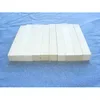 |
American Holly Pen Blanks, 3/4″ x 5″ (10 pcs), $25.00 Ten kiln-dried holly blanks, each 3/4″ x 3/4″ x 5″, a low-cost way to see real holly color before you commit to expensive boards.
|
American holly (Ilex opaca) grows in the eastern United States, but the tree is small, about 30 to 50 feet tall with a trunk 1 to 2 feet across, so boards are short and narrow. The wood-database.com species page describes ideal lumber as a very uniform, pale white with virtually no visible grain, and notes that holly remains light-colored even after a finish is applied, assuming a non-yellowing finish.
There is a catch that most articles skip: holly is fussy to dry. It can develop a bluish-gray fungal stain if it is not dried rapidly after cutting, which is why it is usually cut in winter and kiln dried soon after. The pure white board in a photo has been handled carefully, and a stained one is a common reason for rejects.
- Hardness: 1,020 lbf Janka, mid-range for a hardwood, with an average dried weight of 40 lbs per cubic foot.
- Grain: Interlocked and irregular with a medium to fine, even texture, so it can tear out, and knots are common.
- Working: Glues, stains and finishes well and turns well on the lathe. It is sometimes dyed black as an ebony substitute.
- Weak points: A fairly large shrinkage rate and plenty of seasonal movement, and strength that is mediocre for a hardwood, so it is used for decorative work rather than structure.
- Cost: Seldom available commercially and expensive, usually in small sizes and quantities.
Whitest Woods Compared
The table lists the pale candidates by how white they read, using color descriptions and Janka hardness from wood-database.com. Janka is the force in pounds needed to embed a steel ball into the wood, so a higher number means harder.
| Wood | Color (as described) | Janka (lbf) | Notes |
|---|---|---|---|
| American holly | Very uniform pale white, minimal grain | 1,020 | Whitest; small boards, pricey, fussy to dry |
| Hard (sugar) maple | Sapwood nearly white to off-white cream, sometimes reddish or golden | 1,450 | Widely available; can blotch when stained |
| Paper birch | Nearly white sapwood, light reddish-brown heartwood | 910 | Dull, uniform look; perishable outdoors |
| Basswood | Pale white to light brown, uniform | 410 | Favorite carving wood; very soft |
| Sitka spruce | Cream/white to yellow | 510 | Light and stiff; blotchy when stained |
| Quaking aspen | Sapwood pale yellow to nearly white, wide | 350 | Very soft; light brown heartwood |
| Eastern white pine | Sapwood pale yellow to nearly white | 380 | Darkens with age |
| Boxwood | Light cream to yellow | 2,940 | Extremely hard and costly; darkens with light |
Read the table as a ranking of color potential, not a promise. Maple, birch and pine give you nearly white sapwood, but the same board may include darker heartwood, and boards are usually sorted by grade instead of shade. Holly is the only pick where the whole board is expected to be pale.
Holly versus hard maple, the two realistic choices
For most projects the real decision is holly or hard maple. Holly is whiter and has almost no visible grain, but hard maple is harder (1,450 lbf against 1,020), a little heavier (44 versus 40 lbs per cubic foot) and moves slightly less, with volumetric shrinkage of 14.7 percent against 16.9 percent for holly. Maple is also much easier to find in larger boards, since holly is seldom sold commercially. If your piece is a tabletop or cabinet door, maple is the practical pick, and if it is a small inlay where the color contrast is the point, holly is worth the price.
Why two boards of the same species can look different
Hard maple is one of the few hardwoods where the sapwood is used more often than the heartwood. The sapwood ranges from nearly white to off-white cream, while the heartwood is a darker reddish brown, so a board with any heartwood will not match a pure sapwood board next to it. Ash works the other way, with a very wide beige sapwood. When color matching matters, sort boards by eye, buy a little extra, and glue up panels from boards cut from the same stack.
Three Color Myths Worth Correcting
White ash is not white
White ash (Fraxinus americana) is a popular light hardwood, but wood-database.com describes the heartwood as light to medium brown and the sapwood as beige or light brown, with no sharp line between them. It is a good pale-looking wood for furniture and tool handles at 1,320 lbf, but if you need true white, choose holly. For a wider look at ash, see ash compared with cedar.
Whitewood is a lumber category, not a color
At the lumber yard, whitewood normally means spruce-pine-fir construction lumber. It is pale, but it runs cream to yellow, and it stains blotchy without a conditioner. The full story is in what is whitewood and can you stain white wood.
White oak is not a white wood either
White oak is a species name. The heartwood of Quercus alba is a light to medium brown, commonly with an olive cast, so do not buy it expecting a pale look.
Keeping Pale Wood Pale
- Use a non-yellowing finish. Holly stays light with one, whereas finishes that add an amber tint will warm it. Test on an offcut first.
- Expect some darkening. Wood-database.com notes that eastern white pine darkens with age, boxwood darkens with prolonged light exposure and poplar darkens on exposure to light. Plan on the color warming over time.
- Condition before staining. Hard maple and spruce can blotch, and a pre-conditioner, gel stain or toner is recommended for an even color.
- Dry it quickly. Holly that dries slowly can pick up a bluish-gray stain, so buy kiln-dried stock.
For general finishing choices, see the wood finishing guide.
Which Pale Wood Should You Use?
- Inlay and marquetry: Holly, for maximum contrast against dark woods. See how to make wood inlay strips and hardwood floor inlay ideas.
- Furniture and cabinets: Hard maple sapwood, which is easier to find and typically moderately priced compared with holly, with a light, clean look.
- Carving and painting: Basswood, soft and pale and easy to paint. See carving wood choices for grain risk on harder species.
- Light framing and crafts: Spruce or white pine, cheap and stiff, but they yellow and darken.
- Small turned or carved pieces: Boxwood, if you can afford it, for very fine detail.
Poplar is another pale-looking option; the birch vs poplar comparison explains how the two differ in color and hardness. For hardness numbers across species, use the wood hardness scale, and for a broad overview of species, see types of wood.
Frequently Asked Questions
What is the whitest wood?
American holly (Ilex opaca) is generally considered the whitest commercial wood. Good lumber is a very uniform pale white with almost no visible grain. Hard maple sapwood, basswood, paper birch sapwood and spruce are pale too, but they lean cream or yellow.
Is white ash a white wood?
No. Despite the name, white ash heartwood is light to medium brown and the wide sapwood is beige or light brown. It is a light-colored hardwood, but it is not white.
Does holly wood stay white?
Holly stays light after finishing if you use a non-yellowing finish, and it is cut in winter and dried quickly because slow drying can leave a blue-gray fungal stain. Like most pale woods it may still warm slightly in color over time.
Is whitewood the same as white wood?
No. Whitewood is a lumber-yard term, usually for spruce-pine-fir construction lumber, and it is cream to yellow rather than white. It is a category, not a color guarantee.
Is holly wood expensive?
Yes. Holly is seldom sold commercially, is usually available only in small sizes and quantities, and is priced as an expensive domestic hardwood.
For a truly white look, holly is the answer, and hard maple sapwood is the affordable stand-in. Whichever you choose, seal it with a non-yellowing finish and buy a sample first, because color varies board to board.
Sponsored / affiliate links. As an Amazon Associate I earn from qualifying purchases. I may earn additional commission from eligible campaigns.