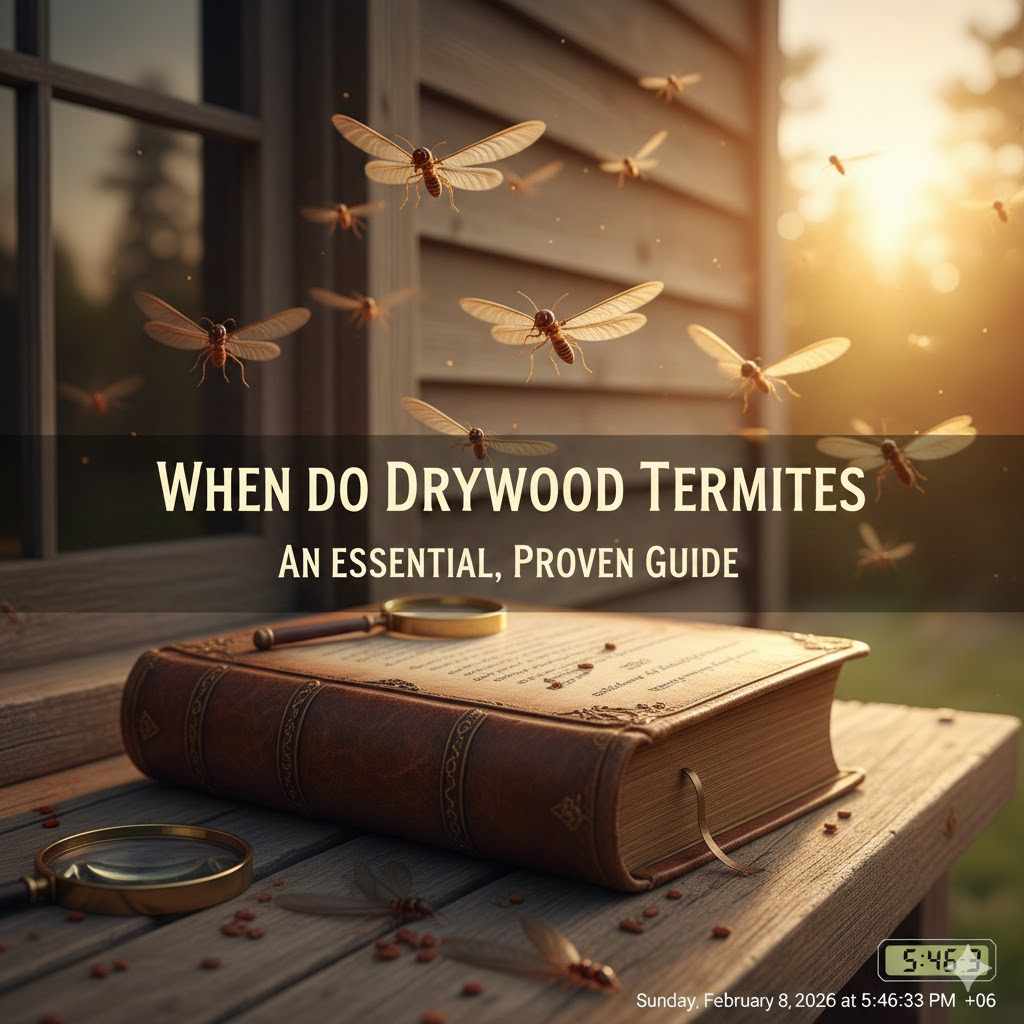
When Do Drywood Termites Swarm? An Essential, Proven Guide
Drywood termites typically swarm on warm, sunny days after a sudden rise in temperature, most often in late spring and summer. Swarming season varies by region but generally occurs from August through November in warmer coastal areas, though it can happen at other times when conditions are right.
Hello fellow creators and homeowners! Md Meraj here, your friendly guide in the workshop. Few things can stop a woodworking project—or a peaceful afternoon at home—in its tracks like the sight of a swarm of winged insects. Is it ants? Is it something worse? Often, that “something worse” is a termite swarm, and knowing what you’re seeing is the first step to protecting your home and your precious wood projects.
Dealing with pests can feel overwhelming, but I’m here to tell you that it doesn’t have to be. We’re going to break down exactly when and why drywood termites swarm, how to identify them, and what to do next. Think of this as your clear, simple roadmap. Together, we’ll turn that moment of worry into a moment of action. Let’s get started.
What is a Termite Swarm? A Simple Explanation
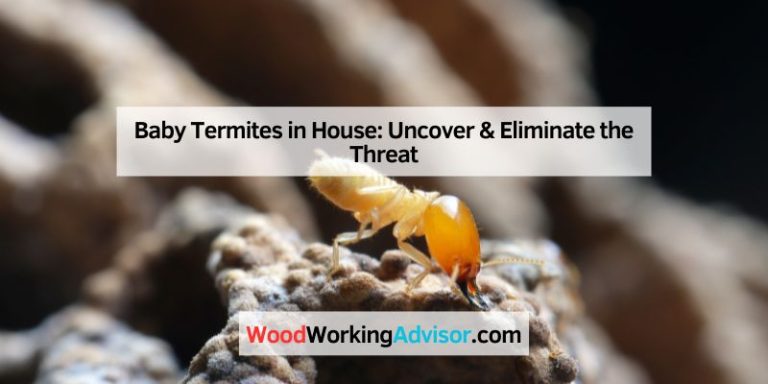
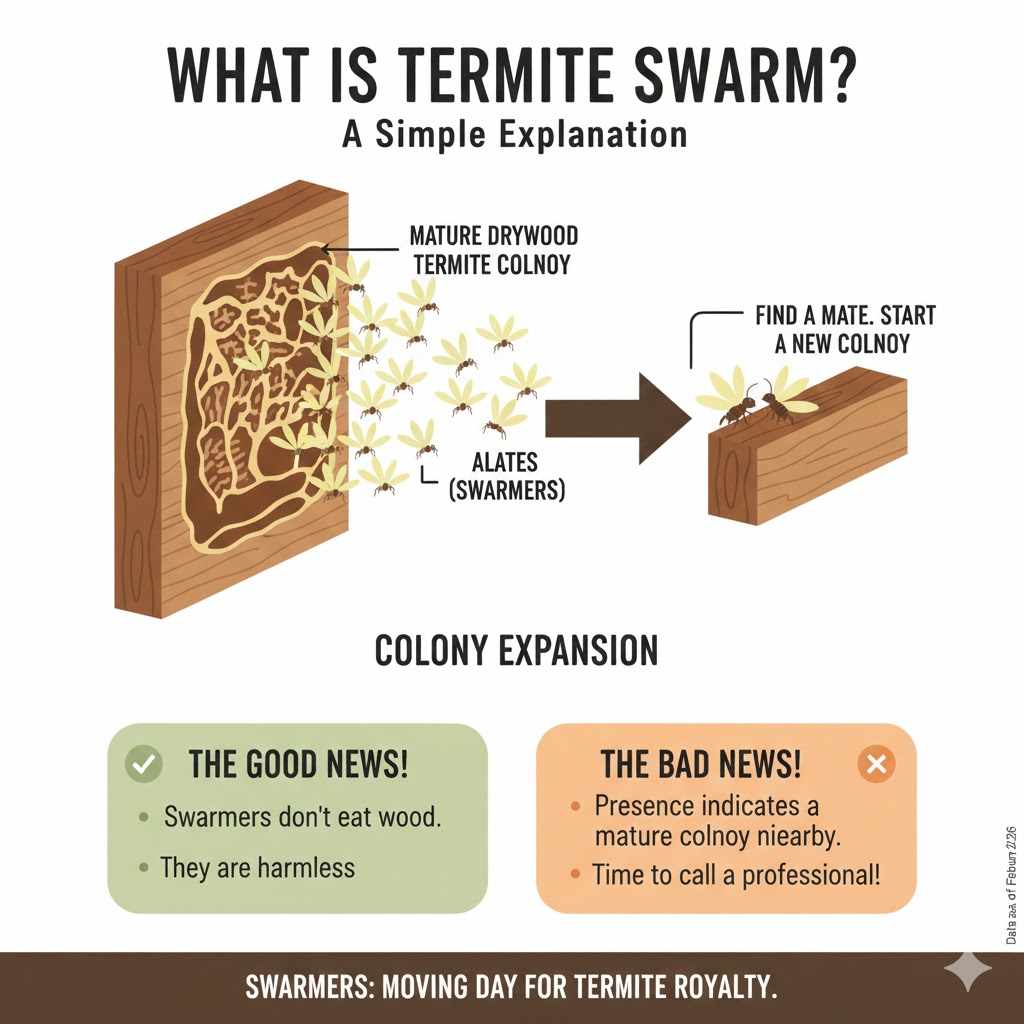
Before we dive into the “when,” let’s quickly cover the “what.” A termite swarm isn’t an attack. It’s actually a colony’s way of expanding. Think of it as a moving day for young termite royalty.
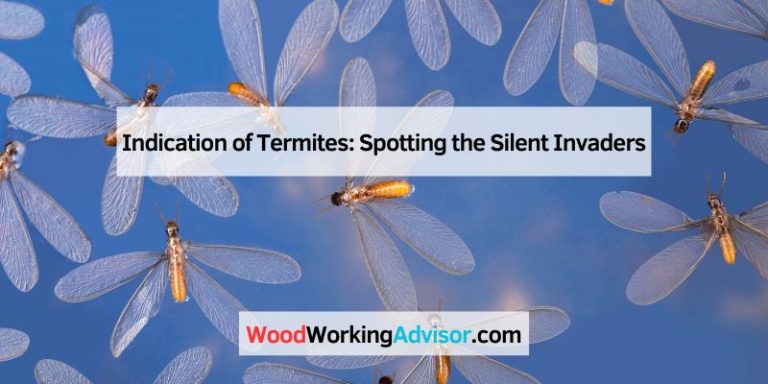
When a drywood termite colony gets big and healthy (usually after several years), it produces special winged termites called “alates” or “swarmers.” Their one and only job is to fly out of the nest, find a mate, and start a new colony somewhere else—perhaps in your neighbor’s house, or unfortunately, another part of your own home. The swarm itself is a collection of these alates all leaving at once.
The good news? Swarmers don’t eat wood or cause damage themselves. The bad news? Their presence is a definite sign that a mature, wood-eating colony is nearby.
The Main Swarming Season for Drywood Termites
So, when do drywood termites swarm? While a swarm can technically happen anytime conditions are perfect, they have a clear favorite season.
The primary swarming season for most drywood termite species is late summer and fall. However, this can shift depending on your location.
- In warmer, coastal regions like California and Florida: You can expect to see swarms from August through November.
- In other warm parts of the country: The season might start earlier, in late spring, and continue through the summer.
The key takeaway is that swarming is tied to weather, not a specific date on the calendar. A sudden heatwave in May could trigger a swarm just as easily as a warm afternoon in September. For more detailed information on termite biology, the Environmental Protection Agency (EPA) offers excellent resources for homeowners.
Key Triggers That Start a Swarm
Termites don’t just decide to swarm on a whim. Several environmental factors need to line up perfectly to give them the green light. Understanding these triggers can help you know when to be most vigilant.
- Warm Temperatures: This is the number one trigger. Drywood termites love warmth. Swarming events are most common on bright, sunny days when the temperature rises, often following a cooler period. They are generally looking for days above 80°F (27°C).
- Sunlight is Key: Unlike some of their subterranean cousins who might swarm at night, drywood termites are daytime swarmers. They use sunlight to navigate, which is why you’ll often see them around windows and doors, trying to get outside.
- Low Wind: Swarmers are not strong fliers. They wait for calm days with little to no wind to give them the best chance of landing safely and finding a mate.
- Colony Maturity: You won’t see a swarm coming from a brand-new termite colony. It takes years—typically 3 to 5—for a colony to mature enough to produce alates. So, a swarm is a signal of a long-term, established problem.
Drywood vs. Subterranean Termites: Swarming Differences
It’s easy to get termites confused, but drywood and subterranean termites have very different habits. Knowing the difference can help you and a pest control expert identify your problem faster. Subterranean termites are the most common type in many parts of the U.S. and require different treatment methods.
| Feature | Drywood Termites | Subterranean Termites |
|---|---|---|
| Swarming Time of Year | Late summer and fall (can vary) | Spring, usually after rainfall |
| Time of Day | Daytime, especially on sunny afternoons | Daytime, often in the morning |
| Signs of a Swarm | Discarded wings of equal size, dead swarmers | Mud tubes, discarded wings of equal size |
| Where They Live | Directly inside dry, sound wood | In the soil; they travel to wood for food |
| Other Key Signs | Tiny, hexagonal fecal pellets (frass) | Pencil-sized mud tubes on foundations or walls |
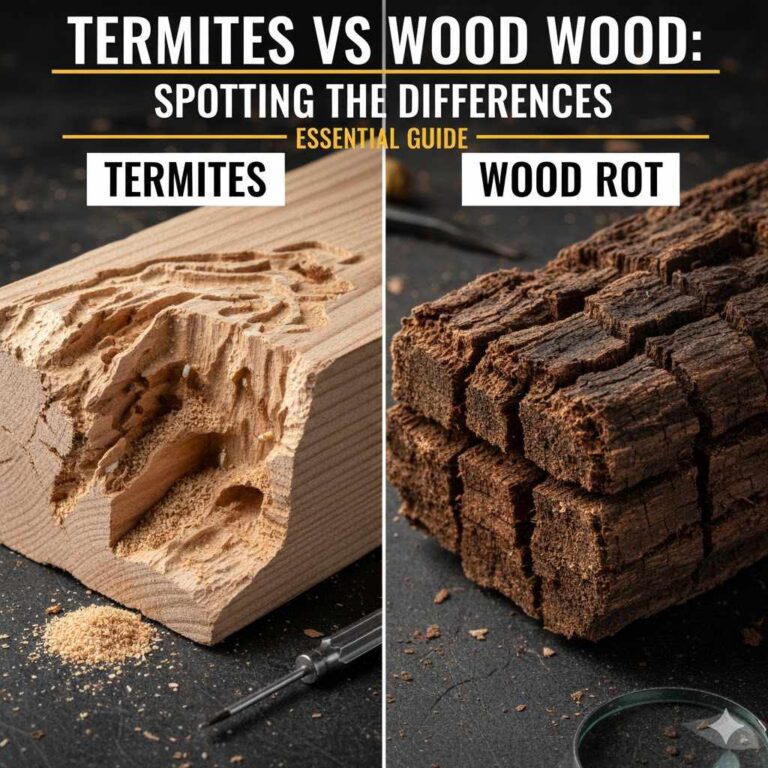
Recognizing these differences is crucial. If you see mud tubes, you’re almost certainly dealing with subterranean termites, not drywood termites. If you find tiny pellets that look like sawdust or coffee grounds, that’s a classic sign of drywood termites.
How to Tell Termite Swarmers from Flying Ants
This is probably the most common mix-up for homeowners. In the spring and summer, both ants and termites produce winged reproductives to start new colonies. At a glance, they look very similar! But with a closer look, you can easily tell them apart. It’s a skill every homeowner and woodworker should have.
Three Telltale Signs to Look For:
- Waist: Termites have a broad, thick waist. Their body is very uniform from top to bottom. Ants, on the other hand, have a very narrow, pinched waist, giving them a distinct “figure-8” look.
- Antennae: Termite antennae are straight and beaded, like a tiny string of pearls. Ant antennae are bent or “elbowed,” with a sharp angle in the middle.
- Wings: This is the easiest one to spot. A termite swarmer has two pairs of wings that are equal in size and shape. They look milky-white and are much longer than the termite’s body. A flying ant also has two pairs of wings, but the front pair is much larger than the back pair.
Quick Comparison Table: Termite vs. Ant
| Body Part | Termite Swarmer | Flying Ant |
|---|---|---|
| Waist | Broad / Straight | Pinched / Narrow |
| Antennae | Straight / Beaded | Bent / Elbowed |
| Wings | Two pairs of EQUAL size | Front pair is LARGER than back pair |
If you find yourself in the middle of a swarm, try to catch one of the insects in a clear jar or a plastic bag. This will make identification much easier, whether you do it yourself or show it to a professional.
What to Do Immediately if You Find a Termite Swarm
Okay, you’ve confirmed it. Those little winged insects are definitely termites. Your first instinct might be to panic, but let’s replace that with a calm, step-by-step plan. A swarm is an alarm bell, not a house-on-fire emergency. Here’s what to do.
Step 1: Don’t Panic and Don’t Spray
Resist the urge to grab a can of bug spray and go to town. Spraying the swarmers you see will only kill those few individuals. It does absolutely nothing to the main colony hiding in the wood. Plus, you’ll destroy valuable evidence that a pest control expert can use to identify the species and locate the nest.
Step 2: Collect a Sample
This is incredibly helpful. Use a small jar, a sealed plastic bag, or even a piece of clear tape to capture a few of the swarmers. If you find discarded wings (often on windowsills or near light sources), collect those too. This physical evidence is the best way for a professional to confirm what you’re dealing with.
Step 3: Note the Location and Time
Where exactly did you see the swarm? Was it coming from a windowsill in the living room? A vent in the attic? A baseboard in the garage? Write down the specific location, the date, and the time of day. This information helps pinpoint the origin of the colony. The swarmers are exiting from a “kick-out” hole, and finding that hole is a major clue.
Step 4: Look for Other Signs of Drywood Termites
While you wait for a professional, you can do a little detective work yourself. Look around the swarm area for other signs of a drywood termite infestation. These include:
- Frass (Termite Droppings): Look for small mounds of tiny, six-sided pellets. They can look like sawdust or pepper. Check along baseboards, on windowsills, and under wooden furniture.
- Discarded Wings: After they land, swarmers twist off their wings because they won’t need them again. Piles of these identical, milky wings are a sure sign of a recent swarm.
- Damaged Wood: Tap on wooden surfaces near the swarm area. If it sounds hollow or papery, that could indicate termites have eaten the wood from the inside out. You might also see tiny “kick-out” holes, where they push frass out of their galleries.
Step 5: Call a Licensed Pest Control Professional
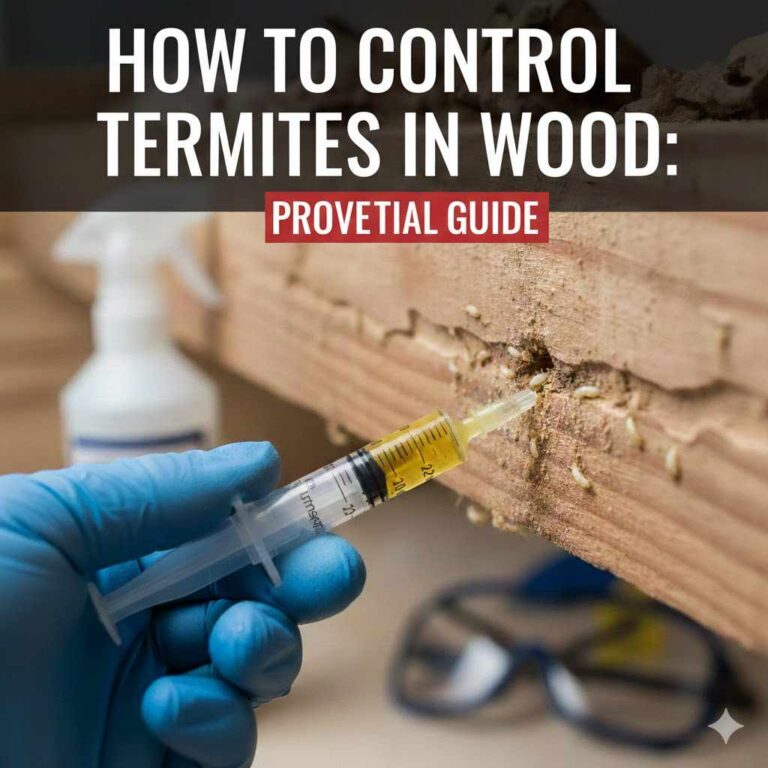
This is the most important step. A drywood termite infestation is not a DIY project. The colony is hidden deep inside the wood, and trying to treat it yourself will almost certainly fail. A licensed and reputable pest control company has the tools, training, and experience to find the colony and treat it effectively. Get at least two or three inspections and estimates before choosing a company. Universities with strong entomology programs, like the University of California’s Integrated Pest Management Program, provide unbiased advice on selecting a pest control service.
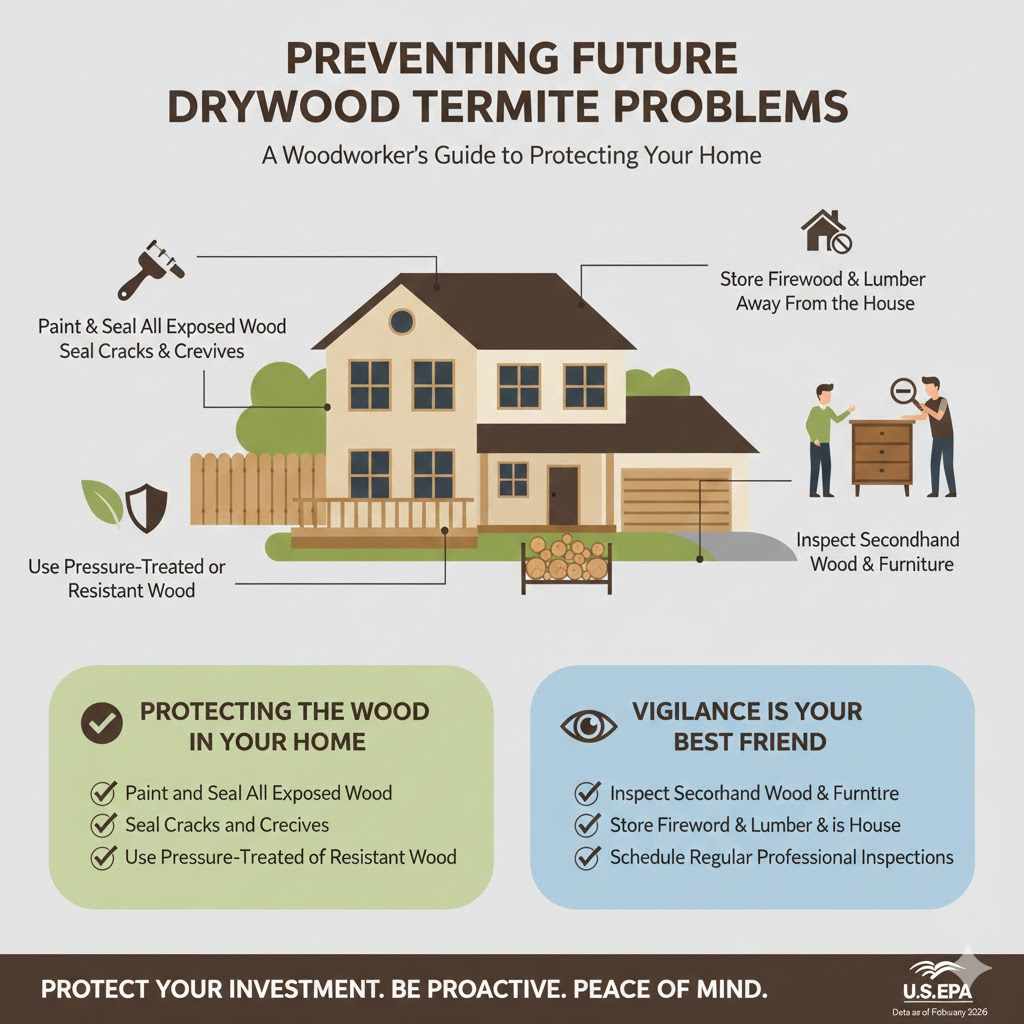
Preventing Future Drywood Termite Problems
As a woodworker, I believe the best project is a well-protected one. The same goes for your home. Once you’ve dealt with an infestation (or if you want to avoid one altogether), prevention is your most powerful tool. Here are some simple, practical steps you can take.
Protecting the Wood in Your Home
- Paint and Seal All Exposed Wood: Termites look for tiny cracks and crevices to get into the wood. A good coat of paint or sealant creates a physical barrier that makes it much harder for a new queen to start her colony. Pay special attention to the ends of boards, where wood is most vulnerable.
- Seal Cracks and Crevices: Check the exterior of your home, especially around window frames, door frames, and where utilities enter the house. Use caulk to seal any gaps that could provide an entry point for swarming termites.
- Use Pressure-Treated or Resistant Wood: When working on outdoor projects like decks, fences, or garden beds, always use wood that is rated for outdoor use. Pressure-treated wood is infused with chemicals that deter termites. Naturally resistant woods like redwood or cedar can also be good choices.
Vigilance is Your Best Friend
- Inspect Secondhand Wood and Furniture: Bringing in a beautiful antique dresser or some reclaimed lumber for a project? Give it a thorough inspection before it comes inside. Look for kick-out holes, frass, or any signs of damage.
- Store Firewood and Lumber Away From the House: Never stack firewood or project lumber directly against your foundation. Keep it elevated and at least a few feet away from the house to avoid giving termites a direct bridge inside.
- Schedule Regular Professional Inspections: An annual termite inspection is one of the best investments you can make for your home. A trained professional can spot the subtle, early signs of an infestation long before you would ever see a swarm.
Frequently Asked Questions (FAQ)
Do drywood termites swarm at night?
It’s very rare. Drywood termites are diurnal, meaning they are active during the day. They rely on sunlight to guide them during their swarming flight. If you see a swarm at night, especially around lights, you are more likely dealing with a species of subterranean termite.
How long does a termite swarm last?
A swarm is usually over very quickly. The entire event may only last for 30 to 40 minutes. The termites are trying to get out, pair up, and find a new home as fast as possible. You’ll likely just find the aftermath: dead swarmers and their discarded wings.
Does seeing one termite swarmer mean I have an infestation?
Not necessarily. A single swarmer could have flown in from a neighboring property. However, if you see multiple swarmers indoors, find discarded wings on your windowsills, or see them actively emerging from a wall or ceiling, that is a very strong sign that a colony is in your home.
What’s the easiest way to tell a swarming termite from a flying ant?
Look at the wings! This is the most beginner-friendly way. If all four wings are the same size and shape, it’s a termite. If the front wings are noticeably larger than the back wings, it’s an ant. The straight antennae and broad waist of a termite are other great clues.
Can I just vacuum up the swarmers and be done with it?
You can (and should) vacuum up the swarmers and wings to clean up the mess. However, this does absolutely nothing to solve the root problem. The parent colony is still inside the wood, eating away 24/7. Cleaning up the swarm is just step one; calling a professional for an inspection is the essential next step.
Do drywood termites swarm in the winter?
It’s highly unlikely for them to swarm outdoors in winter in most climates. They need warm temperatures to fly. However, an indoor swarm could theoretically happen at any time of year if a nest is located near a consistent heat source (like a furnace or water heater) that tricks them into thinking it’s warm enough to swarm.
Are termite swarmers harmful to people or pets?
No, not at all. Termite swarmers do not bite, sting, or carry diseases. They are completely harmless to people and animals. The real danger is the hidden damage their parent colony is doing to the wooden structures of your home.
Your Next Steps: Confidence and Action
Discovering a potential termite swarm can be unsettling, but now you are armed with knowledge. You know that swarms are triggered by warm, sunny days in the late spring, summer, or fall. You know how to confidently tell the difference between a termite and an ant. Most importantly, you have a clear, calm plan of action: collect a sample, look for other signs, and call a professional for help.
As a woodworker and homeowner, protecting the integrity of our wood is everything. Think of a termite swarm not as a disaster, but as a critical piece of information. The termites have revealed their presence to you. Now, you can take smart, decisive steps to protect your home and your workshop for the long haul. You’ve got this!