White Cedar Shingles vs Red: Essential Differences
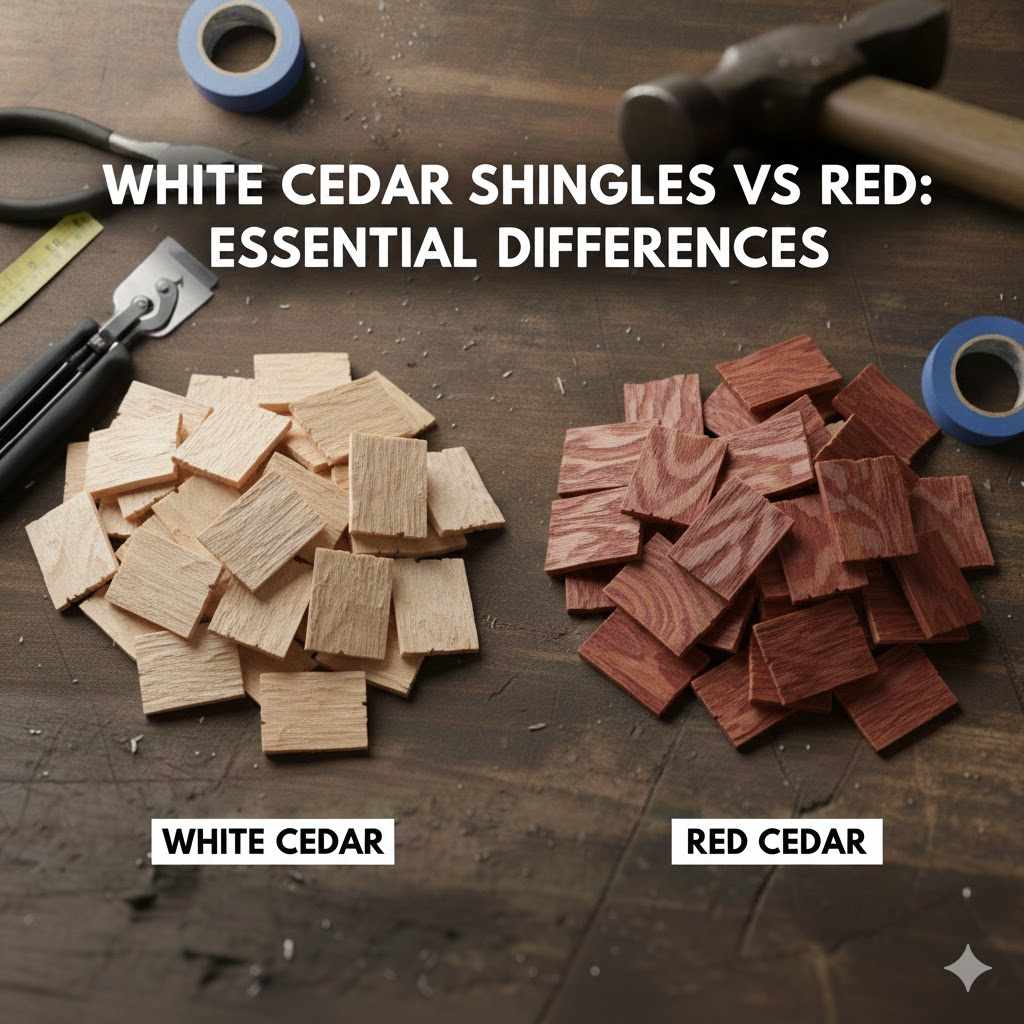
The main difference between white and red cedar shingles is their color, cost, and origin. White cedar is lighter, more affordable, and weathers to a classic silver-gray, ideal for coastal looks. Red cedar has rich reddish-brown tones, is more naturally rot-resistant, and costs more, offering a premium, rustic finish for siding and roofing.
Hello, fellow makers! It’s Md Meraj, and today we’re tackling a question I hear all the time in the workshop: should I use white cedar or red cedar shingles for my project? Picking the right wood can feel like a huge decision, especially when you’re standing in the lumber aisle staring at two beautiful but different options. It’s easy to get confused by the names, prices, and what people say about them.
But don’t worry. This is one of those choices you can feel great about once you have a little information. Both types of cedar are fantastic materials, but they shine in different ways. We’re going to break down the essential differences in a simple, straightforward way. By the end of this guide, you’ll know exactly which cedar is the perfect fit for your home, your budget, and your style. Let’s get started!
What Are Cedar Shingles, Anyway? A Quick Primer
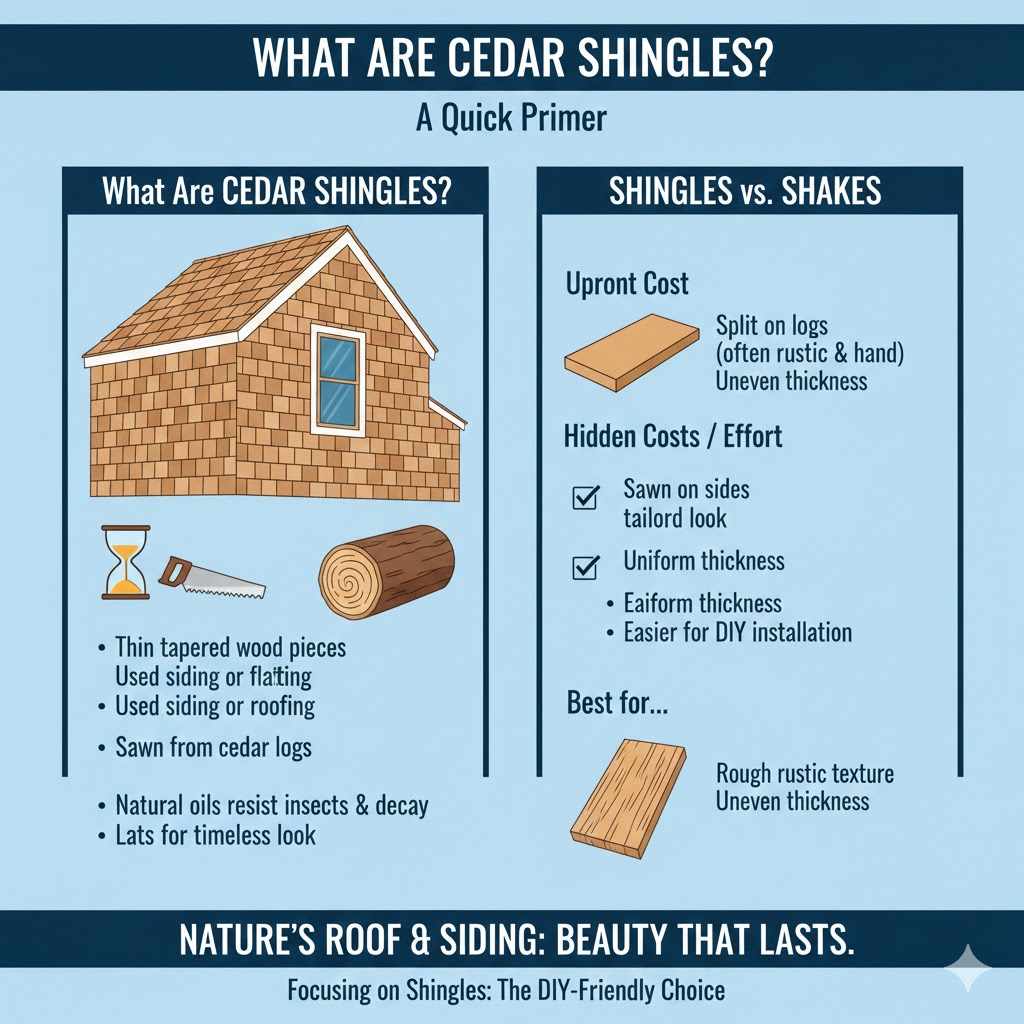
Before we dive into the “white vs. red” debate, let’s get on the same page. What exactly are cedar shingles? Think of them as thin, tapered pieces of wood used to cover the outside of a house (siding) or the roof. They are sawn from cedar logs and have a smooth, uniform appearance.
For centuries, builders have loved cedar for its natural beauty and resilience. Unlike many other woods, cedar contains natural oils and compounds called tannins that help it resist insects, moisture, and decay. This means a cedar-sided shed or a cedar roof can last for decades with proper care. They give homes a warm, timeless look that you just can’t get with vinyl or metal.
People often use the terms “shingles” and “shakes” interchangeably, but there’s a small difference:
- Shingles: Are sawn on both sides for a smooth, tailored look. They are more uniform in thickness.
- Shakes: Are split from the log, usually by hand. This gives them a rougher, more rustic texture on at least one side.
For this guide, we’re focusing on shingles, which are a popular choice for DIY projects because their uniform shape makes them a bit easier to install.
Let’s Meet the Contenders: White Cedar vs. Red Cedar
Now, let’s introduce our two main players. They come from different trees in different parts of North America, which is the root of all their differences.
Eastern White Cedar: The Coastal Classic
As its name suggests, Eastern White Cedar (Thuja occidentalis) grows primarily in the northeastern United States and southeastern Canada. You’ll see it all over New England, giving coastal homes that iconic, silvery-gray weathered look. It starts as a pale, creamy white or light tan color when freshly cut.
White cedar is known for being lightweight, fine-grained, and fragrant. It’s a softer wood but is surprisingly durable. Because the trees are smaller than their western cousins, the shingles are often smaller, too. This is the wood that defines that classic, windswept seaside cottage aesthetic.
Western Red Cedar: The Forest Giant
Western Red Cedar (Thuja plicata) is the big brother. This majestic tree grows in the lush forests of the Pacific Northwest—think British Columbia, Washington, and Oregon. These trees grow enormous, which allows for longer, wider, and more consistent shingles.
When new, Western Red Cedar is famous for its stunning range of colors, from warm amber and reddish-cinnamon to deep sienna brown. This natural variation in tone is one of its most prized features. It is incredibly popular across the country for everything from siding and roofing to decks and fences because of its rich color and exceptional resistance to the elements.
Key Differences You Need to Know: A Side-by-Side Breakdown
Okay, you’ve met the two types of cedar. Now, let’s put them head-to-head on the factors that matter most for your project.
1. Color and Appearance: The Most Obvious Difference
This is where you’ll see the biggest and most immediate distinction. It all comes down to the look you want for your home.
White Cedar:
- When New: Starts as a very light, creamy beige or pale yellow. It has a subtle, consistent grain.
- When Weathered (Untreated): This is its claim to fame! Left to the elements, white cedar ages beautifully into a stunning, uniform silver-gray. This is the classic Cape Cod look. The process usually takes a year or two, depending on sun and moisture exposure.
Red Cedar:
- When New: Offers a beautiful mix of warm colors. You’ll find boards ranging from honey-amber to rich reddish-brown, often in the same bundle. This creates a rich, visually interesting pattern.
- When Weathered (Untreated): If left alone, red cedar will also turn gray. However, it’s often a darker, less uniform shade of gray than white cedar and can sometimes look a bit blotchy if not maintained. Many homeowners choose to stain red cedar to preserve its famous red hues.
2. Durability and Longevity: How Long Will They Last?
Both cedars are champions of durability thanks to their natural preservative oils. But there are slight differences in their composition that affect how they perform over the long haul.
Western Red Cedar is generally considered the winner in the raw durability department. Its oils are slightly more potent, giving it superior resistance to rot, fungus, and insects. A properly installed and maintained Western Red Cedar roof can last 30 to 50 years, and siding can last even longer. According to the U.S. Forest Service Forest Products Laboratory, its heartwood is highly resistant to decay.
Eastern White Cedar is also very durable and decay-resistant, just not quite to the extreme level of red cedar. It performs exceptionally well, especially in the cold and damp climates it’s native to. You can expect a lifespan of 20 to 35 years for roofing and well beyond that for siding. Its strength is in its resilience and time-tested performance in coastal areas.
3. Weather Resistance: Handling Sun, Rain, and Snow
How your shingles hold up to Mother Nature is a huge factor. Both cedars are excellent choices, but they handle the elements a bit differently.
White Cedar has a lower density, which means it can be more prone to absorbing moisture if not properly finished or installed. However, it’s also very stable and tends to not warp or split from changes in humidity. Its proven track record in rainy, salty coastal air speaks for itself.
Red Cedar is incredibly stable. It has a low “shrinkage value,” which means it expands and contracts very little when moisture levels change. This makes it highly resistant to warping, cupping, and splitting. It’s an outstanding choice for climates with dramatic shifts in temperature and humidity.
4. Cost: What’s the Impact on Your Wallet?
For most of us DIYers, budget is a major consideration. Here, you’ll find a clear difference between the two.
Eastern White Cedar is almost always the more affordable option. There are a few reasons for this: the trees grow faster, they are processed closer to major markets on the East Coast (reducing shipping costs for those customers), and the overall demand is a bit different. If you’re on a tighter budget, white cedar can give you the authentic wood look for less.
Western Red Cedar is a premium material, and its price reflects that. The trees are older and larger, the wood is considered higher quality in terms of its preservative oils, and it often has to be shipped across the country. Expect to pay a significant amount more per square foot for red cedar.
| Feature | Eastern White Cedar | Western Red Cedar |
|---|---|---|
| Material Cost | $$ (More Affordable) | $$$ (Premium Price) |
| Installation Cost | Generally the same | Generally the same |
| Long-Term Value | Excellent value, classic appeal | High-end appeal, may add more resale value |
5. Maintenance: Staining, Sealing, and Upkeep
Your maintenance plan will depend entirely on the look you want to achieve. Do you want the wood to age naturally, or do you want to preserve its original color?
- For a Natural Weathered Look: White cedar is the king. Most people choose it specifically for its ability to weather to a beautiful silver-gray with zero maintenance. Just install it and let nature do the work.
- To Preserve the Natural Wood Color: Red cedar is the more popular choice here. To keep those stunning reds and browns, you will need to apply a high-quality UV-blocking semi-transparent stain every 3 to 5 years. You can also stain white cedar, but preserving its light color can be trickier, and most people prefer its weathered look anyway.
6. Scent and Workability: How They Feel in the Workshop
For those of us who love working with wood, these qualities matter!
Scent: Both cedars have that wonderful, aromatic smell we all know and love. White cedar has a lighter, sweeter scent, while Red cedar has a richer, more pungent aroma.
Workability: Both are a dream to work with. They are soft, lightweight, and easy to cut, nail, and shape without splitting. Red cedar is slightly softer and more brittle, so handle it with a little care to avoid dents and dings.
Comparison Table: White vs. Red Cedar at a Glance
Sometimes, a simple chart is the best way to see everything side-by-side. Here’s a quick-reference table to help you compare.
| Feature | Eastern White Cedar | Western Red Cedar |
|---|---|---|
| Fresh Color | Pale white, creamy yellow | Vibrant mix of amber, red, and brown |
| Weathered Color | Consistent silver-gray | Darker, less consistent gray |
| Rot Resistance | Very good | Excellent |
| Cost | More affordable | More expensive (premium) |
| Best For… | Classic coastal look, aging naturally | Rich, rustic look, preserving color with stain |
| Lifespan (Roofing) | 20-35 years | 30-50 years |
| Dimensional Stability | Good | Excellent |
| Maintenance | Low to none for a weathered look | Higher if preserving original color |
Which Cedar Shingle is Right for Your Project?
Feeling clearer? Let’s simplify it even more. Here’s a quick guide to help you choose.
Choose White Cedar If…
- You love the classic, silvery-gray look of a weathered coastal home.
- Your budget is a primary concern, and you want the best value.
- You want a low-maintenance siding that you can install and forget about.
- You live on the East Coast, where it may be more readily available and affordable.
- Your project is a shed, a barn, or a rustic outbuilding where a natural, weathered appearance is desired.
Choose Red Cedar If…
- You want the rich, warm, and varied tones of reddish-brown wood.
- You plan to stain and maintain your shingles to preserve that vibrant color.
- You want the absolute maximum durability and longevity.
- Budget is less of a concern, and you are investing in a premium finish.
- You live in a climate with extreme weather swings, as its stability is top-notch.
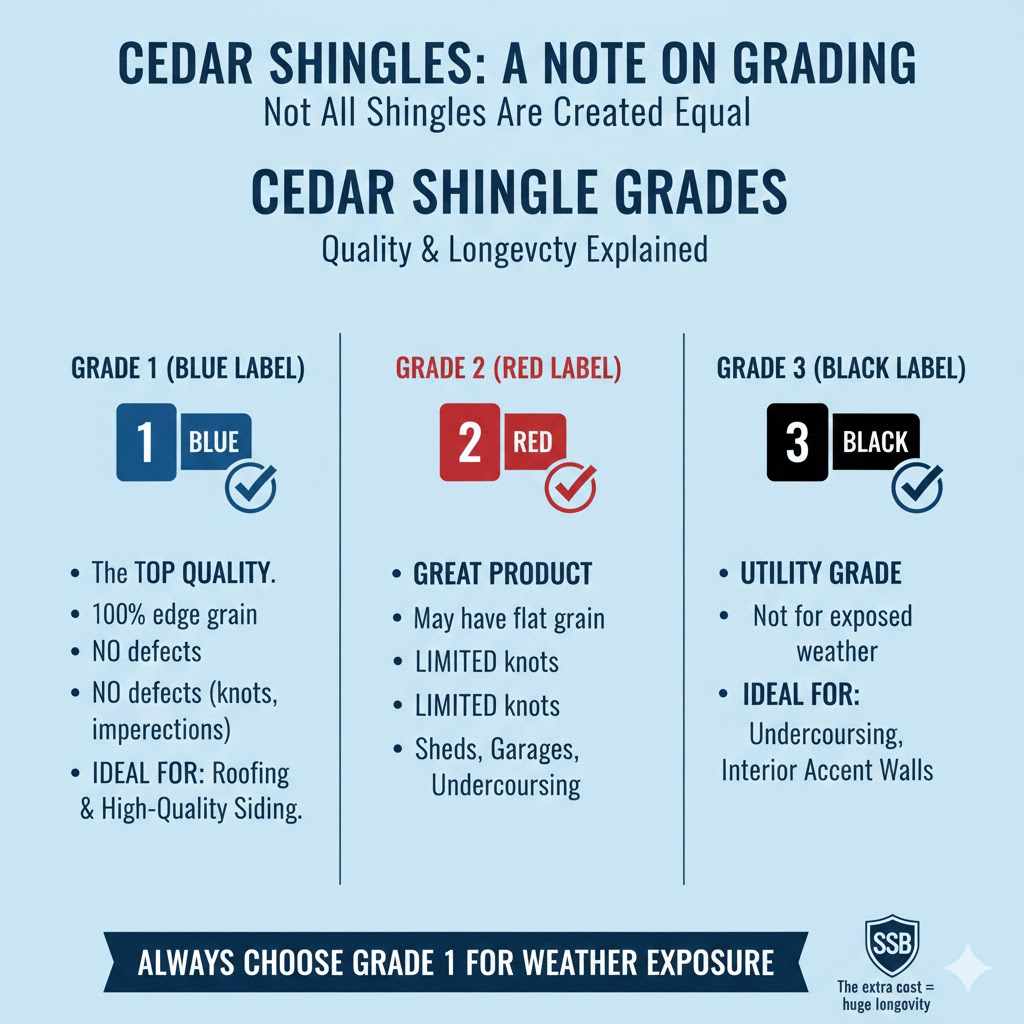
A Note on Grading: Not All Shingles Are Created Equal
One last important tip! When you go to buy your shingles, you’ll see they come in different grades. The grade refers to the quality of the shingle, specifically its grain and whether it has any knots or defects. The Cedar Shake & Shingle Bureau sets the standards.
Here’s a simplified breakdown:
- Grade 1 (Blue Label): The top quality. These are 100% edge grain and have no defects. This is what you should use for roofing and for high-quality siding.
- Grade 2 (Red Label): Still a great product, but may have some flat grain and limited knots. Excellent for siding on sheds, garages, and as an undercourse.
- Grade 3 (Black Label): A utility grade for undercoursing or interior accent walls where it won’t be exposed to weather.
Always choose Grade 1 for any surface that will take a beating from the weather. The extra cost is well worth the huge boost in longevity.
FAQ: Your Cedar Shingle Questions Answered
1. Do I have to use stainless steel nails?
Yes, absolutely! Cedar wood contains tannins that will react with regular galvanized nails, causing ugly black streaks to run down your siding. Always use stainless steel or hot-dipped galvanized fasteners specifically rated for cedar.
2. Can I install cedar shingles myself?
Definitely! It’s a very DIY-friendly project if you are patient and detail-oriented. The keys are establishing a level starting course and maintaining the correct exposure (the amount of shingle visible in each row). There are many great guides online, but starting with a small project like a shed is a great way to learn.
3. Which is better for roofing?
While both can be used, Western Red Cedar is generally preferred for roofing. Its superior rot resistance and dimensional stability give it an edge in the harsh conditions a roof endures, leading to a longer lifespan.
4. Do I need to put a finish on my white cedar shingles if I want them to turn gray?
Nope! You can leave them completely bare. They will weather to silver-gray on their own. Some people apply a “weathering stain,” which is a product designed to speed up and even out the graying process, but it’s not necessary.
5. Is cedar a sustainable wood choice?
Yes, it’s a great choice. Cedar used for shingles in North America is typically harvested from sustainably managed forests. Look for certifications from organizations like the Forest Stewardship Council (FSC) or the Sustainable Forestry Initiative (SFI) to ensure your wood comes from a responsible source.
6. How do I clean cedar shingles?
To clean dirt or mildew, you can use a gentle solution of oxygen bleach (not chlorine bleach) mixed with water. Apply it with a garden sprayer, let it sit for a few minutes, and gently rinse with a garden hose. Avoid high-pressure power washing, as it can damage the soft wood fibers.
Conclusion: Making Your Final Choice with Confidence
So, white cedar shingles vs red? As you can see now, there’s no single “better” option—just the right option for you and your project. It’s a wonderful choice between two of nature’s best building materials.
If you dream of a classic, silvery-gray cottage look and want a durable siding that’s kinder to your wallet, Eastern White Cedar is a fantastic choice. If you’re captivated by rich, warm wood tones and are aiming for a premium, long-lasting finish that you plan to maintain, Western Red Cedar is worth every penny.
Whichever you choose, you’re making a great decision. You’re adding timeless beauty, character, and durability to your home. Take your time, think about the final look you want to achieve, and trust your gut. You’ve got this!
Happy building,
Md Meraj