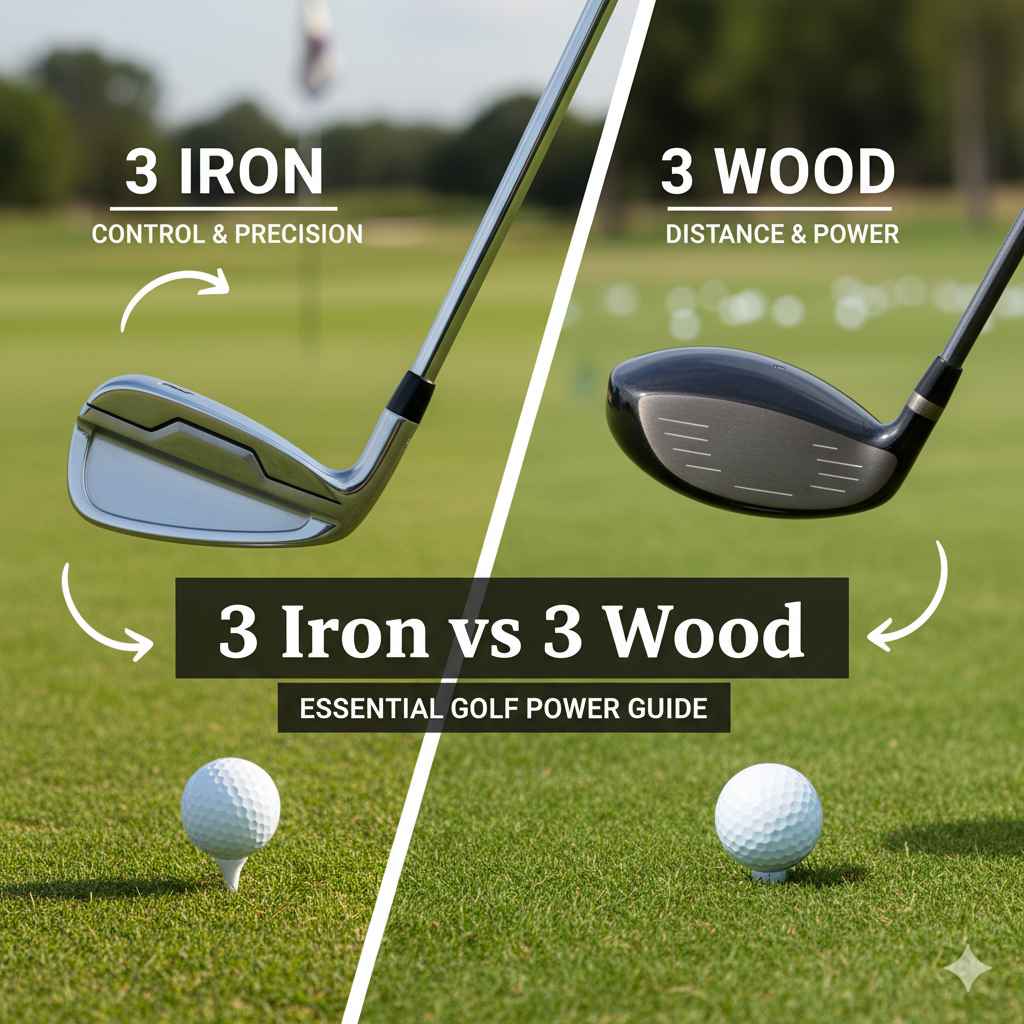
3 Iron vs 3 Wood: Essential Golf Power
Choosing between a 3 iron and a 3 wood for more driving power can be confusing. This guide simplifies their differences, helping you pick the right club for longer, more accurate shots from the fairway or tee. Learn which club fits your game and golf needs.
Hitting a golf ball further and straighter is something every golfer wants, right? Sometimes, standing on the tee box or facing a long fairway shot, you might wonder which club will give you that extra boost. The confusion between a 3 iron and a 3 wood is super common, especially when you’re just starting out or looking to improve your game. These clubs seem similar in purpose, but they behave quite differently! Knowing their strengths will unlock more confidence and control in your swing. Let’s break down what makes each club special so you can make the best choice for your game. We’ll explore their unique features and when to pull them out of your bag.
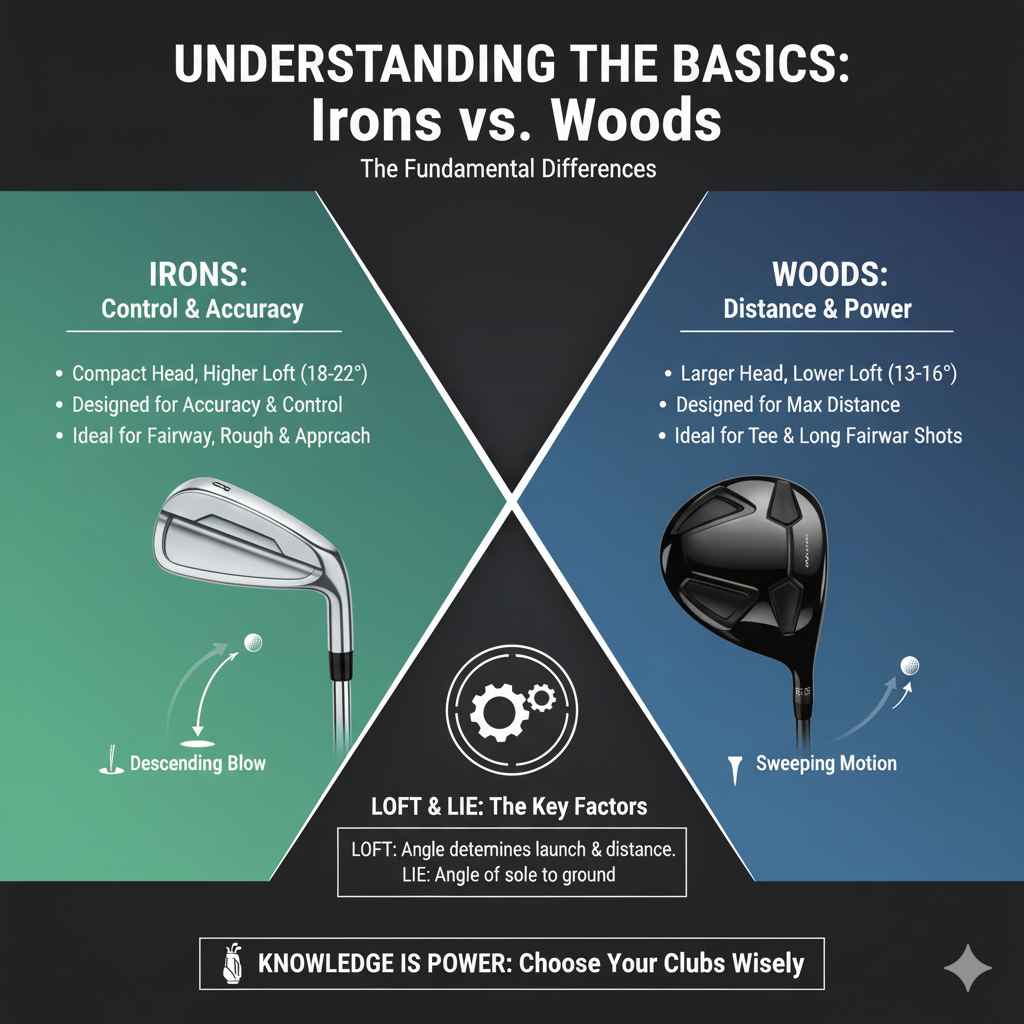
Understanding the Basics: Irons vs. Woods
Before we dive deep into the 3 iron versus 3 wood debate, it’s helpful to understand the fundamental differences between irons and woods in a golf set. This will give you a solid foundation for why these two specific clubs perform as they do.
Golf Club Categories: A Simple Overview
Golf clubs are generally divided into three main categories: woods, irons, and putters. Each category is designed for different types of shots and distances.
Woods: Traditionally, these were made of wood, hence the name. Nowadays, they are typically made from metal composites like titanium and carbon fiber. Woods have larger heads and lower lofts, designed for hitting the ball long distances, primarily from the tee box (driver) or the fairway (fairway woods).
Irons: These clubs have smaller, more compact heads and are numbered from 1 (historically, the longest iron, now often replaced by hybrids or woods) up to 9, plus wedges. Irons are designed for accuracy and offer more control for shots from the fairway, rough, and approach shots into the green. The higher the number, the higher the loft and the shorter the distance.
Putters: Specifically designed for rolling the ball on the green towards the hole.
Loft and Lie Angle: The Key Differences
The main distinctions between golf clubs, especially within the wood and iron families, come down to two critical design elements: loft and lie angle. Understanding these will immediately clarify the 3 iron vs 3 wood performance.
Loft: This refers to the angle of the clubface relative to the shaft. A lower loft means the clubface is more upright, sending the ball on a lower trajectory. A higher loft means the clubface is tilted back, sending the ball higher.
Woods have significantly less loft than irons. A 3 wood typically has a loft between 13 to 16 degrees.
Irons have more loft. A 3 iron usually has a loft between 18 to 22 degrees. This difference in loft is a primary reason why woods and irons produce different ball flights and distances.
Lie Angle: This is the angle between the sole of the club and the ground when the club is held in its intended playing position. While important for overall club fitting, for understanding the basic differences between a 3 iron and 3 wood, loft plays a more significant role in the distance and trajectory of the shot.
The 3 Wood: Your Fairway Powerhouse
The 3 wood, often called a “spoon” in older golfing terms, is a versatile club designed to deliver power and distance from various parts of the course, especially when you need more than an iron but less than your driver.
What is a 3 Wood?
A 3 wood is a type of fairway wood that sits between the driver (1 wood) and the 5 wood in terms of loft and length. It’s designed to be hit off the tee on holes where accuracy is more important than maximum distance, or from the fairway for long approach shots.
Key Characteristics of a 3 Wood:
Larger Clubhead: Compared to irons, fairway woods have larger, often hollow or complex-structured heads. This larger size helps with forgiveness on off-center hits.
Longer Shaft: The shaft of a 3 wood is typically longer than that of a 3 iron. A longer shaft allows for a faster swing speed, which in turn generates more distance.
Lower Loft: As mentioned, the 3 wood has a low loft (around 13-16 degrees). This promotes a lower ball flight and less spin, leading to longer carry distances.
Lower Center of Gravity (CG): Modern 3 woods often feature a design that lowers the center of gravity within the clubhead. This helps get the ball airborne more easily, even with a less-than-perfect strike, and reduces spin.
When to Use Your 3 Wood:
The 3 wood really shines when you need controlled distance. It’s your go-to club for specific situations:
Off the Tee (Second Shot): On long par 4s or par 5s, if you didn’t hit your driver perfectly or want more control, a 3 wood can be a great alternative for positioning your ball for the next shot.
Long Par 3s: For longer par 3 holes, a 3 wood can help you reach the green in regulation, especially if winds are a factor or the pin is tucked far away.
Fairway Shots: When you have a long way to go from the fairway and can get a clean strike, the 3 wood is designed to cover significant ground.
Teeing Off with Precision: If a hole has hazards (like out of bounds or water) near the typical driver landing zone, the more controlled trajectory and slightly shorter length of a 3 wood can be a safer bet.
Pros and Cons of Using a 3 Wood:
Like any club, the 3 wood has its advantages and disadvantages.
Pros:
Maximum Distance (from the fairway): Generally provides more distance than a 3 iron from the fairway.
Forgiveness: The larger head and modern technology offer more forgiveness on off-center hits.
Versatility: Usable from the tee and the fairway, offering a good blend of power and control.
Lower Spin: Promotes a penetrating ball flight that can roll out significantly.
Cons:
Difficulty for Beginners: Can be harder to get airborne consistently for golfers with slower swing speeds.
Less Control: More loft than a driver, but still less loft than an iron, can lead to less precise distance control for some players.
Requires a Good Strike: While forgiving, it still requires a solid contact to maximize its potential.
The 3 Iron: The Precision Powerhouse
The 3 iron is a staple in many golfers’ bags, offering a blend of distance and control. It’s a club that rewards a solid swing with predictable results, making it crucial for strategic play.
What is a 3 Iron?
The 3 iron is a long iron, typically the second longest iron in a standard set (after the 1 or 2 iron, which are less common now). It’s designed to provide significant distance while offering more control and a higher trajectory than a 3 wood.
Key Characteristics of a 3 Iron:
Smaller Clubhead: Irons have smaller, more compact clubheads with a more traditional shape. This design emphasis is on workability and precise control over the ball’s flight.
Shorter Shaft: The shaft of a 3 iron is considerably shorter than that of a 3 wood. This shorter length increases control and reduces wrist action during the swing, leading to more consistent contact.
Higher Loft: With a loft typically between 18 to 22 degrees, the 3 iron sends the ball on a higher trajectory than a 3 wood but lower than higher-numbered irons.
Less Forgiveness: Due to its smaller head and design focus, 3 irons are generally less forgiving on off-center hits compared to fairway woods.
When to Use Your 3 Iron:
The 3 iron is your reliable partner for when you need distance with a fair amount of control or when the situation demands a different type of shot.
Long Approach Shots: When you need to carry hazards like bunkers or water to reach the green from a distance.
Tee Shots on Tight Holes: On narrow fairways or when accuracy is paramount, the shorter shaft and more controllable flight of a 3 iron can be safer than a driver or 3 wood.
Windy Conditions: The lower, more penetrating trajectory of a 3 iron can be advantageous in strong headwinds.
When Control is Key: If you’re prioritizing hitting the green over maximum distance, the 3 iron offers more certainty.
Par 3s (Longer ones): Similar to the 3 wood, it’s used for longer par 3s, but with a higher trajectory and potentially less roll.
Pros and Cons of Using a 3 Iron:
While a fantastic club, the 3 iron has its trade-offs.
Pros:
Greater Control: The shorter shaft and design offer more control over direction and distance.
Higher Ball Flight: Promotes an easier-to-manage trajectory for many players seeking to get the ball up in the air.
Better for Wind: The lower, more penetrating flight is less affected by crosswinds.
Easier Off the Deck (Fairway): For many, hitting a 3 iron cleanly from the turf is more achievable than a 3 wood.
Cons:
Less Distance: Generally yields less distance than a 3 wood for most golfers.
Less Forgiving: Off-center hits can result in significant loss of distance and accuracy.
Requires a Solid Strike: Demands a good quality strike to perform optimally.
Can be Difficult to Launch: For beginners or those with slower swings, getting the ball up quickly can be a challenge.
3 Iron vs 3 Wood: Direct Comparison
Let’s put these two clubs side-by-side to see their key differences in a clear format. This can help you visualize where each excels.
Performance Metrics: Distance, Ball Flight, and Loft
The numbers tell a story when you compare clubs. Here, we look at the crucial metrics that define their performance on the course.
| Feature | 3 Wood | 3 Iron |
|---|---|---|
| Loft | 13° – 16° | 18° – 22° |
| Shaft Length | Longer (approx. 42-43 inches) | Shorter (approx. 39-40 inches) |
| Clubhead Size | Larger, more rounded | Smaller, more compact |
| Typical Distance (Men’s Average) | 210-230 yards | 180-205 yards |
| Ball Flight | Lower-Mid trajectory, less spin, more roll | Mid-High trajectory, more spin, less roll |
| Forgiveness | More forgiving | Less forgiving |
| Typical Use | Driving (when accuracy needed), long fairway shots | Long approach shots, tight tee shots, windy conditions |
Note: Distances are approximate averages and depend heavily on the golfer’s swing speed, technique, and course conditions. Many modern players are now replacing traditional 3 irons with hybrids due to their increased forgiveness and ease of use.
Choosing the Right Club for Your Game
The “best” club isn’t universal; it’s tailored to your individual strengths, weaknesses, and the demands of the course.
For Maximum Distance Seekers (with good swing speed): If you have a powerful swing and can consistently make solid contact, the 3 wood will likely offer more yardage, especially from the fairway.
For the Control-Oriented Golfer: If accuracy and predictability are your priorities, the 3 iron provides more control. Its shorter shaft helps manage the swing, and the higher loft can be easier to manage for some.
For Beginners: This is where it gets interesting. Many beginners find a 3 iron very difficult to hit effectively. The lower loft and need for a precise strike can be challenging. Often, a hybrid club (which we’ll touch on briefly) or even a 5 wood might be a more suitable alternative for longer shots for someone just starting. The 3 wood can also be tricky for beginners, but its larger head can sometimes be more forgiving. It’s best to get fitted or experiment.
Course Management: Consider the course you’re playing. If it’s known for tight fairways and hazards, the control of a 3 iron might be more valuable. If it’s an open course with wide fairways where bombing it is key, the 3 wood might be your choice on certain holes.
The Rise of Hybrids: A Modern Solution
It’s worth mentioning that in modern golf, long irons like the 3 iron are often being replaced by hybrid clubs. Hybrids blend the characteristics of woods and irons. They typically have a larger clubhead than an iron but are smaller than a fairway wood, with a sole designed to glide through turf more easily.
Why Hybrids are Popular:
Ease of Launch: Hybrids are generally easier to get airborne than long irons, thanks to their design and loft.
Forgiveness: They offer more forgiveness on off-center hits than traditional long irons.
Versatility: They perform well from the tee, fairway, and light rough.
Distance: They provide distance comparable to long irons or even short fairway woods.
If you’re struggling with a 3 iron, a hybrid might be the perfect replacement, offering a similar loft and distance but with much greater ease of use and forgiveness. Many golfers find a 15-18 degree hybrid to be a great substitute for a 3 or 4 iron.
Mastering Your Swing for Both Clubs
Regardless of whether you choose the 3 iron or 3 wood, your swing mechanics are paramount. A great club in the wrong hands won’t perform.
Key Swing Thoughts for the 3 Wood:
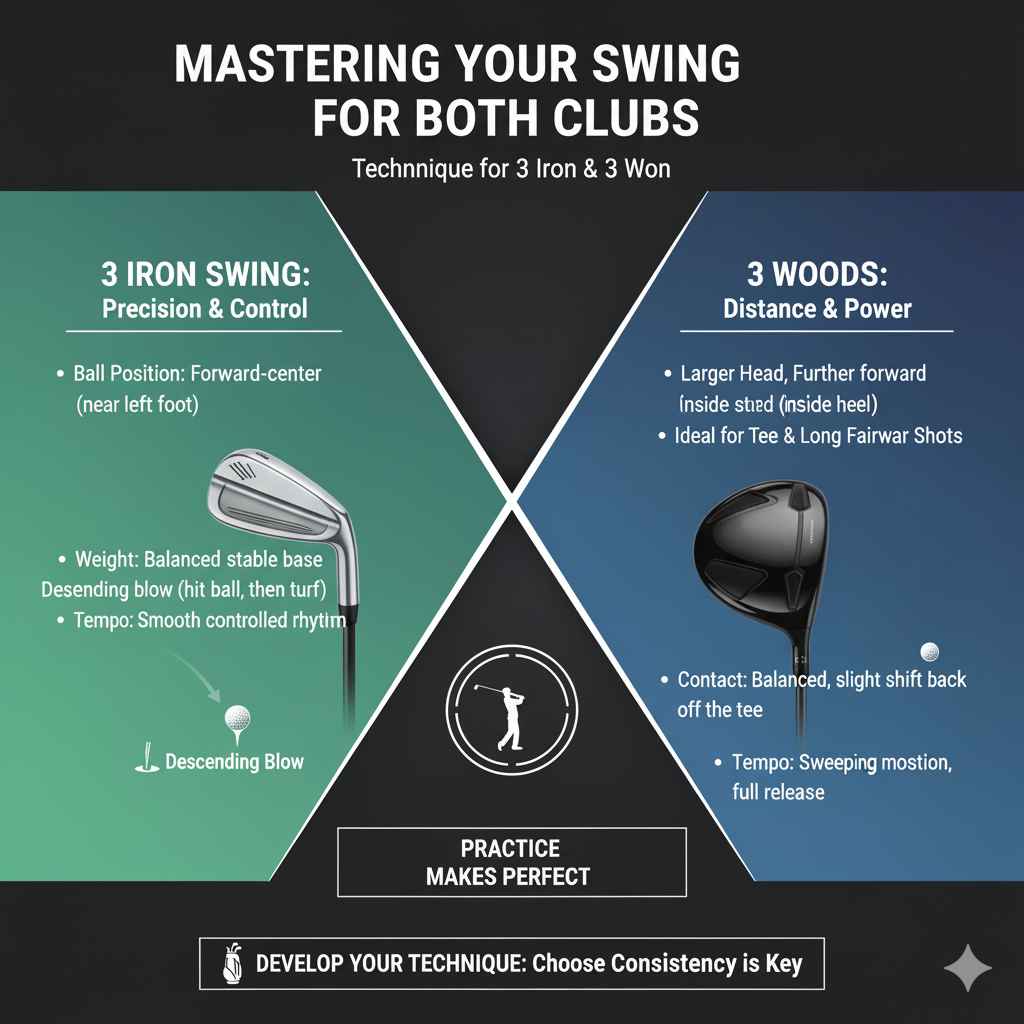
Tee Shots: Use a slightly wider stance than you might for a driver. Tee the ball up higher to help get the clubface under the ball and promote a sweeping motion rather than a steep downswing. Focus on a smooth transition and a full release.
Fairway Shots: For fairway shots (off the deck), play the ball slightly forward of center in your stance. Think about striking the ball with a slight descending blow or a sweeping motion, ensuring you hit the ball first, then the turf. Avoid trying to “scoop” the ball up. A good follow-through is crucial.
Key Swing Thoughts for the 3 Iron:
Ball Position: Play the ball slightly forward of the center in your stance. For a 3 iron, you might place it around the ball of your left foot if you’re right-handed.
Weight Distribution: Keep your weight balanced during the swing. Avoid shifting too much weight to your back foot and then trying to swing back to the ball.
Descending Blow: The goal is to hit down on the ball slightly, striking it just as the clubhead begins to ascend after hitting the turf. This imparts loft and spin for control. Think of making a divot after you strike the ball.
* Smooth Tempo: A controlled, rhythmic swing is more effective than a fast, jerky one. Focus on a good tempo from start to finish.
Practice Makes Perfect
The best way to decide and improve is consistent practice. Spend time on the driving range, hitting both clubs, and focus on the feel of each strike. Pay attention to the results: distance, height, and direction.
FAQ: Your Burning Questions Answered
Let’s tackle some common questions beginners have about these clubs.
Q1: Is a 3 iron easier or harder to hit than a 3 wood for a beginner?
Generally, a 3 iron is harder for beginners to hit effectively. Its smaller head, shorter shaft, and higher loft require a more precise strike. A 3 wood can also be challenging, but its larger size can offer more visual confidence, and its lower loft might make it easier for some to get airborne, especially off a tee.
Q2: What loft does a modern 3 wood typically have?
Modern 3 woods typically have lofts ranging from 13 to 16 degrees. Some specialty 3 woods might have slightly higher or lower lofts to fit specific player needs.
Q3: How much further does a 3 wood usually go than a 3 iron?
On average, a 3 wood will go about 10-25 yards further than a 3 iron for a typical golfer. This difference comes from the longer shaft and lower loft of the 3 wood, leading to higher clubhead speed and less spin.
Q4: Can I use a 3 wood on every par 3?
No, you generally wouldn’t. A 3 wood is for long shots, so you’d only use it on very long par 3s where your typical iron wouldn’t reach the green. For most par 3s, you’d use higher-numbered irons or wedges that are designed to stop the ball closer to the pin.
Q5: What club should I use if I struggle with my 3 iron?
If you struggle with a 3 iron, most golfers find a hybrid club or a 5 wood to be much easier to hit. Hybrids are designed to be more forgiving and easier to launch than long irons. A 5 wood offers more loft than a 3 wood, making it easier to get up in the air.