Why Dust Collection Matters for Your Ryobi Table Saw
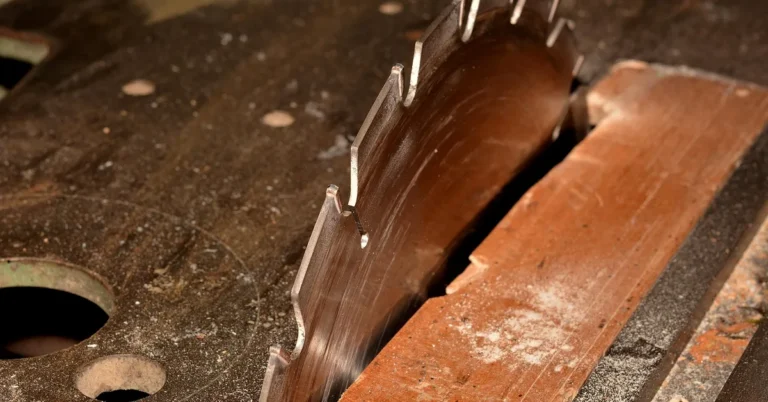
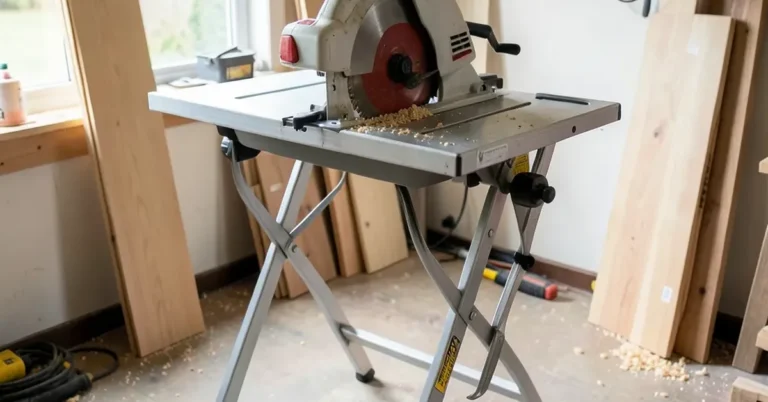
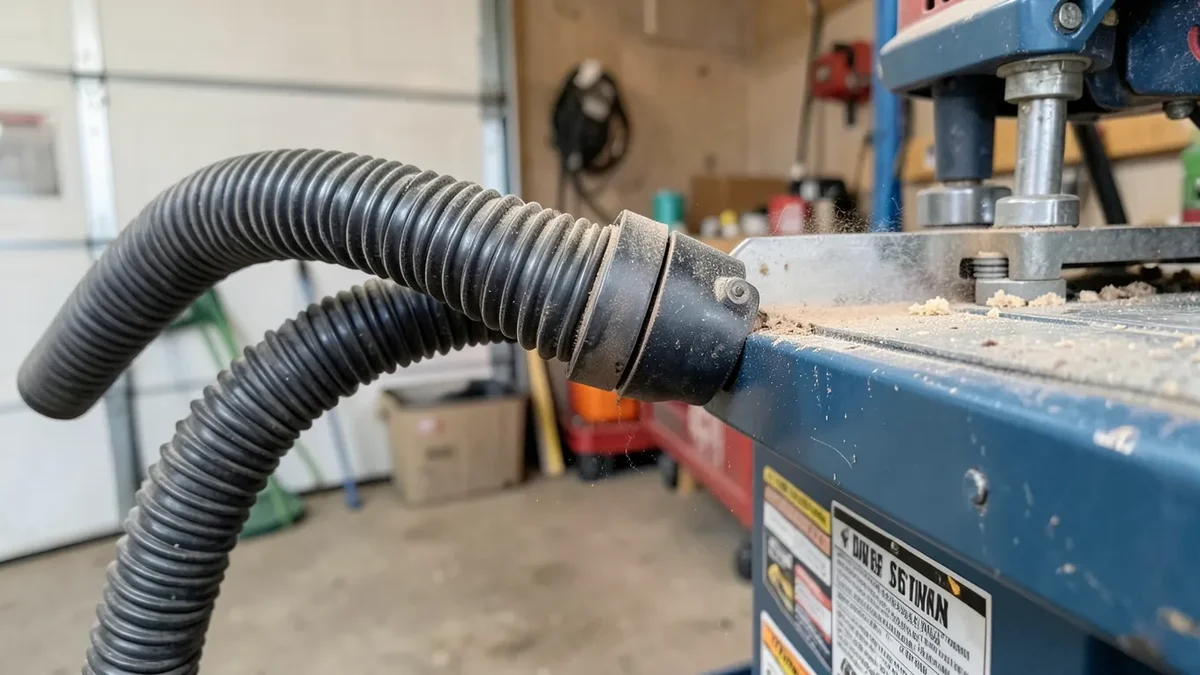
Most Ryobi table saws – jobsite and benchtop models alike – ship with either a small dust port or no port at all, so dust collection is left almost entirely up to you. That’s not a defect; it’s a cost-cutting decision common across budget and mid-range table saws. But it means the saw will bury your shop in fine dust unless you add a shop vac or dust collector, and doing that well takes more than just plugging in any hose that fits.
Why This Matters Beyond A Messy Floor
Best Shop Vac Hookup Kit
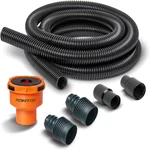 |
POWERTEC 70511 10 Ft. Dust Collection Hose Kit – $54 Includes the tapered reducers most Ryobi table saw owners actually need to step down from a shop vac hose to a small saw dust port without a loose, leaking fit.
|
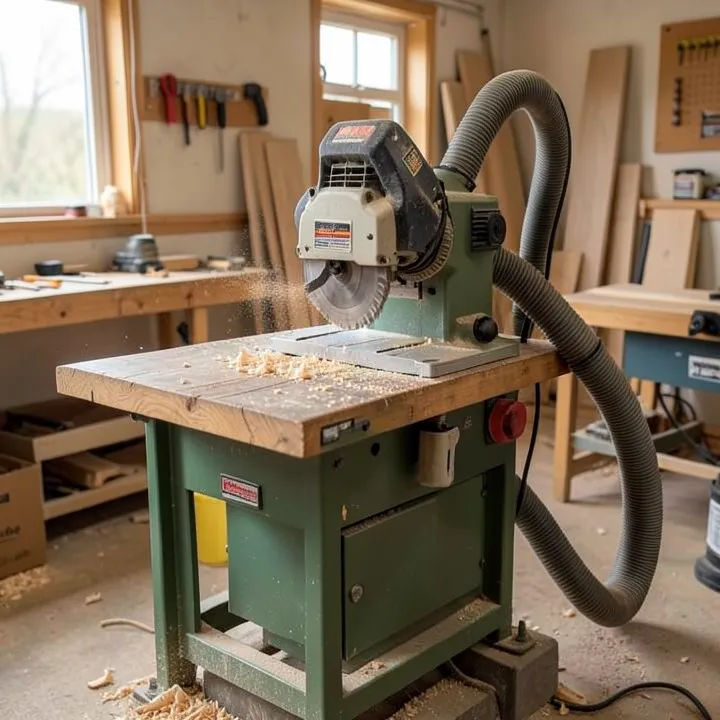
Table saw dust isn’t uniform – a large share of it is fine enough to stay suspended in shop air for hours after you finish cutting, rather than settling out like the visible chips and shavings. That airborne fraction is what actually reaches your lungs, and it’s the reason health agencies classify wood dust as a respiratory irritant worth controlling at the source rather than sweeping up afterward. Capturing dust at the blade, before it becomes airborne, does more for your health than any dust mask worn after the fact.
The Real Bottleneck: Hose Diameter, Not Just CFM
This is the part most dust collection advice skips. A dedicated dust collector rated at 400 to 650 CFM through its native 4-inch hose does not deliver anywhere close to that airflow once it’s stepped down to a Ryobi saw’s 2 to 2.5-inch port. Airflow capacity scales with the cross-sectional area of the hose, and a 2.5-inch opening has roughly 39% of the area of a 4-inch opening – so the narrow port, not the collector’s motor, ends up setting your real-world suction. In practice, this means an inexpensive shop vac rated around 100 to 150 CFM, matched to a properly sealed 2.5-inch hose, often performs closer to a full-size dust collector than the raw CFM numbers on the box would suggest.
Matching A Collector To Your Saw’s Port
Start by checking what your specific saw actually has: a small 2 to 2.5-inch dust port on the blade guard or lower housing, or no port at all, with an open bottom that lets dust fall straight through onto the floor or into a table saw stand‘s shelf.
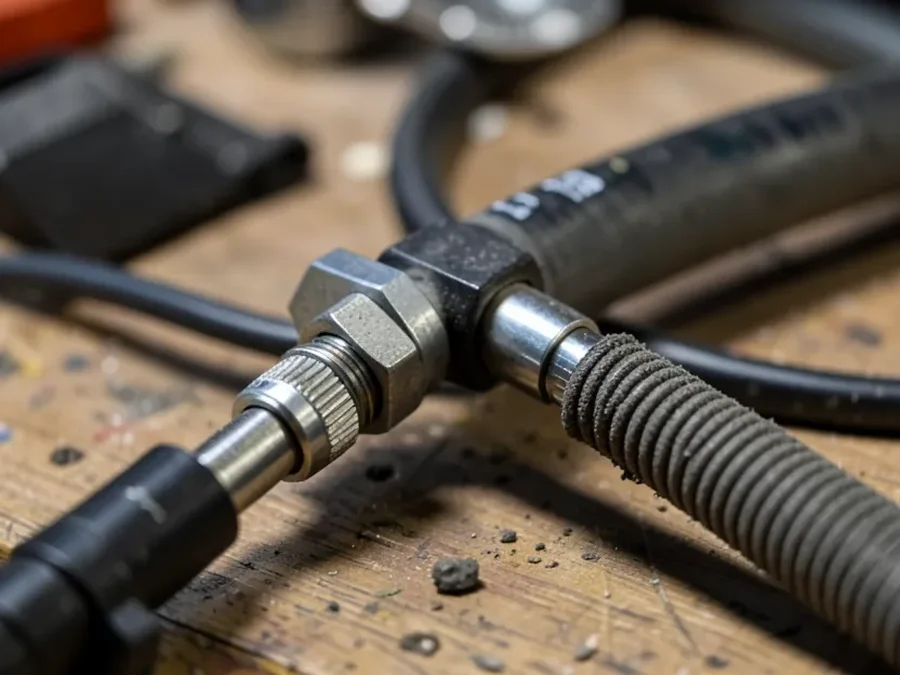
- Has a 2 to 2.5-inch port: a standard shop vac hose connects directly or with a simple reducer – this is the easiest and most common setup.
- No port at all: you’re catching dust after the fact, not at the source. A dust bag clamped under the open bottom, or an enclosure built from thin plywood or sheet plastic around the saw’s underside with a vac port added, redirects debris toward a collector instead of letting it fall freely.
- Want to run a 4-inch dedicated collector: you’ll need a tapered reducer to step the hose down to the saw’s port size, and you should expect the effective suction at the blade to be governed by that smaller opening, not the collector’s rated CFM.
Sealing The System Matters As Much As The Collector
Any gap between the saw’s dust port and the collector hose acts like a leak in a vacuum line – air takes the path of least resistance, and a loose-fitting connector lets the collector pull shop air through the gap instead of dust through the blade housing. Foam weatherstripping around the port connection and a properly sized adapter (rather than a hose jammed on at an angle) make a bigger difference to real-world dust capture than upgrading to a more powerful collector on a leaky connection.
Filtration: Don’t Just Catch Dust, Contain It
A standard shop vac filter captures the coarse material fine, but exhausts a meaningful amount of the finest particles right back into shop air through its own exhaust port. For dedicated dust-control setups, a filter bag or cartridge rated for 1 to 5 microns holds onto that fine fraction instead of just recirculating it, and running the vacuum’s exhaust hose outside (or through a HEPA-rated filter) closes that loop for anyone spending extended time at the saw.
Setting It Up: The Short Version
- Measure your saw’s dust port (or confirm it has none).
- Pick a shop vac for occasional light use, or a dedicated collector with a reducer if you already own one or cut frequently.
- Use a proper reducer fitting rather than tape or a loose push-fit – this is where most of the suction loss actually happens.
- Keep the hose run as short and straight as practical; every extra foot and every bend adds resistance that cuts real airflow.
- Run a test cut, watch for dust escaping around the blade guard or the port connection, and reseal any gap you find.
Frequently Asked Questions
Do Ryobi table saws come with dust collection built in?
Most have only a small 2 to 2.5-inch dust port, and some budget models have no port at all. In either case, an external shop vac or dust collector is needed to actually capture dust rather than let it fall or blow into the shop.
Will a shop vac work as well as a dedicated dust collector?
For a saw with a small 2 to 2.5-inch port, often yes, because the port’s diameter – not the collector’s rated CFM – ends up limiting real airflow. A shop vac matched to that hose size, sealed well, frequently performs close to a full-size dust collector stepped down through a reducer.
How much CFM do I need for a table saw?
Around 100 to 200 CFM is generally enough for a benchtop or jobsite table saw connected through a 2.5-inch hose, since the narrow port caps how much airflow can actually reach the blade regardless of the collector’s rating.
Conclusion
Dust collection matters for a Ryobi table saw because the saw itself does very little of it. Match your hose size to the actual port, seal the connection properly, and a modest shop vac will handle the job about as well as a bigger, more expensive collector running through the same narrow opening.
Sponsored / affiliate links. As an Amazon Associate I earn from qualifying purchases. I may earn additional commission from eligible campaigns.