Best Miter Saw Blade for Every Cut: Tooth Count & Kerf Guide
The best miter saw blade depends on what you’re cutting — an 80-tooth carbide blade for trim and hardwood, a 40-tooth blade for fast framing cuts, and a dedicated TCG blade for aluminum or PVC. Using the wrong blade tears wood fibers, burns cuts, or chips carbide meant for another material. This guide covers tooth count by task, kerf width, hook angle, and real picks for crosscutting, plywood, framing, and metal.
Quick Answer
For most woodworking, an 80-tooth carbide blade (like the Makita A-93681) gives the smoothest crosscuts and trim work. Switch to a 40-tooth blade for fast framing cuts, a Hi-ATB 80-tooth blade for plywood and laminate, and a negative-hook TCG blade for aluminum or PVC — using the wrong one burns cuts or chips carbide teeth.
Miter Saw Blade Tooth Count, Kerf & Hook Angle by Cutting Task
Best Overall Miter Saw Blade Pick
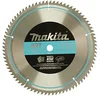
Makita A-93681 10″ 80-Tooth Miter Saw Blade
An 80-tooth ATAF (Alternate Top and Alternate Face) blade with a Japanese ultra-thin kerf and micro-polished carbide teeth — the balance point most shops reach for first.
- Best for: Trim, molding, and general hardwood crosscuts where finish quality matters most
- Why we picked it: Thin kerf reduces motor drag on portable saws, and 80T ATAF geometry leaves a near-splinter-free edge without a separate finish blade
- Main drawback: Too fine and slow for framing lumber or demo work — swap to a lower tooth count for that
Compare more miter saw blade options
 Best for Plywood Freud LU79R010 10″ 80T Plywood & Melamine
|
 Best for Framing Diablo 10″ 50-Tooth Combination Blade
|
 Best for Metal Diablo D1080N 10″ 80T Non-Ferrous TCG
|
As an Amazon Associate we earn from qualifying purchases.
Every blade spec trades off speed against finish quality. According to This Old House, blades with fewer teeth (20–40) clear material fast for rough cuts, while blades with more teeth (50–80+) leave a smoother, nearly splinter-free edge. Kerf and hook angle change alongside tooth count, so matching all three to the actual task — not just picking “more teeth is better” — is what actually determines cut quality.
| Cutting Task | Tooth Count | Kerf | Hook Angle | Best For |
|---|---|---|---|---|
| Fine trim & crosscuts | 80–100T | Thin (.06″–.09″) | 0° to -5° | Baseboard, molding, hardwood trim, finish carpentry |
| Plywood & laminate | 80T Hi-ATB | Thin (~.09″) | 0° to -5° | Veneered plywood, melamine, laminate flooring |
| Framing & rough cuts | 24–40T | Standard (.09″–.13″) | 10°–20° | Dimensional lumber, deck framing, demo work |
| Aluminum & non-ferrous metal | 80–96T TCG | .09″–.11″ | -5° to -7° | Aluminum extrusion, brass, PVC, plastics |
Hook angle is the tooth’s tilt relative to the blade’s centerline. Positive hook angles (10°–20°) pull the blade into the cut aggressively — good for fast framing cuts, bad for control. Negative or near-zero hook angles (0° to -7°) hold the blade back, which is why nearly every dedicated miter saw blade uses this range: a miter saw is a chop saw, not a rip saw, so control matters more than raw speed for most of what it cuts. For a closer look at exactly how an 80-tooth and 100-tooth blade compare on kerf, hook angle, and heat, see our 80 vs 100 tooth miter saw blade comparison.

Best Miter Saw Blades for Every Cutting Task
These four picks cover the cutting tasks above, each chosen for a specific job rather than as a single “do everything” blade — because for most shops, no single blade actually does everything well.
Thin Kerf vs Full Kerf: Which Should You Choose?
Kerf is the width of the slot a blade cuts — thin kerf (roughly .06″–.09″) removes less material and less wood, while full/standard kerf (roughly .09″–.13″) runs straighter under load but wastes more stock.
- Choose thin kerf for cordless and lower-powered miter saws, since less material removed means less strain on the motor, and for cutting expensive hardwood where waste matters.
- Choose full kerf for high-torque corded saws doing repetitive framing cuts, where the thicker plate resists deflection and holds a truer line under heavier feed pressure.
A thin-kerf blade on an underpowered saw can bind or burn if it deflects mid-cut, so match kerf to the saw’s power, not just the material.
10-Inch vs 12-Inch Miter Saw Blades
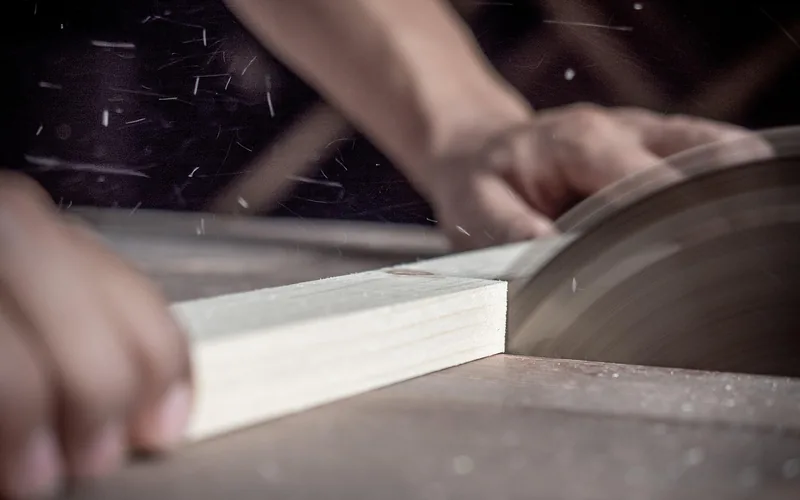
10-inch blades (5/8″ arbor) are the standard for trim and finish carpentry and are what most compact and cordless compound sliding miter saws take. 12-inch blades (1″ arbor) add cutting capacity — enough to cross a 2×8 in one pass on some saws — at the cost of a heavier, pricier blade with more rotational inertia to spin up. If your saw is rated for a 12-inch blade specifically, see our 12-inch miter saw blade breakdown for size-specific picks; never mount a blade larger than your saw’s rated diameter.
📊 Rip-style blades typically run 20–40 teeth; crosscut blades typically run 50–80+ teeth — the tooth count is a direct trade-off between cutting speed and edge smoothness. — Source: This Old House Tool Lab, 2026
How to Keep a Miter Saw Blade Cutting Clean
Most “bad cuts” aren’t actually a bad blade — they’re a dirty or mismatched one. Three habits fix the majority of cut-quality complaints:
- Clean pitch buildup regularly: resin and pitch coat the teeth after a few dozen cuts in softwood, which slows the cut and generates heat that burns the workpiece — a blade-and-pitch cleaner or diluted degreaser and a soft brush restores most of the lost performance without replacing the blade.
- Match the blade to the material every time: a wood blade on aluminum grabs and can kick back; a metal-cutting TCG blade run on wood dulls in a handful of cuts. Keep dedicated blades for wood, plywood/laminate, and metal rather than treating one blade as universal.
- Watch for burn marks and drift, not just dullness: a blade can look sharp and still be chipped microscopically on a few teeth — burn marks appearing on a crosscut that weren’t there a week earlier, or the cut starting to wander off the line, are usually the earliest real signs it needs cleaning, resharpening, or replacing.
For baseboard and trim work specifically, see our guide to cutting baseboards with a miter saw, which walks through the 60-tooth setup and corner technique in more detail. If you’re deciding between saw types before buying a blade at all, our single vs. dual bevel miter saw comparison covers that first. For the full category, browse every miter saw guide on the site.
Durability For Longevity
| Brand | Price | Retailer | Features |
| Grainger Industrial Supply | $84.94 | Online | Carbide Tipped, Durable |
| Grainger Industrial Supply | $44.91 | Online | Carbide Tipped, Durable |
| Harbor Freight Tools | $38.98 | Online | Cuts well, Well made, Durable |
| Amazon.com | $16.99 | Online | High hardness |
| Home Depot | $54.97 | In Store | Cuts well, Well made, Durable |
The Impact Of Kerf
| Blade Type | Price | Retailer | Features |
|---|---|---|---|
| Carbide Tipped | $84.94 | Grainger Industrial Supply | High durability |
| 12 Saw Blade | $44.91 | Grainger Industrial Supply | For Table Saw, Miter Saw, Circular Saw for Wood |
| 12 Saw Blade | $19.99 | Harbor Freight Tools | Cuts well, durable and well-made |
| 12 Saw Blade | $38.98 | Amazon.com | High hardness, free shipping |
| 12 Saw Blade | $16.99 | Harbor Freight Tools | Cuts well and in-store |
| 12 Saw Blade | $64.99 | Amazon.com | Free shipping, for Miter Saw and Circular Saw |
| 12 Saw Blade | $34.97 | Northern Tool | Special offer, cuts well, well-made and durable |
| 12 Saw Blade | $27.38 | Amazon.com | For Table Saw, Miter Saw, Circular Saw for Wood and Metal |
| 12 Saw Blade | $54.97 | Home Depot | Pick up today CURBSIDE, cuts well, well-made and durable |
| 12 Saw Blade | $57.98 | Lowe’s | Pick up today, cuts well and well-made |
| 12 Saw Blade | $20.79 | Amazon.com | 2 colors, for Miter Saw and Circular Saw |
| 12 Saw Blade | $54.54 | Northern Tool | Special offer, cuts well, well-made and durable |
| 12 Saw Blade | $149.96 | Toolstoday.com | Extra Fine Laminate |
| 12 Saw Blade | $34.99 | Amazon.com | Low Vibration Optimized Tooth Geometry |
| 12 Saw Blade | $29.99 | Harbor Freight Tools | Cuts well, durable and well-made |
| Saw Blade | $8.48 | Temu | For Table Saw, Miter Saw, Circular Saw, Chop Saw for Wood |
| 12 Saw Blade | $38.99 | Ace Hardware | Pick up today CURBSIDE, cuts well, well-made and durable |
| 12 Saw Blade | $67.49 | Amazon.com | Free shipping, computer balanced plate and exclusive wedge shoulder design |
| 12 Saw Blade | $36.69 | Zoro | Cuts well, well-made and durable |
| 12 Saw Blade | $50.00 – $79.00 | Grainger Industrial Supply | Sale, for Miter Saw and Circular Saw for Wood and Metal |
| Miter Saw Blade | $36.98 | Lowe’s | Pick up today, for Saw Blades, Table Saw and Circular Saw for Wood and Metal |
| 12 Saw Blade | $19.88 | Home Depot | Free shipping, cuts well |
| 12 Saw Blade | $39.99 | Amazon.com | Free shipping, for Table Saw, Miter Saw, Circular Saw for Wood and Metal |
| 12 Saw Blade | $29.63 | Amazon.com | 2 colors, for Miter Saw and Circular Saw |
| 12 Saw Blade | $24.99 | Amazon.com | For Table Saw, Miter Saw, Circular Saw and Chop Saw for Wood |
| Saw Blade | $20.29 | Amazon.com | For Table Saw, Miter Saw and Circular Saw for Wood |
| 12 Saw Blade | $51.69 | Home Depot | Free shipping, cuts well, well-made and durable |
| 12 Saw Blade | $27.99 | Harbor Freight Tools | Cuts well, well-made and durable |
| 12 Saw Blade | $47.52 | Amazon.com | Free shipping, for Table Saw, Miter Saw, Circular Saw for Wood, Metal and Plastic |
| 12 Saw Blade | $23.99 | Northern Tool | Special offer, cuts well and well-made |
| 12 Saw Blade | $128.65 | Grainger Industrial Supply | For Table Saw, Miter Saw and Circular Saw for Wood |
| 12 Saw Blade | $24.26 | Home Depot | Free shipping, cuts well and well-made |
| 12 Saw Blade | $59.99 | Ace Hardware | Pick up today CURBSIDE, cuts well, well-made and durable |
| 12 Saw Blade | $24.19 | Amazon.com | For Table Saw, Miter Saw and Circular Saw for Wood |
Frequently Asked Questions
How many teeth should a miter saw blade have?
For general woodworking, a 60- to 80-tooth carbide blade gives the best balance of speed and finish. Fewer teeth (24–40) cut faster but leave a rougher edge, better for framing lumber; higher tooth counts (80–100) leave a smoother, nearly splinter-free cut for trim, molding, and hardwood.
What’s the difference between a rip blade and a crosscut blade on a miter saw?
Rip blades have fewer teeth (24–30) and a steep, positive hook angle to clear material fast along the grain. Crosscut blades have more teeth (40–80) and a shallow or negative hook angle that slices cleanly across the grain. Most miter saw blades sold are crosscut or combination blades, since a miter saw rarely rips.
Can a miter saw blade cut aluminum or other metal?
Yes, with a dedicated non-ferrous blade — look for triple-chip-grind (TCG) teeth, an 80–96 tooth count, and a negative hook angle around -5°. A standard wood-cutting blade will overheat, dull almost instantly, or grab and kick back on metal, so never substitute one for the other.
Can I put a 12-inch blade on a 10-inch miter saw?
No. A 10-inch saw’s arbor, blade guard, and motor speed are all sized for a 10-inch blade; a larger blade won’t fit the guard properly and can be spun faster than it’s rated for, which is a genuine safety hazard. Always match blade diameter to the saw’s rated capacity exactly.
How do I know when to replace a miter saw blade?
Replace or resharpen a blade when cuts start leaving burn marks, the cut drifts off the guide line, or you can see chipped or missing carbide teeth. A blade that’s simply gummed up with pitch can often be restored with a blade cleaner instead of being replaced outright.
Conclusion
There’s no single “best” miter saw blade — there’s the right blade for the cut in front of you. Keep an 80-tooth blade mounted for everyday trim and crosscut work, and swap to a 40-tooth blade for framing or a dedicated TCG blade the moment metal or plastic is involved. Matching tooth count, kerf, and hook angle to the task is what actually protects the finish, the blade, and the saw.
Sponsored / affiliate links. As an Amazon Associate I earn from qualifying purchases. I may earn additional commission from eligible campaigns.