Are Ryobi Circular Saws Any Good? Essential Guide
Yes, Ryobi circular saws are generally good for DIYers and homeowners. They offer a great balance of affordability, performance, and features, making them excellent choices for many home projects. While not professional-grade, their power and ease of use make them reliable tools for beginners and hobbyists.
Welcome to the workshop! If you’re diving into woodworking or tackling home improvement projects, a circular saw is likely on your tool wishlist. And when you start looking, you’ll see Ryobi saws everywhere. They’re popular, especially for DIY folks. But a big question pops up: are Ryobi circular saws actually any good? It’s a fair question, and one I hear a lot. You want to know if they’ll get the job done without breaking the bank or leaving you frustrated. I get it! That’s why I’ve put together this guide. We’ll break down what makes a circular saw good, look closely at what Ryobi offers, and help you decide if a Ryobi is the right fit for your projects.
Are Ryobi Circular Saws Any Good? The Short Answer for DIYers
For the average homeowner, hobbyist woodworker, or DIY enthusiast, Ryobi circular saws are a solid choice. They hit a sweet spot by offering good performance at an accessible price point. You’ll find they’re powerful enough for most common tasks like cutting lumber for shelves, framing small projects, or making quick adjustments to plywood. Plus, Ryobi’s commitment to battery-powered tools means you can often find cordless options that offer great freedom of movement. While they might not stand up to the daily grind of a professional construction site, for your weekend projects and home repairs, a Ryobi circular saw is more than capable.
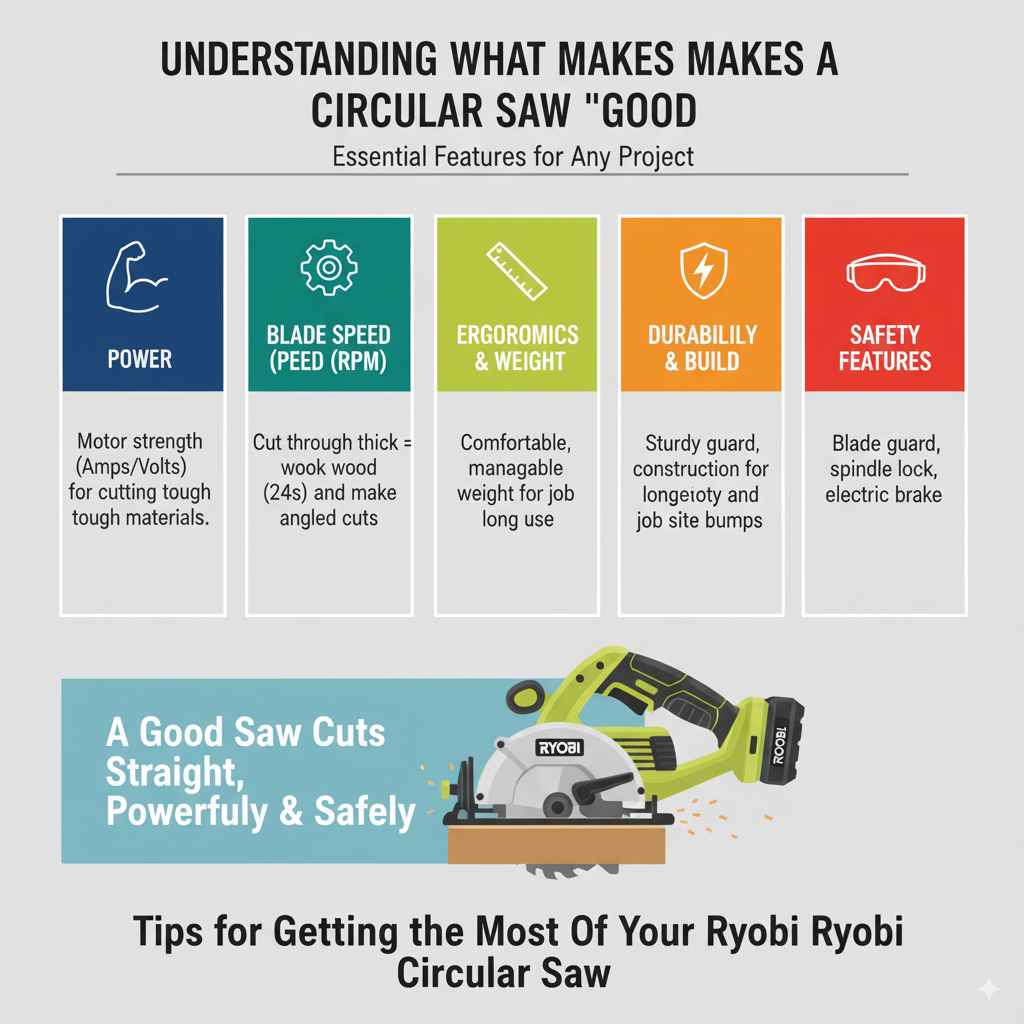
Understanding What Makes a Circular Saw “Good”
Before we dive into Ryobi specifics, let’s talk about what makes any circular saw a good tool. Think of it like this: a good saw cuts straight, powerfully, and safely. Here are the key ingredients:
- Power: A good saw needs enough muscle to push the blade through the material without bogging down. For wood, this usually means a motor with sufficient amperage (for corded) or voltage (for cordless).
- Blade Speed (RPM): Higher revolutions per minute (RPM) mean a cleaner, faster cut. It affects how smoothly the saw moves through wood.
- Depth of Cut: This is how deep the saw can cut. Most standard circular saws can cut through a 2×4 (which is actually 1.5 inches thick) and have adjustable depth settings.
- Bevel Capacity: Can the saw tilt to make angled cuts? Many DIY projects require bevels for precise fits.
- Ergonomics & Weight: A comfortable saw, that isn’t too heavy, makes a huge difference, especially for long cuts or when you’re not used to power tools.
- Durability: Will it last? For home use, you want a tool that feels sturdy and can handle occasional bumps.
- Safety Features: Things like blade guards that retract smoothly and a spindle lock for easy blade changes are crucial.
Ryobi Circular Saws: A Closer Look
Ryobi is part of the One World Technologies group, which also owns brands like Ridgid and Hoover. Their focus is on providing reliable tools for the DIY market at an affordable price. They are particularly well-known for their extensive line of 18V ONE+ cordless tools, which means you can often use the same batteries across many different Ryobi tools.
When looking at Ryobi circular saws, you’ll generally find a few main types:
- Corded Circular Saws: These are your traditional plug-in saws. They tend to be a bit lighter and offer consistent power. Great if you don’t mind being tethered by a cord.
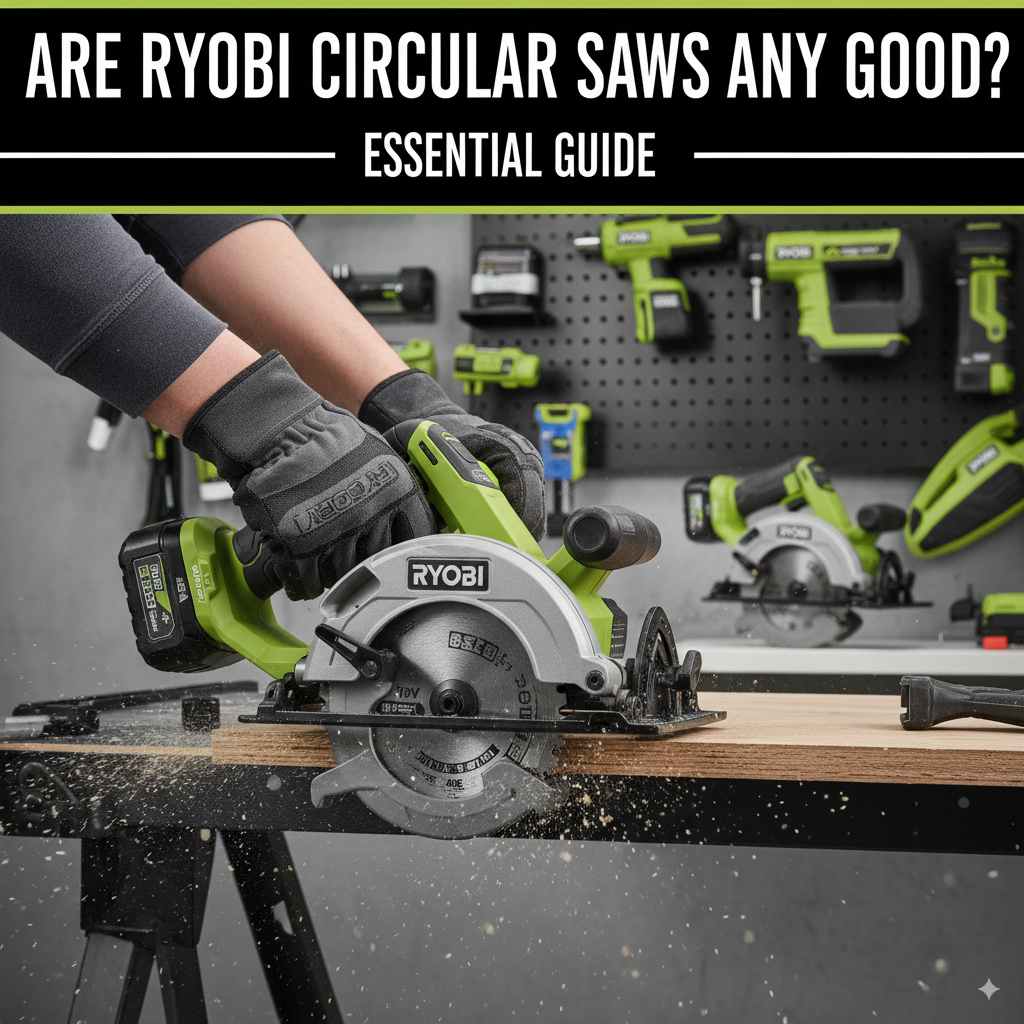
- 18V ONE+ Cordless Circular Saws: These are incredibly popular. They offer freedom from cords and are powered by Ryobi’s interchangeable 18V batteries. This is where Ryobi really shines for DIYers because of the cordless convenience and battery ecosystem.
- Specialty Saws: Ryobi also makes smaller “one-handed” saws (like the P508 18V ONE+ Brushless Compact Router) or specific models aimed at particular tasks, but the standard 7-1/4 inch and smaller cordless saws are their most common offerings.
Key Features to Expect from Ryobi Saws
Ryobi typically equips its circular saws with features that are very user-friendly:
- Adjustable Shoe: Allows you to set the depth of your cut and provides a stable base for keeping cuts straight.
- Bevel Adjustment: Most Ryobi saws allow for tilt cuts, usually up to 45 or 50 degrees.
- Spindle Lock: Makes changing the blade much easier.
- Dust Port: Helps to manage sawdust, especially when connected to a shop vacuum.
- LED Light (on many cordless models): Illuminates the cut line, which is a nice touch for accuracy.
- Ergonomic Grips: Designed for comfort during use.
| Feature | Ryobi Corded Saws (Typical) | Ryobi 18V ONE+ Saws (Typical) |
|---|---|---|
| Power Source | AC Power | 18V ONE+ Lithium-Ion Battery |
| Portability | Limited by cord length | High; no cord restrictions |
| Consistent Power | Very consistent (as long as you have power) | Can vary slightly as battery drains; brushless motors help maintain power |
| Weight | Often slightly lighter | Can be heavier due to battery, but well-balanced |
| Initial Cost | Generally lower | Can be higher if buying battery and charger separately; often bundled (Kits) |
| Blade Diameter | Often 7-1/4 inch | Commonly 5-1/2 inch or 6-1/2 inch, some 7-1/4 inch models |
Ryobi Circular Saw Models and Performance
Ryobi offers a range of circular saws to fit different needs and budgets. Let’s look at some common types and what you can expect:
The Basic Corded Option
Ryobi often has a 7-1/4 inch corded circular saw in its lineup. These are typically the most budget-friendly. They usually boast around 13 amps of power, which is respectable for general-purpose cutting. You can expect them to handle tasks like:
- Cutting 2x4s and other dimensional lumber for framing.
- Breaking down larger sheets of plywood or MDF.
- Making straight cuts for shelves or basic furniture.
The main limitation here is, of course, the cord. You’ll need an extension cord and proximity to an outlet. They are also generally a bit noisier and can vibrate more than their cordless counterparts.
The Popular 18V ONE+ Cordless Saws
This is where Ryobi’s strength lies for many. Their 18V ONE+ cordless circular saws are incredibly convenient. They come in various sizes, but the most common are:
- Compact/Trim Saws (around 5-1/2 inch blade): These are lighter and smaller, making them fantastic for one-handed use and quick cuts. They are perfect for trim work, smaller DIY projects, or when maneuverability is key. They might struggle with very thick lumber in a single pass but are excellent for their intended use.
- Standard Cordless Saws (around 6-1/2 inch or 7-1/4 inch blade): These offer more power and a deeper cut capacity, closer to corded models. They are brilliant for breaking down sheet goods, cutting framing lumber, and general construction. Look for models with brushless motors, as these are more efficient, offer more power, and tend to last longer. For example, the Ryobi PCL704B 18V ONE+ Brushless Cordless 6-1/2 Inch Circular Saw is frequently praised for its power and battery life in the cordless category for DIYers. Brushing up on electrical safety for home projects is also a wise step before using any power tool, which you can often find resources at sites like the Occupational Safety and Health Administration (OSHA) on electrical safety.
Battery Life: With 18V ONE+ batteries, you can usually get a good number of cuts on a single charge, especially with smaller saws or when using higher amp-hour (Ah) batteries (like 4.0Ah or 6.0Ah). A 2.0Ah battery might be fine for small tasks, but for larger projects, consider investing in bigger batteries.
Pros and Cons of Ryobi Circular Saws
Every tool has its strengths and weaknesses. Here’s a balanced look at Ryobi circular saws:
Pros:
- Affordability: This is a huge draw. Ryobi tools are significantly less expensive than professional-grade brands, making them accessible to a wider audience.
- Battery System (18V ONE+): If you own other Ryobi 18V tools, you can use the same batteries. This reduces the overall cost of building your tool collection.
- Good for DIY and Home Use: They perform well for common household tasks and hobby projects.
- User-Friendly: Generally easy to set up and operate, with intuitive controls.
- Good Availability: Ryobi tools are widely available at big box stores like Home Depot, making them easy to purchase and find accessories for.
- Lightweight and Compact Options: Many cordless models are designed for easy handling.
Cons:
- Not for Heavy-Duty Professional Use: They are not built for the daily, demanding use of a professional contractor. Durability under extreme conditions might be a concern.
- Power Limitations: While good for their class, they might struggle with very dense hardwoods or very thick materials compared to professional saws.
- Blade Quality: The blades that often come bundled with saws are usually basic. Upgrading to a higher-quality blade is recommended for cleaner, faster cuts.
- Durability of Plastic Components: Some users report that plastic parts can be more prone to breaking if the saw is dropped or mishandled compared to more robust, professional tools.
When is a Ryobi Circular Saw the RIGHT Choice for You?
So, are Ryobi circular saws good? If you find yourself nodding to most of these scenarios, then a Ryobi is likely a fantastic fit:
- You’re new to woodworking or DIY.
- You have a budget to stick to.
- Your projects are mostly for around the house: building shelves, repairing fences, making simple furniture, cutting lumber for small projects.
- You’re already invested in the Ryobi 18V ONE+ battery system.
- You value convenience (especially cordless) and ease of use.
- You don’t plan on using the saw for 8 hours a day, 5 days a week.
For these situations, a Ryobi circular saw will serve you very well and help you achieve great results without a huge investment.
When Might You Consider Other Options?
Conversely, you might want to look at higher-end brands if:
- You are a professional carpenter or contractor.
- You cut very hard materials or very thick lumber regularly.
- You need the absolute best in durability and precision for fine woodworking.
- You plan to use your saw for extremely long periods without breaks.
Tips for Getting the Most Out of Your Ryobi Circular Saw
Once you have your Ryobi saw, there are a few things you can do to ensure great performance and longevity:
- Safety First, Always: Always wear safety glasses. Ensure the blade guard is functioning correctly. Keep hands clear of the blade. Read your saw’s manual. For more detailed safety information, resources like the Wood Magazine safety guide offer excellent, practical advice.
- Use the Right Blade: The blade that comes with the saw is often a general-purpose blade. For cleaner cuts in plywood, use a higher tooth count blade (e.g., 40-60 teeth). For ripping (cutting with the grain on dimensional lumber), a lower tooth count (e.g., 24 teeth) can be more effective. A good quality blade makes a world of difference!
- Properly Support Your Material: Use sawhorses or a workbench to support the wood you are cutting, especially when cutting sheets. Ensure the waste piece is also supported or cut over an opening so it doesn’t pinch the blade.
- Mark Your Lines Clearly: Use a pencil and a straight edge or speed square to mark your cut line.
- Let the Saw Do the Work: Don’t force the saw through the wood. Apply steady, even pressure and let the blade’s speed do the cutting. Forcing it can bog down the motor, lead to rough cuts, and is a safety hazard.
- Keep it Clean: Brush off sawdust from the motor housing and vents. A clean tool runs better.
- Check Your Battery: For cordless models, ensure your battery is adequately charged. A partially discharged battery will result in less power and shorter run time.

Frequently Asked Questions (FAQ)
Q1: Are Ryobi circular saws powerful enough for cutting 2x4s?
A: Yes, absolutely. Both their corded and standard 18V ONE+ cordless circular saws are powerful enough to cut through standard dimensional lumber like 2x4s (which are actually 1.5 inches thick) with ease.
Q2: Can Ryobi circular saws make bevel cuts?
A: Most Ryobi circular saws, including their common cordless models, feature an adjustable shoe that allows for bevel cuts, typically up to 45 or 50 degrees. This is essential for many joinery and framing tasks.
Q3: What is the advantage of Ryobi’s 18V ONE+ system?
A: The primary advantage is battery compatibility. If you own multiple Ryobi 18V ONE+ tools (like drills, sanders, or mowers), you can use the same batteries and chargers across all of them, saving money and convenience.
Q4: How long does a Ryobi battery last for a circular saw?
A: Battery life depends on the saw model, the type of cut, the battery’s amp-hour (Ah) rating, and the material being cut. A fully charged 4.0Ah battery on a standard 18V ONE+ saw can often provide dozens of cuts in common lumber before needing a recharge. Compact saws will generally offer more cuts per charge.
Q5: Should I upgrade the blade on my Ryobi circular saw?
A: For significantly improved cut quality and performance, yes, upgrading the blade is highly recommended. The stock blades are usually basic. Investing in a good quality blade can lead to smoother cuts, less tear-out, and faster cutting.
Q6: Are Ryobi circular saws safe for beginners?
A: Yes, Ryobi circular saws are designed with user-friendliness in mind and include standard safety features like blade guards. However, like all power saws, they require proper training, caution, and adherence to safety guidelines. Always wear safety glasses and read the manual.
Q7: Where can I buy Ryobi circular saws?
A: Ryobi tools are primarily sold at The Home Depot, both in-store and online. You can also find them on some online retail platforms.
Conclusion: Ryobi Circular Saws – A Wise Choice for the Home Workshop
So, to wrap things up: Are Ryobi circular saws any good? For the vast majority of homeowners, DIY enthusiasts, and hobby woodworkers, the answer is a resounding yes. They offer a compelling combination of performance, features, and affordability that’s hard to beat. Whether you choose a corded model for consistent power or opt for the freedom and convenience of their 18V ONE+ cordless system, you’re getting a tool that’s designed to help you complete your projects successfully.