DeWalt Circular Saw and Multi-Tool: Buying Guide
A DeWalt circular saw handles long, straight cuts through thick material (framing, plywood ripping), while a DeWalt oscillating multi-tool handles precision work in tight spaces (flush trim cuts, plunge cuts, sanding corners) that a circular saw is too large for. Most woodworkers who buy both end up using them for genuinely different jobs, not as competing options for the same task.
DeWalt’s 20V MAX platform lets both tools share the same battery, which is a real practical advantage: buying into one battery ecosystem covers both tools instead of managing two separate charger and battery systems.
DeWalt Circular Saws: Power And Precision
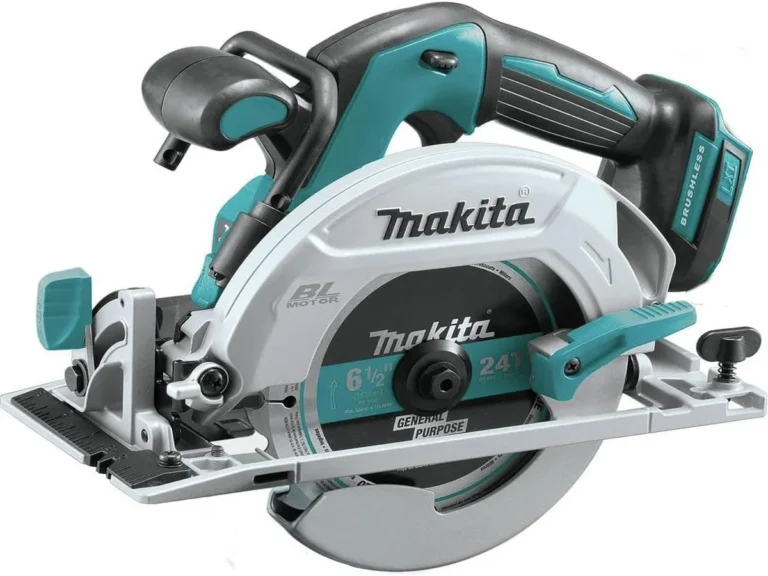
DeWalt’s 20V MAX cordless circular saws, like the DCS570B, run a brushless motor spinning the blade up to roughly 5,200-5,500 RPM depending on model, enough for hardwoods, softwoods, and most sheet goods. The brushless design means less internal wear and generally longer runtime per charge than older brushed-motor saws.
The FLEXVOLT battery system is DeWalt’s higher-voltage line (20V/60V) that automatically adjusts output depending on which tool it’s plugged into — the same FLEXVOLT battery runs a standard 20V MAX circular saw and steps up power for a 60V MAX tool. This matters mainly for anyone already invested in DeWalt’s FLEXVOLT lineup rather than being a reason to switch platforms on its own.
Blade Sizing
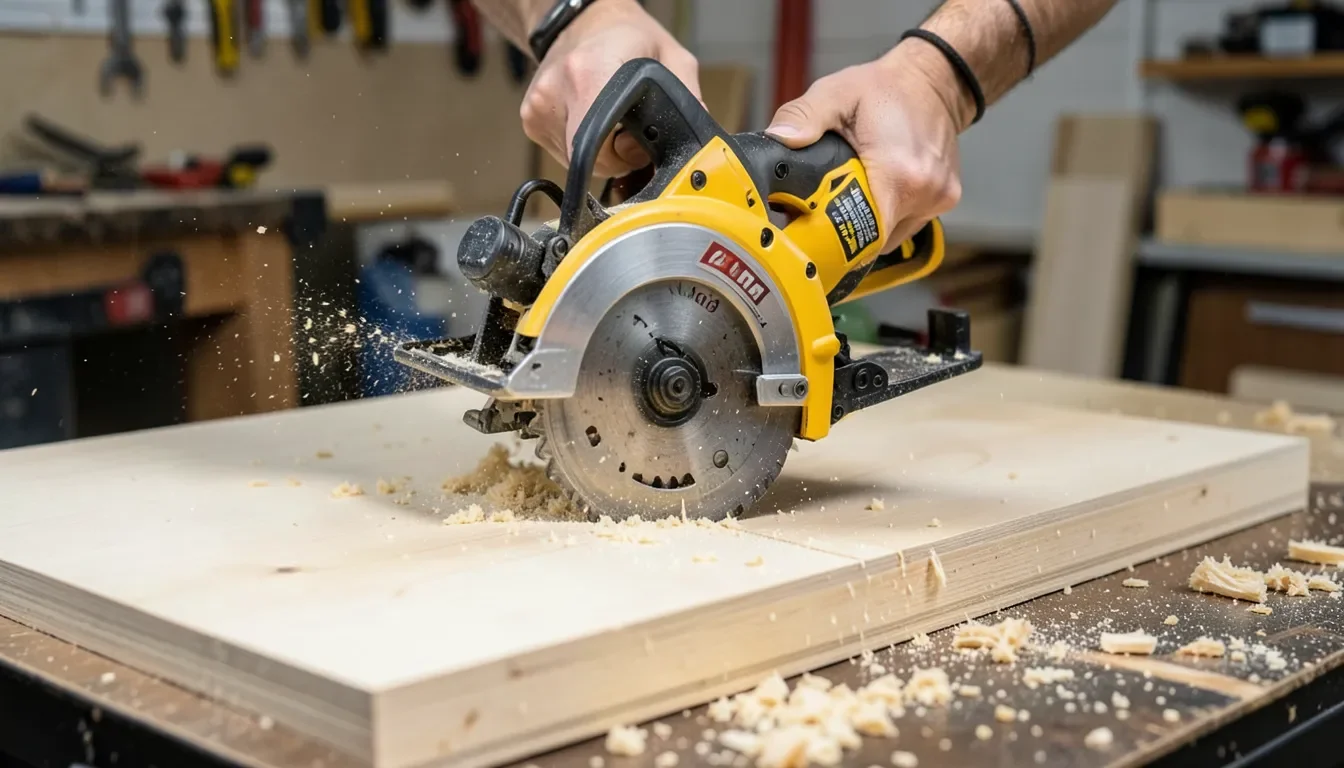
DeWalt circular saws typically use 6-1/2 inch or 7-1/4 inch carbide-tipped blades. The smaller 6-1/2 inch size is common on lighter, more compact saws suited to trim and thinner sheet goods; the 7-1/4 inch size is the standard for full-depth cuts through 2x lumber and thicker material. Blade tooth count trades off the same way on any circular saw: fewer teeth (18-24) cut faster and rougher, more teeth (40+) cut slower but leave a smoother finish.
Bevel Capacity And Guides
Most DeWalt circular saws bevel from 0 to 50 degrees, enough for standard framing and trim angle cuts. Some models add a built-in laser guide for tracking a straight cut line, though a clamped straightedge or a dedicated guide rail generally gives a more reliably straight result than eyeballing a laser line on a long rip.
Best DeWalt 20V Circular Saw
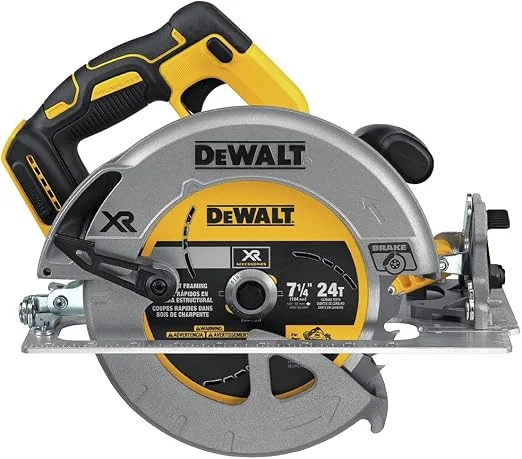 |
DEWALT 20V MAX Circular Saw, 7-1/4 in (DCS570B) – $243.99 A full-size brushless saw on the same 20V MAX battery platform as DeWalt’s multi-tool line.
|
DeWalt Multi-Tools: Precision In Tight Spaces
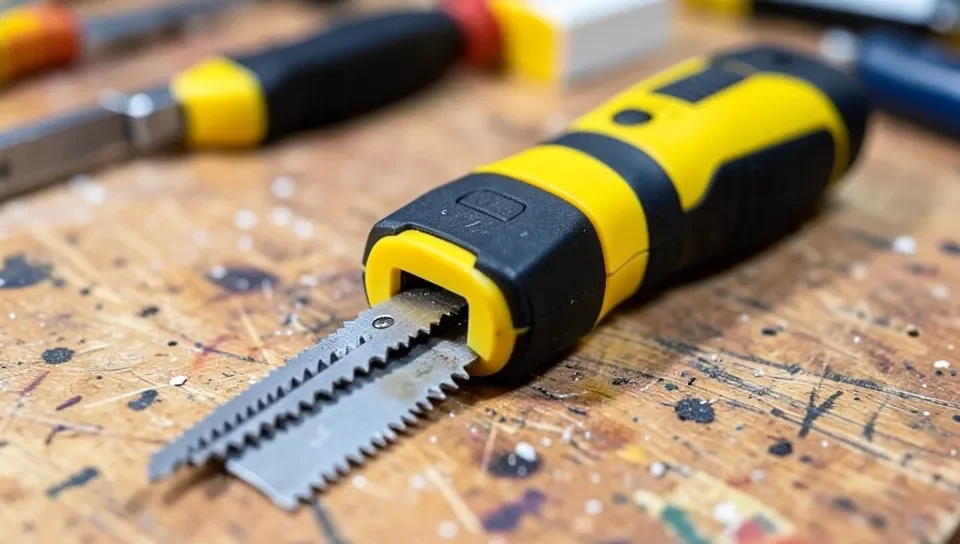
DeWalt’s oscillating multi-tools use a rapid side-to-side blade motion (up to roughly 20,000 oscillations per minute) rather than a spinning blade, which lets them make precise plunge cuts and work flush against a wall or in a corner a circular saw physically can’t reach. They’re the right tool for flush-trimming a door casing, cutting a notch for plumbing or electrical, or removing old caulk and grout — not a substitute for a circular saw’s straight-line ripping capacity.
Attachments are the real versatility here: plunge-cut blades, semi-circle blades for wider cuts, and sanding pads all mount to the same tool body, and most current models use a tool-free clamp for fast attachment swaps rather than requiring a hex key. Blade quality matters more on a multi-tool than people expect — a cheap blade dulls fast on the oscillating motion’s smaller cutting stroke.
Comparing DeWalt Circular Saws And Multi-Tools
| Feature | DeWalt Circular Saw | DeWalt Multi-Tool |
|---|---|---|
| Primary Use | Straight cuts through thick materials | Precision cuts, sanding, scraping in tight spots |
| Blade Size | 6-1/2″ to 7-1/4″ carbide-tipped | Various (plunge, semi-circle, sanding pads) |
| Power Source | Cordless (20V MAX, 60V FLEXVOLT) | Cordless (20V MAX) |
| Speed | Up to ~5,500 RPM | Up to ~20,000 oscillations per minute |
| Best For | Large-scale cuts, framing, plywood ripping | Detail work, tight spaces, versatile tasks |
| Typical Weight | 7.5-8 lbs | ~3-4 lbs |
The two tools are complementary rather than competing purchases — a circular saw handles the bulk material removal and long cuts, while a multi-tool cleans up the detail work a saw can’t reach. Most home workshops eventually add both rather than choosing one over the other.
Tips For Getting The Most From Either Tool
- Use a guide rail or straightedge: for consistently straight circular saw cuts, a clamped straightedge or dedicated guide rail outperforms freehanding along a marked line.
- Match blade to material: a higher tooth-count blade reduces splintering on plywood and veneered panels.
- Wear proper safety gear: safety goggles, hearing protection, and a dust mask for both tools; stand to the side of a circular saw’s cut line to stay clear of kickback.
- Start slow with a multi-tool: the oscillating motion takes some getting used to compared to a spinning blade — practice on scrap before a visible cut.
- Keep a charged spare battery: especially useful when both tools share the same 20V MAX platform and can draw from a common battery pool.
Which Should You Buy First?
A circular saw is the higher-priority purchase for most beginners, since it handles the majority of basic cutting tasks (breaking down sheet goods, framing cuts) that come up constantly in general woodworking and home improvement. A multi-tool is a strong second purchase once you hit projects that need flush cuts, tight-corner work, or detail trimming a circular saw can’t handle.
Buying both on the same 20V MAX battery platform from the start avoids the cost and clutter of maintaining two separate battery/charger systems later.
Frequently Asked Questions
What’s The Difference Between A DeWalt Circular Saw And A Multi-Tool?
A circular saw is designed for straight, powerful cuts through thick materials like wood or plywood, ideal for large projects. A multi-tool is designed for precision tasks like cutting in tight spaces, sanding, or scraping, best suited to detail work a circular saw can’t reach.
Can A DeWalt Multi-Tool Cut Through Hardwood Like Oak?
Yes, with a sharp plunge-cut blade rated for wood, a multi-tool can cut through oak, though it’s slower than a circular saw and best reserved for smaller cuts or detail work rather than long straight cuts.
How Do You Make Straight Cuts With A DeWalt Circular Saw?
Use a guide rail or a straightedge clamped to the workpiece and run the saw’s base plate against it. A built-in laser guide (on models that have one) helps with initial alignment but a clamped physical guide gives a more reliably straight result on long cuts.
Are DeWalt’s Cordless Tools Worth The Investment?
Yes, for most users the 20V MAX cordless platform’s shared battery system across saws, multi-tools, and other DeWalt tools makes the investment worthwhile, since one battery pool covers a growing tool collection rather than requiring separate systems per tool.
Conclusion
A DeWalt circular saw and a multi-tool aren’t competing purchases — they solve different problems, and the shared 20V MAX battery platform makes owning both practical rather than redundant. Start with a circular saw for general cutting, add a multi-tool once detail and tight-space work comes up.
Match blade type and tooth count to the material for either tool, and a clamped guide will always beat a laser line for genuinely straight circular saw cuts.
Sponsored / affiliate links. As an Amazon Associate I earn from qualifying purchases. I may earn additional commission from eligible campaigns.