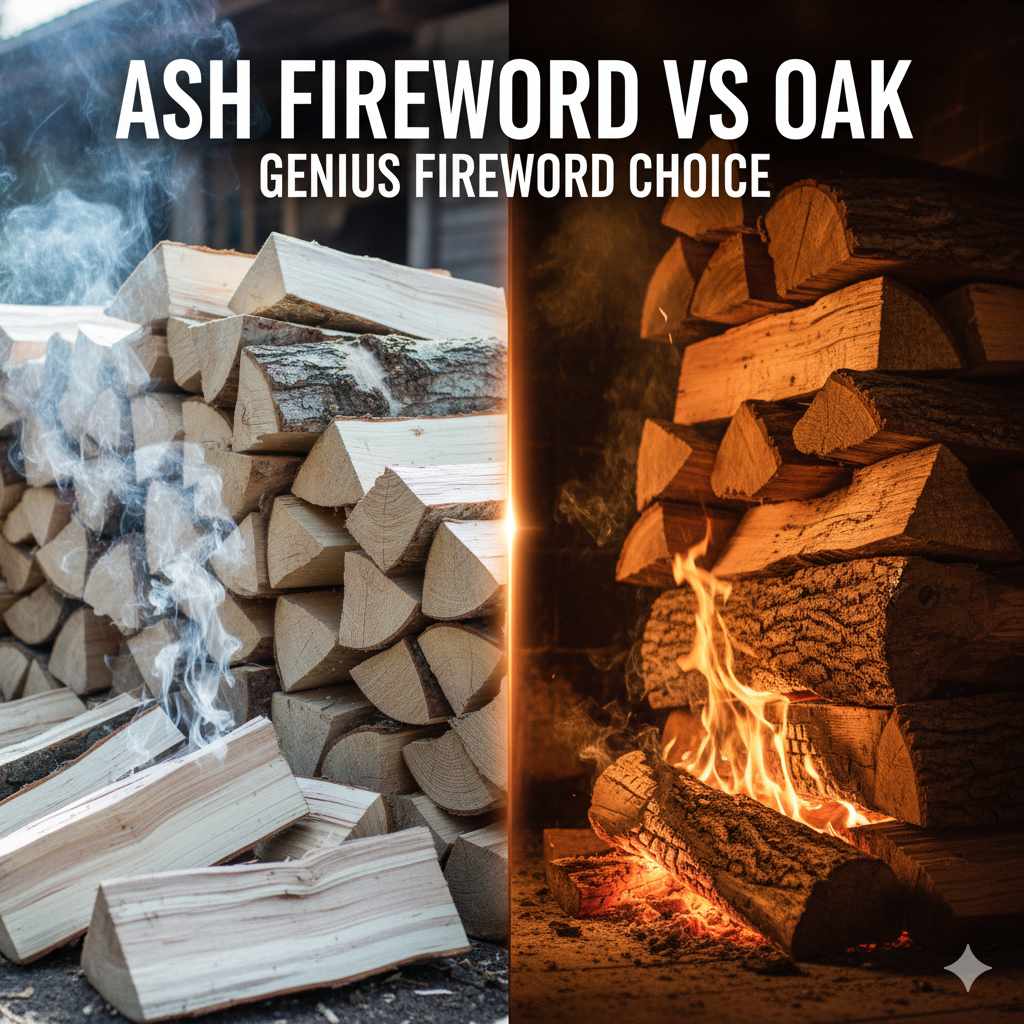
Ash Firewood vs Oak: Genius Firewood Choice
Ash firewood vs Oak: For a crackling fire and great heat, ash is often the genius choice for its fast burn and easy lighting, while oak provides longer-lasting, hotter coals. Both are excellent, but ash often wins for quick warmth and ease of use, making it a beginner’s best friend.
Choosing the right firewood can feel like a puzzle, especially when you just want a warm, cozy fire. You’ve probably heard that some woods burn better than others, but which ones are best for you? It’s a common question, and picking the wrong wood can lead to smoky fires that don’t last long or are hard to get going. Don’t worry, we’ll break down the popular choices, focusing on ash firewood versus oak. By the end of this, you’ll know exactly which wood is your perfect match for a delightful fire. Let’s explore!
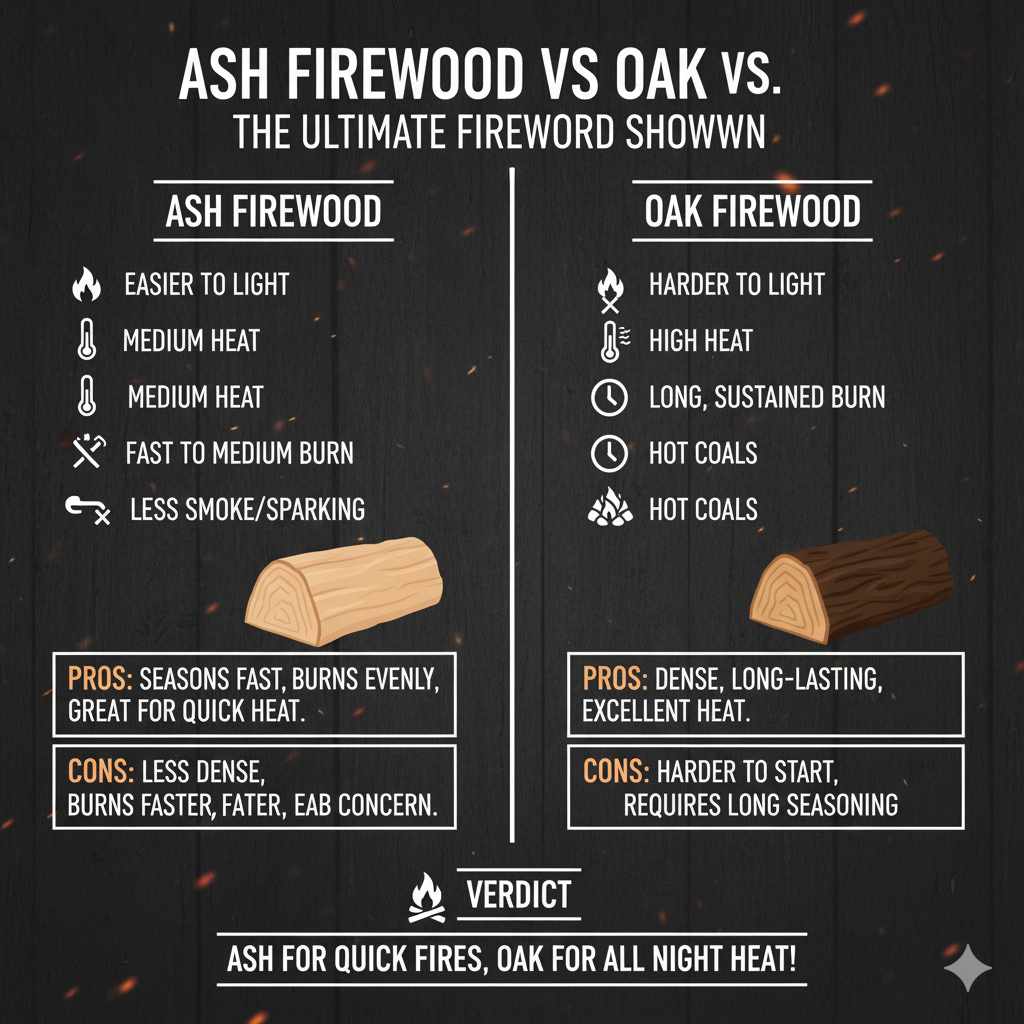
Ash Firewood vs Oak: The Ultimate Firewood Showdown
When it comes to choosing firewood, two of the most popular and reliable hardwoods are ash and oak. Both offer fantastic burning qualities, but they have distinct differences that make one potentially better suited for your specific needs. Think of this as a friendly chat in the workshop, where I’ll share what I’ve learned from countless fires.
As a woodworker, I’ve spent a lot of time with both ash and oak – they’re incredibly versatile woods. But when it comes to the cozy glow of a fireplace or a wood stove, their unique properties really shine through. We’ll dive into what makes each special, helping you make a choice that leads to happy, warm evenings.
Why This Choice Matters for Your Fireplace
The firewood you choose directly impacts your fire’s performance. Do you want a quick burst of heat to warm up a room fast, or a long, steady burn that keeps you toasty all night? Are you looking for a wood that’s easy to light, or one that burns intensely and leaves great coals?
Getting this right means less frustration and more enjoyment. A good firewood choice means:
- Easier ignition – your fire starts up quickly.
- Consistent heat output – no more cold spots!
- Longer burn times – less frequent reloading.
- Less creosote buildup – a cleaner chimney.
We’ll look at these factors for ash and oak, so you can feel confident about your next firewood purchase.
Meet the Contenders: Ash and Oak Firewood
Let’s get acquainted with our two star players. Understanding their characteristics will make comparing them much easier. Both are hardwoods, meaning they are dense and generally burn hotter and longer than softwoods like pine. But they each have their own personality.
Ash Firewood: The Quick-Warm Specialist
Ash wood is a fantastic choice, especially for those who appreciate a fire that’s easy to start and provides good heat relatively quickly. It’s often called the beginner’s hardwood because of its forgiving nature. My own experiences with ash in the workshop show its incredible strength and flexibility, and in the fireplace, it offers similar benefits for a fire.
Common types of ash include white ash, green ash, and blue ash. All are highly sought after for firewood.
Pros of Ash Firewood:
- Easy to light: Ash ignites readily, making it simple to get your fire going, even with less experienced fire-starters.
- Good heat output: While not the absolute hottest, ash provides a very respectable amount of BTUs (British Thermal Units) per cord, delivering ample warmth.
- Burns relatively clean: When properly seasoned, ash produces less creosote than some other hardwoods, which is good for your chimney’s health. You can learn more about proper seasoning from resources like this guide from the Wood Magazine.
- Less spitting: It tends to be less “spitty” or prone to throwing sparks compared to some other woods, making it a bit safer.
- Pleasant aroma: Ash burns with a mild, pleasant scent that many people enjoy.
Cons of Ash Firewood:
- Burns moderately fast: Compared to denser hardwoods like oak, ash tends to burn through a bit quicker. This means you might need to add logs more often.
- Availability can vary: Emerald ash borer has significantly impacted ash tree populations in many areas, which can affect its availability and price in certain regions. This is a tough subject, and its impact on firewood is unfortunate.
Oak Firewood: The Long-Haul Champion
Oak is another heavyweight champion in the firewood world. Famous for its density and strength in woodworking, this translates to a very dense and long-burning firewood. When you think of a hearty, slow-burning fire, oak often comes to mind. It’s a wood that really commits to keeping you warm.
The most common types for firewood are red oak and white oak. Both are excellent, with white oak generally being slightly denser and more rot-resistant.
Pros of Oak Firewood:
- Produces intense heat: Oak is one of the hottest burning hardwoods, thanks to its high density. It will warm your space very effectively.
- Long burn time: Because it’s so dense, oak burns for a very long time. A well-seasoned log can smolder and radiate heat for hours.
- Excellent coals: Oak leaves behind a bed of glowing, long-lasting coals that are perfect for maintaining heat and easily re-lighting your fire.
- Widely available: Oak is a very common tree in many parts of the world, making it generally easy to find and purchase as firewood.
Cons of Oak Firewood:
- Difficult to light: Its density means oak can be challenging to ignite, especially if it’s not perfectly seasoned. You might need a good base of kindling and smaller pieces.
- Can be smoky if not seasoned: Because it holds moisture more stubbornly, under-seasoned oak can produce more smoke and creosote. This is why proper seasoning is absolutely critical for oak. According to the University of New Hampshire Extension, “well-seasoned firewood burns hotter, cleaner, and produces less creosote and smoke.”
- Heavier to handle: Oak logs are significantly heavier than ash logs of the same size, making them more labor-intensive to split, stack, and move.
- Can spark: Some types of oak, particularly red oak, can be prone to sparking.
Comparing Ash Firewood and Oak Firewood Side-by-Side
To make it even clearer, let’s put ash and oak head-to-head on a few key metrics that matter most to any homeowner wanting a great fire. This comparison will highlight where each excels.
| Feature | Ash Firewood | Oak Firewood |
|---|---|---|
| Ease of Lighting | Excellent – Lights easily. | Fair – Can be difficult if not perfectly seasoned. |
| Heat Output (BTUs) | Good – Provides substantial warmth. | Excellent – Very hot and intense heat. |
| Burn Time | Moderate – Burns steadily but not as long as oak. | Excellent – Long-lasting burn, ideal for keeping warm. |
| Coals Produced | Good – Leaves a decent bed of coals. | Excellent – Produces a long-lasting, hot bed of coals. |
| Ease of Handling (Splitting/Stacking) | Moderate – Lighter than oak. | Challenging – Very dense and heavy. |
| Creosote Production (when seasoned) | Low – Burns relatively clean. | Moderate – Can be higher if not perfectly seasoned. |
| Sparking Tendency | Low | Moderate (especially red oak) |
| Aroma | Mild and pleasant | Mild to subtle |
| Seasoning Sensitivity | Less sensitive, but best seasoned. | Highly sensitive, absolutely must be well-seasoned. |
As you can see, ash tends to be the more user-friendly option for someone just starting out or who values ease of use. Oak, on the other hand, is for those who want maximum heat and the longest possible burn time, and are willing to put in a bit more effort.
When to Choose Ash Firewood
So, who should reach for ash firewood? If any of these scenarios sound like you, ash is likely your genius choice:
- You’re new to fires: If you’re just getting the hang of starting fires or tend to struggle, ash’s easy-to-light nature is a lifesaver. You’ll get a fire going quickly without much fuss.
- You need quick warmth: On a chilly evening, if you want to take the edge off the cold rapidly, ash delivers heat faster without the prolonged effort of getting denser woods going.
- You prefer less maintenance: If you don’t want to constantly tend to a fire, ash offers a good balance. It burns steadily and provides good heat without requiring constant attention like some very fast-burning woods, but it also doesn’t demand the rigorous seasoning and effort of oak to burn well.
- You’re concerned about handling challenges: Ash is lighter and generally easier to split and stack than oak. If you have physical limitations or find heavy lifting difficult, ash is a much friendlier option.
- You’re in an area with limited oak seasoning expertise: While oak is widely available, if you’re buying wood and aren’t sure of the seller’s seasoning process, ash is often more forgiving of slight imperfections in seasoning than oak.
Think of ash as the reliable friend who’s always ready to help you out quickly and efficiently. It’s dependable and gets the job done with minimal fuss.
When to Choose Oak Firewood
Oak firewood, on the other hand, is the king for those who prioritize certain aspects of the fire experience. Consider oak if:
- You want a long, enduring fire: If you’re looking to keep a large room warm for hours, or want to get a fire going before bed and have it last through the night, oak is your go-to. Its density means it burns slow and steady.
- Maximum heat is your goal: When you need serious warmth that can stand up to the coldest nights, oak’s high BTU output is unmatched by most other common hardwoods.
- You love a robust coal bed: The glowing embers left by oak are legendary. This hot coal bed is perfect for radiant heat and makes restarting the fire in the morning or after a period of low burning incredibly easy. It’s like a built-in heat reservation.
- You have the time and effort to invest: Oak requires proper seasoning and can be more work to split and handle. If you don’t mind the extra effort for superior long-term performance, oak is worth it.
- You have an efficient wood stove: Oak’s long burn time and intense heat are fantastic for modern, efficient wood stoves designed to burn hot and produce less emissions.
Oak is the workhorse of firewood. It demands a bit more respect and effort but rewards you with incredible performance for extended periods. It’s the choice for sustained comfort and serious heat.
The Importance of Seasoning Firewood
No matter whether you choose ash or oak, the single most important factor for a good fire is proper seasoning. Unseasoned (or “green”) firewood is packed with moisture. Burning it is like trying to light a sponge – it’s difficult, produces very little heat, and creates a lot of smoke and dangerous creosote. Creosote is a sticky, flammable residue that builds up in your chimney and can cause dangerous chimney fires. For more on chimney safety, the National Fire Protection Association (NFPA) has excellent resources.
What is Seasoned Firewood?
Seasoned firewood is wood that has been cut, split, and left to dry for at least 6 months to a year (or more for dense hardwoods like oak). The moisture content should be reduced to ideally below 20%. You can often tell if wood is seasoned by:
- Cracks: Look for cracks and checks on the ends of the logs.
- Color: Seasoned wood is usually lighter in color than green wood.
- Weight: It will feel lighter than green wood.
- Sound: When two seasoned logs are banged together, they make a clear, hollow ringing sound, not a dull thud.
- Bark: The bark may be loose or peeling.
Seasoning Ash vs. Oak
Ash generally dries out faster than oak because it is less dense. This means it might be ready to burn sooner after cutting. Oak, being very dense, can take longer to season properly. This is another reason why ash can be more forgiving. However, both absolutely require seasoning for optimal performance.
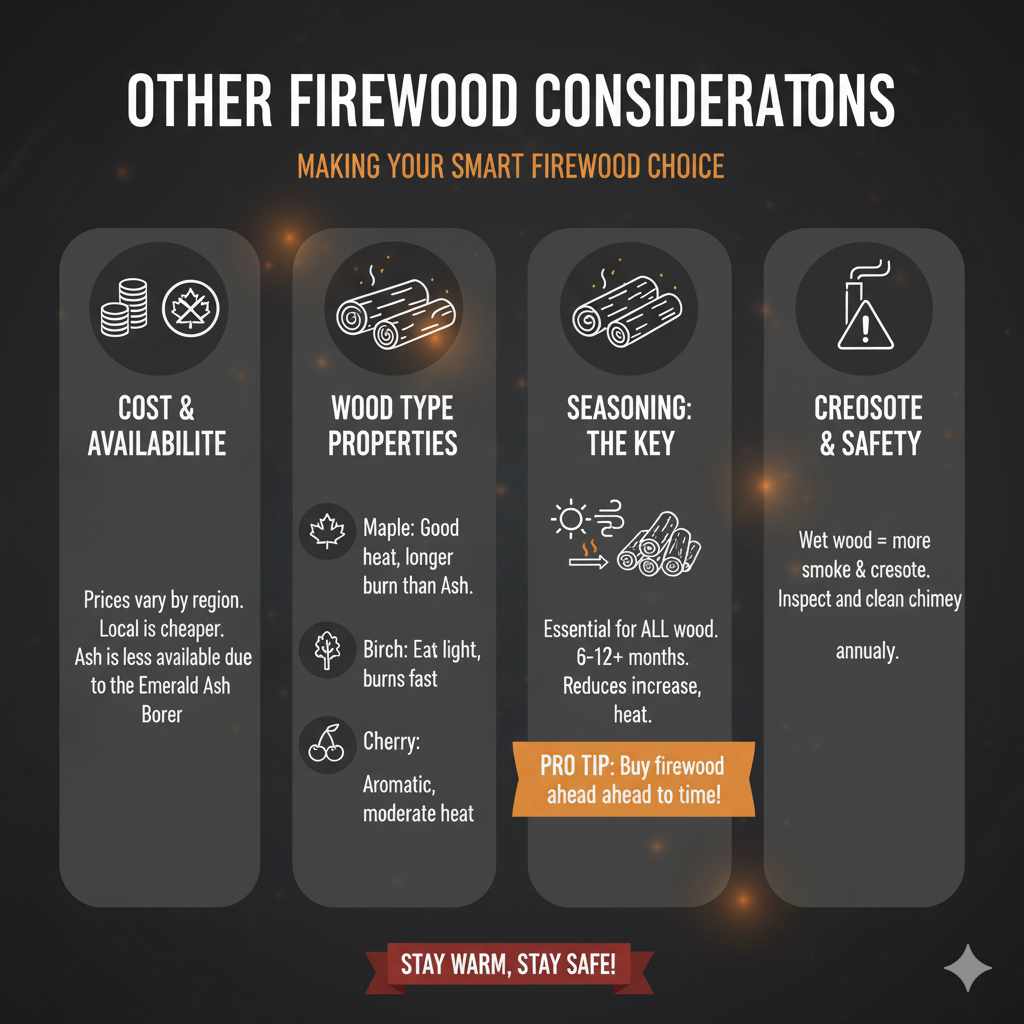
Other Firewood Considerations
While ash and oak are fantastic, there are other factors that might influence your choice:
- Cost: Prices vary significantly by region and season. Generally, locally sourced wood will be cheaper than wood transported long distances.
- Availability: As mentioned, ash availability is a growing concern in some areas due to the emerald ash borer. Oak is typically more widespread.
- Wood Type Properties: Other hardwoods like maple, birch, and cherry also make great firewood, each with their own characteristics.
For instance, maple offers a good mix of heat and burn time, similar to ash but typically hotter. Birch ignites easily like ash but burns faster. Cherry provides a lovely aroma and visual appeal, burning moderately hot for a decent time. If you’re curious about other options, resources like the Penn State Extension often have great comparisons.
Frequently Asked Questions (FAQ)
Here are some common questions beginners have about ash and oak firewood:
Q1: Which is better for a fireplace, ash or oak?
Both are excellent, but for general fireplace use, ash often takes the lead for beginners. It’s easier to light and provides good, quick warmth. Oak is great if you want a long-lasting, hot fire and don’t mind it taking a bit longer to get going.
Q2: Can I burn unseasoned ash or oak?
No, you should not. Burning unseasoned firewood is inefficient, creates a lot of smoke and creosote (which can cause chimney fires), and produces very little heat. Always ensure your firewood is properly seasoned, regardless of the type.
Q3: Which wood burns longer, ash or oak?
Oak burns significantly longer than ash. Its high density means it smolders and radiates heat for extended periods, making it ideal for overnight burns or keeping a space warm for many hours. Ash burns at a moderate pace.
Q4: Is ash firewood too smoky?
When properly seasoned, ash firewood burns relatively cleanly with minimal smoke. Unseasoned ash, like any unseasoned wood, will be very smoky. The key is always good seasoning.
Q5: Is oak firewood good for starting a fire?
Oak is generally not ideal on its own for starting a fire because it’s dense and harder to ignite. You’ll need kindling and smaller pieces of faster-burning wood to get a good fire going before adding oak logs. Ash is much better for starting.
Q6: How much firewood should I buy?
This depends on your heating needs, the size of your space, how often you use your fireplace, and the type of wood. A cord of firewood (a stack 4 feet high, 8 feet long, and 4 feet deep) is a common unit of measure. For many, two to three cords might last a full heating season if you rely on your fireplace or wood stove heavily. It’s best to start with a smaller amount to see how it performs for you.