When Do Ash Tree Leaves Fall? Normal Timing vs Warning Signs
Ash trees drop their leaves earlier than almost any other shade tree, often in September while still green, but a white ash and green ash won’t shed on the same schedule or turn the same color. Leaf loss in May or June, or across more than a quarter of the canopy for several years, usually signals anthracnose or emerald ash borer, not a normal fall. This guide covers species timing, warning signs, and when to call an arborist.
Quick Answer
Most ash trees drop their leaves in September and October, often while still green rather than fully changing color first. White ash tends to go first, turning purple to burgundy before dropping; green ash follows a few weeks later with a yellow-gold color. Leaf loss outside that window — especially in May or June, or affecting a quarter or more of the canopy — usually points to ash anthracnose or drought stress, not a normal seasonal drop.
When Do Ash Tree Leaves Normally Fall?
Best Loppers Pick for Ash Branch Removal
Fiskars 32″ PowerGear2 Bypass Loppers
Compound-action gearing roughly doubles cutting force, so a 2-inch bypass blade can take down the brittle deadwood a declining ash tree tends to drop first.
- Best for: live and dead branches up to 2 inches thick
- Why we picked it: bypass blades leave a cleaner cut than anvil loppers on branches that are still alive, which matters if only part of the tree is declining
- Main drawback: 32 inches of handle is heavy for overhead cuts — not a substitute for a pole saw on tall limbs
Compare more ash branch removal options
 Option 1 Fiskars 28″ Bypass Loppers
|
 Option 2 Corona 32″ Compound Action Anvil Lopper
|
 Option 3 AIRAJ Telescoping Anvil Loppers
|
As an Amazon Associate we earn from qualifying purchases.
Ash trees are among the first shade trees in the yard to lose their leaves each fall, typically starting in September and finishing by late October — weeks before most oaks and maples have even begun turning. The whole genus is also unusually early to go dormant, with most ash trees holding no leaves at all from late October through early March.
Why Ash Leaves Drop So Early, and Often While Still Green
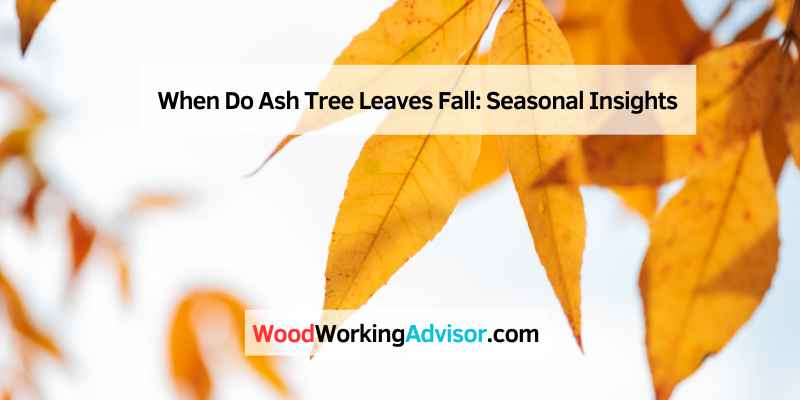
Unlike maples or oaks, ash trees frequently shed leaves while they’re still green or only partly colored, rather than putting on a slow color change first. As days shorten and temperatures drop, the tree forms an abscission layer at the base of each leaf stem, cutting off water and nutrient flow. In ash, that process happens fast — the tree prioritizes shutting down efficiently for winter over holding a display of fall color.

Leaf Drop by Species: White, Green, and Black Ash
“Ash tree” covers several species that don’t all drop on the same schedule or turn the same color. If you know which ash you have, you can predict roughly when the canopy will empty out:
| Species | Fall Leaf Color | Typical Drop Window | ID Clue After Leaves Are Gone |
|---|---|---|---|
| White ash | Purple to burgundy, sometimes yellow-orange first | Earliest to drop — often starts in September | U-shaped leaf scar just below each bud |
| Green ash | Yellow to pale gold | Follows white ash by 2–4 weeks, into October | 7–9 leaflets, each tapering to a short winged base |
| Black ash | Yellow-brown, drops fast once it starts | Early-to-mid autumn | 7–11 leaflets per compound leaf; grows in wet, swampy sites |
White ash color and timing are documented in the Missouri Department of Conservation’s white ash field guide, which notes the species’ leaves often turn before Missouri’s broader fall peak arrives. If you’re not sure which species is in your yard, our guide on ash tree varieties covers the leaf and bark differences in more detail.
Is a Leaf-Dropping Ash Tree a Safety Risk?
A healthy ash losing its leaves on a normal fall schedule isn’t dangerous. The safety issue shows up in ash trees already weakened by emerald ash borer or advanced disease — those trees become structurally brittle fast, and branches can come down with little warning, sometimes even in calm weather.
Preventive Steps for a Declining Ash
- Inspect the canopy each season for dead limbs, thinning from the top down, or bark that’s splitting or flaking off in patches.
- Prune dead or weak branches before they fail on their own — a declining ash sheds deadwood unpredictably, not just in a storm.
- Consult a certified arborist for a structural evaluation if more than a third of the canopy looks dead or thin.
- Plan for removal if the trunk itself shows heavy woodpecker damage or the tree is close to a house, driveway, or power line.
Why Ash Leaves Sometimes Fall Early — Anthracnose and Stress
Leaf drop outside the normal September–October window is a different problem than seasonal shedding, and it’s almost always driven by one of two things: a fungal disease called anthracnose, or heat and drought stress.
Ash Anthracnose: Symptoms and When It’s Serious
Anthracnose shows up first as water-soaked blotches on young leaflets that darken to reddish-brown, sometimes with pinpoint purple lesions. New growth can curl, pucker, or twist. When the infection reaches the base of the leaf stem, the whole leaflet drops — which is why an infected ash can look like it’s losing leaves in May, at the height of spring growth, rather than fall.
Cool, wet spring weather is what drives outbreaks; hot, dry conditions shut the fungus down for the season. The City of Thief River Falls, MN forestry page, citing North Dakota State University Extension, lays out when spring leaf drop is cosmetic versus a genuine concern:
📊 Losing under 25% of the canopy to anthracnose in a given spring is mostly cosmetic — the tree typically pushes a second flush of leaves and recovers on its own. Losing 25% or more for three consecutive springs is when forestry extension services flag a real risk of decline. Source: North Dakota State University Extension Forestry, via Thief River Falls, MN.
Extension foresters who track ash anthracnose outbreaks generally advise against reaching for fungicide once symptoms already show — it only works as a preventive spray applied before infection, so by the time leaves are dropping it’s too late in the season to help. The more useful response is raking up and disposing of the fallen leaves in autumn, since the fungus overwinters in that leaf litter and reinfects the tree the following spring.
Heat and Drought Stress
Extended heat or drought can trigger the same kind of premature shedding as a survival response — the tree drops leaves to cut water loss through transpiration rather than risk dying of dehydration. This kind of stress-drop tends to affect the whole canopy fairly evenly, unlike the top-down thinning that signals borer damage, and it usually stops once rainfall or cooler weather returns.
Normal Leaf Drop vs Emerald Ash Borer: How to Tell the Difference
The hardest part of diagnosing an ash tree that’s losing leaves unexpectedly is telling ordinary stress from the emerald ash borer (EAB), an invasive beetle that has killed hundreds of millions of ash trees across North America since it was first found in the U.S. in the early 2000s. The two look similar at a glance but differ in a few specific ways:
| Sign | Normal Fall Leaf Drop | Emerald Ash Borer Decline |
|---|---|---|
| Timing | All at once, September–October | Any time of year, often starting mid-summer |
| Pattern | Whole canopy drops together | Canopy thins from the top down first |
| Bark | Unaffected | D-shaped exit holes about 1/8 inch wide; vertical bark splits |
| Trunk/roots | No unusual growth | Epicormic sprouts (bushy shoots) low on the trunk or at the base |
| Woodpecker activity | None | Increased flecking or stripped bark from woodpeckers feeding on larvae |
If you’re seeing the EAB-column signs rather than a uniform fall drop, treat it as a decline situation, not a seasonal one — that distinction affects whether the right response is raking leaves and waiting, or getting a professional assessment before a weakened limb fails.
Frequently Asked Questions
Do ash trees drop their leaves earlier than other trees?
Yes. Ash is typically one of the first shade trees to lose its leaves each fall, often starting in September while sycamores, oaks, and maples are still fully green. The leaves frequently drop while still green or only partly colored, rather than turning a full autumn shade first.
What color do ash tree leaves turn before they fall?
It depends on the species. White ash usually turns purple to burgundy, sometimes with yellow-orange first. Green ash turns a paler yellow-gold. Black ash goes yellow-brown and drops quickly once color change starts, often before a full color show develops.
Why are my ash tree’s leaves falling off in spring or early summer?
Leaf drop in May or June is not normal fall behavior — it’s usually ash anthracnose, a fungal disease that thrives in cool, wet spring weather and causes leaflets to drop from infected leaf stems. Hot, dry weather stops the disease from spreading further that season.
How can I tell if ash leaf drop is anthracnose or emerald ash borer damage?
Anthracnose causes leaf loss but the tree usually still looks structurally normal and often pushes new leaves back out that same season. Emerald ash borer causes canopy thinning from the top down, D-shaped exit holes in the bark, bushy shoots low on the trunk, and increased woodpecker activity — and it does not reverse on its own.
Is it normal for ash leaves to fall while still green?
Yes, this is one of the most distinctive traits of ash trees. Unlike species that hold leaves until they fully change color, ash trees commonly shed leaves that are still green or just beginning to turn, especially early in the fall drop window.
Are ash trees dangerous once they start dropping leaves?
A healthy ash dropping leaves on a normal fall schedule isn’t a safety concern. The risk comes from ash trees already declining from emerald ash borer or advanced disease — those trees become structurally brittle and can drop branches with little warning, which is why dead or heavily thinned limbs should be pruned or professionally assessed.
Conclusion
Most ash trees empty out fast and early — September into October, often while the leaves are still green — and which color they turn on the way out mostly comes down to whether you’re looking at a white, green, or black ash. Leaf loss that shows up outside that window, especially in spring or concentrated at the top of the canopy, is worth a closer look rather than assuming it’s just an early fall. For more on identifying, growing, and troubleshooting ash trees, see our full ash tree resource hub.
Sponsored / affiliate links. As an Amazon Associate I earn from qualifying purchases. I may earn additional commission from eligible campaigns.