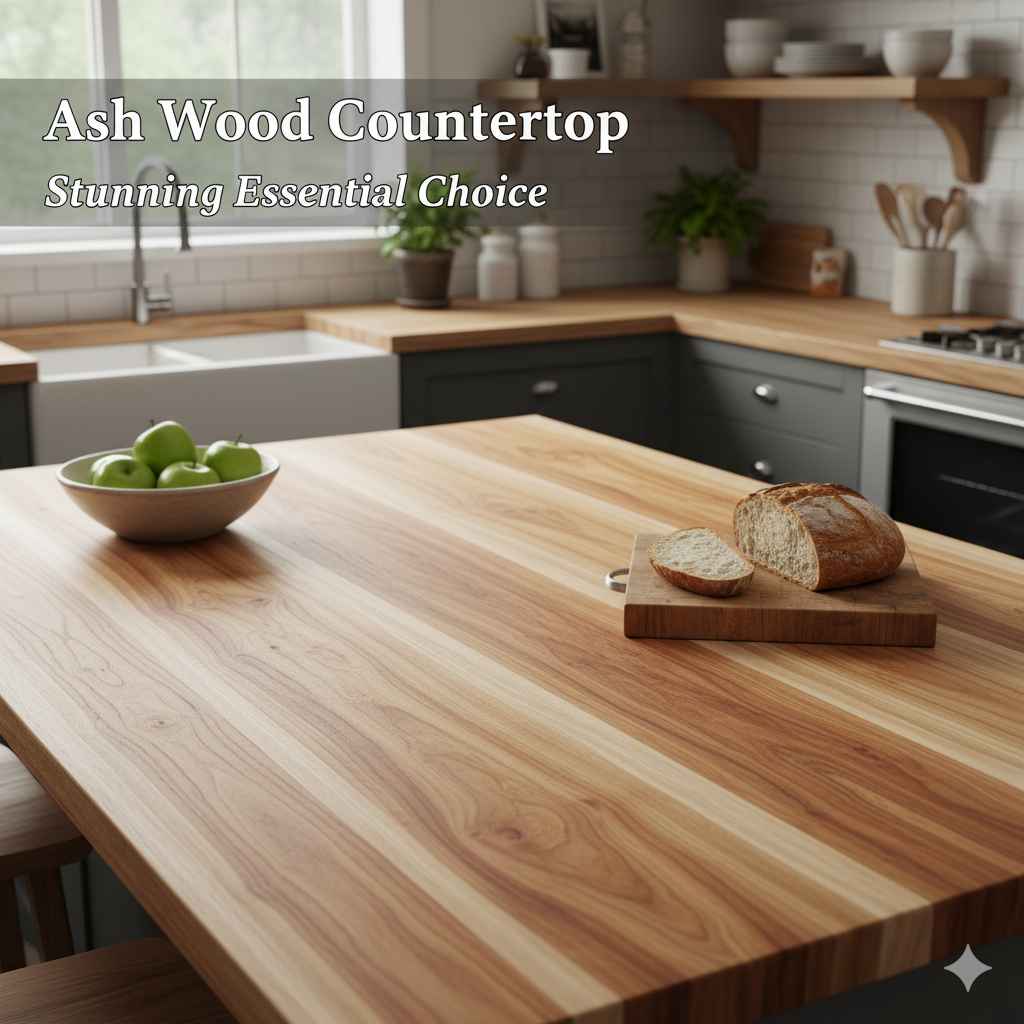
Ash Wood Counter Top: Stunning Essential Choice
Ash wood countertops offer incredible durability, a beautiful natural grain, and a budget-friendly option for stylish kitchens. This guide will show you why ash is a stunning choice and how to care for it, making it an essential for any DIY enthusiast or homeowner looking for quality, beauty, and value.
Are you dreaming of a kitchen that feels both warm and modern, but feeling overwhelmed by countertop choices? You’re not alone! Many homeowners find the options confusing and expensive. But what if I told you there’s a wood that’s tough, looks amazing, and won’t break the bank? That’s where ash wood comes in. It’s a fantastic material that brings a touch of natural elegance to your home. Thinking about wood countertops can seem daunting, especially for beginners, but I’m here to guide you. We’ll explore why ash is such a popular and brilliant option, and by the end of this, you’ll feel confident about its place in your kitchen. Let’s start by looking closer at what makes ash wood so special.
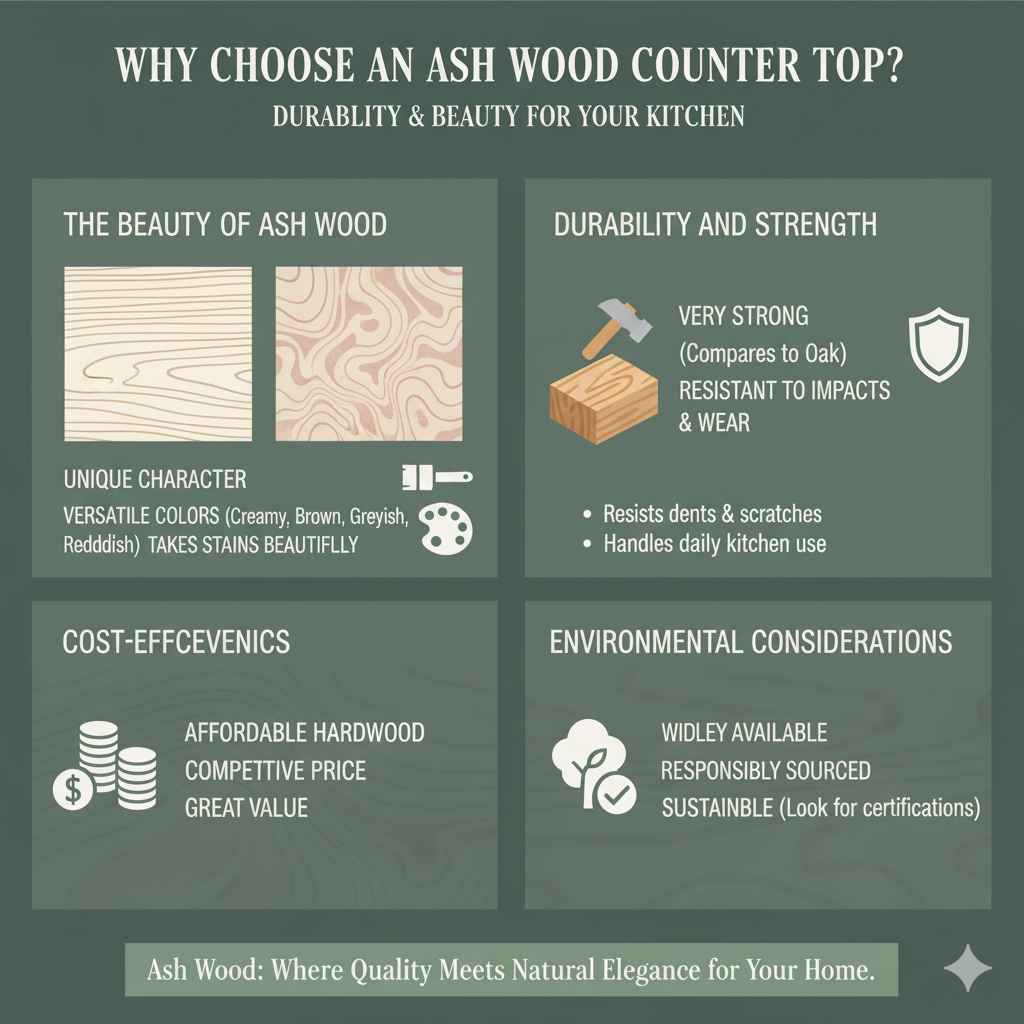
Why Choose an Ash Wood Counter Top?
When it comes to kitchen countertops, durability and looks are usually top of the list. Ash wood really shines in both these areas, making it a top contender for your home. It’s a hardwood that’s known for its strength and the beautiful patterns it creates. This makes it a fantastic choice for busy kitchens where countertops have to handle a lot.
The Beauty of Ash Wood
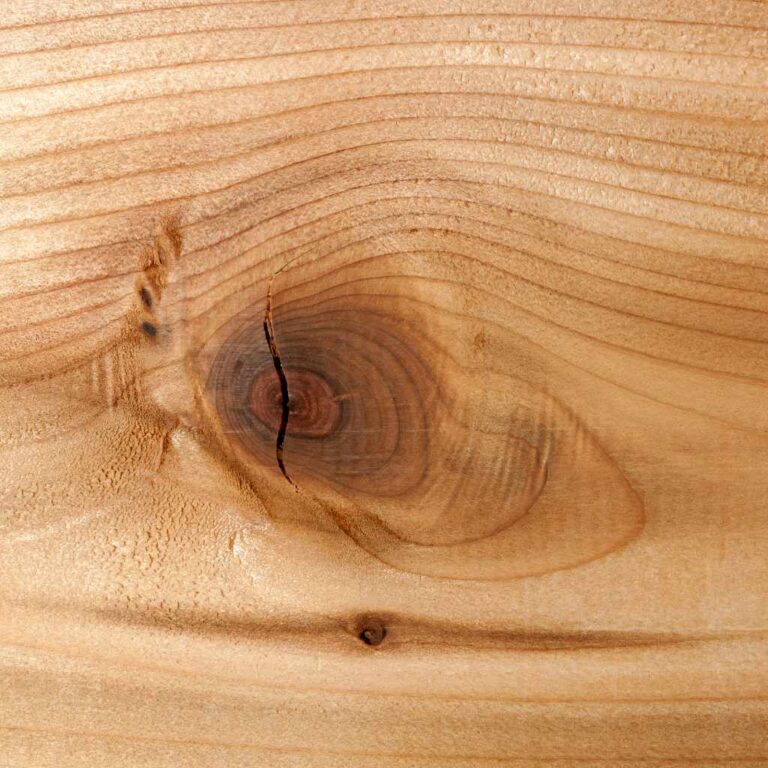
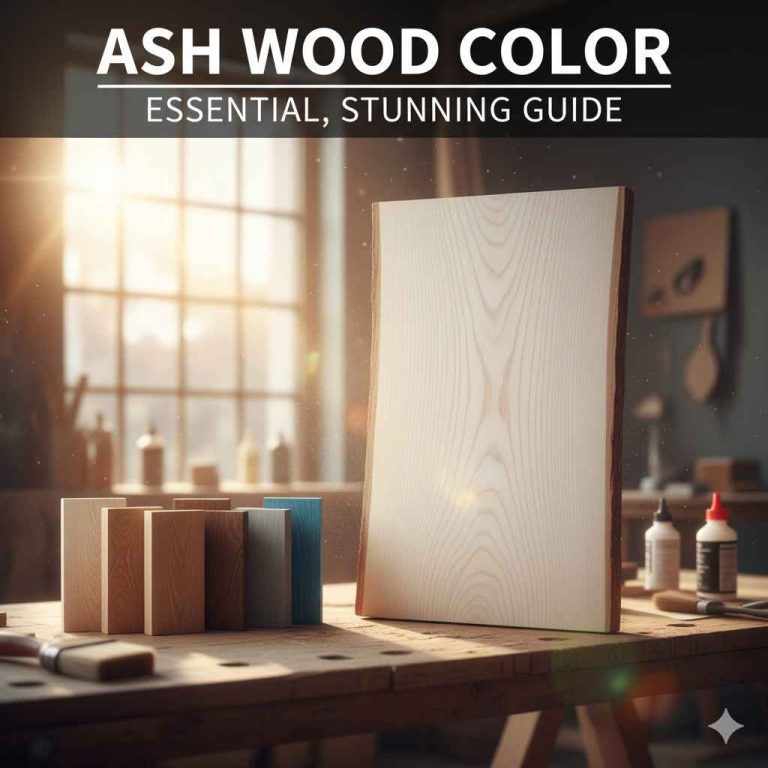
Ash wood has a distinctive grain pattern. It’s often straight but can also feature beautiful wavy or curly figures. This variation gives each ash wood countertop a unique character. The color typically ranges from creamy white to light brown, sometimes with a reddish or grayish hue. This versatility in appearance means it can fit into many different kitchen styles, from rustic farmhouse to sleek modern designs.
The wood’s porous nature also means it takes stains and finishes beautifully, allowing you to customize the look further. Whether you prefer a light, airy feel or a deeper, richer tone, ash wood can adapt.
Durability and Strength
Ash is a very strong wood. In fact, it’s often compared to oak for its toughness. This makes it highly resistant to impacts and wear and tear. It’s good at resisting dents and scratches, which is crucial for a kitchen surface that sees daily use.
According to the Forest Products Laboratory, ash has excellent shock resistance. This means it can handle chopping, placing hot pans (with protection, of course!), and the general hustle of a kitchen without easily showing damage. This resilience is a key reason why ash is a favorite for furniture, sports equipment, and, you guessed it, countertops.
Cost-Effectiveness
Compared to some other dense hardwoods like maple or walnut, ash wood is often more affordable. This makes it an excellent option for homeowners who want high-quality, durable materials without a sky-high price tag. You get a lot of bang for your buck with ash, combining aesthetic appeal with robust performance.
Environmental Considerations
Ash is a widely available wood in North America and Europe. When sourced responsibly, it can be a sustainable choice for your home. Many suppliers offer ash wood that comes from sustainably managed forests. Always look for assurances of responsible sourcing when making your purchase to ensure you’re making an eco-friendly decision.
Types of Ash Wood Countertops
When you’re looking at ash wood countertops, you’ll notice they come in a few different styles. These styles affect the look and sometimes the cost. Understanding these can help you pick the perfect one for your kitchen.
Edge Grain Construction
This is the most common style for wood countertops. In edge grain construction, strips of wood are glued together along their edges. This creates a beautiful, linear appearance with the grain running lengthwise. It’s strong and relatively stable, making it a great workhorse for everyday use. The resulting surface shows multiple thin strips of wood.
Face Grain Construction
Face grain countertops are made by gluing wider boards together side-by-side. The face of the wood, showing its natural width and patterns, is what you see on the surface. This style can showcase larger, more dramatic grain figures and knots, giving a more rustic or traditional look. It’s generally less durable than edge grain for heavy chopping, but it’s stunning for islands or areas with less intense use.
End Grain Construction
This is the premium option. End grain countertops are made by gluing together blocks of wood so that the ends of the grain are facing up. This creates a checkerboard or mosaic-like pattern. This construction is incredibly durable and even self-healing (minor cuts can often close up). It’s a favorite for butchers’ blocks and gourmet kitchens because it’s gentle on knives. However, it’s also typically the most expensive.
A table comparing these types can be helpful:
| Construction Type | Appearance | Durability | Cost |
|---|---|---|---|
| Edge Grain | Linear, uniform strips | High | Moderate |
| Face Grain | Wider boards, natural patterns | Moderate | Moderate to High |
| End Grain | Mosaic, checkerboard | Very High | High |
Installing Your Ash Wood Countertop
Installing a countertop can seem like a big DIY project, but with careful planning and the right tools, it’s absolutely achievable. Remember, always prioritize safety!
Preparation is Key
Before you even unbox your new ash wood top, make sure your cabinets are ready. They need to be level, securely fastened, and properly spaced. Measure everything twice, and then measure again. A slightly uneven cabinet base can cause all sorts of problems down the line.
Check Cabinet Level: Use a long level to ensure your cabinets are flat. Shim them if necessary.
Secure Cabinets: Make sure all cabinets are firmly attached to the wall studs and to each other.
Clearance: Ensure there’s enough space for your countertop, accounting for any overhangs you plan.
Cutting and Shaping (If Needed)
Most people order their countertops cut to size, but sometimes you’ll need to make adjustments for sinks, cooktops, or unique kitchen layouts.
Measure Carefully: Mark any cutouts with a pencil. For sink cutouts, use the template provided with your sink.
Use the Right Tools: A circular saw with a fine-tooth blade is usually best for straight cuts. A jigsaw is good for curves and cutouts.
Support the Wood: When cutting, make sure the piece you are cutting off is supported so it doesn’t break off prematurely and splinter the wood.
Smooth Edges: After cutting, use sandpaper or a router to smooth any rough edges.
Sealing and Finishing
This is a crucial step for protecting your ash wood countertop from moisture, stains, and daily wear.
Choose Your Finish: There are several options:
Food-Safe Mineral Oil: Great for a natural look and easy reapplication. Ideal for areas where food prep directly happens.
Tung Oil or Linseed Oil: Offer good protection and a natural sheen. They penetrate the wood well.
Polyurethane or Varnish: These create a durable, waterproof barrier. They can give a more glossy or satin finish. They are excellent for general protection but may not be ideal for direct food prep unless specified as food-safe.
Apply Evenly: Using a clean cloth or brush, apply the finish in thin, even coats. Follow the manufacturer’s instructions for drying times between coats.
Multiple Coats: Most finishes require at least two to three coats, sometimes more, for adequate protection. Don’t forget to seal the underside and edges!
Installation on Cabinets
Once cut, shaped, and finished, it’s time to place the countertop.
Careful Placement: With a helper, carefully lift and place the countertop onto the cabinets.
Check for Fit: Ensure it sits flush and evenly on all cabinets.
Secure the Top: Typically, countertops are secured from underneath by screwing through the cabinet’s top support rails into the underside of the countertop. Use screws that are not too long, so they don’t poke through. If you live in a region prone to earthquakes, consider using a more flexible method like construction adhesive. According to guidelines from organizations like FEMA, proper fastening is key for structural integrity.
Caring for Your Ash Wood Countertop
A little bit of care goes a long way in keeping your ash wood countertop looking beautiful and functional for years. Wood countertops require a bit more attention than laminate or stone, but the results are well worth it!
Daily Cleaning
For everyday spills and crumbs, simple is best.
Wipe Up Spills Immediately: Don’t let liquids sit on the surface, as they can penetrate the wood and the finish.
Use a Damp Cloth: A soft cloth with a little mild soap (like dish soap) and water works great for general cleaning.
Dry Thoroughly: After cleaning, always wipe the countertop dry with a clean, soft towel. This prevents water spots and moisture damage.
Dealing with Stains and Scratches
Wood countertops can get stained or scratched. The good news is that ash wood and its finishes allow for repairs.
For Minor Scratches: A light sanding and reapplication of your chosen finish can often make minor scratches disappear. If you used mineral oil, just reapply another coat.
For Deeper Scratches or Stains: You might need to lightly sand the affected area down to fresh wood and reapply the protective finish. For tough stains, a paste of baking soda and water can sometimes help lift it, but always test in an inconspicuous area first.
Protect from Heat and Harsh Chemicals: Always use trivets or hot pads under hot pots and pans. Avoid placing very hot items directly on the wood. Also, steer clear of abrasive cleaners, bleach, ammonia, or degreasers, as these can damage the finish and the wood.
Regular Maintenance
The most important part of wood countertop care is regular reapplication of your protective finish.
Re-oiling: If you used a penetrating oil (like mineral oil, tung oil, or linseed oil), you’ll need to reapply it periodically. How often depends on usage, but typically every 3-6 months is a good starting point. You’ll know it’s time when water stops beading up on the surface and starts to soak in.
Re-finishing: For film-forming finishes like polyurethane, check for wear and tear. You may need to lightly de-gloss the surface with fine-grit sandpaper and apply a new coat every few years.
Here’s a quick checklist for maintenance:
- Wipe spills promptly.
- Clean with mild soap and water.
- Dry surfaces thoroughly after cleaning.
- Use trivets and cutting boards.
- Reapply oil finishes every 3-6 months.
- Inspect for wear and re-finish as needed.
Ash Wood Countertop vs. Other Materials
Choosing a countertop material is a big decision. How does ash wood stack up against other popular options?
Ash Wood vs. Butcher Block (Other Woods)
Butcher block is essentially wood countertops. Ash is a type of hardwood often used for butcher blocks. Compared to softer woods like pine, ash is much harder and more durable. Against other hardwoods like maple, walnut, or oak, ash offers a similar level of durability but often at a more competitive price point. Its grain pattern is generally lighter and more prominent than maple, offering a different aesthetic.
Ash Wood vs. Granite
Granite is a natural stone, known for its extreme durability and resistance to heat and scratches. It’s also very heavy and generally more expensive than ash wood. While granite is very low maintenance, it requires sealing to prevent staining, and chips can occur. Ash wood offers a warmer, softer feel and can be repaired more easily if damaged. Granite is inert, while wood offers a natural, organic element to the kitchen.
Ash Wood vs. Quartz
Quartz countertops are engineered from natural quartz crystals and resins. They are highly durable, non-porous, stain-resistant, and require no sealing. They often mimic the look of natural stone. Quartz is extremely hard and can be prone to chipping under impact, and like granite, it has a cooler, harder feel than wood. Ash wood offers unique natural variations and a warm, inviting texture that engineered materials can’t fully replicate.
Ash Wood vs. Laminate
Laminate countertops are typically a more budget-friendly option, consisting of a layer of printed material over particleboard or MDF. They are easy to install and come in a vast array of patterns and colors. However, laminate is not very durable. It’s prone to scratching, chipping, and damage from heat and moisture, and the pattern can wear off over time. Ash wood offers a genuine, long-lasting natural material that adds significant value and warmth to a kitchen compared to laminate.
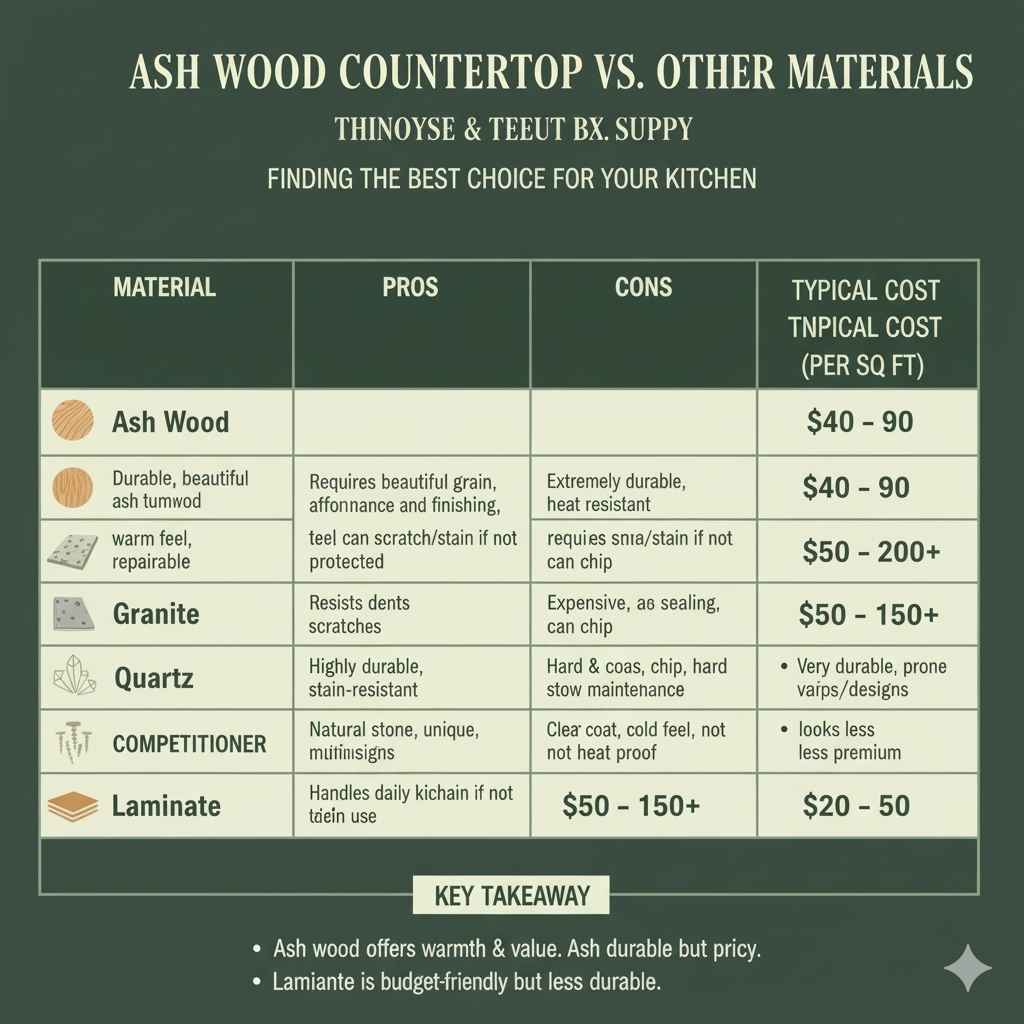
Here’s a table summarizing the comparison:
| Material | Pros | Cons | Typical Cost (per sq ft) |
|---|---|---|---|
| Ash Wood | Durable, beautiful grain, affordable hardwood, warm feel, repairable | Requires regular maintenance and finishing, can scratch/stain if not protected | $40 – $90 |
| Granite | Extremely durable, heat resistant, unique patterns, adds value | Expensive, heavy, requires sealing, can chip | $50 – $200+ |
| Quartz | Highly durable, non-porous, stain-resistant, low maintenance, consistent patterns | Expensive, can chip, hard and cold feel, not heat proof | $50 – $150+ |
| Laminate | Very affordable, wide variety of designs, easy to clean | Not durable, prone to scratches/chips/heat damage, looks less premium | $20 – $50 |
FAQ: Your Ash Wood Countertop Questions Answered
Here are some common questions beginners have about ash wood countertops.
Q1: Is an ash wood countertop good for food preparation?
A1: Absolutely! When finished with a food-safe oil like mineral oil or a specialized food-grade sealant, ash wood countertops are excellent for food prep. They offer a natural, attractive surface. Remember to reapply the finish regularly to maintain its protective and sanitary qualities.
Q2: How do I prevent my ash wood countertop from warping?
A2: Proper installation is key. Ensure your cabinets are level and your countertop is well-supported. Consistent humidity levels in your kitchen also help. For wider countertops, consider the construction type – edge or end grain is generally more stable than face grain. Also, ensure both the top and underside are sealed.
Q3: Can I cut directly on my ash wood countertop?
A3: While ash wood is durable, it’s not recommended to cut directly on it regularly if you want to preserve its finish and appearance. Using a cutting board will prevent scratches and make cleaning easier, prolonging the life and beauty of your countertop. If you do cut on it, be prepared to sand and refinish any marks.
Q4: How often do I need to reapply the finish?
A4: This depends heavily on the type of finish you use and how much the countertop is used. For penetrating oil finishes (like mineral oil or tung oil), you might need to reapply every 3-6 months, or whenever water no longer beads up. Film finishes like polyurethane may last longer but would require reapplication every few years, or when wear becomes noticeable.
Q5: Is ash wood prone to staining?
A5: Like most natural wood, ash can stain if spills are left to sit, especially if the sealant is worn. Red wine, coffee, or certain sauces can be problematic if not wiped up quickly. Regular application of a good quality sealant and prompt cleanup of spills are the best defenses against staining.
Q6: Will my ash wood countertop look like everyone else’s?
A6: Not at all! Ash wood is prized for its natural variation in grain and color. Each piece of wood is unique, meaning your ash wood countertop will have its own distinct pattern. This natural beauty is one of its biggest appeals and ensures your kitchen will have a one-of-a-kind element.
Q7: Can I repair scratches or minor damage on my ash wood countertop?
A7: Yes, one of the great advantages of wood countertops is their repairability. Minor scratches can often be sanded down and refinished. Deeper damage might require a bit more work, but it’s usually fixable without needing to replace the entire countertop, which is a significant benefit over stone or laminate.
Conclusion
Making the choice for your kitchen countertops is a significant step, and I hope this deep dive into ash wood has made that decision clearer and much more exciting! Ash wood countertops are a truly stunning essential choice for any home. They offer a beautiful blend of natural character, robust durability, and remarkable affordability.