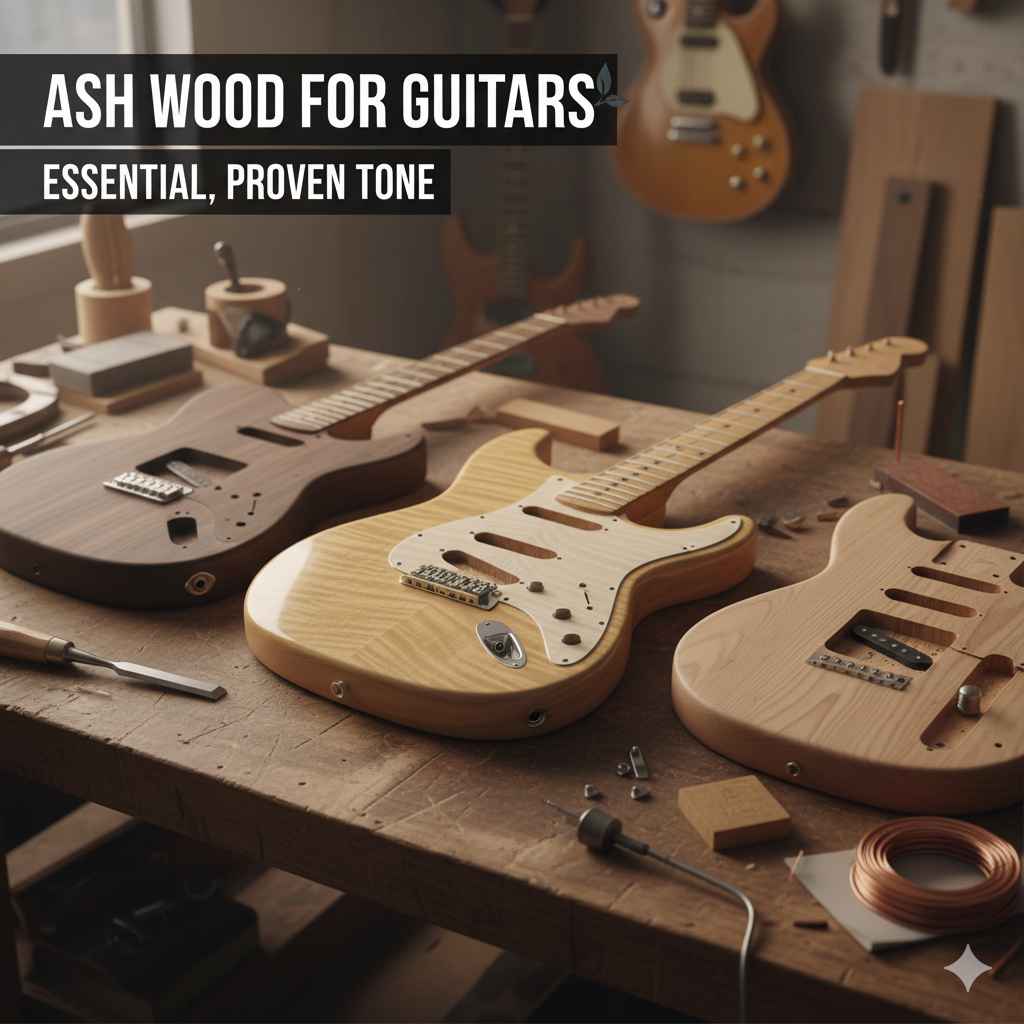
Ash Wood for Guitars: Essential, Proven Tone
Ash wood is an excellent choice for guitar bodies, offering a bright, resonant tone with good note clarity and sustain, making it a proven staple in electric guitar construction for its balanced sonic qualities and attractive grain.
Welcome to the workshop, guitar builders and music lovers! Ever wondered what makes some guitars sing with such clarity and punch? A big part of that magic often comes down to the wood they’re made from. For many electric guitars, especially those known for their bright, articulate sound, one wood stands out: ash.
Ash wood has been a go-to for guitar makers for decades, and for good reason. Its unique properties contribute to a truly special tone that players love. But what exactly makes ash so special for guitars? And is it the right choice for your next project? Don’t worry if you’re new to this; understanding tonewoods can seem complex, but I’m here to break it down simply. We’ll explore why ash is a legendary material for guitar building, what kind of sound you can expect, and what to look for.
Why Ash Wood is a Guitar Builder’s Best Friend
Ash is a hardwood renowned for its strength, stability, and beautiful grain patterns. These qualities make it not only a joy to work with but also an excellent material for crafting musical instruments. For guitars, its sonic characteristics are what truly set it apart.
The Sonic Signature of Ash
When we talk about guitar tone, we often describe it using terms like bright, punchy, resonant, and clear. Ash delivers on all these fronts. Its cellular structure is relatively open, allowing vibrations to travel freely. This results in a bright, crisp attack with a rich sustain and a pleasing harmonic complexity.
Bright and Clear Tone: Ash typically produces a clear, articulate sound with a strong upper-midrange presence. This makes notes pop and cuts through a mix easily, which is fantastic for genres like rock, blues, and country.
Good Note Separation: You’ll often find that guitars made from ash have excellent note separation, meaning each note you play is distinct and well-defined. This is crucial for players who do a lot of fast picking or complex chord work.
Resonance and Sustain: The open-grained nature of ash allows the guitar body to resonate well. This translates into a sustained note that rings out beautifully, adding richness to your playing.
Punchy Midrange: Ash offers a solid midrange, giving guitars a good “oomph” or “punch” that sits well in a band setting.
Varieties of Ash and Their Tonal Nuances
When you encounter ash wood for guitars, you’ll often hear about two main types: Northern Ash (also known as White Ash) and Southern Ash (also known as Green Ash). While both are ash and share many common traits, they have subtle differences that guitar builders consider.
Northern Ash (White Ash – Fraxinus americana)
This is the classic tone wood that many iconic Fender guitars were built with in the 1950s and 60s.
Characteristics: It’s known for being denser and having a finer, more consistent grain. It often exhibits a more pronounced shimmer and a slightly sweeter high-end character.
Tone: Generally produces a very bright, articulate sound with exceptional clarity and sustain. It’s often described as having a bell-like quality.
Appearance: Typically lighter in color and can have attractive figuring.
Southern Ash (Green Ash – Fraxinus pennsylvanica)
This type of ash is more common today and is used widely in guitar construction.
Characteristics: It tends to be a bit lighter and has a coarser, more open grain than Northern Ash.
Tone: It still offers that characteristic ash brightness and clarity but can be slightly less dense, potentially leading to a slightly warmer or more compressed tone compared to White Ash. Some describe it as having a bit more “chime.”
Appearance: Can vary in color and grain pattern.
Swamp Ash
This isn’t a botanical species but rather a description of ash trees that grew in wet environments. These trees often developed a lighter weight and a more open, porous grain.
Characteristics: Swamp Ash is highly prized for its light weight and resonant qualities. The open grain allows for excellent vibrational transfer.
Tone: It’s famous for delivering that sought-after bright, snappy attack with strong lows and shimmering highs, combined with a lively resonance. It’s often considered the most desirable for its tonal balance and comfort due to its lighter weight.
Appearance: The open grain is very noticeable and can be visually striking.
A Comparison of Ash Types for Guitars
| Ash Type | Density | Grain | Brightness | Sustain | Weight | Common Appearance |
|---|---|---|---|---|---|---|
| Northern Ash | High | Fine | Very High | Excellent | Moderate | Lighter color, consistent grain, sometimes figured |
| Southern Ash | Medium | Coarse | High | Good | Moderate | Variable color, more open grain structure |
| Swamp Ash | Lower | Very Open | Very High | Excellent | Lightweight | Very open, pronounced grain; often visually striking |
Why is Ash So Popular in Electric Guitars?
Ash wood was famously used by Fender for many of its early Telecasters and Stratocasters. These guitars became legendary for their bright, cutting tone, which was perfect for the emerging sounds of rock and roll and country music. The wood’s ability to produce a clear, punchy sound that could be heard clearly in a band mix solidified its place in guitar history.
Working with Ash Wood: A Beginner’s Perspective
As a beginner woodworker, eyeing ash for your guitar project might seem a bit daunting, but it’s quite manageable with the right approach. Ash is a pleasure to work with for many reasons, though its hardness does require a few considerations.
Machining and Shaping Ash
Ash machines well and is relatively easy to cut, shape, and sand. Its straight grain makes it predictable.
Cutting: Use sharp blades when cutting ash. Because it’s a hardwood, dull blades can lead to tear-out, especially with its open grain. Carbide-tipped blades are your friend here.
Shaping: Routers and other shaping tools work beautifully on ash. You can achieve smooth curves and detailed edges. Be mindful of the direction of your cut to avoid splintering, particularly on areas with figured grain.
Sanding: Ash sands to a very smooth finish. Start with a coarser grit (like 80 or 100) to remove any tool marks, and gradually move to finer grits (up to 220 or 320) for a surface ready for finishing. Because of its open grain, you might want to use a grain filler if you’re aiming for a perfectly smooth, glossy finish typical on some electric guitars, though many prefer to let the natural grain texture show.
Joining Ash
Ash glues well, allowing for strong joints. If you’re building a multi-piece guitar body, ash pieces will join reliably.
Finishing Ash Wood
One of the most exciting aspects of ash is its grain. It can be stunning!
Natural Finish: Many builders opt for a clear or transparent finish (like a nitrocellulose lacquer or a polyurethane) to showcase the wood’s natural beauty. The grain structure of ash is quite prominent, giving the instrument a visually appealing depth.
Grain Filling: If you want a glass-smooth surface, especially for a high-gloss finish, you’ll likely want to use a grain filler. This product fills the pores of the wood, creating a level surface for your finish coats. You can find water-based or solvent-based fillers.
Staining: Ash takes stains beautifully. Whether you’re going for a sunburst, a solid color, or a natural-looking stain, ash’s grain pattern will often show through, adding character.
Safety First When Working with Ash
Like any woodworking project, safety is paramount.
Dust Mask: Ash dust, particularly the fine particles, can be an irritant. Always wear a good quality dust mask or respirator when cutting, sanding, or routing. A P100 respirator is a good choice for fine woodworking dust. You can learn more about proper respiratory protection for woodworkers at the Occupational Safety and Health Administration (OSHA).
Eye Protection: Safety glasses or goggles are a must to protect your eyes from flying debris.
Hearing Protection: When using power tools, foam earplugs or earmuffs are essential to prevent hearing damage.
Tool Safety: Always follow the manufacturer’s instructions for your tools and ensure you understand how to use them safely. Read up on specific tool safety guidelines, such as those provided by the Wood Magazine Safety Section.
Ash vs. Other Tonewoods: What’s the Difference?
Comparing ash to other popular guitar woods helps highlight its unique qualities. Two common comparisons are alder and mahogany.
Ash vs. Alder
Alder is another staple tonewood, often found in Fender guitars as well.
Alder: Generally has a more balanced tone with a stronger midrange and slightly less pronounced high-end sparkle than ash. It’s typically lighter and has a finer, less open grain. Some players find alder a bit more “even” or “rounded” in its tone.
Ash: Offers more brightness, a snappier attack, and a more resonant, open sound. Its grain is more pronounced.
Here’s a quick look:
| Feature | Ash Wood | Alder Wood |
|---|---|---|
| Tone | Bright, snappy, clear; bell-like highs; strong upper-mids; good sustain | Balanced, focused mids; smoother highs; slightly less sustain |
| Grain | Open, pronounced, often visually striking | Fine, tight grain; subtle appearance |
| Weight | Moderate to light (especially Swamp Ash) | Generally light and consistent |
| Typical Use | Telecasters, Stratocasters, bright and articulate guitars | Stratocasters, Telecasters; very versatile tones |
| Appearance | Distinct, bold grain; great for transparent finishes | Uniform look; ideal for solid colors and sunbursts |
Ash vs. Mahogany
Mahogany is a different beast altogether, known for a warmer, richer tone.
Mahogany: Produces a warm, thick, and sustaining tone with a mid-focused character. It has a rich harmonic complexity and is often described as “woody” or “chewy.” The grain is typically straight and even, and it’s a bit denser than ash.
Ash: Delivers brightness, clarity, and a more articulate attack. It’s generally less warm and more percussive than mahogany.
A quick comparison table:
| Feature | Ash Wood | Mahogany Wood |
|---|---|---|
| Tone | Bright, snappy, clear, resonant; strong upper-mids | Warm, rich, thick, mid-focused; excellent sustain |
| Attack | Crisp, articulate | Punchy, rounded |
| Grain | Open, prominent, visually bold | Straight, uniform, medium-porous |
| Weight | Moderate to light (varies by species; Swamp Ash lighter) | Moderate to heavy depending on species |
| Typical Use | Bright, cutting electric guitars (Fender-style builds) | Gibson Les Pauls/SGs; warm, sustain-rich instruments |
| Appearance | Pronounced grain, ideal for transparent finishes | Uniform reddish-brown; takes stains well; sometimes figured |
For beginners, understanding these differences can help you choose the wood that best suits the sound you’re aiming for. If you want that classic Stratocaster spank or Telecaster twang, ash is a fantastic candidate.
Choosing Ash Wood for Your Guitar Project
When you’re selecting ash for your guitar build, what should you look for? Whether you’re buying a pre-cut body, a neck blank, or lumber to shape yourself, a few things matter.
Grain Pattern and Porosity
Open Grain is Key: For that classic ash tone, you generally want wood with an open grain. This is especially true for “Swamp Ash.” The pores allow the wood to vibrate more freely, contributing to resonance and that snappy attack.
Figuring: While not essential for tone, some pieces of ash have beautiful figuring like flame or quilt. This can add visual appeal, but make sure the tonal characteristics are still there.
Weight
Lightweight is Usually Better for Ash: Especially if you’re looking at Swamp Ash, aim for lighter pieces. Lighter weight in ash often correlates with a more open grain and better resonance, plus it makes for a more comfortable guitar to play. A typical electric guitar body made from ash might range from 4 to 5.5 pounds (about 1.8 to 2.5 kg). You can find resources on wood density and its impact on guitar tone from luthiers and wood suppliers. For instance, StewMac’s guide on tonewoods often discusses weight as a factor.
Moisture Content
Kiln-Dried vs. Air-Dried: Ensure the wood is properly dried. Kiln-dried wood is stable and ready to work with. Air-dried wood needs to be at around 6-8% moisture content for instrument building. Wood that is too wet will warp and move as it dries, which is the last thing you want in a guitar. Reputable lumber suppliers will specify the kiln-drying process or moisture content.
Source and Quality
Reputable Suppliers: Buy your lumber or guitar parts from trusted sources. Specialty guitar wood suppliers or well-regarded lumber yards are your best bet. They’ll be able to tell you what type of ash it is and its properties.
Avoid End-Grain Checks: Inspect the ends of the lumber for cracks or checks that go deep into the board. These can be problematic when cutting out guitar parts.
Common Beginner Mistakes with Ash and How to Avoid Them
Even with a forgiving wood like ash, beginners can run into a few common pitfalls.
1. Using Dull Tools: As mentioned, ash is a hardwood. Dull blades and bits will cause tear-out, splintering, and make your work much harder. Keep your tools sharp!
2. Not Accounting for Grain Direction: While ash has a relatively straight grain, sometimes figuring can throw you off. Always pay attention to the direction of the grain when routing, sanding, or shaping to prevent splintering.
3. Skipping the Grain Filler (If a Smooth Finish is Desired): If you’re aiming for a super-glossy, perfectly smooth finish and you’re using ash with a very open grain, not using a grain filler will result in a textured surface. This isn’t necessarily bad – it’s a matter of preference – but if you want smooth, you need the filler.
4. Finishing Too Soon: Make sure your wood is properly prepared and all dimensions are finalized before you start applying finishes. Sanding after finishing is very difficult.
5. Ignoring Dust and Safety: Ash dust can be irritating. Always use proper ventilation and a mask. Don’t compromise on safety gear.
Ash Wood for Guitar Bodies and Necks
While ash is most famous for guitar bodies, it can also be used for necks.
Ash Bodies: This is where ash truly shines. Its tonal properties are most impactful when used for the main resonating body of the guitar. Pieces with good stiffness and resonance are selected. Lighter weights are often preferred for comfort. Construction can involve a single plank or multiple pieces glued together. To cut out a guitar body from lumber, you’ll typically need plans or templates. Resources like GuitarFurniture.com offer various guitar plans that can guide you. With a template, you’d trace the shape onto your wood, then use a bandsaw or jigsaw to cut it out, followed by routing to create cavities for pickups and control plates.
Ash Necks: Ash can also be used for guitar necks, though it’s less common than maple or mahogany. It’s quite stable and can contribute to a bright tone. However, its weight might be a consideration for some builders. If used for a neck, it often pairs well with a rosewood or ebony fretboard to balance the bright frequencies. Neck construction involves shaping the neck profile, cutting the truss rod channel, and installing fret slots.
Frequently Asked Questions About Ash Wood for Guitars
What kind of tone does ash wood give a guitar?
Ash typically provides a bright, clear, and resonant tone with a snappy attack and excellent note separation. It has a strong upper-midrange presence that helps guitars cut through a mix.
Is ash wood heavy for guitars?
Ash wood can range in weight, but Swamp Ash, a popular variety, is known for being relatively lightweight due to its open-grain structure. Northern Ash can be a bit denser and heavier. The weight is a significant factor for playability.
Is ash wood good for beginners to work with?
Yes, ash is generally good for beginners. It machines, cuts, and sands well. Its straight grain is predictable. However, it is a hardwood, so sharp tools are essential, and dust protection is important.
What are the main types of ash used for guitars?
The most common types are Northern Ash (White Ash), Southern Ash (Green Ash), and Swamp Ash. Swamp Ash is often highly prized for its lightness and resonant tone.