Ash Wood Good To Burn: Essential Guide
Yes, ash wood is excellent to burn, offering a hot, consistent, and relatively clean flame with good heat output. It’s a popular choice for firewood due to its dense nature and manageable moisture content once properly seasoned. With proper drying, it produces minimal smoke and creosote, making it a safe and efficient fuel for fireplaces and wood stoves.
Are you wondering if that pile of wood in your yard can really heat your home? With so many types of wood out there, it’s easy to feel a bit lost, especially when you’re just starting out. Some woods spark and sputter, while others leave a greasy mess. If you’ve come across ash wood and are curious about its burning qualities, you’re in the right place! Many beginners find it frustrating to select the right firewood. This guide is here to clear things up. We’ll break down exactly why ash wood is a fantastic choice and what you need to know to get the best burn. Get ready to make your cozy evenings even warmer and brighter!
Why Ash Wood is a Firewood Favorite
Ash wood has earned its reputation as a top-tier firewood for several compelling reasons. Its dense structure and high energy content mean it burns longer and hotter than many other common hardwoods. This translates to fewer trips to the woodpile and more consistent warmth for your home. For beginners, this predictability is a huge advantage – you can rely on ash to perform well, minimizing guesswork and frustration. Unlike softer woods that can burn up quickly, ash provides a steady heat source.
Understanding Hardwoods vs. Softwoods for Firewood
The first thing to know about firewood is the difference between hardwoods and softwoods. This distinction isn’t just about how hard the wood is to cut; it’s crucial for how it burns. Generally, hardwoods come from deciduous trees (those that lose their leaves annually) and are denser. Softwoods come from coniferous trees (evergreens with needles) and are less dense.
- Hardwoods: Denser, burn longer, hotter, and produce less creosote. Examples include oak, maple, ash, and hickory.
- Softwoods: Less dense, burn faster and cooler, often spark more, and produce more creosote. Examples include pine, fir, and spruce.
Ash, being a hardwood, naturally falls into the category of superior firewood due to its density and energy potential. It strikes an excellent balance, providing significant heat without the rapid burn rate of some very dense woods or the excessive smoke of others.
Is Ash Wood Good to Burn? The Key Benefits
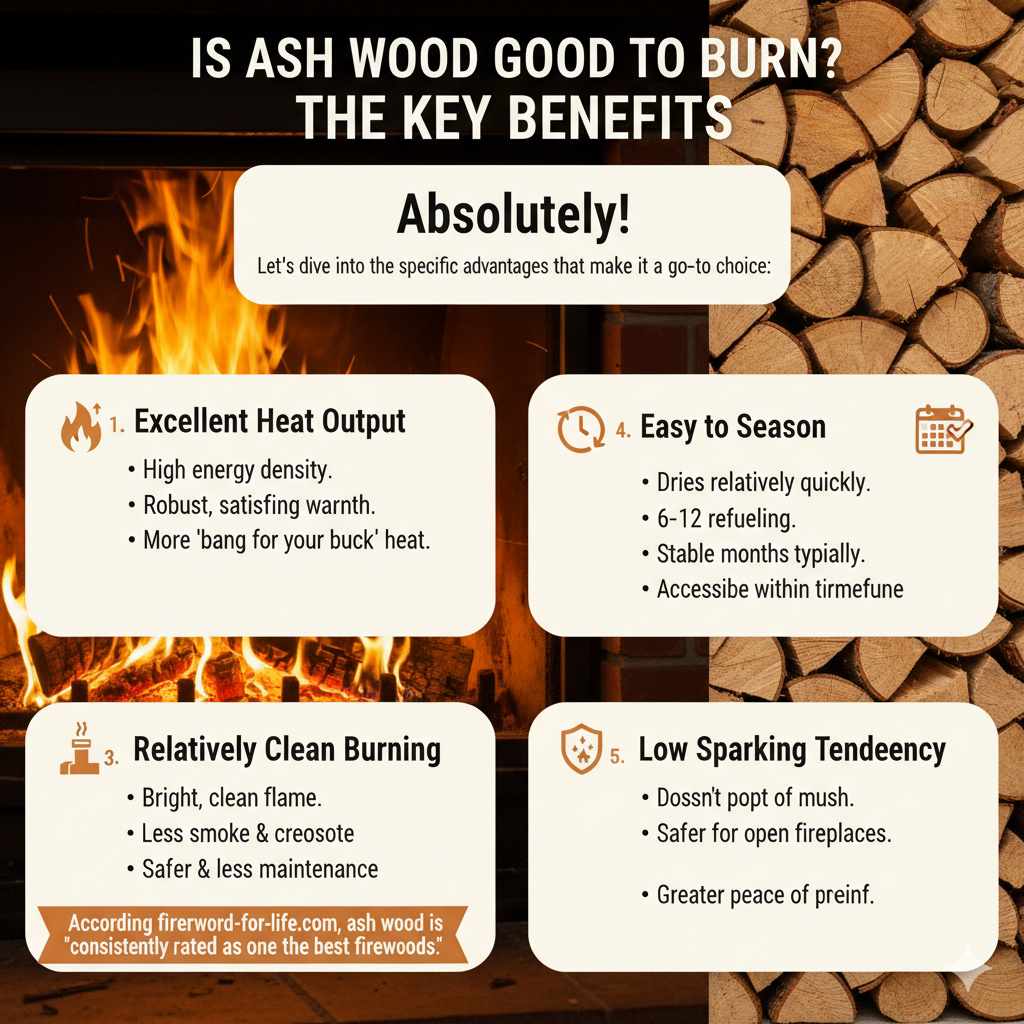
So, is ash wood good to burn? Absolutely! Let’s dive into the specific advantages that make it a go-to choice:
1. Excellent Heat Output
Ash wood boasts a high energy density. This means that for its weight, it contains a significant amount of potential heat. When it burns, it releases this heat efficiently, providing a robust and satisfying warmth. This makes it ideal for keeping your home comfortable, especially during colder months. Think of it as getting more ‘bang for your buck’ in terms of heat generation from each log.
2. Long, Consistent Burn Time
Because ash is a dense hardwood, it burns slowly and steadily. This consistency is a major plus for a fireplace or wood stove. You won’t have to refuel the fire as often compared to burning softer woods. This prolonged burn time means less work for you and a more stable temperature in your room. It’s perfect for overnight burns or simply enjoying a long evening by the fire without constant attention.
3. Relatively Clean Burning
Properly seasoned ash wood burns with a bright, clean flame and produces less smoke and creosote buildup than many other types of firewood. Creosote is a tar-like substance that can build up in your chimney and is a primary cause of chimney fires. A cleaner burn means a safer operation for your fireplace or wood stove and less frequent chimney sweeping. This is a significant safety and maintenance benefit for any homeowner.
According to the firewood-for-life.com, ash wood is “consistently rated as one of the best firewoods.” This external validation from a reputable resource highlights its widespread recognition among experts.
4. Easy to Season
While all firewood needs to be seasoned (dried) properly to burn well, ash is known to season relatively quickly. This means that once cut, it doesn’t take an excessively long time to reach the ideal moisture content for burning. Typically, 6-12 months of proper drying is sufficient for ash, making it more accessible for use within a reasonable timeframe compared to some other dense hardwoods that might take longer.
5. Low Sparking Tendency
Ash wood doesn’t tend to spark or pop as much as some other woods, like pine or fir. This makes it a safer choice for open fireplaces, as it reduces the risk of stray embers escaping and potentially igniting nearby materials. You can enjoy your fire with greater peace of mind.
Comparing Ash Wood to Other Firewood Types
To truly appreciate why ash wood is so good, let’s see how it stacks up against some other common firewood options. This comparison will highlight its sweet spot in terms of burn characteristics.
| Wood Type | Heat Output (BTU/cord) | Burn Time | Ease of Seasoning | Smoke/Creosote | Overall Rating |
|---|---|---|---|---|---|
| Ash | 24.0 – 24.5 million | Long & Steady | Good (6-12 months) | Low | Excellent |
| Oak | 24.5 – 27.0 million | Very Long & Steady | Slow (12-24 months) | Low | Excellent |
| Maple | 22.0 – 24.0 million | Long | Moderate (6-12 months) | Moderate | Good |
| Pine | 17.0 – 19.0 million | Fast | Fast (3-6 months) | High | Fair |
| Birch | 19.0 – 21.0 million | Moderate | Moderate (6-12 months) | Moderate | Good |
| Hickory | 26.0 – 29.0 million | Very Long & Hot | Slow (12-24 months) | Low | Excellent |
As you can see from the table, ash wood offers a fantastic middle ground. It provides heat output comparable to oak but seasons faster, making it more practical for many beginners with limited storage or patience. While hickory and oak might offer slightly more BTU potential per cord, their longer seasoning times can be a drawback. Pine burns fast and produces a lot of creosote, making it less desirable for consistent heating and safety.
Identifying Ash Wood
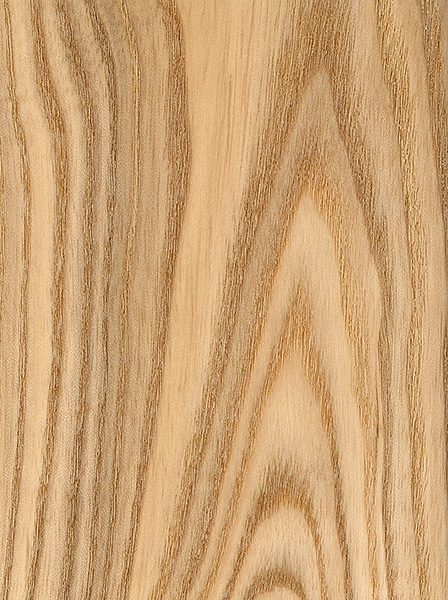
Knowing the wood you’re burning is essential for safety and efficiency. Ash trees are relatively common and can be identified by several key features:
- Leaves: Ash trees typically have compound leaves, meaning each leaf stalk has several leaflets (usually 5-11) arranged opposite each other. The leaflets are typically smooth-edged.
- Bark: Mature ash trees often have gray bark with a diamond-patterned or furrowed texture.
- Branches: The branches tend to be stout and have a distinctive opposite branching pattern, meaning branches grow directly across from each other on the main trunk, not staggered.
- Samaras (Seeds): Ash trees produce winged seeds called samaras, often described as looking like canoe paddles or helicopter seeds, which hang in clusters.
If you’re unsure about identifying ash, it’s always a good idea to consult a local arborist or a reliable tree identification guide. The Arbor Day Foundation’s Tree Identification page is an excellent resource for learning about different tree species.
The Importance of Seasoning Ash Wood
Even the best firewood is only as good as its preparation. For ash wood to burn efficiently and cleanly, it MUST be properly seasoned. Seasoning is the process of drying out the wood to reduce its moisture content. Wet or “green” wood burns poorly, smolders, produces a lot of smoke, and creates excessive creosote. The ideal moisture content for seasoned firewood is typically below 20%.
Why Seasoning is Crucial for Ash Wood
- Reduced Moisture: Freshly cut wood contains a lot of water. Burning wet wood wastes energy just to evaporate that water, leading to a cooler fire.
- Increased Heat Output: Dry wood burns hotter because the energy released by combustion isn’t used to boil off water.
- Less Smoke and Creosote: Low moisture content allows for more complete combustion, leading to less smoke and a significant reduction in creosote formation in your chimney.
- Easier Ignition: Dry wood catches fire more readily and stays lit more easily.
How to Season Ash Wood
Seasoning ash wood correctly is straightforward and rewarding. Here’s a simple approach:
- Cut and Split: Once the tree is down, cut it into manageable log lengths (usually 16-20 inches for standard stoves). Then, split the logs. Splitting exposes the inner wood to air, which is crucial for drying. Aim for pieces no more than 6 inches in diameter.
- Stack Properly: Stack the split wood off the ground. Use a sturdy base like pallets or a simple wood rack. This prevents ground moisture from re-entering the wood. Stack the wood in parallel rows, leaving space between the logs for airflow. A common method is “cordwood stacking” or a simple linear stack.
- Allow Airflow: Ensure there’s plenty of air circulation around the woodpile. Avoid leaning it against walls or fences. Position the stack in a sunny, breezy location if possible.
- Cover the Top: Protect the top of the stack from rain and snow, but leave the sides open to allow air to flow through. A waterproof tarp or a dedicated wood shed roof works well. Do not cover the sides, as this traps moisture.
- Wait: For ash, 6 to 12 months of seasoning is usually sufficient in most climates. You can test the moisture content using a wood moisture meter, which you can find at most hardware or woodworking supply stores. Ideal readings are below 20%. Cracks appearing at the ends of the logs are also a good indicator that the wood is drying out.
Proper seasoning is one of the most important steps in ensuring that your ash wood burns well and safely. Don’t skip this vital process!
What to Look for When Buying Ash Firewood
If you’re buying firewood, knowing what to look for will help you get the best value and the most efficient burn. Here’s what to consider:
- Is it Ash? Visually inspect the wood if possible. Look for the characteristics of ash trees mentioned earlier.
- Is it Seasoned? Ask the seller about the seasoning time. Well-seasoned wood will have:
- A cracked or “checking” appearance on the ends of the logs.
- A lightweight feel compared to green wood.
- A hollow, ringing sound when two pieces are knocked together, rather than a dull thud.
- No distinct smell of fresh sap or bark.
- Moisture Content: Reputable sellers may be able to provide a moisture content reading. Aim for below 20%.
- Log Size: Ensure the logs are cut to a size that fits your fireplace or wood stove. Common lengths are 16 inches.
- Cleanliness: Avoid wood that looks moldy or has a lot of fungi growing on it, as this can indicate it’s still too wet or has been stored improperly.
Buying firewood can sometimes feel like a bit of a gamble, but by knowing what to ask and what to look for, you can significantly increase your chances of getting high-quality, ready-to-burn ash wood.
Safety First: Burning Ash Wood Responsibly
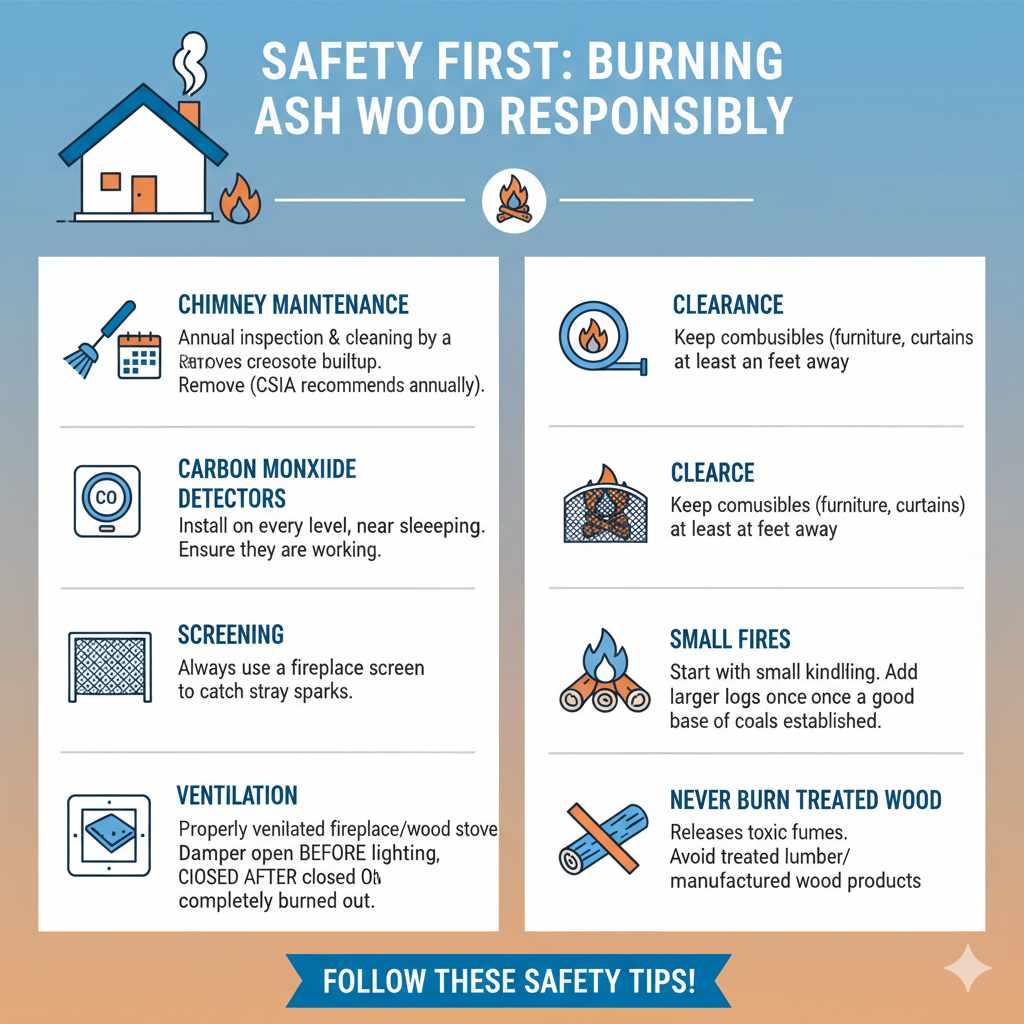
Ash wood burns hot and clean, which is great, but safety should always be your top priority when using any firewood. Here are some essential safety tips:
- Chimney Maintenance: Have your chimney inspected and cleaned annually by a certified professional. This is crucial for removing any creosote buildup, regardless of the wood type you burn. The Chimney Safety Institute of America (CSIA) recommends annual inspections.
- Carbon Monoxide Detectors: Ensure you have working carbon monoxide detectors on every level of your home, especially near sleeping areas.
- Screening: Always use a fireplace screen to catch any stray sparks.
- Ventilation: Make sure your fireplace or wood stove is properly ventilated. Ensure the damper is open before lighting the fire and is closed only after the fire has completely burned out.
- Clearance: Keep combustible materials (furniture, curtains, firewood, etc.) at a safe distance from your fireplace or stove – at least 3 feet is a good rule of thumb.
- Small Fires: For starting fires or warming up a room quickly, using smaller pieces of kindling and then adding larger ash logs once a good base of coals is established works best.
- Never Burn Treated Wood: Treated lumber or any manufactured wood products can release toxic fumes and should never be burned.
Following these safety guidelines will help you enjoy the warmth of your ash wood fire with peace of mind.
Frequently Asked Questions About Burning Ash Wood
Q1: How long does ash wood take to season?
Ash wood typically takes between 6 to 12 months to season properly, provided it is split and stacked with good airflow and protection from the elements. This is relatively fast compared to denser hardwoods like oak or hickory.
Q2: Is ash wood safe to burn in my fireplace?
Yes, seasoned ash wood is safe to burn. It burns cleanly with low smoke and creosote, which is good for your chimney. Always ensure your chimney is clean and you have a spark screen.
Q3: Does ash wood produce a lot of ash?
Ash wood produces a moderate amount of ash. It’s generally less than softer woods but comparable to other dense hardwoods. You’ll still need to clean out your wood stove or fireplace regularly.
Q4: Can I burn ash wood that is still green (unseasoned)?
No, you should never burn green or unseasoned ash wood. It burns poorly, smolders, creates excessive smoke, produces dangerous creosote buildup, and wastes a lot of energy simply boiling off water. Always use seasoned wood with less than 20% moisture content.
Q5: What is the smell of burning ash wood like?
Burning seasoned ash wood typically has a mild, pleasant, woody aroma. It’s not as pungent or smoky as some other firewoods, contributing to its reputation as a clean-burning wood.
Q6: How does ash wood compare to oak for firewood?
Ash wood and oak are both excellent hardwoods for firewood, offering high heat output and long burn times. Oak can sometimes be slightly hotter and burn longer, but it also takes longer to season (12-24 months) than ash (6-12 months), making ash often more practical for beginners.
Conclusion: Embrace the Warmth of Ash Wood
You’ve learned that ash wood is indeed an excellent choice for firewood. Its combination of high heat output, long and consistent burn time, and relatively clean burning makes it a favorite among wood-burning enthusiasts, and for good reason. For beginners, the manageable seasoning time and predictable performance offer a straightforward path to a warm, inviting fire. By understanding how to identify it, the critical importance of seasoning, and prioritizing safety, you can confidently select and burn ash wood for many cozy evenings to come.
So, the next time you have the opportunity to gather or purchase ash wood, you can do so with the knowledge that you’re choosing a top-quality fuel. Remember to always season it well and burn responsibly, and you’ll be rewarded with a comforting and efficient fire. Enjoy the warmth and ambiance that only good firewood, like ash, can provide!