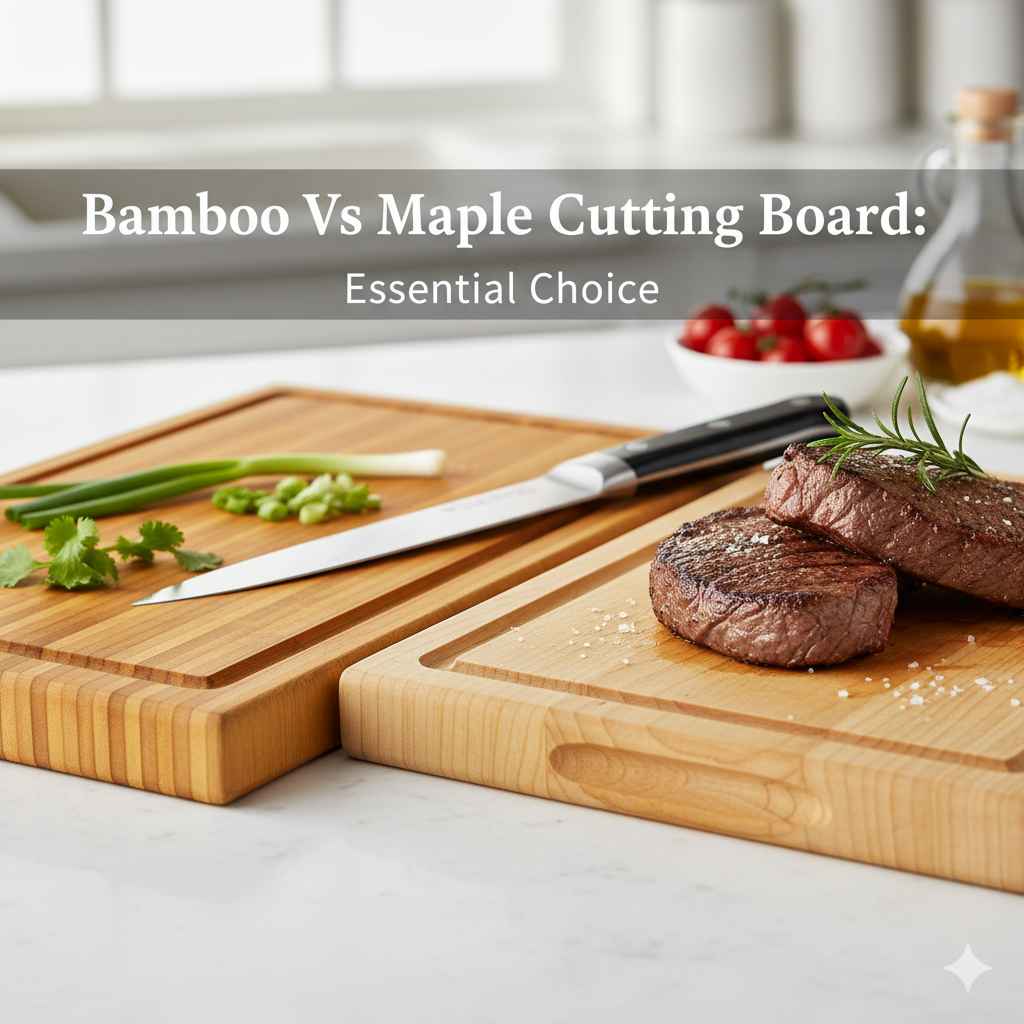
Bamboo Vs Maple Cutting Board: Essential Choice
For beginners seeking a durable, knife-friendly, and aesthetically pleasing cutting board, both bamboo and maple are excellent choices. Bamboo offers superior hardness and sustainability, while maple provides a classic, softer wood that is gentler on knives and readily available. Your “essential choice” depends on prioritizing sustainability and hardness (bamboo) or blade longevity and ease of care (maple).
Choosing the right cutting board can feel overwhelming, especially when you’re just starting out in the kitchen or looking to upgrade your tools. Two popular materials often come up: bamboo and maple. Both are fantastic options, but they have distinct differences that might make one a better fit for you than the other. Don’t worry, we’ll break it all down simply!
Think of your cutting board as your kitchen’s trusty sidekick. It needs to be tough, easy to clean, and kind to your knives. Making the “bamboo vs maple cutting board” choice doesn’t have to be complicated. We’ll guide you through what makes each special, helping you decide which one will best serve your culinary adventures. Get ready to make a choice you’ll feel great chopping on!
Why the Right Cutting Board Matters
A good cutting board isn’t just a surface; it’s a crucial part of your cooking experience. It protects your countertops, keeps your knives sharp, and ensures food safety. Using the wrong board can lead to dull knives, messy kitchens, and even cross-contamination. That’s why understanding the materials is so important, especially when comparing bamboo and maple.
Understanding Bamboo Cutting Boards
Bamboo is a fascinating material. It’s technically a grass, not a wood, and it grows incredibly fast. This makes it a very sustainable choice for many products, including cutting boards. Bamboo boards are often praised for their durability and unique look.
Pros of Bamboo Cutting Boards
- Sustainability: Bamboo is one of the fastest-growing plants on Earth, making it an eco-friendly option compared to slower-growing hardwoods. Learn more about sustainable materials from resources like the Food and Agriculture Organization of the United Nations (FAO).
- Hardness: Bamboo is quite hard, which means it can resist scratches and dents well. This often makes it a good choice for busy kitchens.
- Water Resistance: Its natural density makes bamboo relatively resistant to moisture and staining, though it still needs proper care.
- Aesthetics: Many find the natural color and grain of bamboo visually appealing and modern.
Cons of Bamboo Cutting Boards
- Knife Wear: While hard, bamboo is significantly harder than many knife steels. Over time, it can dull your knives faster than softer woods.
- Potential for Warping: If not properly cared for or if it’s a poorly constructed board, bamboo can be prone to warping, especially with frequent soaking or extreme temperature changes.
- Glue Concerns: Many bamboo boards are made by gluing together strips of bamboo. The quality of the glue and the construction process are important to consider for safety and durability.
Understanding Maple Cutting Boards
Maple, specifically hard maple (also known as sugar maple), is a hardwood beloved by woodworkers and chefs alike. It’s a classic choice for cutting boards because it offers a great balance of durability and knife-friendliness.
Pros of Maple Cutting Boards
- Knife-Friendly: Maple is softer than bamboo, making it much gentler on your knife blades. This helps keep your knives sharper for longer, which is ideal for cooks who value their cutlery.
- Durability: Hard maple is a dense and strong wood that holds up well to daily use, resisting deep cuts and scratches better than many other common woods.
- Natural Antibacterial Properties: Studies suggest that dense hardwoods like maple have inherent properties that can help reduce bacterial growth on their surfaces compared to softer woods or plastic.
- Aesthetics: Maple offers a warm, classic look that many people love in their kitchens. Its natural color can complement various decor styles.
Cons of Maple Cutting Boards
- Softer Than Bamboo: While good for knives, its relative softness means it can show scratches and knife marks more readily than bamboo over time.
- Slightly Less Sustainable: Maple trees grow slower than bamboo, so its sourcing has a different environmental impact, though it can still be sustainably harvested.
- Requires More Care: Maple can absorb moisture and stains more easily than bamboo if not properly seasoned and maintained.
Bamboo Vs Maple Cutting Board: Key Differences at a Glance
To help you visualize the “bamboo vs maple cutting board” debate, let’s look at a direct comparison. This table highlights the main points we’ve discussed and adds a few more considerations.
| Feature | Bamboo Cutting Board | Maple Cutting Board |
|---|---|---|
| Hardness | Very Hard (can be very tough on knives) | Moderately Hard (gentle on knives) |
| Sustainability | Very High (fast-growing grass) | Moderate (hardwood, slower growth) |
| Knife Edge Durability | Lower (can dull knives faster) | Higher (preserves knife sharpness) |
| Water Resistance | Good (dense structure) | Moderate (needs proper seasoning) |
| Appearance | Modern, often striped | Classic, warm, natural wood grain |
| Price (General) | Often more affordable | Mid-range to premium, depending on thickness/craftsmanship |
| Maintenance | Hand wash, occasional oiling | Hand wash, regular oiling is crucial |
| Weight | Can be lighter or heavier depending on construction | Typically dense and moderately heavy |
Ease of Care: Keeping Your Cutting Board Pristine
No matter which material you choose, proper care is essential for longevity and hygiene. Both bamboo and maple cutting boards require similar maintenance, but with slight nuances.
Caring for Your Bamboo Cutting Board
- Hand Wash Only: Never put your bamboo cutting board in the dishwasher. The high heat and prolonged moisture can cause it to warp, crack, or delaminate.
- Clean Promptly: Wash it with warm water and mild soap right after use.
- Rinse Thoroughly: Make sure all soap residue is removed.
- Dry Completely: Pat it dry with a dish towel immediately after washing and then let it air dry upright for a while. Storing it flat can trap moisture.
- Oil Periodically: Once a month, or whenever it looks dry, apply a food-grade mineral oil or a specialized cutting board conditioner. Wipe off any excess after a few hours. This helps prevent drying and cracking, and makes it more resistant to stains.
For more detailed information on wood care, you can often find excellent guides from woodworking supply stores or university extension offices. For instance, many agricultural extension services offer wood finishing and maintenance advice that applies broadly to kitchen tools.
Caring for Your Maple Cutting Board
- Hand Wash Only: Just like bamboo, maple boards should never go in the dishwasher.
- Use Mild Soap: A gentle dish soap and warm water are best.
- Avoid Soaking: Don’t let your maple board sit in water. This can cause it to swell, warp, and develop fissures.
- Dry Thoroughly: Towel dry it immediately and stand it on its edge to air dry.
- Regular Oiling is Key: Maple benefits greatly from regular oiling, ideally once a month. Use food-grade mineral oil, a blend of mineral oil and beeswax, or a specialized cutting board conditioner. Oiling seals the wood, preventing moisture absorption, staining, and drying out.
- Sanitize (Optional but Recommended): For extra peace of mind, you can occasionally wipe down your board with a diluted white vinegar or hydrogen peroxide solution, then rinse and dry.
Which is Better for Your Knives?
This is a big one for anyone who invests in good kitchen knives. The “bamboo vs maple cutting board” debate often hinges on this very point.
In simple terms, softer woods are better for knife edges. Think of it like this: when you cut, your knife blade is essentially gliding along the surface of the board. If the board material is very hard, it acts like sandpaper on your knife’s fine edge, dulling it faster with every chop.
Maple: Maple is a great middle ground. It’s hard enough to be durable and resist deep gouges, but soft enough not to be excessively hard on your knife blades. This is why many professional chefs prefer wooden boards made from woods like maple, cherry, or walnut.
Bamboo: Bamboo, being significantly harder, will dull your knives more quickly than maple. If you have a high-quality set of knives that you want to keep razor-sharp with minimal effort, this is a significant factor to consider. If your knives are more utilitarian, or you don’t mind frequent sharpening, the hardness of bamboo might not be as much of a concern.
Sustainability: A Deeper Look
When we talk about sustainability, we’re looking at how a material impacts the environment.
Bamboo: Bamboo is a champion of sustainability. It can grow up to 3 feet a day, requires no pesticides, and replenishes itself after harvesting without needing replanting. Its rapid growth means a large amount of material can be harvested from a smaller area.
Maple: Maple is a hardwood that grows much more slowly. While responsible forestry practices ensure that maple can be a sustainable choice in many regions, it doesn’t have the same explosive regenerative properties as bamboo. When choosing maple, look for boards labeled as sustainably harvested or sourced from FSC-certified forests. The Forest Stewardship Council (FSC) is a great resource for understanding sustainable forestry.
So, if your primary concern is choosing the most eco-friendly material, bamboo often takes the lead due to its rapid growth and renewability.
What About Edge Grain vs. End Grain?
Beyond the material (bamboo vs. maple), the construction of the cutting board itself plays a role. The two most common constructions are edge grain and end grain.
Edge Grain: This is the most common type of construction for both bamboo and maple boards. Strips of wood are glued together along their long edges to form a solid panel. This is generally more affordable and easier to manufacture.
Pros: More affordable, lighter, can look very clean and striped (especially bamboo).
Cons: Can be more prone to warping than end grain, and can be harder on knives than end grain construction.
End Grain: For end grain boards, blocks of wood are oriented so that the ends of the wood grain are facing up. Each cut is made into the fibers of the wood, rather than across them. This creates a board that is very kind to knife edges and can even “self-heal” minor cuts.
Pros: Excellent for knife longevity, can self-heal, often considered more premium and visually striking.
Cons: Significantly more expensive, heavier, requires more meticulous care, and is less common to find in bamboo.
When comparing bamboo vs. maple, you’ll most commonly find edge grain construction for both. However, if you encounter an end grain maple board, it will be a premium choice for both knife care and durability, though at a higher price point. Bamboo end grain boards are very rare due to the material’s unique fibrous structure.
Practical Considerations for Beginners
As a beginner, you’re likely looking for something that’s easy to use, easy to care for, and offers good value.
Bamboo:
Good for: Those who want a durable, low-maintenance board with an eco-friendly story. If knife sharpness isn’t your absolute top priority, bamboo is a solid choice. It’s often a very budget-friendly entry point.
Watch out for: Very thin bamboo boards can be prone to warping. Look for thicker, well-constructed boards.
Maple:
Good for: Those who want to invest a bit more in their kitchen tools and prioritize knife longevity and a classic aesthetic. It’s a forgiving material for learning to cook.
Watch out for: Ensure it’s properly seasoned (oiled) from the start and maintain that oiling schedule to prevent drying and cracking.
Many beginner cooks find a good quality, medium-sized maple cutting board to be an excellent all-around workhorse. It’s versatile, looks good, and protects their knives as they learn new techniques.
Frequently Asked Questions (FAQ)
Here are some common questions beginners have about bamboo and maple cutting boards:
Q1: Which cutting board material is best for knives?
Maple is generally better for preserving your knife’s sharp edge because it is a softer wood than bamboo. Bamboo’s hardness can dull knives more quickly.
Q2: Is bamboo or maple more hygienic?
Both materials, when properly cared for and maintained, can be hygienic. Dense hardwoods like maple are often cited as having natural antibacterial properties. The key is regular cleaning and drying for both bamboo and maple.
Q3: Can I use my bamboo cutting board for raw meat?
Yes, you can use a bamboo cutting board for raw meat, but it’s crucial to clean and sanitize it thoroughly afterward to prevent cross-contamination. It’s good practice to have separate cutting boards for raw meats and produce.
Q4: How often should I oil my bamboo or maple cutting board?
For both bamboo and maple, aim to oil your cutting board at least once a month, or more frequently if it looks dry or is used very heavily. Proper oiling helps prevent drying, cracking, and staining.
Q5: Which is more prone to warping: bamboo or maple?
Both can warp if not cared for properly. However, poorly constructed bamboo boards, especially thin ones or those made with low-quality glue, might be more susceptible to warping with excessive moisture or temperature changes than a well-made, solid maple board.
Q6: Are glue lines in bamboo boards dangerous?
Reputable manufacturers use food-safe adhesives. The concern is more about the glue line’s durability and potential for separation over time, which can trap moisture and food particles. Choosing a board from a trusted brand minimizes this risk.
Q7: Should I choose a thicker cutting board?
Yes, thicker boards (typically 3/4 inch to 1.5 inches or more) are generally more stable and less prone to warping for both bamboo and maple. They also provide a more satisfying heft and stability while you’re cutting.
Making Your Essential Choice
So, where does this leave you in the “bamboo vs. maple cutting board” decision? The truth is, both are excellent options, and the “essential choice” really comes down to your personal priorities.
Choose Bamboo if:
You are passionate about sustainability and want the most eco-friendly option.
You want a very hard, durable surface that resists scratches well.
You find the modern aesthetic appealing.
Budget is a significant consideration, as bamboo can often be more affordable.
Choose Maple if:
You want to extend the life of your knife edges and prefer them to stay sharp longer.
You appreciate a classic, warm wood look in your kitchen.
You don’t mind a bit more diligent oiling for maintenance.
You are looking for a trusted, traditional material used by many chefs.
Ultimately, either a well-made bamboo or a good quality maple cutting board will serve you well in the kitchen. The most important thing is to choose one that you’ll enjoy using daily and to commit to caring for it properly. Think about how you cook, what tools you value most (your knives!), and what you want your kitchen to look and feel like.
Conclusion: Your Kitchen, Your Choice!
Navigating the world of cutting boards doesn’t have to be complicated. Whether you lean towards the sustainable strength of bamboo or the knife-friendly tradition of maple, you’re making a choice that impacts your kitchen’s functionality and your culinary journey.
Both bamboo and maple cutting boards, when chosen wisely and cared for diligently, will become invaluable tools that stand the test of time. Remember to consider how each material interacts with your knives, its sustainability story, and its aesthetic appeal in your own kitchen.
The best cutting board is the one that fits your needs and brings you joy every time you reach for it. So go ahead, make your choice, and happy chopping!