Do Maple Trees Grow in California? Yes: Bigleaf and Vine Maple
Yes, maple trees grow wild in California – but only two species are truly native: Bigleaf Maple (Acer macrophyllum) and Vine Maple (Acer circinatum), both restricted to the state’s cool, moist northern forests. Mistake a naturalized Japanese or Norway Maple for one of these and you’ll misjudge both its wood quality and where it actually grows. This guide covers where each native species is found, how to identify it, and which one is actually worth harvesting for woodworking.
Quick Answer
California has two native maples: Bigleaf Maple (Acer macrophyllum), common in Northern California’s coastal and Sierra forests, and Vine Maple (Acer circinatum), a smaller understory shrub-tree confined to the state’s far northwest corner near the Oregon border. Japanese, Norway, and Shantung Maples are also common, but only as planted ornamentals – not wild trees.
Which Maple Trees Are Native to California?
California has two genuinely native maple species, plus a closely related mountain variety. All three grow wild without human planting and have been part of the state’s forests for thousands of years.
Bigleaf Maple (Acer macrophyllum)
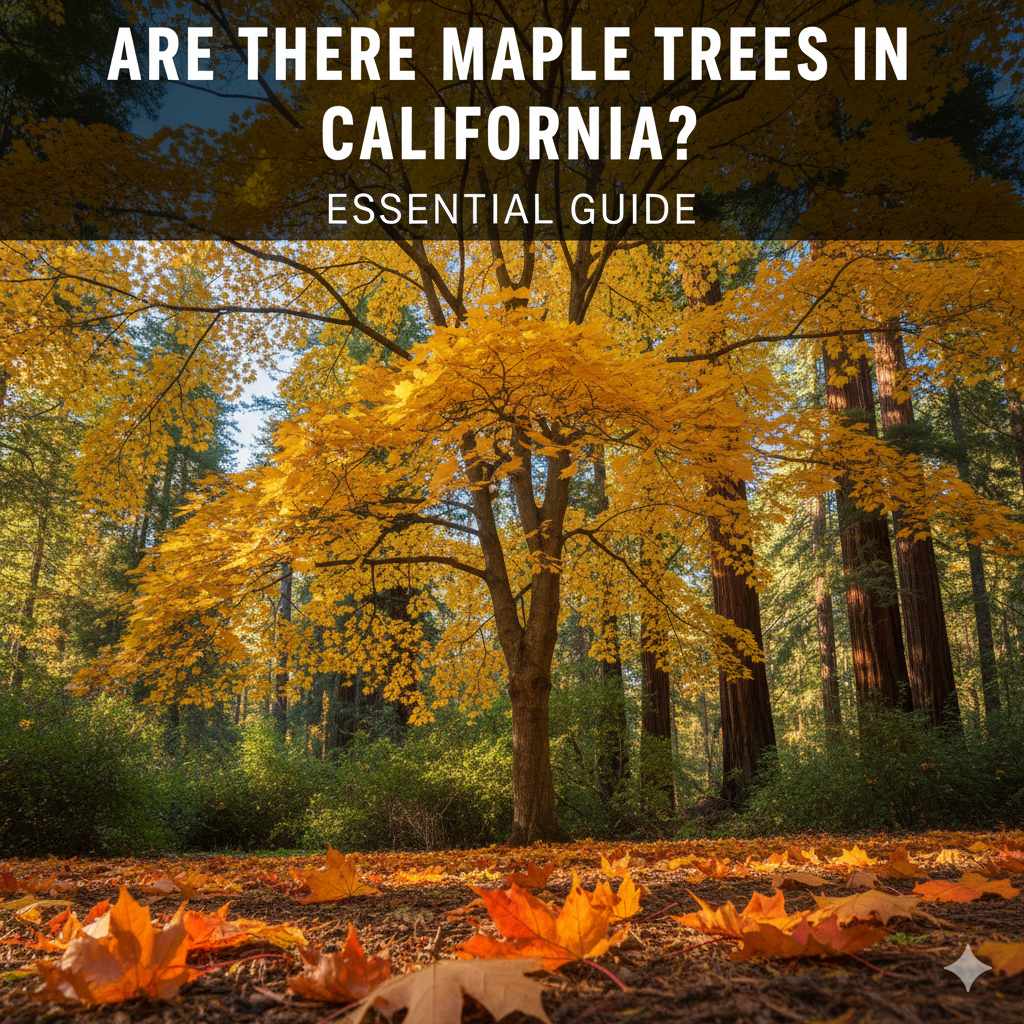
This is California’s most common and iconic native maple. Its name comes from its impressively large leaves, which can grow up to 12 inches across. Bigleaf maples are typically found in coastal forests, oak woodlands, and along streams and canyons, especially in Northern California.
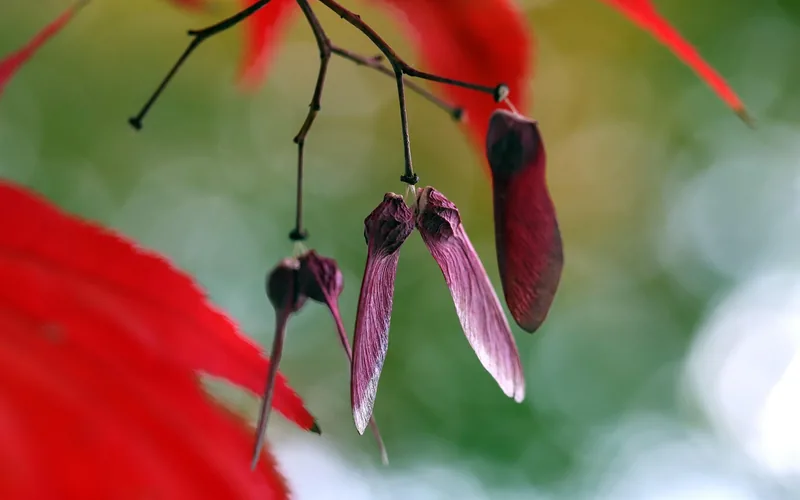
- Appearance: Large, 5-lobed leaves. Bark is grayish-brown and furrowed. Produces clusters of fragrant, greenish-yellow flowers in spring, followed by large, hairy samaras (winged seeds).
- Habitat: Low to mid-elevation moist forests, from Northern California down into parts of Southern California, often associated with redwoods, Douglas fir, and oaks.
- Wood characteristics: Creamy white to pale brown with a straight, pleasing grain; can occasionally show “fiddleback” or “curly” figure. Of the wood species covered in our full types of wood guide, Bigleaf Maple is one of the few genuinely West Coast hardwoods – used for lumber, furniture, cabinetry, and decorative items, with figured pieces prized for musical instruments.
- Ecological role: Provides food and shelter for wildlife; its large leaves contribute significantly to forest-floor soil organic matter.
Vine Maple (Acer circinatum)
California’s second native maple is easy to miss: Vine Maple rarely tops 20 feet and usually grows as a sprawling, multi-trunked shrub rather than a proper tree. In California it’s confined almost entirely to Del Norte and Humboldt counties, within about 20 miles of the Oregon border – the southern tail of a range that runs north through the Pacific Northwest.
- Appearance: Small, nearly circular 7-to-9-lobed leaves (the species name circinatum means “coiled,” describing the leaf shape); vivid orange-to-red fall color even in California’s milder coastal climate.
- Habitat: Shaded understory of coastal redwood and Douglas fir forests, almost always within a few feet of a creek or seep.
- Wood characteristics: Trunks and branches rarely grow straight or thick enough for dimensional lumber, but the dense, fine-grained wood has a long history of use for tool handles, snowshoe frames, and basketry, and it still turns well on a lathe at small sizes.
- Availability: Not commercially harvested in California – its limited range and shrub-like form make it a craft-scale curiosity, not a lumber species.
California Maple / Douglas Maple (Acer glabrum var. glabrum)
Often lumped in with Rocky Mountain Maple, this variety – correctly Acer glabrum var. glabrum, sometimes called California Maple or Douglas Maple – is a smaller, drought-tolerant tree found in California’s higher, drier mountain ranges. (It’s occasionally misidentified online as Acer cissifolium, but that name actually belongs to an unrelated ivy-leaved maple native to Japan, not California.) It can handle far drier conditions than Bigleaf Maple and often takes on a shrub-like form in harsher sites.
- Appearance: Smaller, 3-to-5-lobed leaves, typically smooth-edged. Bark is smooth and gray when young, becoming fissured with age.
- Habitat: Mountainous areas, often on north-facing slopes or in canyons, in the Sierra Nevada and Klamath Mountains.
- Wood characteristics: Harder and denser than Bigleaf Maple, with a fine grain. Not widely harvested due to its smaller size and remote habitat, but suitable for tool handles and decorative turning when available – see our guide on maple’s water resistance and best finishes before using either species outdoors.
- Ecological role: Important for erosion control on mountain slopes; provides browse for deer and other herbivores.
A few rarer, more geographically restricted relatives also exist, such as Acer glabrum var. douglasii (Douglas Maple) – closely related enough to California Maple that most field guides treat it as a variety rather than a separate species.
Best Wood Moisture Meter Pick
 |
General Tools MMD4E Moisture Meter for Wood Before you mill any maple you find – salvaged, purchased, or from a downed tree – here’s the one tool worth having on hand to confirm it’s actually ready to work.
|
As an Amazon Associate we earn from qualifying purchases.
Non-Native Maples You’ll See Planted in California
Beyond the native trees above, several non-native maple species have been planted widely throughout California as ornamentals, and a few have naturalized in scattered areas.
Shantung Maple (Acer truncatum)
This hardy maple from China is increasingly popular in California landscapes for its drought tolerance and reliable fall color.
- Appearance: Medium-sized tree with rounded, lobed leaves, often a deeper green than other maples; good fall color from yellow to orange-red.
- Habitat: Adaptable to most soils and climates across California, mostly seen in urban and suburban plantings.
- Wood characteristics: Dense and strong, similar to other cultivated maples. Not commercially harvested in California, but usable for small DIY projects and carvings if a fallen tree becomes available.
Japanese Maple and Norway Maple
Japanese Maple (Acer palmatum) is a common ornamental prized for garden color, not lumber – its trunks stay too small and twisted for dimensional wood. Norway Maple (Acer platanoides) is also widely planted, but is considered invasive in several U.S. climates and is worth monitoring rather than encouraging in a home landscape.
Chinese Tallow Tree – Not Actually a Maple
Chinese Tallow Tree (Triadica sebifera) is sometimes mistaken for a maple because of its similar leaf shape and fall color, but it’s botanically unrelated (family Euphorbiaceae). It’s grown for ornamental value and its waxy seed coating, and is considered invasive in parts of the southeastern U.S., though less aggressively so in California’s drier climate.
Where to Find Wild Maple Trees in California
Finding native maples in California depends heavily on climate and elevation – and mostly means heading north.
Northern California Redwoods and Forests
The foggy, moist environments of Northern California are prime territory for Bigleaf Maple, and the far northwestern corner near the Oregon border is the only place to find wild Vine Maple in the state. Look for both thriving alongside towering redwoods, Douglas fir, and mixed evergreen forest, often lining riverbanks and shaded canyons.
Sierra Nevada Mountains
In the higher elevations of the Sierra Nevada, you’ll find the hardier California Maple (Acer glabrum varieties) growing in more open spaces, on rocky slopes, and in riparian zones. The Stanislaus, Eldorado, and Tahoe National Forests are all reliable places to look.
Coastal Ranges and Foothills
The coastal ranges and foothills throughout the state, particularly from Mendocino County southward, are excellent places to spot Bigleaf Maple as part of the oak woodland ecosystem.
In cities and suburbs, what you’re seeing is almost always one of the planted ornamentals described above (Shantung, Japanese, or Norway Maple) rather than a wild native – a useful distinction if you’re hoping to source real Bigleaf Maple lumber locally.
How to Identify a California Maple
Distinguishing between species is straightforward once you know what to check.
- Leaf shape and size: Bigleaf Maple leaves are enormous and deeply 5-lobed; California Maple leaves are smaller and usually 3-lobed; Vine Maple leaves are small and nearly circular.
- Bark: Young trees generally have smoother bark, while mature trees develop furrows or scales.
- Samaras (wings): The distinctive winged seeds are a fast giveaway. Their size, hairiness, and angle help differentiate species.
- Shape and growth habit: A large spreading tree points to Bigleaf Maple; a smaller, shrub-like form points to California or Vine Maple.
If you find a downed Bigleaf Maple with wavy, spotted, or “quilted” grain rather than plain straight grain, it’s worth reading our guide on ambrosia maple vs. spalted maple to know exactly what you’re looking at before you mill it.
Maple Wood for Woodworking: Properties and Uses
The presence of native maples in California offers real possibilities for local woodworking and craft projects – if you know which species is actually worth pursuing.
Bigleaf Maple Wood
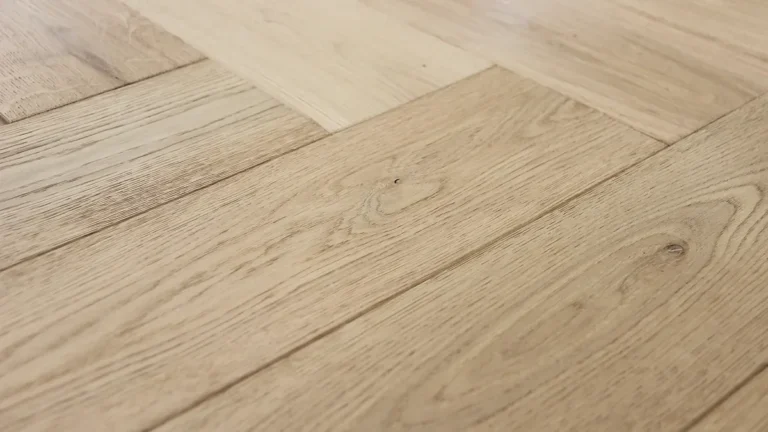
- Appearance: Creamy white to light brown heartwood; can exhibit curls, waves, and quilted figure, especially from mature trees.
- Workability: Dresses and sands well, takes finishes beautifully. Straight-grained pieces work easily with hand and power tools; figured grain needs more care to avoid tear-out.
- Uses: Furniture, cabinetry, flooring, tabletops, musical instruments (guitars, violins), decorative bowls, and cutting boards – see our notes on sealing maple for kitchen use before finishing a cutting board or board.
- Availability: Specialty lumber yards that source locally, or salvagers of downed trees from construction sites or storms. Look for sustainably harvested sources.
California Maple Wood
- Appearance: Similar creamy to light brown hues, often with a finer grain than Bigleaf Maple.
- Workability: Denser and harder, so it takes more effort to work but holds sharp edges and fine detail exceptionally well.
- Uses: Tool handles, delicate carvings, walking sticks, and musical instrument components where a denser wood is wanted.
| Wood Species (California) | Janka Hardness (lbf) | Avg. Dried Density (lbs/ft³) | Primary Uses | Workability |
|---|---|---|---|---|
| Bigleaf Maple (Acer macrophyllum) | ~700-800 | ~33-37 | Furniture, cabinetry, musical instruments | Good; figured grain needs care |
| California Maple (Acer glabrum) | ~900-1,000 | ~38-42 | Tool handles, small craft projects, carving | Moderate; dense, good for detail work |
| Shantung Maple (Acer truncatum) – ornamental sample | ~900-1,100 | ~38-44 | Experimental craft projects, small furniture | Good; dense, holds detail well |
Note: Janka hardness and density are approximate and vary with growing conditions.
Sourcing and Working California Maple
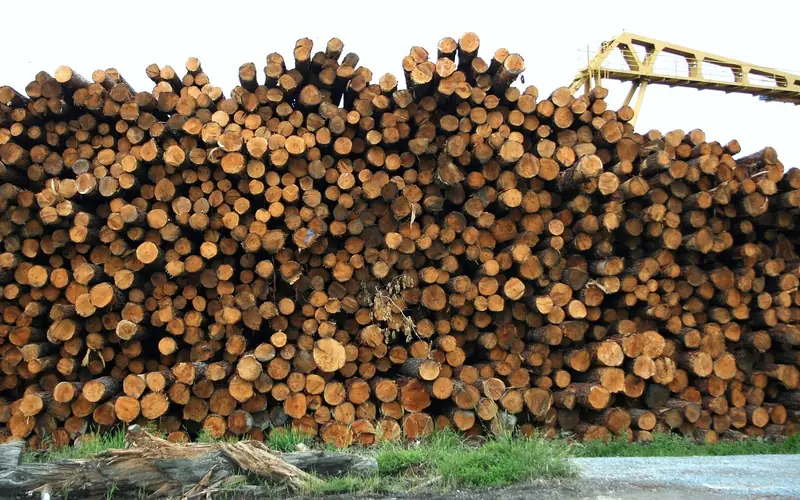
- Sourcing local lumber: Look for local sawmills or lumber suppliers who specialize in salvaged or sustainably harvested wood. This supports local resources and cuts transportation impact.
- Figured wood: Bigleaf Maple is renowned for its figured grain. A piece with “curl” or “fiddleback” figure will elevate any project – these pieces are rarer and cost more, but are worth it.
- Drying and stability: Like all hardwoods, maple needs to be properly dried before use. Improperly dried wood can warp, crack, or shrink significantly. Buy kiln-dried or well-acclimated air-dried lumber from a reputable supplier.
- Tool maintenance: Maple, especially the denser California Maple, is tough on tools. Keep saw blades sharp and chisels honed to work it safely and cleanly.
“A maple board that feels dry on the surface can still be damp at the core – I check every board with a pin-style moisture meter before glue-up, not just by weight or feel. It’s saved more than one project from warping after assembly.”
Can You Make Maple Syrup From California Maples?
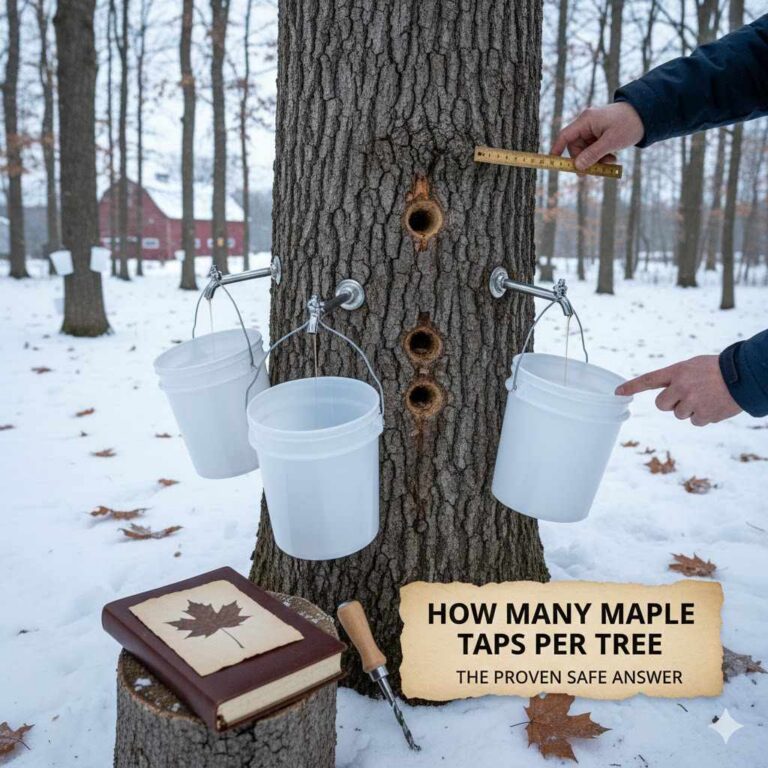
While the idea of California maple syrup might seem unusual, it’s genuinely possible. Bigleaf Maples can be tapped for sap just like their eastern cousins, but commercial production is rare in the state due to the cost and effort involved compared to established maple-syrup regions, plus lower typical sap yield and sugar content. It’s more of a backyard hobby for those with a mature Bigleaf Maple on their property; the University of Vermont Extension publishes tapping guidance that can be adapted to a single backyard tree.
Frequently Asked Questions
Can you get maple syrup from maples in California?
Yes, you can tap Bigleaf Maples (Acer macrophyllum) for sap to make maple syrup. Commercial production is very rare in California due to lower yields and established industries elsewhere, so it’s typically done as a backyard hobby.
Are maple trees common in Los Angeles or Southern California?
Native maples like Bigleaf Maple can be found in some moist canyons and coastal areas of Southern California, but they’re far less common than in Northern California. Most maples seen around Los Angeles and the rest of SoCal are planted ornamentals.
What is the difference between Eastern maple wood and California Bigleaf Maple wood?
Bigleaf Maple (Acer macrophyllum) generally has a larger grain pattern and can show more dramatic figuring, like quilting or extensive curls, compared to common Eastern maples such as Sugar Maple (Acer saccharum). Its Janka hardness is also typically lower – see our guide on how to finish maple wood for species-specific finishing notes.
Is maple wood good for cutting boards?
Yes. Maple, including Bigleaf Maple, is an excellent choice for cutting boards. It’s a dense hardwood that resists knife marks, cleans easily, and doesn’t contain toxic compounds, and its tight grain helps prevent bacteria from penetrating the surface.
How can I identify a maple tree in California without its leaves?
Look for opposite branching (branches growing directly across from each other), smooth grey-brown bark that becomes furrowed with age, and characteristic “helicopter” samara seeds, even dried and on the ground. Bud shape and arrangement can also help experienced observers.
Are there any invasive maple species in California?
Norway Maple (Acer platanoides) can be invasive in certain climates and is worth monitoring, though California’s drier conditions limit its spread compared to wetter regions. Planting native species like Bigleaf Maple is always the better choice for local ecosystems.
Conclusion
So, are there maple trees in California? Yes – two genuinely native species, Bigleaf Maple in the northern forests and coastal ranges, and the shrub-like Vine Maple in the far northwest corner, plus a scattering of California Maple in the higher Sierra and Klamath mountains. Add in the ornamental Japanese, Norway, and Shantung Maples planted in cities, and the maple family has a real foothold in the Golden State. For woodworkers, Bigleaf Maple in particular is a legitimate local hardwood worth seeking out from a specialty sawmill – just confirm it’s properly dried before you build anything with it.
Sponsored / affiliate links. As an Amazon Associate I earn from qualifying purchases. I may earn additional commission from eligible campaigns.