Is Walnut Good for Cutting Boards? 1,010 Janka + Juglone Facts
Walnut is a good wood for cutting boards — its 1,010 Janka hardness rating sits in the ideal range for daily chopping, and its closed grain resists moisture and bacteria. The one real caveat: walnut wood contains juglone, but heartwood levels are too low to matter once the board is sealed. This guide covers the hardness and durability data, the juglone and nut-allergy facts (with sources), and how to finish and maintain a walnut board correctly.
What Makes Walnut a Good Wood for Cutting Boards?
Best Walnut Cutting Board Conditioner Pick
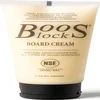
John Boos Board Cream (Beeswax + Mineral Oil)
A mineral-oil-and-beeswax cream built specifically for butcher blocks and wood cutting boards, from a brand that’s made wood kitchenware since 1887.
- Best for: Monthly conditioning of walnut, maple, or any closed-grain hardwood board
- Why we picked it: Food-grade mineral oil + unbleached beeswax, no nut-oil allergy risk, single application lasts weeks
- Main drawback: Smaller 5 oz size means more frequent reorders for a large board
Compare more cutting board conditioner options
 Option 1 Howard Products Butcher Block Conditioner
|
 Option 2 CLARK’S Cutting Board Oil & Wax Kit
|
 Option 3 Project Papa Cutting Board Conditioner
|
As an Amazon Associate we earn from qualifying purchases.
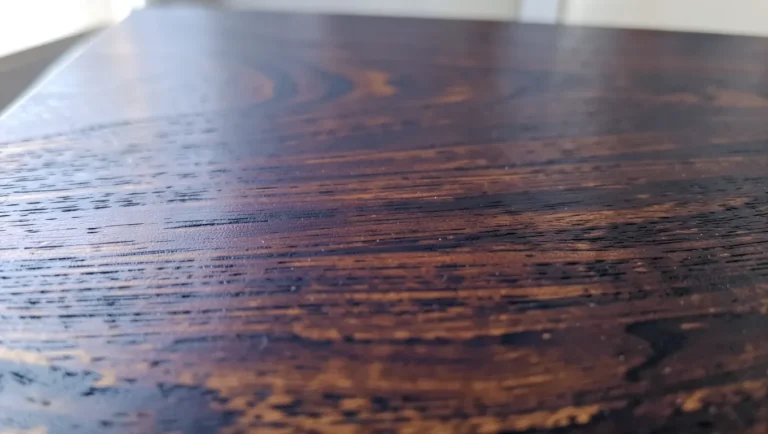
Black walnut is a closed-grain hardwood with a Janka hardness rating of about 1,010 lbf — harder than cherry (995 lbf) but noticeably softer than hickory (1,820 lbf) or hard maple (1,450 lbf). That middle-of-the-road hardness is exactly what a cutting board needs: dense enough to resist deep gouging, soft enough that it won’t dull your knife edge the way a harder board will.
- Closed grain: Walnut’s tight pore structure limits how far liquid and food debris can soak in, which is the same trait that makes maple and cherry good choices and makes open-grain woods like oak and ash poor ones.
- Dimensional stability: Properly dried walnut resists the seasonal warping that softer, wider-grained species show, so a well-built board stays flat over years of wet cleaning.
- Knife-friendly hardness: At 1,010 Janka, walnut is soft enough to spare your knife edge but firm enough to shrug off years of slicing.
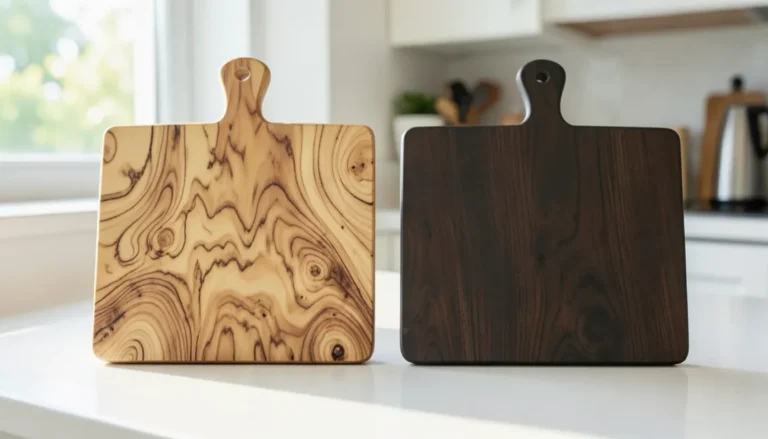
None of this is unique to walnut — closed-grain hardwoods in general make good cutting boards, and walnut’s real selling point over cheaper options like maple is color: a rich chocolate brown that most other domestic species can’t match.
How to Maintain and Finish a Walnut Cutting Board
A walnut board needs monthly oiling, not weekly. Food-grade mineral oil and a mineral-oil-and-beeswax “board cream” are the standard, inert finishes — they don’t go rancid and won’t feed bacteria the way an unrefined food oil can.
- Clean after every use: Warm water, mild soap, and a soft cloth or sponge — never a dishwasher, and never a long soak. Wood that sits wet is what actually warps and cracks, not normal washing.
- Dry standing up: Air-dry the board on its edge so both faces dry evenly. A board left flat on a wet counter cups as one side dries faster than the other.
- Oil monthly: Apply food-grade mineral oil or a mineral-oil-and-beeswax conditioner, let it soak in for a few hours or overnight, then wipe off the excess.
- Sand out deep marks yearly: Light hand-sanding with 220-grit paper removes ingrained scratches and stains before re-oiling.
One finish to be deliberate about: pure walnut oil dries harder than mineral oil and looks great on walnut, but if anyone in the household has a tree-nut allergy, skip it — stick with mineral oil or beeswax instead. See the allergy section below for why.
Is Walnut Wood Toxic or Unsafe for Cutting Boards?
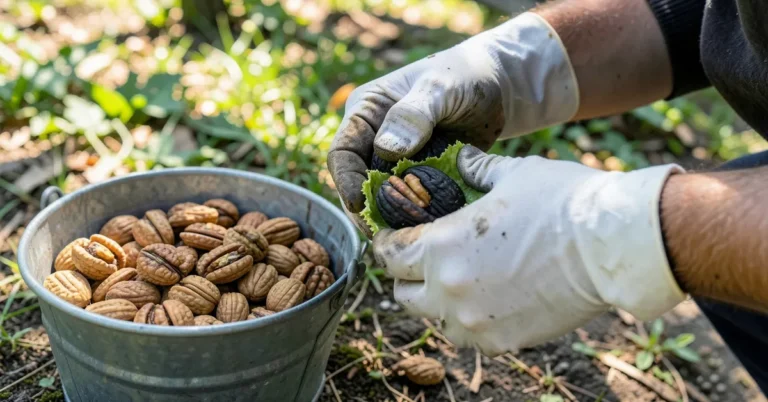
No — a properly finished walnut cutting board is not toxic. The confusion comes from juglone, the natural compound walnut trees produce to suppress competing plants. Juglone is real and it does make tomatoes and other sensitive plants wilt near a living walnut tree’s roots. But juglone concentrates in the tree’s roots, husks, and leaves — not in the dried heartwood that gets milled into lumber and cutting boards. University of Maryland Extension confirms juglone is specifically associated with black walnut roots, not the finished wood.
No regulatory body — including the FDA — restricts walnut wood for food-contact use, and finished walnut boards have a long, ordinary history in professional and home kitchens. Sealing the board with mineral oil, the way you would any wood cutting board, is the actual safety step that matters — not the species.
Can People With Tree Nut Allergies Use a Walnut Cutting Board?
Almost always, yes. Tree nut allergies react to the protein in the nut itself, not to the wood. According to Food Allergy Canada’s allergist Q&A, wooden kitchen items made from walnut wood are considered extremely low risk for someone with a walnut allergy, since the allergenic protein lives in the nut, not the lumber. The one thing worth being careful about is an unrefined walnut oil finish — highly refined walnut oil has the protein stripped out, but a less-refined bottle could carry trace protein. If anyone in your home has a walnut allergy, finish the board with mineral oil or beeswax instead of walnut oil, and you remove the only real point of concern.
Is Walnut Naturally Antibacterial? The Real Science
Not specifically — this is a common myth worth correcting, because the real explanation is more useful than the marketing claim. All wood, not just walnut, has a genuine antibacterial advantage over plastic, and it comes down to moisture, not species chemistry.
In the early 1990s, University of Wisconsin food scientist Dean O. Cliver deliberately contaminated wood and plastic cutting boards with E. coli, salmonella, and listeria. Bacteria on the wood boards were no longer recoverable within a few minutes — they soak into the wood’s capillary structure along with moisture, and as the board dries to its normal 10–15% moisture content, the bacteria are starved of the water they need to survive. Boards left overnight had no recoverable bacteria at all. Plastic boards, by contrast, let bacteria survive and even multiply overnight, and knife-scarred plastic was harder to clean by hand than a knife-scarred wood board. The full study writeup is summarized here.
Walnut, is closed-grain, is where it does have a real edge: a tighter pore structure than an open-grain wood like oak means less surface area for bacteria and food residue to lodge in the first place. That’s a genuine walnut-specific advantage — it’s just a structural one, not a mysterious “antibacterial chemical” one.
“After building both maple and walnut end-grain boards, the difference I actually notice in the shop isn’t hygiene — it’s how each wood takes a knife mark. Walnut’s slightly softer face shows fewer white scuff lines than maple right after a fresh cut, but you’ll sand out either one the same way.”
— Md Meraj, Woodworking Advisor
Walnut vs Maple vs Cherry vs Bamboo for Cutting Boards
Janka hardness and cost are the two numbers that actually predict how a board will perform and what it will cost you.
| Wood | Janka Hardness | Relative Cost | Best For |
|---|---|---|---|
| Black Walnut | 1,010 lbf | $$$ | Dark color, knife-friendly softness |
| Hard Maple | 1,450 lbf | $$ | Maximum durability, budget-friendly |
| Cherry | 995 lbf | $$ | Warm color that darkens with age |
| Bamboo | ~1,380 lbf (varies) | $ | Lowest cost, but harder on knife edges and prone to splitting at glue lines |
For a deeper side-by-side against another closed-grain hardwood, see our Acacia vs Walnut cutting board comparison.
Pros and Cons of Walnut Cutting Boards
| Pros | Cons |
|---|---|
| Rich, dark color unmatched by cheaper woods | 2–3x the cost of maple per board foot |
| 1,010 Janka hardness spares knife edges | Softer than maple or hickory, so it shows knife marks sooner |
| Closed grain resists moisture and bacteria | Needs monthly oiling like any wood board |
| Stable, resists warping when dried properly | Unrefined walnut-oil finishes aren’t ideal for nut-allergy households |
If durability-per-dollar is the priority, hickory or maple will outlast walnut at a lower price — see our full breakdown of which woods are the most sanitary choice for a cutting board. If color and a knife-friendly surface matter more than cost, walnut earns its premium.
Frequently Asked Questions
Is walnut wood toxic for cutting boards?
No. Juglone, the compound walnut trees use to suppress nearby plants, concentrates in the roots, husks, and leaves — not in the dried heartwood used for cutting boards. No regulatory body restricts walnut wood for food-contact use, and a properly sealed walnut board is standard, ordinary kitchenware.
Can people with tree nut allergies use a walnut cutting board?
Yes, in almost all cases. Allergic reactions are triggered by the protein inside the nut, not the wood, so an allergist source (Food Allergy Canada) rates walnut-wood kitchen items as extremely low risk. The one exception is a less-refined walnut-oil finish, which can carry trace protein — use mineral oil or beeswax instead if anyone in the household has the allergy.
Is walnut wood naturally antibacterial?
Not uniquely — all wood, not just walnut, kills bacteria faster than plastic because its capillary structure pulls moisture (and trapped bacteria) away from the surface, starving the bacteria as the wood dries. Walnut’s tight, closed grain does give it a modest edge over open-grain woods like oak, but the mechanism is structural, not a walnut-specific chemical.
What’s the best oil for a walnut cutting board?
Food-grade mineral oil, or a mineral-oil-and-beeswax board cream, applied monthly. Both are inert, won’t turn rancid, and are safe for any household, including one with a nut allergy. Pure walnut oil also works and dries harder, but skip it if anyone has a tree nut allergy — see our guide to finishing walnut wood for other food-safe options.
Is walnut or maple better for a cutting board?
Maple wins on raw durability and price — its 1,450 Janka rating outlasts walnut’s 1,010. Walnut wins on color and knife-friendliness, since its softer face is gentler on blade edges. Neither is objectively “better” — it depends whether you’re optimizing for longevity or looks.
How long does a walnut cutting board last?
Many years to decades with proper care — monthly oiling, hand-washing only, and standing the board upright to dry evenly. Boards that are soaked, dishwashed, or left flat while wet are what actually fail early, regardless of species.
Conclusion
Walnut is a good wood for cutting boards: a 1,010 Janka rating that balances durability against knife-friendliness, a closed grain that resists bacteria and moisture, and juglone levels in the heartwood that are a non-issue once the board is finished. The real maintenance rule is the same one that applies to any wood board — hand-wash, dry upright, and oil monthly with mineral oil or beeswax rather than an unrefined nut oil.
Sponsored / affiliate links. As an Amazon Associate I earn from qualifying purchases. I may earn additional commission from eligible campaigns.