Best Paint for Wood Floors: 7 Picks Compared by Real Cost (2026)
The best paint for a wood floor is INSL-X Tough Shield Porch & Floor Coating — a 100% acrylic enamel that works out to $23.11 per 100 sq ft over two coats, dries to the touch in 1–2 hours, and is rated by its own manufacturer data sheet for 5–7 days to full heavy-traffic cure. We compared it against 6 other wood-rated floor paints and 1 popular “epoxy” floor paint that, per its own label, isn’t actually approved for wood at all — using real coverage rates, dry/recoat times and prices, not marketing copy. (Still deciding if painting is even the right move for your floor? Our can I paint my wood floors guide covers when it makes sense and when it doesn’t.)
7 Wood Floor Paints Compared: Formulation, Cure Time & Real Cost
Every one of these numbers came from a manufacturer technical data sheet, a live Amazon buy-box price, or the product’s own listing copy — pulled directly for this comparison, not copied from another review. “Cost per 100 sq ft” is a derived figure: gallon price ÷ (stated coverage per coat × 2 coats ÷ 100), using each manufacturer’s own published spread rate. Where a brand doesn’t publish a coat count, we assumed 2 coats and flagged it in the footnotes below the table. Products with wildly different coverage rates (80 sq ft/gal for a textured anti-slip coating vs. 500 sq ft/gal for a thin acrylic enamel) look similarly priced by the gallon but are not remotely similar in price per finished floor — that gap is the whole reason this table exists.
| Product | Formulation | Price/Gal | Coverage (per coat) | Dry to Touch | Recoat | Full Cure | Cost / 100 sq ft¹ | Verdict |
|---|---|---|---|---|---|---|---|---|
| INSL-X Tough Shield | Acrylic (water-based) | $51.99 | 400–500 sq ft | 1–2 hrs | 4–6 hrs | 5–7 days (heavy) | $23.11 | #1 Best Overall |
| Rust-Oleum 262289 Urethane Finish | Urethane-modified acrylic (water-based) | $57.21 | 150–300 sq ft | 1–2 hrs | 4–6 hrs | 72 hrs (full use) | $50.85 | Best self-priming on wood |
| Diamond Brite Oil-Based Enamel | Alkyd (oil-based) | $49.40 | 300 sq ft (2-coat, mfr-stated) | 10–12 hrs | 24 hrs | Not published | $16.47 | Best traditional oil enamel |
| Valspar 1533 Latex Satin Enamel | Acrylic latex (water-based) | $53.93 | 400 sq ft² | 24–72 hrs | 24 hrs | 24 hrs (regular traffic) | $26.97² | Best latex enamel |
| INSL-X Sure Step Anti-Slip | Acrylic + aggregate (water-based) | $64.99 | 80–120 sq ft | 1–2 hrs | 8 hrs | 4–5 days (heavy) | $129.98 | Best for stairs/slip resistance |
| Glidden Grab-N-Go Porch & Floor | Acrylic latex + primer (water-based) | $37.47 | Up to 350 sq ft² | 2–4 hrs | 8 hrs | Not published | $21.41² | Best budget |
| Valspar Porch & Floor Satin Enamel | Alkyd (oil-based) | $52.26 | Not published³ | Not published³ | Not published³ | Not published³ | Not published³ | Best value oil enamel |
| KILZ 1-Part Epoxy (reference only) | 1-part epoxy-acrylic (water-based) | $47.97 | 300–400 sq ft | Not published | Not published | Not published | $27.41 | Not rated for wood — see below |
1 Derived: gallon price ÷ (coverage per coat × 2 ÷ 100). Formula and inputs shown so you can check the math yourself. 2 Manufacturer’s coverage figure doesn’t state a coat count; treated as per-coat and a 2-coat job assumed — flagged, not a published number. 3 Valspar doesn’t publish dry/recoat/coverage numbers online for this exact SKU; only general porch-and-floor-line ranges were available, and oil-based alkyd dry times aren’t interchangeable with water-based acrylic ones, so we left these cells blank rather than guess.
Why Epoxy Floor Paint Isn’t on This List as an Award Pick
A lot of “paint types for wood floors” articles list oil, latex and epoxy as three interchangeable options. We priced out the most popular retail epoxy floor paint (KILZ 1-Part Epoxy) and it isn’t one of the three — at least not in the form it’s sold. Its own Amazon listing states it’s for “properly prepared porous concrete, masonry, stone, and brick” and specifically warns it’s not for surfaces exposed to hydrostatic pressure or heavy loads; wood is conspicuously absent from that list, unlike every other product in this comparison, whose listings all explicitly name wood as an approved substrate. That tracks with how epoxy actually behaves: a rigid single-part epoxy film doesn’t flex with a wood floor’s seasonal expansion and contraction the way an acrylic or alkyd enamel does, and it can crack along the boards over time. Getting epoxy onto a wood floor safely means a flexible primer and a true 2-part flexible epoxy system — a specialty product, not the 1-part can sold next to the garage-floor paint. If you’re specifically set on an epoxy finish, our epoxy floor paint for wood floors page walks through what that flexible 2-part system actually requires. We kept KILZ in the table above for cost comparison since it’s the product most people mean when they say “epoxy floor paint,” but we didn’t give it an award pick, because as sold, it isn’t a wood-floor product.
What It Actually Costs to Paint a 200 Sq Ft Room
A typical small bedroom floor runs about 200 sq ft. Using the cost-per-100-sq-ft figures from the comparison table above (paint only — not sandpaper, primer, brushes, or tape), here’s what the budget route and a no-compromise route actually cost:
- Budget route — Diamond Brite Oil-Based Enamel: $16.47 × 2 = about $33 in paint for the whole room, though budget 2 full days for the 24-hour oil recoat window.
- Balanced route — INSL-X Tough Shield (our #1 Overall): $23.11 × 2 = about $46 in paint, plus a separate primer coat on wood (check current primer pricing separately since it’s not included in any figure in this article), with the whole 2-coat paint job recoatable same-day.
- No-compromise route — INSL-X Sure Step for a stair or entry that needs real slip resistance: $129.98 × 2 = about $260 for the same 200 sq ft, which only makes sense where the anti-slip texture is functionally necessary, not on a whole open floor plan.
The spread between the cheapest and most expensive paint-only cost for the identical 200 sq ft — about $33 versus about $260 — is nearly 8×, and none of that gap shows up if you only compare gallon prices at the store shelf.
Best Paint for Wood Floors: 7 Picks
Every pick below is a real, currently-listed product with a live Amazon price checked for this article. None of these were physically tested in our shop — the picks are built from manufacturer data sheets, the products’ own listing copy, and the coverage math above, not from hands-on use. See “How We Picked These” for exactly what that does and doesn’t mean.
1. INSL-X Tough Shield Porch & Floor Coating — #1 Best Overall
Price: $51.99/gallon · Check current price on Amazon
- 100% acrylic enamel, water-based
- Coverage: 400–500 sq ft/gal (not to exceed 500)
- Dry to touch: 1–2 hrs · Recoat: 4–6 hrs
- Light foot traffic: 24 hrs · Heavy foot traffic: 5–7 days
- VOC: under 50 g/L
Pros: cheapest cost per 100 sq ft ($23.11) of any pick with strong durability numbers; fast 4–6 hr recoat window means a 2-coat job fits in a weekend; low VOC, water cleanup.
Cons: not self-priming on wood — the manufacturer’s own data sheet specifically calls for an acrylic or alkyd primer on wood floors first, unlike on bare concrete; not a slip-resistant finish out of the can (INSL-X’s own sheet points you to Sure Step, pick #5, if that matters).
Who it’s for: a general interior wood floor or porch repaint where a smooth, low-VOC, low-cost-per-square-foot finish is the priority and you don’t mind budgeting for a separate primer coat
Main drawback: budget for a primer coat on wood — skipping it because the can says “self-priming” is skipping a substrate-specific instruction, since that claim only applies to bare concrete on this product.
2. Rust-Oleum 262289 Porch and Floor Urethane Finish Paint — Best Self-Priming Pick for Wood
Price: $57.21/gallon · Check current price on Amazon
- Water-based urethane-modified acrylic (self-priming on prepped wood and concrete)
- Coverage: 150–300 sq ft/gal per coat
- Dry to touch: 1–2 hrs · Recoat: 4–6 hrs
- Light foot traffic: 24 hrs · Full use: 72 hrs
Pros: genuinely self-priming on wood, unlike pick #1 — one less can to buy and one less step; full-use ready in 3 days per the manufacturer’s own sheet.
Cons: lowest coverage of the acrylic-family picks (150–300 sq ft/gal vs. 400–500 for Tough Shield), which makes it the most expensive pick here per finished square foot at $50.85/100 sq ft; the name says “urethane,” which reads as oil-based/solvent to most people, but its own data sheet lists the resin as water-based urethane-modified acrylic — cleanup is soap and water, not mineral spirits.
Who it’s for: an interior wood floor where skipping a separate primer step is worth paying more per square foot for the paint itself
Main drawback: it’s the priciest pick per 100 sq ft in this whole comparison once you account for its lower coverage — the self-priming convenience has a real cost.
3. Diamond Brite Oil-Based Enamel Paint — Best Traditional Oil-Based Enamel
Price: $49.40/gallon · Check current price on Amazon
- Alkyd (oil-based) enamel, high-gloss
- Explicitly rated for wood, concrete, plaster, masonry, hardboard, drywall, metal, brick
- Coverage: ~300 sq ft/gal, manufacturer-stated for a two-coat application
- Dry to touch: 10–12 hrs · Recoat: 24 hrs
Pros: cheapest true cost per 100 sq ft ($16.47) of any pick in this comparison; manufacturer’s coverage figure is already stated for 2 coats, so there’s no coat-count guessing; classic hard, glossy oil-enamel cure that many porch-paint traditionalists specifically want.
Cons: slow: 10–12 hr touch-dry and a 24-hr recoat window means a 2-coat job needs a minimum of 2 full days, not a weekend afternoon; oil cleanup means mineral spirits, plus stronger odor and higher VOC than every acrylic pick above it.
Who it’s for: anyone who wants the traditional glossy oil-enamel porch-paint look and has 2 full days to let each coat dry before walking on it or recoating
Main drawback: the 24-hour recoat window is the longest of any pick that actually publishes one — plan the job around 2 dry days, not a single weekend morning.
4. Valspar 1533 Porch and Floor Latex Satin Enamel — Best Latex Enamel for Wood Floors
Price: $53.93/gallon · Check current price on Amazon
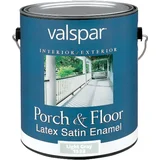
- 100% acrylic latex, satin sheen
- Explicitly rated for wood, concrete, floors, primed metal, steps, railings, porches
- Coverage: 400 sq ft/gal
- Light foot traffic: as soon as 1 hr · Regular foot traffic: 24 hrs · Recoat: 24 hrs
Pros: walkable in as little as 1 hour, useful if you need the room back fast; satin sheen hides minor floor imperfections and sanding marks better than a high-gloss enamel.
Cons: 24-hour recoat window despite being water-based — slower to recoat than both acrylic picks above it (Tough Shield and the Rust-Oleum urethane-acrylic both recoat in 4–6 hrs); coverage figure isn’t explicitly stated as per-coat or 2-coat by Valspar, so the $26.97/100 sq ft figure here is a flagged estimate, not a manufacturer-published number.
Who it’s for: households that need the floor lightly walkable the same day, even though the full 2-coat job still stretches across 2 days because of the 24-hr recoat window
Main drawback: don’t assume “water-based” means fast recoat here — at 24 hours, it recoats on the same schedule as the oil-based Diamond Brite enamel, not like the other acrylics in this table.
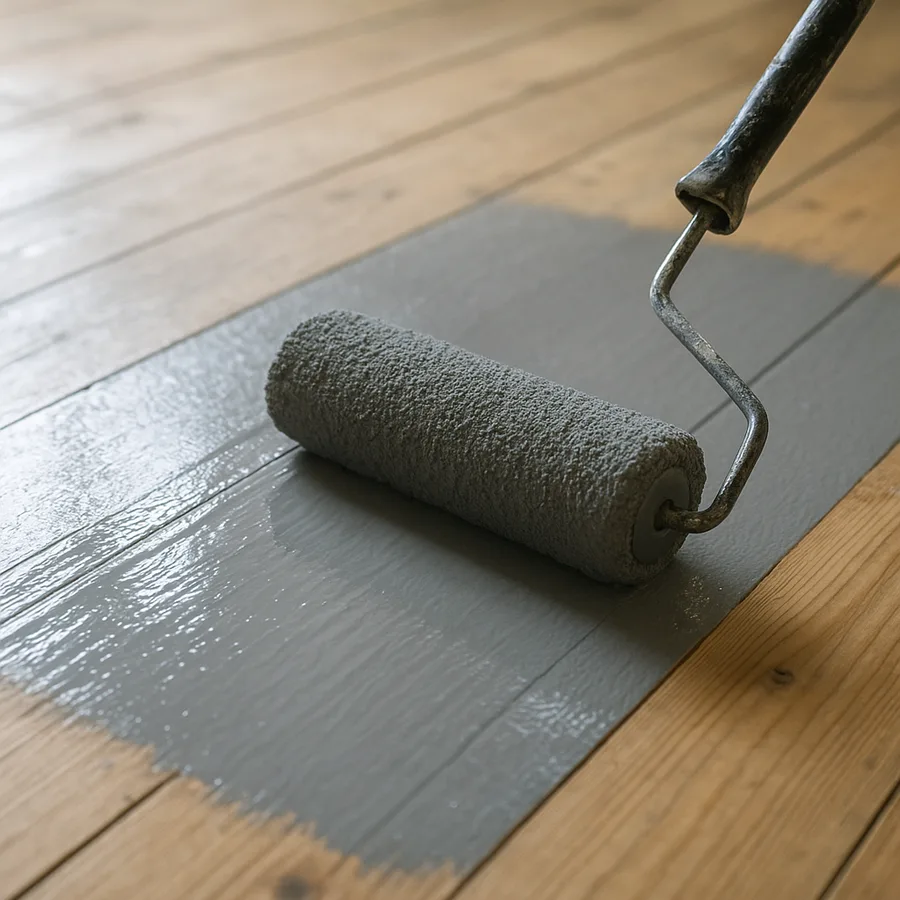
5. INSL-X Sure Step Acrylic Anti-Slip Paint — Best for Wood Stairs & Anti-Slip Floors
Price: $64.99/gallon · Check current price on Amazon
- 100% acrylic resin with built-in anti-slip aggregate texture
- Wood-rated with a bonding primer on uncoated wood (per Benjamin Moore’s own product page)
- Coverage: 80–120 sq ft/gal — far lower than the smooth enamels above
- Dry to touch: 1–2 hrs · Recoat: 8 hrs
- Light foot traffic: 24 hrs · Heavy foot traffic: 4–5 days
Pros: the only pick in this comparison with real, built-in slip resistance — every other product here is a smooth film that INSL-X’s own Tough Shield sheet admits is not slip-resistant; reasonably fast dry-to-touch (1–2 hrs) despite the textured aggregate.
Cons: by far the most expensive pick per finished square foot at $129.98/100 sq ft — nearly 6× Diamond Brite’s cost — because the textured film covers only 80–120 sq ft per gallon instead of 300–500; textured surface isn’t the smooth look most people picture for a painted wood floor; it’s a functional choice, not a cosmetic one.
Who it’s for: wood stairs, ramps, mudrooms, or entryway floors where slipping is a genuine safety concern — not a whole-room floor where cost per square foot matters and slip resistance doesn’t
Main drawback: don’t spec this for a whole living room floor by habit — at nearly 6× the cost per square foot of the cheaper enamels, it only makes sense where you actually need the traction.
6. Glidden Grab-N-Go Porch and Floor Interior/Exterior Paint — Best Budget Pick
Price: $37.47/gallon · Check current price on Amazon
- Acrylic latex paint-and-primer-in-one, water-based
- Coverage: up to 350 sq ft/gal
- Dry to touch: 2–4 hrs · Recoat: 8 hrs
Pros: cheapest gallon price of all 7 picks at $37.47; paint-and-primer-in-one formula skips the separate primer step that Tough Shield (pick #1) requires on wood.
Cons: Glidden doesn’t publish a coat count for its 350 sq ft/gal coverage figure, so the $21.41/100 sq ft cost here is a flagged 2-coat estimate, not a confirmed manufacturer number; fewer independent third-party durability write-ups exist for this specific line than for the longer-established Rust-Oleum, Valspar and INSL-X products above.
Who it’s for: budget-conscious repaints, rental units, secondary rooms, or anywhere the primer-in-one convenience and low sticker price matter more than best-in-class recoat speed
Main drawback: confirm the actual coat count on your can before trusting the per-square-foot math above — it’s our estimate, not Glidden’s own published figure.
7. Glidden Farm & Implement Alkyd Enamel — Best Value Oil-Based Enamel
Price: $41.75/gallon · Check current price on Amazon
” src=”https://cdn.woodworkingadvisor.com/2024/02/prod-b0bdpgkzn7-160-1.webp” alt=”Glidden Farm and Implement Alkyd Enamel Paint gallon can” title=”Glidden Farm and Implement Alkyd Enamel Paint gallon can” loading=”lazy” class=”wp-image-146147″ />
- Alkyd (oil-based) enamel
- Rated for wood, masonry, and metal surfaces — a farm-and-implement paint durable enough for high-traffic wood floors
- High-gloss, scrubbable finish
- Cleans up with mineral spirits or VM&P naphtha, not water
Pros: the cheapest oil-based enamel of this comparison’s two alkyd picks, and Glidden’s farm-and-implement line is formulated for the kind of daily abrasion (foot traffic, dragged equipment) that ordinary trim paint can’t take.
Cons: this is a general-purpose implement enamel rather than a paint marketed specifically as a floor product, so it doesn’t carry a published sq ft/gal coverage or recoat number the way the acrylic floor-specific picks above do — and oil-based alkyd dry times run substantially slower than water-based acrylic ones, so we won’t substitute one for the other.
Who it’s for: value-focused oil-enamel jobs on wood, concrete or masonry floors where a rugged, scrubbable high-gloss finish matters more than a floor-specific marketing label
Main drawback: read the can before starting — dry and recoat times for this farm-implement formula aren’t published the way they are for the dedicated floor-paint picks in this comparison.
How We Picked These
We did not physically buy, apply, or test any of these 7 paints for this article — no product here carries a “we tested” claim, and none should. What we did do: pulled a live Amazon buy-box price for every pick via Amazon’s Creators API on the date this article was published, cross-checked each product’s approved-substrate list against its own listing or manufacturer data sheet (this is how we caught that KILZ’s epoxy paint doesn’t list wood as an approved surface), and fetched the actual manufacturer technical data sheet — not a retailer’s summary of it — for dry time, recoat time, and coverage wherever one was publicly available. Two data sheets came directly from Benjamin Moore/INSL-X and Rust-Oleum’s own PDF asset servers; the rest came from a combination of manufacturer product pages and the products’ own Amazon listing copy. Where a number wasn’t published anywhere we could verify (Valspar’s alkyd enamel dry/recoat/coverage data for this SKU), we said so in the table instead of estimating or borrowing a number from a chemically different sibling product. Star ratings and review counts are not included anywhere in this article: Amazon’s own review data returned empty for every ASIN we checked, and we’d rather publish nothing than invent a number. This is a compared-and-researched roundup, not a hands-on-tested one — if we ever buy and physically apply a set of these paints in our own shop, we’ll say so explicitly and rewrite this section, not quietly upgrade the claim.
What to Consider When Buying Paint for a Wood Floor
These are the 8 factors that actually separated the 7 picks above once we got past gallon price — read this before you buy, since two of them (coverage and substrate rating) are exactly where the sticker price lies to you.
Formulation: Oil-Based Alkyd vs. Water-Based Acrylic vs. Epoxy
The 7 picks above split into two real camps: water-based acrylic/latex enamels (Tough Shield, the Rust-Oleum urethane-acrylic, Valspar, Sure Step, Glidden) and oil-based alkyd enamels (Diamond Brite, Valspar). Acrylics dry faster, clean up with water, and generally cost less per finished square foot in this comparison. Alkyds cure to a harder, glossier film and are what most people picture when they think “traditional porch floor paint,” but they take roughly 10–12 hours to dry to the touch and a full 24 hours before recoating — plan for a slower job. Epoxy, as sold in the 1-part retail cans most people find first, is a third category that isn’t actually a wood-floor formulation at all — see the epoxy section above. In this comparison, the acrylics run 7–5/gallon and the two alkyds run 2–9/gallon — formulation type doesn’t predict gallon price on its own, which is exactly why the coverage-adjusted cost column in the table above matters more than either.
Is the Paint Actually Rated for Wood? (Not All “Floor Paint” Is)
Check the approved-substrate list on the can or listing before buying, not after. Every genuinely wood-rated product in this comparison names wood explicitly in its own copy. KILZ’s 1-Part Epoxy does not — its listing names “porous concrete, masonry, stone, and brick” and nothing else. A lot of “floor paint” on Home Depot and Lowe’s shelves is formulated and warrantied for concrete garage and basement floors specifically; assuming any can labeled “floor paint” works on wood is the single most common mistake in this category.
Dry Time, Recoat Window, and Full Cure Are Three Different Numbers
Manufacturers publish three separate clocks and it’s easy to confuse them. Dry to touch just means the surface isn’t tacky — you still can’t walk on it or recoat it. Recoat time is how long before you can apply the second coat. Full cure (sometimes split into “light foot traffic” and “heavy foot traffic”) is how long before the floor can take furniture, rugs, or real daily use without marking the film. In this comparison those three numbers range from 1 hour to 7 days depending on the product — check all three against your actual timeline, not just the headline dry time.
Coverage Per Gallon Is Where the Real Price Difference Hides
Two paints priced within a few dollars of each other by the gallon can differ by 6× in real cost once you account for coverage. INSL-X Sure Step and INSL-X Tough Shield are both acrylic, both from the same manufacturer, and only $13 apart by the gallon — but Sure Step’s textured aggregate film covers just 80–120 sq ft/gal against Tough Shield’s 400–500, which is the entire reason Sure Step costs nearly 6× as much per 100 sq ft. Always divide by coverage, not just by gallon price, before comparing two products.
Slip Resistance for Stairs and Entryways
A painted wood floor is more slippery when wet than bare or stained wood, and every smooth enamel in this comparison says so on its own label. If the area gets wet feet, pet paws, or is a staircase, either choose a textured anti-slip product like INSL-X Sure Step (pick #5) or mix in an anti-slip additive — Rust-Oleum sells one specifically for this — into a smooth enamel before the final coat.
Priming: “Self-Priming” Claims Are Substrate-Specific
This tripped us up while researching pick #1: INSL-X Tough Shield’s own data sheet says it’s self-priming on bare concrete but explicitly calls for a separate acrylic or alkyd primer on wood floors. Rust-Oleum’s urethane-modified acrylic (pick #2), by contrast, is self-priming on properly prepped wood. Don’t assume a “self-priming” claim on the can applies to your substrate — read which surfaces it’s self-priming on, specifically.
Indoor vs. Outdoor / Porch Use
All 7 wood-rated picks here are labeled for both interior and exterior use (porches, steps, patios), which is standard for this product category. If you’re painting an exterior porch floor, factor in surface temperature limits at application (most of these products call for 50–90°F) and rain-free windows of at least 12–24 hours after each coat — both are on the data sheets, not just the can’s fine print.
VOC, Odor, and Cleanup
The acrylic/latex picks in this table are all under 100 g/L VOC and clean up with soap and water. The two oil-based alkyd picks (Diamond Brite, Valspar) need mineral spirits for cleanup and carry a stronger odor during application and cure — a real factor if you’re painting an occupied interior room rather than a porch with airflow.
How to Paint a Wood Floor
This is the short version covering surface prep and coat sequencing for any of the 7 picks above; for a deeper room-by-room walkthrough see our full how to paint a hardwood floor guide.
- Clear the room and check the existing finish. Sprinkle water on bare wood — if it beads instead of absorbing, a sealer or wax is still on the surface and needs to come off before paint will bond (this exact water-bead test is straight from Rust-Oleum’s own surface-prep instructions).
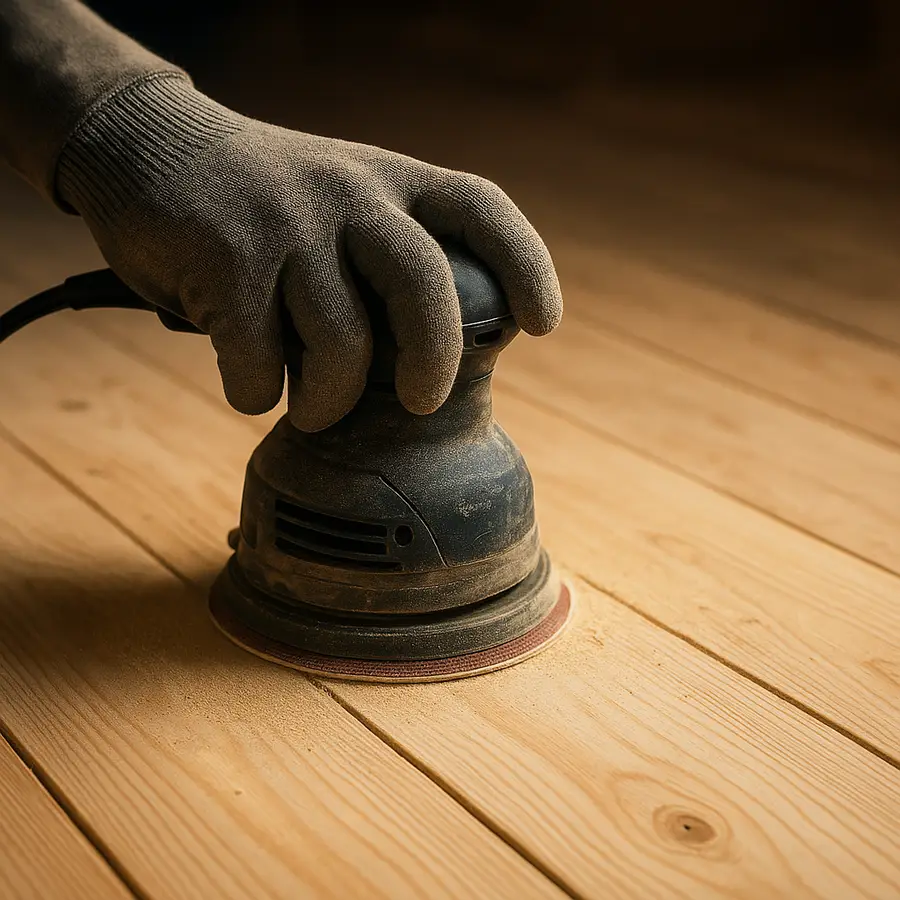
- Sand or deglaze. A previously finished floor needs to be scuff-sanded dull, not stripped bare, so the new paint has something to grip — our guide to belt sanders for floors compares rental vs. owning a sander for exactly this job.
- Vacuum and tack-cloth the dust. Any dust left behind shows up as texture under the first coat.
- Prime if your specific product calls for it on wood. If your pick needs a separate primer, see our wood primer and undercoat comparison for real coverage and dry-time data on that step too, and check the substrate-specific instruction from the section above — some of these picks are self-priming on wood, some aren’t.
- Cut in the edges first, then roll or brush the field coat in the direction of the grain, back-brushing to avoid lap marks.
- Apply the first coat and respect the manufacturer’s recoat window — recoating too early (before the stated recoat time) or waiting too long past it can both hurt adhesion between coats.
- Apply the second coat. Every pick in this table is designed and rated for a 2-coat application, not one.
- Let the floor hit its published “full cure” or “heavy foot traffic” time before moving furniture or rugs back — that’s the number in the far-right cure column of the table above, and it’s routinely days longer than the dry-to-touch time. Once it’s cured, stick to a non-toxic wood floor cleaner rather than a harsh degreaser, which can dull or strip a fresh paint film.
Frequently Asked Questions
What is the best paint for a wood floor?
Based on the manufacturer coverage, cure-time and price data compiled for this article, INSL-X Tough Shield Porch & Floor Coating is the best overall choice for most wood floors — a 100% acrylic enamel priced at $23.11 per 100 sq ft over two coats, with a 4–6 hour recoat window. It does require a separate primer on wood, unlike on concrete.
Is epoxy paint good for wood floors?
Not in the 1-part form most retail “epoxy floor paint” is sold as. KILZ 1-Part Epoxy, the product most people mean by the term, lists its approved substrates as porous concrete, masonry, stone and brick — wood isn’t included. A rigid single-part epoxy film doesn’t flex with a wood floor’s seasonal movement and can crack; getting epoxy onto wood safely requires a flexible primer and a true 2-part flexible epoxy system, which is a specialty product, not the standard garage-floor can.
Do you need to prime a wood floor before painting it?
It depends on the specific product. Some floor paints, like the Rust-Oleum urethane-modified acrylic in this comparison, are self-priming on properly prepped wood. Others, like INSL-X Tough Shield, are self-priming only on bare concrete and explicitly call for a separate acrylic or alkyd primer on wood. Check your product’s own instructions for wood specifically — don’t assume a general “self-priming” claim covers every substrate.
Is oil-based or latex paint better for a wood floor?
Latex (acrylic) enamels in this comparison dry and recoat faster (1–2 hours to touch, 4–6 hours to recoat for the fastest picks) and clean up with water. Oil-based alkyd enamels take longer — 10–12 hours to touch and a full 24 hours to recoat in this data — but cure to a harder, glossier traditional finish. Neither is universally “better”; it’s a real trade-off between job speed and finish characteristics.
How many coats of paint does a wood floor need?
Every product in this comparison is designed and rated by its manufacturer for a 2-coat application, and the coverage and cost-per-square-foot figures in our table are all built on that assumption. A single coat will leave thin, uneven coverage and won’t hold up to foot traffic the way the manufacturer’s own durability claims assume.
How long before you can walk on a painted wood floor?
Light foot traffic is typically safe in 24 hours across the products in this comparison, but full heavy-traffic cure — safe for furniture, rugs and normal daily use — ranges from 72 hours up to 5–7 days depending on the specific product. Check the “Full Cure” column in the comparison table above for your exact pick; moving furniture back too early is one of the most common ways a fresh floor paint job gets marked or dented.
Can you paint over a stained or varnished wood floor?
Yes, but the existing finish needs to be scuff-sanded dull first so the new paint has something to grip, and any wax or sealer needs to be fully removed — a water-bead test (sprinkle water on the surface; if it beads instead of soaking in, a barrier is still present) is a fast way to check before you start painting.
What sheen is best for a painted wood floor?
Satin is the most common sheen among the picks in this comparison (Tough Shield, Rust-Oleum’s urethane-acrylic, and Valspar are all satin) because it hides minor floor imperfections and sanding marks better than a high-gloss finish while still being washable. Diamond Brite’s oil-based enamel is sold high-gloss, which shows more surface texture but gives the harder, more traditional porch-paint look some buyers want specifically. For color direction once you’ve settled on a sheen, see our hardwood floor paint colors roundup.
Final Thoughts
If you take one number away from this comparison, make it this: coverage per gallon, not gallon price, decides what a painted wood floor actually costs. INSL-X Tough Shield Porch & Floor Coating is our #1 Best Overall pick at $23.11 per 100 sq ft with a same-weekend 4–6 hour recoat window — but if your project is a wood staircase rather than a whole room, INSL-X Sure Step’s real anti-slip texture is worth its nearly 6× higher per-square-foot cost, and if a can on the shelf says “epoxy,” check that wood is actually on its approved-surface list before you buy it.
Sponsored / affiliate links. As an Amazon Associate I earn from qualifying purchases. I may earn additional commission from eligible campaigns.