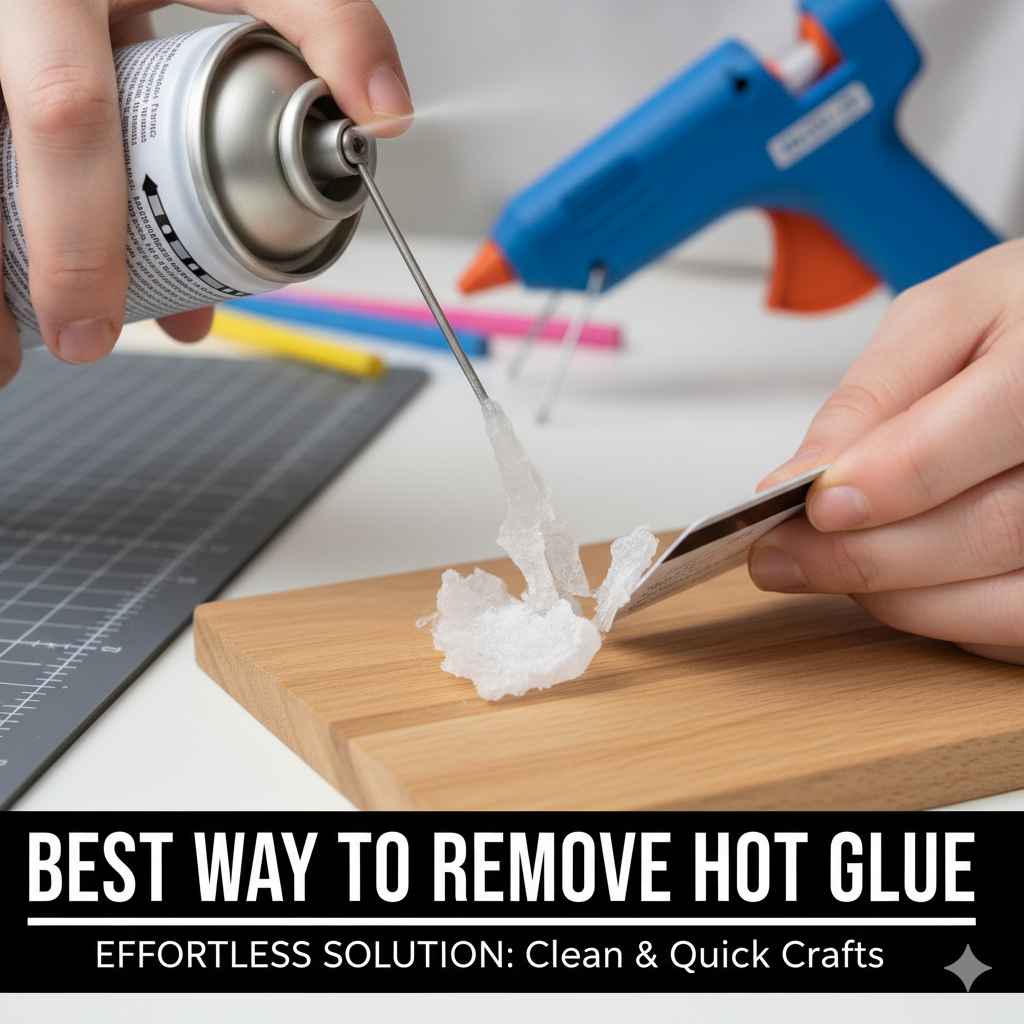
Best Way To Remove Hot Glue: Effortless Solution
The best way to remove hot glue is by using heat or a solvent. For most common surfaces, gently heating the glue with a hairdryer or iron will soften it for easy removal. For stubborn spots, rubbing alcohol or commercial removers work well. Always test in an inconspicuous area first!
Hey there, DIY enthusiasts and fellow crafters! Md Meraj here, ready to tackle a sticky situation that many of us have encountered: stubborn hot glue. Whether it’s a misplaced blob on a treasured piece of furniture, a craft project gone slightly awry, or remnants on fabric, hot glue can be a bit of a nuisance when it’s time to clean up. Don’t worry, though! I’ve learned a few tricks over the years in my workshop, and I’m excited to share the simplest, most effective ways to banish that unwanted hot glue.
We’ll walk through safe and easy methods that will leave your projects looking clean and professional, so you can get back to creating without the sticky mess!
In this guide, we’ll explore various techniques, discuss the best tools for the job, and even cover how to deal with hot glue on tricky surfaces. Get ready to say goodbye to frustrating glue residue!
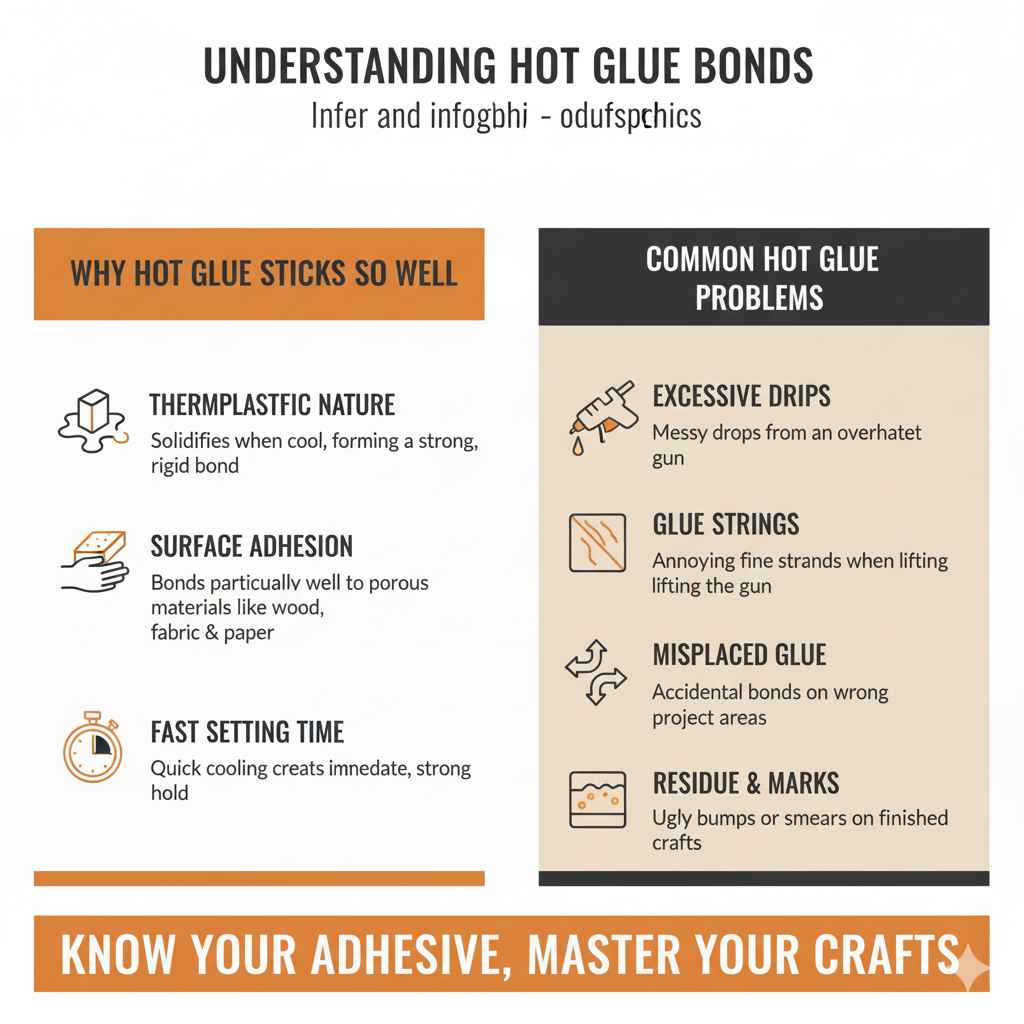
Understanding Hot Glue Bonds
Before we dive into removal, it’s helpful to understand why hot glue sticks so well and how we can break that bond. Hot glue, also known as hot melt adhesive (HMA), is a thermoplastic. This means it’s solid at room temperature, but when heated, it melts into a molten liquid that can flow and fill gaps. When it cools, it solidifies again, forming a strong bond. This thermoplastic nature is key to its removal: by applying heat, we can reverse the process and make the glue fluid again.
The strength of the bond depends on a few factors:
- Surface preparation: Clean, dust-free surfaces adhere better.
- Adhesion properties: Hot glue bonds particularly well to porous materials like wood, fabric, and paper.
- Cooling time: Allowing the glue to cool and set fully increases its holding power.
Understanding these principles helps us choose the most effective removal method. We’re essentially trying to disrupt the solidified bond by making the glue liquid or by dissolving its chemical structure.
Common Hot Glue Problems for Beginners
As beginners, we often face a few common hot glue mishaps:
- Excessive glue drips: When the glue gun gets too hot or is held too close to the project.
- Glue strings: Those annoying thin strands that fly everywhere when you lift the glue gun.
- Misplaced glue: Accidentally gluing two pieces together incorrectly.
- Glue residue: Leaving behind unsightly bumps or marks on the project surface.
- Glue on unintended surfaces: Like fabric, carpet, or finished wood.
The good news is that most of these can be easily resolved with the right approach. Let’s get to the solutions!
The Heat Method: Your First Line of Defense
This is often the easiest and least damaging method, especially for larger blobs of glue or when working with porous materials. The principle is simple: make the glue go from solid back to goo!
Using a Hairdryer
This is a fantastic, gentle approach for many surfaces, including fabric, wood, and some plastics. It’s accessible because most people have a hairdryer.
Tools You’ll Need:
- Hairdryer
- Plastic scraper, old credit card, or putty knife (nothing too sharp that will scratch)
- Clean cloths or paper towels
Step-by-Step Guide:
- Set your hairdryer to a medium or high heat setting. Hold it a few inches away from the hot glue spot.
- Heat the glue evenly. Move the hairdryer around to warm the entire area. You’ll start to see the glue soften and become pliable. Be patient; this might take a minute or two.
- Gently scrape away the softened glue. As the glue softens, use your scraper or credit card to carefully lift and peel it away from the surface. Work from the edges inward.
- Wipe away residue. Use a clean cloth or paper towel to wipe up any remaining softened glue. You might need to reheat small stubborn spots.
- Repeat if necessary. If some glue remains, repeat the heating and scraping process.
Safety Tip: Always keep the hairdryer moving to avoid overheating one spot, which could damage the underlying material, especially delicate fabrics or painted surfaces.
Using an Iron
This method is particularly effective for removing hot glue from fabric. It uses sustained, broad heat.
Tools You’ll Need:
- Household iron
- Paper bag or clean cloth (like an old dishtowel)
- Tweezers (optional, for small bits)
Step-by-Step Guide:
- Check Fabric Care Instructions: Before you begin, ensure the fabric can withstand ironing. Consult the garment’s care label.
- Set the iron to a medium-heat setting. Make sure the steam function is OFF.
- Place the paper bag or cloth over the glue spot. Position it so the glue blob is in the center of your protective layer.
- Iron over the paper bag/cloth. Gently press the iron onto the paper bag/cloth, directly over the hot glue. Hold it for about 10-15 seconds. The heat will transfer through to the glue, softening it.
- Lift and check. Carefully lift the iron and the paper bag/cloth. inspect the spot. You should see the glue transferring to the paper bag or cloth.
- Repeat with a clean section. Move the paper bag/cloth to a clean section and repeat the ironing process. Continue until most of the glue has been absorbed.
- Remove stubborn bits. If small bits remain, you might be able to pick them off with tweezers while the spot is still warm, or you can use a bit of rubbing alcohol (see solvent section) once cooled.
Important Note on Ironing: Never place the iron directly onto the hot glue, as this can melt the glue onto the iron’s soleplate, creating a bigger mess. Also, be mindful of the fabric type; delicate synthetics can melt under direct or excessive heat.
Solvent Methods: When Heat Isn’t Enough
Sometimes, heat alone won’t cut it, especially for dried-on, stubborn glue in tight spots or on surfaces where heat might cause damage. Solvents work by breaking down the adhesive’s chemical structure.
Using Rubbing Alcohol (Isopropyl Alcohol)
Rubbing alcohol is a readily available and effective solvent for hot glue. It works by slightly dissolving the adhesive, making it easier to wipe away.
Tools You’ll Need:
- Rubbing alcohol (70% or 90% isopropyl alcohol)
- Cotton balls or clean cloths
- Plastic scraper or old credit card
Step-by-Step Guide:
- Test in an inconspicuous area. This is crucial! Apply a small amount of rubbing alcohol to a hidden spot on the material you’re working with to ensure it doesn’t cause discoloration or damage. Let it sit for a few minutes, then wipe it off. If there’s no adverse reaction, proceed.
- Saturate a cotton ball or cloth with rubbing alcohol.
- Dab the alcohol onto the hot glue. Hold the saturated cotton ball or cloth on the glue spot for a minute or two. This allows the alcohol to penetrate and break down the adhesive.
- Gently scrape or rub the glue away. Use your plastic scraper or credit card to lift the softened glue. You can also rub the area with a clean cloth to help remove the loosened adhesive.
- Wipe the area clean. Use a fresh, slightly damp cloth to wipe away any alcohol residue and loosened glue.
- Repeat if necessary. For very stubborn glue, you might need to apply more alcohol and repeat the process.
Where it works best: Fabric, finished wood, glass, some plastics (always test first!).
Commercial Glue Removers
There are various commercially available products designed specifically to dissolve adhesives. These can be very effective but often require careful handling and testing.
Types of Commercial Removers:
- Citrus-based removers: Often environmentally friendly and safe for many surfaces.
- Acetone-based removers: Very strong, but can damage plastics and some finishes. Use with extreme caution.
- Specialty adhesive removers: Formulated for specific types of glue or surfaces.
Tools You’ll Need:
- Chosen commercial glue remover
- Gloves (recommended for many removers)
- Eye protection (recommended)
- Applicator (often included, or use cotton balls/cloths)
- Plastic scraper
- Clean cloths
Step-by-Step Guide:
- READ THE PRODUCT LABEL CAREFULLY. This is the most important step. Understand the safety precautions, application instructions, and which materials it’s safe for.
- Test, test, test! Apply a tiny amount to an inconspicuous area. Wait for the recommended time, then wipe and check for any damage or discoloration.
- Protect yourself. Put on gloves and eye protection if the product recommends it. Ensure good ventilation in your workspace.
- Apply the remover. Follow the product’s instructions. This might involve dabbing it on, letting it sit, or applying it to a cloth and holding it on the glue.
- Allow the solvent to work. Give it the time specified on the label.
- Scrape and wipe. As the glue loosens, use a plastic scraper to lift it away. Use clean cloths to wipe up the dissolved glue and remover.
- Clean the surface. Once the glue is removed, clean the area with a mild soap and water solution or according to the remover’s final cleanup instructions.
Authoritative Resource: The Occupational Safety and Health Administration (OSHA) provides guidance on chemical safety. Always prioritize safety when using any chemical solvent.
Special Surface Considerations
Not all surfaces are created equal, and some require a bit more care when removing hot glue.
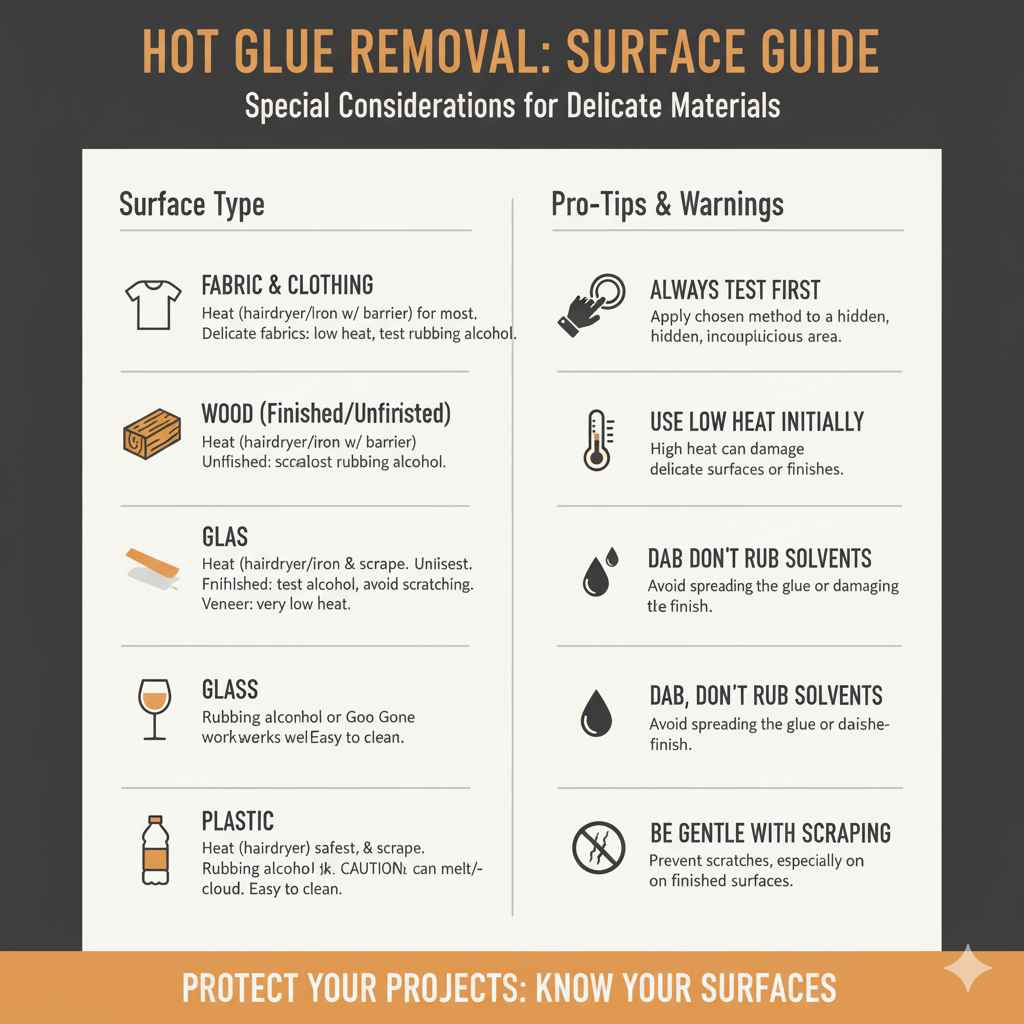
Hot Glue on Fabric and Clothing
Fabric is probably the most common place we find unwanted hot glue. Heat methods are usually your best bet here.
- Washable fabrics: For most clothing, the iron and paper bag method (described above) is excellent. After removing the bulk, you might need to pre-treat any remaining stain with a laundry stain remover before washing as usual.
- Delicate fabrics: For silks, lace, or very fine materials, use a hairdryer on a low heat setting first. If that doesn’t work, a very gentle application of rubbing alcohol on a cotton swab, dabbed only on the glue itself, might be considered—but test thoroughly in a hidden seam.
- Upholstery: Treat upholstery with care. A hairdryer is usually the safest option. For stubborn spots, try applying rubbing alcohol sparingly with a cotton swab directly to the glue and then gently scraping. Always test in an unseen area of the upholstery first.
Hot Glue on Wood
Wood can range from unfinished lumber to beautifully stained or painted surfaces. Care is needed to avoid damage.
- Unfinished or raw wood: You can often use heat from a hairdryer or iron (with a protective cloth) and then carefully scrape. Sometimes, a bit of gentle sanding can remove the last stubborn bits after the bulk is gone.
- Finished wood (stained, varnished, painted): Heat is preferred. A hairdryer on a medium setting is safest. Be cautious with the iron; ensure a thick cloth or barrier is used, and don’t leave it in one spot for too long, as excessive heat can damage the finish. Rubbing alcohol might be used sparingly on very stable finishes, but always test first. Avoid abrasive scraping that could scratch the finish.
- Veneered wood: Be extremely careful with heat and solvents, as veneers are thin and can be easily damaged or lifted. Use the lowest effective heat setting, and err on the side of caution.
Hot Glue on Plastic and Glass
- Glass: Glass is very forgiving. You can use heat from a hairdryer or even a heat gun (on a low setting, held at a distance) to soften the glue, then scrape it off. Rubbing alcohol or even Goo Gone often works wonders here. Water and soap should work for any residue.
- Most plastics: Heat from a hairdryer (medium setting) is usually safe and effective. Many plastic surfaces can also handle rubbing alcohol well. Be very cautious with stronger solvents like acetone, as they can melt or cloud many types of plastic. Always test in a hidden spot to ensure compatibility.
Tools for Safe Hot Glue Removal
Having the right tools makes all the difference. Here’s a rundown of helpful items often found around the house or easily obtainable:
| Tool | Best For | Considerations |
|---|---|---|
| Hairdryer | Fabric, wood, plastic, general use | Requires patience; can damage heat-sensitive materials if too hot or held too long. |
| Household Iron | Fabric, upholstery | Ensure steam is off; use a protective barrier to avoid melting glue onto the iron. |
| Plastic Scraper/Old Credit Card | Lifting softened glue from most surfaces | Less likely to scratch than metal scrapers. |
| Putty Knife (Plastic or Soft Metal) | Larger amounts of hardened glue | Use with caution on delicate surfaces to avoid scratching. |
| Rubbing Alcohol (Isopropyl Alcohol) | Stubborn glue, fabric, wood, glass | Always test for colorfastness/surface compatibility first. Ensure good ventilation. |
| Cotton Balls/Swabs | Applying solvents precisely | Good for dabbing solvents onto specific glue spots. |
| Clean Cloths/Paper Towels | Wiping away softened glue and residue | Have plenty on hand! |
| Tweezers | Picking off small, stubborn bits of glue | Useful for tiny-scale work. |
| Commercial Adhesive Remover | Very tough glue spots | Read label carefully; test extensively; follow safety instructions (gloves, ventilation). |
Safety First in the DIY Space
As Md Meraj, I can’t stress enough how important safety is in any DIY project, including cleanup. When working with heat tools like hairdryers or irons, always be mindful of hot surfaces. For solvents, ensure your workspace is well-ventilated to avoid inhaling fumes. Whenever using commercial removers, wear gloves and, if recommended, eye protection. It’s also good practice to keep a first-aid kit handy, just in case of minor burns or cuts.
Frequently Asked Questions About Removing Hot Glue
Here are some common questions beginners have about getting rid of hot glue:
Q1: Can I use a heat gun to remove hot glue?
A: Yes, a heat gun can be very effective, but it requires a lot of caution. Heat guns produce much higher temperatures than hairdryers. Use the lowest setting, keep the gun moving, and hold it at a significant distance to avoid scorching or melting the material underneath the glue. Always test first in an inconspicuous area.
Q2: Will hot water remove hot glue?
A: For some water-safe materials and smaller spots, very hot water can help soften hot glue. You can try soaking the item briefly or dabbing with a cloth soaked in hot water. However, it’s generally less effective than a hairdryer or steam iron for most applications and can be tricky on porous surfaces like wood or unfinished fabric.