What’s Stronger Than Super Glue? Epoxy vs CA Glue by PSI
Epoxy resin beats cyanoacrylate (CA) super glue in raw tensile strength, testing up to 6,000 psi versus roughly 4,400 psi for CA on steel, but CA still wins on speed, setting in seconds instead of epoxy’s five-minute cure. Pick the wrong one and a rigid CA bond can crack under the flex a wood joint takes over years of use. This guide compares epoxy, polyurethane, and CA by real PSI and cure time, and shows which one actually holds on woodworking joints.
Epoxy vs Super Glue vs Polyurethane: Real PSI and Cure Time Compared
Two-part epoxy is the adhesive most likely to beat super glue on raw strength, but “stronger” depends on whether the joint is rigid or flexes. The table below compares the adhesives homeowners reach for when CA glue isn’t holding.
| Adhesive Type | Tensile Strength | Cure Time | Best Wood Use |
|---|---|---|---|
| Epoxy (2-part) | Up to 6,000 psi on steel | 5 min set / 24 hr full cure | Gap-filling, rigid structural joints, wood-to-metal |
| CA / Super Glue | ~4,400 psi on steel (weaker and brittle on porous wood) | Seconds to set / 24 hr full cure | Small non-flexing repairs, quick end-grain touch-ups |
| Polyurethane (Gorilla Glue-type) | No single published PSI — trades peak strength for flexibility and impact resistance | ~24 hr full cure, expands while curing | Outdoor joints, joints that flex, damp or uneven surfaces |
| PVA Wood Glue (Titebond-type) | Rated stronger than the wood fibers themselves in a properly clamped joint | 20–60 min clamp / 24 hr full cure | Standard edge-grain and face-grain joinery |
The epoxy and CA figures above come from adhesive-industry tensile testing on steel substrates (Permabond’s strongest-adhesive comparison). Wood joints behave differently — porous grain, moisture, and flex all change the outcome — which is why the “best wood use” column matters more than the raw psi number for most shop repairs.
Best Epoxy Pick For Gap-Filling Repairs
 |
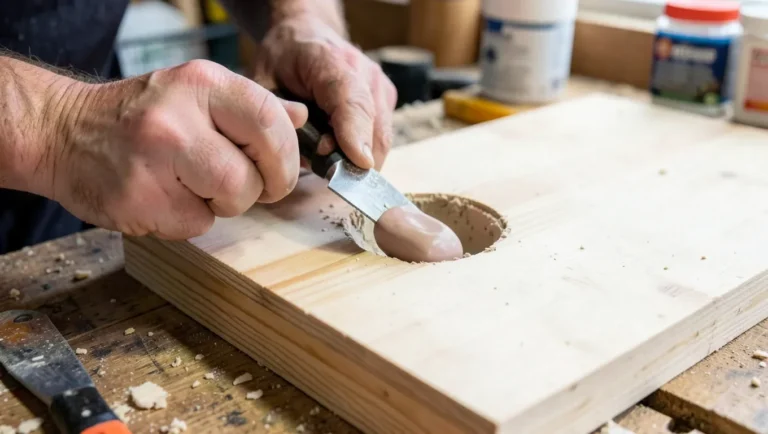
Gorilla 2 Part Epoxy, 0.85 oz – $5.97 A 5-minute two-part epoxy sized for exactly the gap-filling and dissimilar-material repairs the comparison table above says epoxy wins — a stripped screw hole, a cracked chair rail, or bonding wood to metal hardware.
|
As an Amazon Associate we earn from qualifying purchases.
Is Epoxy Really Stronger Than Super Glue?
Epoxy is a two-part adhesive made of a resin and a hardener that cure through a chemical reaction rather than by drying or evaporating solvent. That reaction is what lets it outperform CA glue on rigid joints: epoxy fills gaps CA can’t bridge, bonds dissimilar materials like wood to metal or stone, and keeps working at temperatures that make CA brittle.
The tradeoff is time and mess. CA sets in seconds with no mixing; epoxy needs measuring, mixing, and a five-minute-or-longer open time before it grips. For a quick end-grain touch-up, CA still wins on convenience even though epoxy wins on the strength spec sheet.
What About Polyurethane (Gorilla Glue) or Regular Wood Glue?
Polyurethane adhesives like original Gorilla Glue don’t publish a single headline PSI number the way epoxy manufacturers do, because their selling point isn’t peak tensile strength — it’s flexibility and gap-tolerance. Polyurethane expands slightly as it cures, which helps it grab an uneven or slightly damp surface that would starve a CA bond. For a full side-by-side on set time, mess, and which wins where, see our Gorilla Glue vs. Super Glue comparison.
Standard PVA wood glue (the Titebond family) isn’t trying to beat super glue at all — it’s formulated to soak into porous wood fiber on both sides of a joint, which is exactly what CA struggles with. In a clean, tight-fitting edge-grain joint, PVA glue often outperforms both CA and epoxy because the wood itself fails before the glue line does. Our wood glue buying guide covers which PVA formula to buy for indoor, outdoor, and food-safe projects.
Why CA Super Glue Struggles on Porous Wood
Cyanoacrylate cures by reacting with trace surface moisture, which is why it sets almost instantly on smooth, non-porous materials like metal or hard plastic. Wood is porous: CA wicks into the open grain, and a joint that soaks up too much adhesive can end up starved of the thin film CA actually needs to bond. It also cures rigid and brittle, so a wood joint that flexes under normal use — a drawer front, a chair rail, anything that sees repeated stress — can crack a CA bond even though the initial hold felt solid.
📊 Two-part epoxy can test up to 6,000 psi in tensile/shear strength on steel versus roughly 4,400 psi for cyanoacrylate — Source: Permabond, Strongest Adhesive Comparison
If your real question is CA glue versus standard wood glue rather than CA versus epoxy, our CA glue vs wood glue breakdown covers that comparison specifically, including which wins on porous edge-grain joints.
Which Adhesive Should You Use for Each Woodworking Joint?
Match the adhesive to the joint type, not just to whichever bottle is closest on the shelf:
- End grain or a gap that doesn’t close tight: epoxy. End grain is too porous for PVA glue to build real strength, and epoxy fills the gap instead of just wicking into it.
- Standard edge-grain or face-grain glue-ups: PVA wood glue. It’s formulated for exactly this joint and usually outperforms both CA and epoxy here.
- Bonding wood to metal, glass, or stone hardware: epoxy. See our best glues for gluing wood to metal comparison for specific picks.
- Outdoor joints or anything that gets damp: polyurethane or a Type I waterproof PVA — both tolerate moisture during cure better than CA or standard PVA.
- A quick, small, non-structural repair: CA glue with an accelerator, accepting that it’s a stopgap rather than a permanent structural fix.
For a full ranked comparison across every common wood-to-wood glue with published PSI numbers, our strongest wood glue comparison goes deeper than the epoxy-vs-CA focus here.
“Our shop rule after enough failed repairs: if the joint will ever flex — a drawer front, an outdoor bench, anything that gets sat on or leaned against — polyurethane’s slight give beats epoxy’s rigidity, even though epoxy wins on paper strength. Epoxy is for joints that need to stay perfectly still.”
How to Get Maximum Strength From Any Wood Adhesive
- Clean both surfaces: remove dust, grease, and old finish with a rag and mineral spirits or rubbing alcohol before applying any adhesive.
- Dry-fit the joint first: confirm a tight fit with clamps and no glue, since no adhesive on this list fixes a poorly cut joint.
- Apply a thin, even layer: a thick glob doesn’t cure as reliably as a thin film, especially with CA and epoxy.
- Clamp to the correct pressure and time: follow the manufacturer’s clamp time, not a guess — PVA typically needs 20 to 60 minutes of clamp pressure even though full cure takes 24 hours.
- Keep the joint dry during cure: moisture during the curing window weakens CA and standard PVA bonds significantly.
Frequently Asked Questions
What glue is stronger than super glue?
Epoxy is the most common answer, testing up to roughly 6,000 psi versus CA’s approximately 4,400 psi on steel. Polyurethane (Gorilla Glue-type) adhesives don’t publish a comparable PSI figure but outperform CA on flexible or damp joints. Choose based on whether the joint is rigid (epoxy) or needs to flex or tolerate moisture (polyurethane).
Is Gorilla Glue stronger than super glue?
Gorilla Glue (polyurethane) isn’t necessarily stronger in raw tensile terms, but it holds up better on joints that flex, that aren’t perfectly dry, or that need gap-filling as the glue expands during cure. Super glue sets faster and is easier to apply precisely. See our full Gorilla Glue vs. Super Glue comparison for a complete breakdown.
Is wood glue stronger than super glue for woodworking joints?
Yes, in a properly clamped edge-grain or face-grain joint, standard PVA wood glue usually outperforms super glue because it’s formulated to soak into and bond with porous wood fiber, while CA glue is formulated for fast bonds on non-porous materials and can starve or wick unevenly into open wood grain.
Can super glue be improved for stronger bonds on wood?
Yes, to a point. A CA accelerator speeds and firms up the cure, and surface-insensitive or “wood-formula” CA glues are made to perform better on porous material than standard CA. Neither turns CA into a substitute for epoxy or PVA on a joint that will flex or bear real structural load.
Conclusion
Epoxy is the straightforward answer to “what’s stronger than super glue” on raw tensile strength, but the honest answer depends on the joint: epoxy for rigid, gap-filling, or mixed-material bonds; polyurethane for anything that flexes or gets damp; and standard PVA wood glue for ordinary edge-grain joinery, where it often beats both. Match the adhesive to the joint first, and the strength numbers take care of themselves.
Sponsored / affiliate links. As an Amazon Associate I earn from qualifying purchases. I may earn additional commission from eligible campaigns.