Can Bunnies Eat Cherry Tomatoes? A Proven Danger
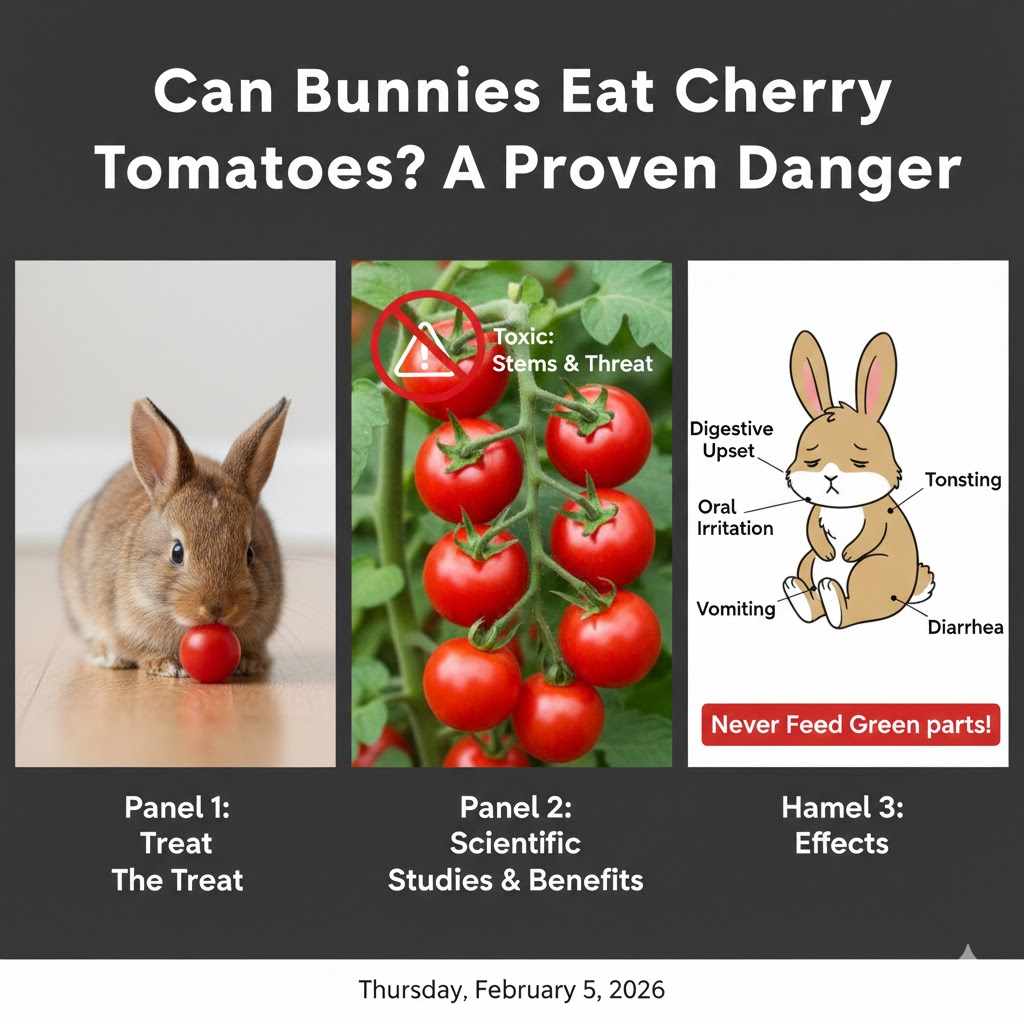
No, bunnies should not eat cherry tomatoes. While the ripe red fruit is not toxic, it is too high in sugar and acid for a rabbit’s sensitive digestive system. More importantly, all green parts of the tomato plant—the leaves, stems, and unripe fruit—are poisonous to rabbits and can cause serious harm.
You’re enjoying a fresh salad, and you see your bunny watching you with those big, curious eyes. You pop a sweet cherry tomato in your mouth and wonder, “Can I share this with my furry friend?” It’s a common question for loving rabbit owners who want to give their pets a special treat. You see vegetables as healthy, so it feels natural to want to share.
But when it comes to a rabbit’s delicate digestion, not all veggies are created equal. The world of safe and unsafe foods can be confusing, and giving your bunny the wrong thing can lead to serious health problems. Don’t worry, though. We’re here to clear up the confusion about cherry tomatoes once and for all. This guide will give you a clear, simple answer and show you exactly what your rabbit needs to stay happy and healthy.
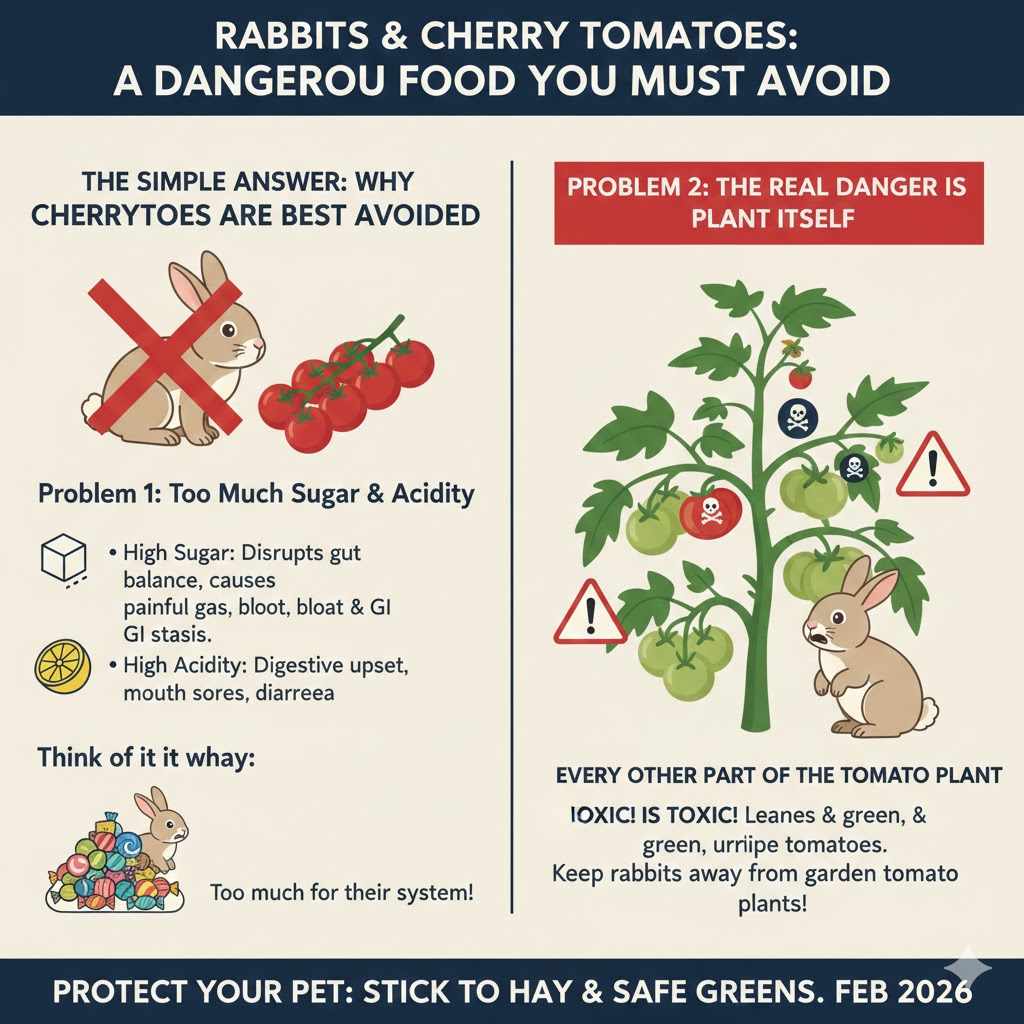
The Simple Answer: Why Cherry Tomatoes Are Best Avoided
Let’s get straight to the point: It’s best to keep cherry tomatoes away from your rabbit. While a tiny piece of the ripe, red fruit itself isn’t likely to cause immediate poisoning, it’s not a healthy choice and comes with significant risks. There are two main problems with the tomato fruit and a much bigger danger lurking in the rest of the plant.
Problem 1: Too Much Sugar and Acidity
Rabbits have a digestive system designed to break down high-fiber, low-sugar foods like hay. The delicate balance of good bacteria in their gut can be easily upset. Cherry tomatoes, while tasting tart to us, are full of sugar and acid from a rabbit’s perspective.
- High Sugar Content: Sugary foods can cause the wrong kind of bacteria to overgrow in a rabbit’s cecum (a part of their digestive tract). This can lead to painful gas, bloating, and a life-threatening condition called GI stasis.
- High Acidity: The acidic nature of tomatoes can cause digestive upset, mouth sores, or diarrhea. For a small animal like a rabbit, even mild diarrhea can quickly lead to dangerous dehydration.
Think of it this way: for a tiny bunny, eating a sugary cherry tomato is like a person eating a whole bag of candy. It’s just too much for their system to handle properly.
Problem 2: The Real Danger is the Plant Itself
The biggest reason to keep tomatoes away from your rabbit has nothing to do with the red fruit. Every other part of the tomato plant is toxic. This includes the leaves, stems, vines, and even the green, unripe tomatoes. If you grow tomatoes in your garden, it’s critical to ensure your rabbit cannot access them.
Understanding the Hidden Toxin: Solanine
The danger in tomato plants comes from a class of chemical compounds called glycoalkaloids. In tomatoes, the primary toxic compound is known as tomatine, which is very similar to solanine, the toxin found in green potatoes and other nightshade plants. These compounds are a natural defense mechanism for the plant, designed to stop insects and animals from eating them.
While tomatine is present in all parts of the plant, its concentration is highest in the green parts. As the fruit ripens to red, the tomatine levels decrease dramatically, which is why the ripe fruit is considered non-toxic. However, the leaves and stems remain poisonous throughout the plant’s life.
According to information from educational resources like the Cornell University College of Agriculture and Life Sciences, while human poisoning from tomato leaves is rare due to the large quantities one would need to consume, the risk is much higher for a small herbivore like a rabbit.
What Parts of the Tomato Plant are Toxic?
To make it perfectly clear, here is a breakdown of the tomato plant and the risk each part poses to your bunny.
| Part of the Plant | Toxicity Level for Rabbits | Primary Concern |
|---|---|---|
| Leaves | Highly Toxic | Contains high levels of tomatine/solanine. |
| Stems & Vines | Highly Toxic | Contains high levels of tomatine/solanine. |
| Flowers | Toxic | Part of the green plant; contains tomatine. |
| Unripe (Green) Fruit | Toxic | Contains tomatine that has not yet broken down. |
| Ripe (Red) Fruit | Non-Toxic, but Unhealthy | High in sugar and acid; can cause digestive upset. |
Signs of Tomato Plant Poisoning in Rabbits
If you suspect your rabbit has nibbled on a tomato plant, you must act quickly. Knowing the signs of solanine or tomatine poisoning can help you get them the care they need. Symptoms can appear within a few hours.
Look for the following warning signs:
- Extreme tiredness or lethargy
- Loss of appetite and refusal to eat
- Abdominal pain (your bunny might be hunched over or grinding its teeth)
- Diarrhea or soft stools
- Vomiting (though this is very rare in rabbits)
- Weakness or difficulty moving
- Confusion or changes in behavior
- Slowed heart rate
If you notice any of these signs, it’s an emergency. Call your veterinarian or an emergency animal hospital immediately.
What To Do if Your Bunny Eats Tomato or the Plant
Seeing your pet eat something potentially harmful is scary. The most important thing is to act calmly and quickly. Follow these steps if you find your bunny has eaten part of a cherry tomato or the plant.
- Remove Your Rabbit from the Area: Immediately get your bunny away from the plant or any remaining pieces of tomato to prevent them from eating more.
- Assess What They Ate: Try to figure out what part of the plant they ate and how much. Did they have a bite of a ripe red tomato, or did they chew on a leaf or stem? This information will be extremely helpful for your vet. Don’t stress if you’re not sure, but any details help.
- Do Not Induce Vomiting: Rabbits are physically unable to vomit. Never try to make your rabbit throw up, as this can cause serious injury or aspiration.
- Call Your Vet Immediately: This is the most crucial step. Call your rabbit-savvy vet or the nearest emergency animal clinic right away. Tell them your rabbit’s breed, age, and size, and explain what they ate. Follow their instructions exactly. They may ask you to monitor your bunny at home or tell you to bring them in for an examination.
Having a vet who specializes in “exotics” or small animals is important for rabbit owners. If you don’t have one, resources like the House Rabbit Society’s veterinarian listings can help you find a qualified professional in your area.
Healthy and Safe Alternatives Your Bunny Will Love
Now that we know cherry tomatoes are off the menu, let’s talk about all the delicious and healthy treats you can give your bunny! A rabbit’s diet should consist of about 80% high-quality grass hay (like Timothy or Orchard hay). The rest should be a small amount of high-quality pellets and a daily serving of fresh, leafy greens.
Vegetable treats should be given in moderation. Here are some excellent choices that are safe and beneficial for your rabbit’s health.
Safe Leafy Greens for Daily Feeding
These should make up the bulk of your rabbit’s fresh food portion. Offer a variety of at least three different greens per day. A good serving size is about 1 packed cup per 2 pounds of body weight.
- Romaine Lettuce (not Iceberg, which has little nutritional value)
- Red or Green Leaf Lettuce
- Arugula
- Cilantro
- Parsley (use sparingly if your rabbit has kidney issues)
- Dandelion Greens
- Mint
- Basil
- Bok Choy
- Carrot Tops
Occasional Treats (A Few Times a Week)
These vegetables and fruits are higher in sugar or starches, so they should be offered as small treats only. Think of a portion size about the tip of your thumb, just a few times a week.
| Safe Veggie Treats | Safe Fruit Treats (Very High Sugar) |
|---|---|
| Bell Peppers (any color, no seeds or stem) | Apple (no seeds or core) |
| Broccoli (stems and leaves, use sparingly to avoid gas) | Banana (a tiny slice is plenty) |
| Zucchini or Yellow Squash | Berries (strawberries, blueberries, raspberries) |
| Cucumber | Peach (no pit) |
| Carrots (high in sugar, not a staple food!) | Pineapple (no skin or core) |
When introducing any new food, always start with a very small amount to see how your rabbit’s digestive system reacts. Wait 24 hours before offering more. If you see soft stools, stop feeding that food.
Conclusion: Prioritizing Your Bunny’s Health
So, can bunnies eat cherry tomatoes? The answer is a firm but caring “no.” While a bite of the ripe red fruit might not cause a catastrophe, the risks associated with the high sugar content and, more importantly, the poisonous nature of the tomato plant itself, make it a food to avoid entirely. It’s simply not worth the danger to your beloved pet’s health.
Being a great rabbit owner means understanding their unique dietary needs. Your bunny relies on you to provide a safe environment and a healthy diet based on unlimited hay, a small portion of pellets, and a daily serving of safe leafy greens. By skipping the tomatoes and offering delicious, rabbit-appropriate alternatives instead, you are making the best choice for a long, happy, and healthy life with your furry companion.
Frequently Asked Questions (FAQ)
1. Can my bunny eat just a tiny piece of a ripe red cherry tomato?
While a very small bite of ripe tomato fruit is not toxic, it’s still not recommended. The high sugar and acid can upset their sensitive stomach, potentially leading to gas or diarrhea. There are many healthier and safer treat options available that your bunny will enjoy just as much.
2. Are red cherry tomatoes safer for bunnies than green ones?
Yes, significantly. Ripe red tomatoes have very low levels of the toxic compound tomatine. Unripe green tomatoes have much higher levels and are poisonous to rabbits. However, even red tomatoes are unhealthy due to their sugar content. All green parts of the plant (leaves, stems) are always toxic.
3. Does this apply to all types of tomatoes, not just cherry tomatoes?
Yes. The rules are the same for all varieties of tomatoes, including Roma, beefsteak, and heirloom types. The fruit is too sugary and acidic, and the plant itself (leaves, stems, vines, and unripe fruit) is toxic to rabbits due to its solanine/tomatine content.
4. My rabbit ate a tomato leaf from my garden. What should I do?
This is an emergency. Immediately remove your rabbit from the garden and call your veterinarian or an emergency animal hospital. Tell them what happened and follow their professional advice. Do not wait for symptoms to appear, as early intervention is key.
5. Are cooked tomatoes or tomato sauce safe for rabbits?
No. Cooking does not eliminate the problems of high sugar and acidity. Furthermore, tomato sauces and other processed tomato products often contain other ingredients that are harmful to rabbits, such as salt, sugar, onions, and garlic (which are highly toxic).
6. What are the absolute best treats for a rabbit?
The best treats are healthy and offered in moderation. Small pieces of safe vegetables like bell pepper or cucumber are good choices. For a special treat, a tiny piece of fruit like a blueberry or a slice of apple (no seeds) is okay once or twice a week. Ultimately, the best “treat” you can give your bunny is a fresh handful of their favorite hay or leafy greens like cilantro or romaine lettuce.