How to Drill Your Own Well: Permits, Method, and When You Need a Pro
Drilling your own well is legally possible in many rural areas for a shallow, hand-driven well point, but check your state and county rules before you dig. Most states require a licensed driller and a permit for any well used as a potable (drinking) water source, and many require permits even for irrigation-only wells. DIY is realistic for a shallow well point in sandy or gravelly soil down to roughly 30 feet; anything deeper, or any well feeding a home’s drinking water, is a job for a licensed driller with the right rig and required water testing.
Hey there, fellow DIYers, Md Meraj here. Before any digging starts, call 811 (the national utility-locating hotline) so buried gas, electric, and water lines get marked. Then check with your county health department or extension office. They can tell you the required setback distance from septic systems and property lines (commonly 50-100 feet, but this varies by state), and whether your groundwater depth and soil type even make a DIY well point realistic where you live.
Planning Your Well Project
FOR A SHALLOW DIY WELL POINT
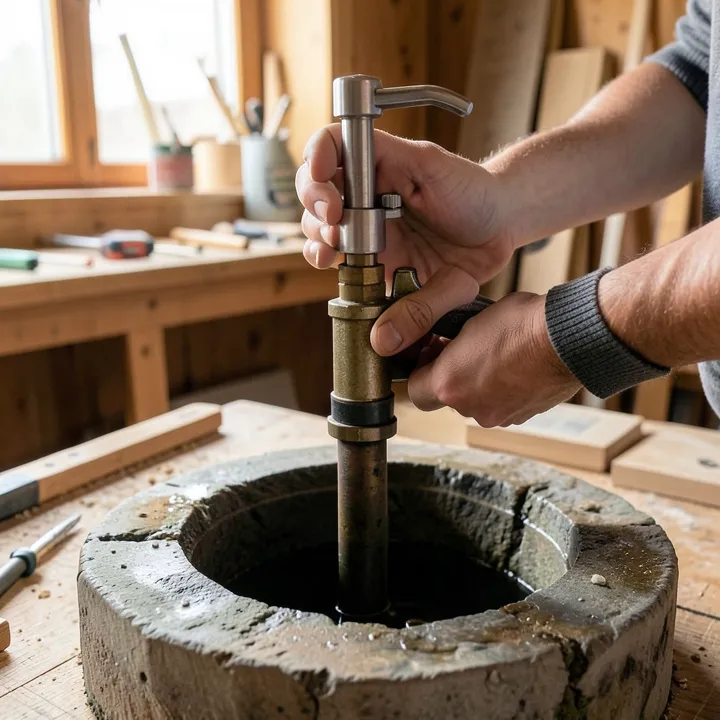 |
Stainless Manual Well Hand Pump – $38.99 A non-electric hand pump that’s a practical match for a shallow, hand-driven well point once it’s developed and tested.
|
Permits and Regulations Come First
This is the step people skip and regret. An unpermitted well can create real problems at resale, and if it’s ever used for drinking water without proper testing, a genuine health risk. Your county health department or state department of environmental quality is the right first call, not the last one.
Choosing the Right Location
Keep well distance well clear of septic tanks, drain fields, livestock areas, and property lines per your local code. Higher ground away from runoff pooling is safer than a low spot that collects surface water, which can carry contaminants into a shallow well.
Assessing Groundwater Availability
Neighbors’ well logs (often on file with your state’s water resources agency) and local well drillers can tell you realistic depth and yield for your area before you invest in equipment. This single phone call saves a lot of guesswork.
Equipment for a DIY Well Point
- Driven well point: a pointed screen assembly attached to sections of pipe, driven into the ground with a sledgehammer or a drive weight. Realistic only in sandy, gravelly, or loose soil, not clay or rock.
- Hand auger: works for very shallow test holes or soft ground, but is slow and impractical past a modest depth.
- PVC well casing: protects the borehole and keeps it from collapsing once you’re past the well point stage.
- A hand or shallow-well pump to actually draw water once the point is in and developed.
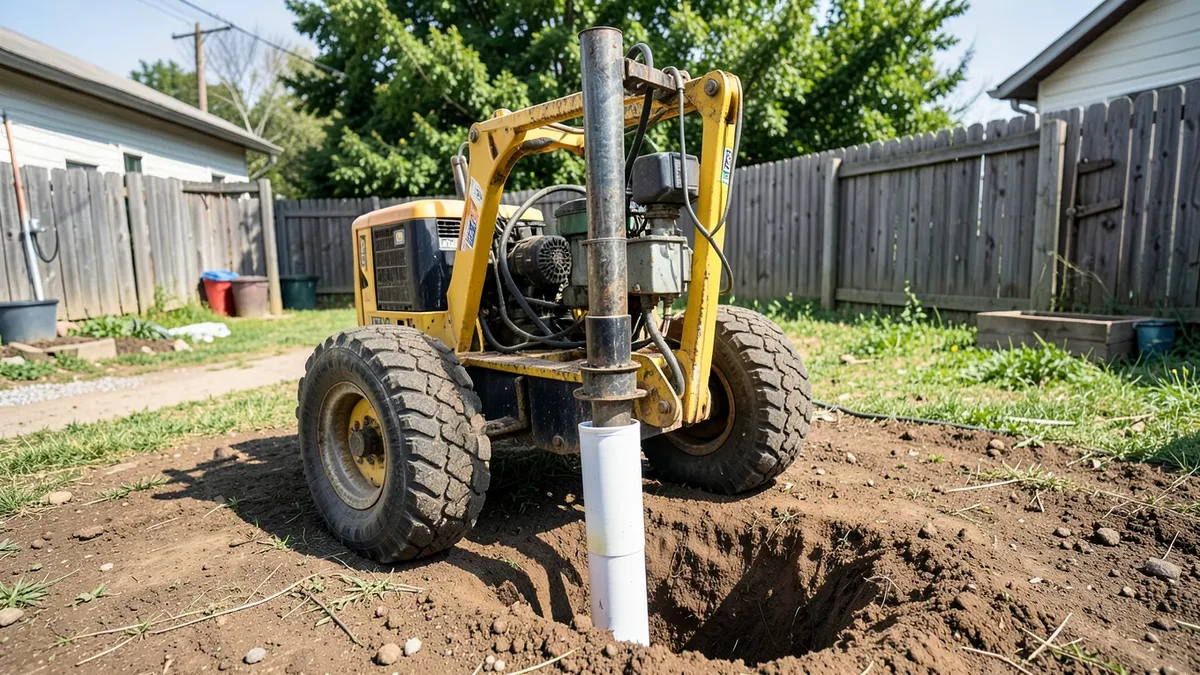
A gas- or engine-powered rotary or auger drilling rig can go much deeper, but these are genuinely industrial equipment, typically rented with an operator or requiring real training to run safely. For most homeowners, “DIY” realistically means the well-point method above, not operating a full drilling rig solo.
The Well Point Process, Step by Step
- Confirm utilities are marked (call 811) and permits are in hand before any digging.
- Assemble the well point and pipe sections per the manufacturer’s instructions, threading each section as you go.
- Drive the point straight down using a drive cap and sledgehammer or mechanical driver, checking regularly that it’s staying vertical.
- Add pipe sections as the point goes deeper, continuing until you hit the water table plus enough depth for a stable water column (a local driller or extension office can tell you the typical water table depth for your area).
If you hit rock, dense clay, or the point won’t advance, stop. That’s the point where a well-point method has reached its limit, and continuing risks damaging the point or the pipe. That’s a sign you need a professional rig, not more force.
Well Development and Water Testing
Once the point is in, “developing” the well (pumping repeatedly to clear fine sediment) gets you cleaner-flowing water. This can take from a few hours to a couple of days depending on soil. After that, water testing is not optional for anything used as drinking water. Have it tested by a certified lab for bacteria (total coliform and E. coli), nitrates, and any regionally common contaminants (arsenic and other minerals are a real concern in some areas). Test again annually even after the initial pass comes back clean.
Installing a Pump and Connecting to Plumbing
A shallow well point (under about 25 feet to water) can use a simple shallow-well jet pump or even a manual hand pump. Deeper wells need a submersible pump, which is a job most homeowners hire out since it involves electrical work at the wellhead and lowering the pump correctly into the casing. Connecting to household plumbing typically requires a pressure tank and check valve, and in most jurisdictions, a licensed plumber for the final connection to meet code.
Troubleshooting Common Well Issues
- Low or dropping yield: often sediment clogging the screen, or a seasonally lower water table. Redeveloping the well can help; a persistent drop across seasons may mean the point needs to go deeper.
- Cloudy or sandy water: usually a sign the well needs more development time, or the screen has a problem letting fine particles through.
- A failed bacteria test: get guidance from your local health department before using the water at all. Shock chlorination is a common fix, but the well needs to be retested afterward to confirm it worked.
Frequently Asked Questions
Is it legal to drill your own well?
It depends entirely on your state and county. Many jurisdictions allow a homeowner to drive a shallow well point themselves but require a licensed driller and permit for any well used as a drinking water source. Check with your local health department before starting.
How deep can a DIY well point go?
Realistically up to about 25-30 feet in sandy or gravelly soil. Rock, dense clay, or a deep water table generally requires a professional drilling rig.
Do I need to test the water before drinking it?
Yes, always. A certified lab test for bacteria and nitrates at minimum is essential before using any new well as a drinking water source, and annual retesting after that.
How much does DIY well drilling save compared to hiring a professional?
A DIY well point kit costs a few hundred dollars in materials versus several thousand for a professionally drilled well, but that gap only applies to shallow well points in suitable soil. Any well needing a professional rig, deeper casing, or a submersible pump narrows that savings considerably once you factor in equipment rental and required inspections.
Sponsored / affiliate links. As an Amazon Associate I earn from qualifying purchases. I may earn additional commission from eligible campaigns.