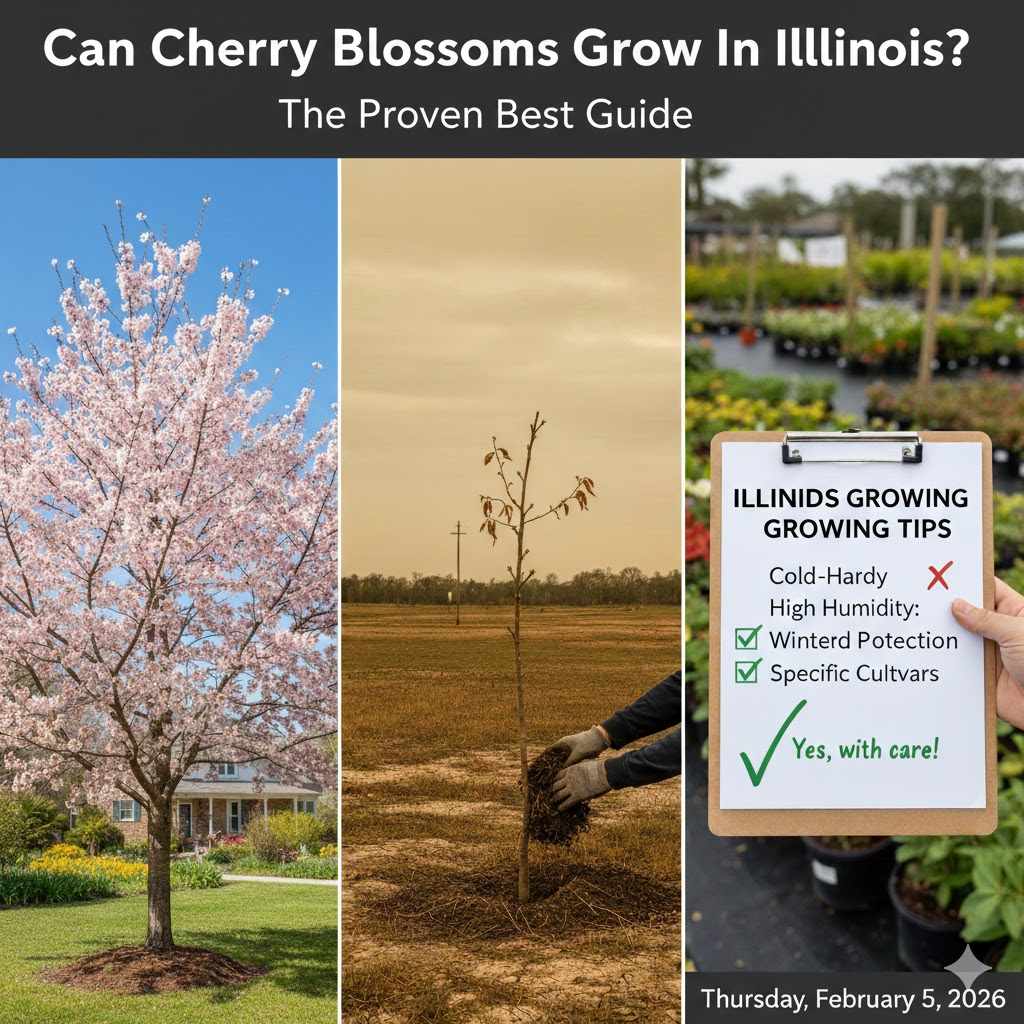
Can Cherry Blossoms Grow In Illinois The Proven Best Guide
Yes, cherry blossoms can absolutely grow in Illinois, but success depends on choosing the right cold-hardy variety. Trees like the Kwanzan, Okame, or Snow Fountains Weeping Cherry are tough enough for Illinois winters. With proper planting location and care, you can enjoy these beautiful spring blooms in your own yard.
Have you ever dreamed of seeing beautiful cherry blossoms in your own garden? Many people think these lovely pink and white flowers only grow in places with mild weather. It’s a common worry for us here in Illinois, where our winters can be pretty tough.
But I have great news for you. You can grow these stunning trees right here! It just takes a little know-how. This guide will walk you through everything, step-by-step. We will show you which trees to pick and exactly how to plant and care for them. Let’s get started and bring that spring magic to your home.
Understanding the Illinois Climate: Your First Big Step
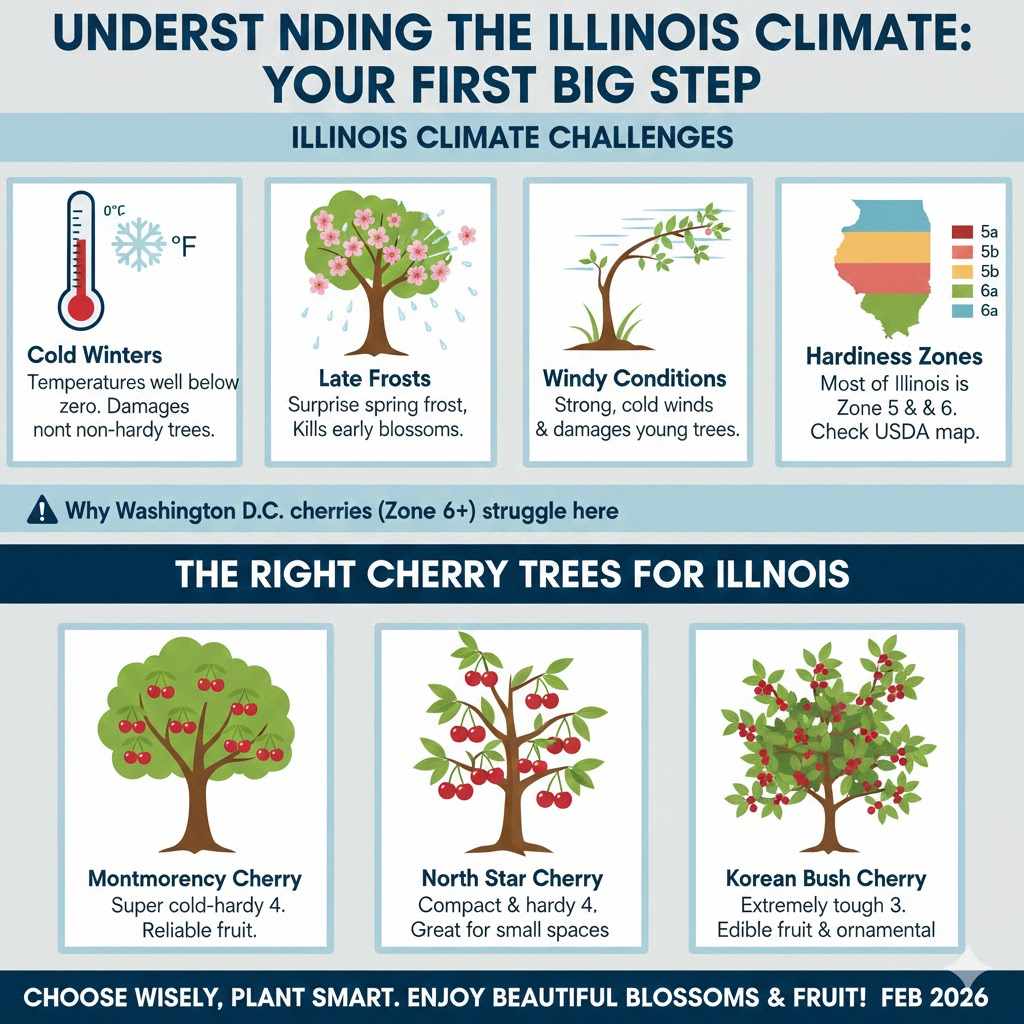
Before you can succeed, you need to understand what you’re up against. Illinois weather is the main challenge. Our state covers several USDA Plant Hardiness Zones, mostly Zones 5a, 5b, and 6a. You can check your specific zone on the USDA Plant Hardiness Zone Map. These zones tell us the average coldest temperatures in winter.
Here’s what makes it tricky for delicate trees:
- Cold Winters: Temperatures can drop well below zero, which can damage or kill trees that aren’t tough enough.
- Late Frosts: Sometimes, we get a surprise frost in late spring after the flower buds have started to form. This can ruin the blossom show for the year.
- Windy Conditions: The “Windy City” isn’t just Chicago. Strong, cold winds can dry out and damage young trees.
This is why the famous Yoshino cherry trees you see in Washington, D.C., often struggle here. They are generally rated for Zone 6 and warmer. But don’t worry! There are plenty of other beautiful varieties that are built to handle our climate.
The Secret to Success: Choosing Cold-Hardy Cherry Trees
This is the most important decision you’ll make. Picking a tree that is rated for Zone 5 is the key to having beautiful blooms year after year. Forget about the ones you see in warmer climates and focus on these proven winners for Illinois.
These trees are not just tough; they are stunning. They give you that classic cherry blossom look without the risk. Here is a table to help you compare some of the best choices for our state.
| Variety Name | Hardiness Zone | Flower Color | Mature Size (H x W) | Special Notes |
|---|---|---|---|---|
| Kwanzan Cherry | 5-9 | Showy, double pink flowers | 25-30 ft x 25-30 ft | Very popular and reliable. Blooms a bit later, helping it avoid late frosts. |
| Okame Cherry | 5-8 | Vibrant rosy-pink flowers | 20-25 ft x 20-25 ft | One of the earliest to bloom. Has nice orange-red fall color. |
| Snow Fountains Weeping Cherry | 5-8 | Pure white flowers | 8-12 ft x 6-8 ft | A beautiful weeping form, perfect for smaller gardens. Very graceful. |
| Pink Flair® Cherry | 4-8 | Light pink flowers | 20-25 ft x 15 ft | Extremely cold-hardy. Its later bloom time is excellent for avoiding frost. |
| Prairifire Crabapple | 4-8 | Magenta-pink flowers | 15-20 ft x 15-20 ft | A fantastic look-alike! It’s a crabapple, not a true cherry, but it’s tough, disease-resistant, and has a stunning blossom display. |
A Note on Crabapples
I included the Prairifire Crabapple because it’s a nearly foolproof choice for an Illinois garden. It gives you that same breathtaking explosion of spring color but is much more forgiving of our climate and soil. If you’re nervous about trying a cherry tree, a crabapple is a wonderful and reliable alternative.
Step-by-Step Guide: Planting Your Cherry Blossom Tree for Success
Once you’ve picked out your perfect tree, it’s time to get it in the ground. Following these simple steps will give your tree the best possible start in its new home.
Find the Perfect Planting Spot
Location is everything. Look for a spot in your yard that gets:
-
- Full Sun: Your tree needs at least 6 to 8 hours of direct sunlight each day to produce the best flowers.
- Well-Drained Soil: Cherry trees hate “wet feet.” Their roots can rot if they sit in water. To test your soil, dig a hole about a foot deep and fill it with water. If it takes more than a few hours to drain, you may need to amend the soil or choose a different spot.
- Protection from Wind: If possible, plant your tree where it will have some shelter from the harshest north and west winter winds. A spot on the east side of your house can be ideal.
Room to Grow: Check the tag on your tree for its mature size. Make sure you plant it far enough away from your house, power lines, and other trees.
Know When to Plant Your Tree
Timing your planting right helps the tree get established without stress. The two best times to plant in Illinois are:
-
-
- Spring: Plant after the last chance of a hard frost has passed. This gives the tree a full growing season to establish its roots before winter.
-
Fall: Plant about 6 to 8 weeks before the ground freezes. This allows the roots to grow a bit before the tree goes dormant for the winter.
Prepare the Soil for a Happy Home
Good soil is the foundation for a healthy tree. Most Illinois soil is clay-based, which can hold too much water. You can improve it by mixing in some compost or other organic matter with the soil you dug out of the hole. This helps with drainage and adds nutrients. For detailed information on your local soil, the University of Illinois Extension has excellent resources on soil testing.
A word of caution: don’t add fertilizer to the planting hole. This can burn the young, tender roots. A layer of compost is all your new tree needs to get started.
Digging the Hole and Planting
This part is simple if you follow one key rule. Let’s get it right.
-
- Dig the right size hole: Dig your hole two to three times as wide as the tree’s root ball, but only as deep as the root ball. A wide hole gives the roots room to spread out.
- Find the root flare: Look for the spot at the base of the trunk where the roots start to branch out. This is called the root flare, and it MUST be at or slightly above ground level. Planting a tree too deep is one of the most common mistakes and can slowly kill the tree.
- Place and backfill: Gently place the tree in the center of the hole. Make sure it’s standing straight. Begin backfilling the hole with the soil you dug out (mixed with compost, if you added it). Gently pack the soil down as you go to remove air pockets.
Water deeply: Once the hole is filled, give the tree a long, deep drink of water. This helps the soil settle around the roots.
Mulch for Moisture and Protection
Mulching is a great final step. A 2-to-3-inch layer of wood mulch or bark over the planting area will:
- Hold in soil moisture so you don’t have to water as often.
- Keep the soil temperature even.
- Prevent weeds from growing.
Just remember to keep the mulch a few inches away from the tree’s trunk. Piling mulch up against the trunk (a “mulch volcano”) can trap moisture and lead to disease and rot.
Caring for Your Young Cherry Tree: The First Few Years
Your tree will need a little extra TLC for the first couple of years while it gets settled. But don’t worry, the care is simple and straightforward.
Watering: The Golden Rule
The most important job is watering. For the first two years, your tree is working hard to grow a strong root system. A good rule of thumb is to provide about one inch of water per week, either from rain or your hose.
Check the soil by sticking your finger a few inches down. If it feels dry, it’s time to water. It’s better to give the tree a long, slow soaking once a week than a little sprinkle every day. This encourages the roots to grow deep into the ground.
Fertilizing: Less Is More
Ornamental cherry trees are not heavy feeders. You probably won’t need to fertilize your tree at all, especially if you have amended your soil with compost. If your tree’s leaves look pale or its growth seems very slow after a year or two, you can apply a balanced, slow-release fertilizer in the early spring. Follow the directions on the package carefully.
Pruning for Health and Shape
Pruning keeps your tree healthy and looking its best. The best time to prune is in the late winter or very early spring while the tree is still dormant. Focus on removing:
- Dead or broken branches: These can be removed anytime you see them.
- Damaged branches: Cut off any branches that look diseased or have been damaged by storms.
- Crossing branches: If two branches are rubbing against each other, remove one of them. The rubbing can create a wound where disease can enter.
As a beginner, you don’t need to worry about complex shaping. Just focus on keeping the tree healthy and open, allowing for good air circulation through the branches.
Common Problems and Simple Solutions in Illinois
Even with the best care, you might run into a few issues. Here’s a quick guide to some common problems and how to handle them easily.
| Problem | Symptom | Simple Solution |
|---|---|---|
| Late Frost Damage | Flower buds turn brown and die before opening. | Plant later-blooming varieties like Kwanzan. If a late frost is predicted, you can try covering a small, young tree with a blanket overnight. |
| Japanese Beetles | Leaves look like skeletons (lacy) in mid-summer. | The easiest, safest method is to go out in the morning and knock them into a bucket of soapy water. They are sluggish when it’s cool. |
| Powdery Mildew | A white, dusty coating on the leaves. | Ensure your tree has good air circulation by pruning properly. Water the base of the tree, not the leaves, to keep them dry. |
| Sunscald | Bark on the trunk cracks or peels, usually on the southwest side, after winter. | Protect the trunks of young, thin-barked trees for the first few winters with a commercial tree wrap. Remove it in the spring. |
Great Alternatives That Thrive in Illinois
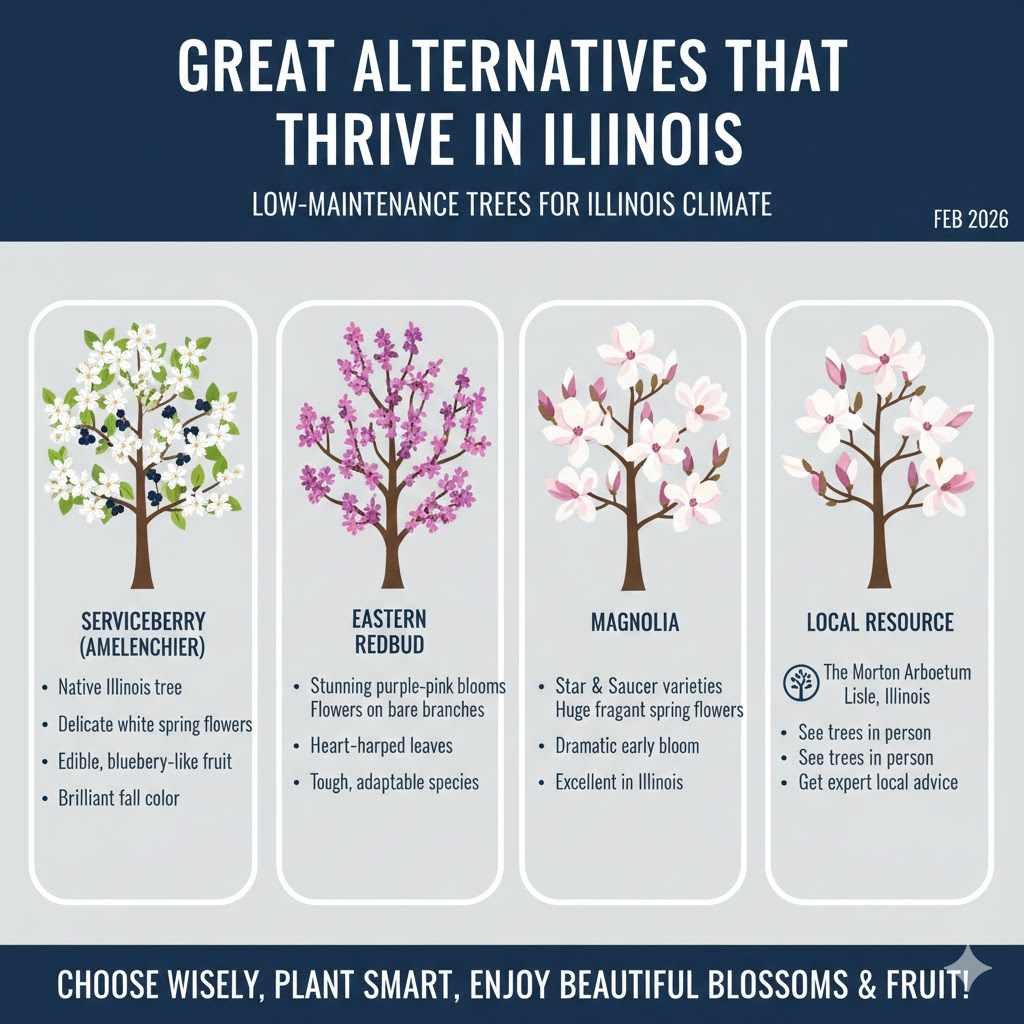
If you love the look of spring blossoms but want a tree that’s even more low-maintenance, you have some wonderful options. These trees are exceptionally well-suited to our Illinois climate and soil.
- Serviceberry (Amelanchier): A beautiful native tree with delicate white spring flowers, edible berries, and brilliant fall color.
- Eastern Redbud: Famous for its stunning purple-pink flowers that appear right on the branches before the leaves emerge.
- Magnolia: Varieties like the Star Magnolia or Saucer Magnolia offer huge, breathtaking flowers in early spring and do very well in Illinois.
Local resources like The Morton Arboretum in Lisle are fantastic places to see these trees in person and get expert advice on what will grow best in your specific area.
Frequently Asked Questions
How long does it take for a cherry blossom tree to bloom?
Most young cherry trees will start producing a good amount of flowers within 2 to 5 years of being planted. Be patient! The first couple of years, the tree is focusing its energy on growing strong roots.
Do these cherry blossom trees produce cherries?
The trees we’ve discussed are ornamental cherry trees, grown for their beautiful flowers, not their fruit. They may produce tiny, sour fruits that birds enjoy, but they are not the sweet cherries you buy at the grocery store.
What is the best month to plant a cherry tree in Illinois?
The best months are April and May in the spring, or September and October in the fall. This avoids the stress of extreme summer heat and deep winter cold while the tree is trying to get established.
Can I grow a cherry blossom tree in a pot in Illinois?
You can, but it is much more difficult. A potted tree’s roots are exposed to the cold, so it would need to be a very cold-hardy dwarf variety and the pot would need to be protected in an unheated garage over winter. Planting in the ground is the easier and safer option.
Why are my cherry tree’s leaves turning yellow?
Yellow leaves are most often a sign of a watering problem, either too much or too little. Check the soil moisture about 3-4 inches down. If it’s soggy, you’re overwatering. If it’s bone dry, it needs a deep drink.
How do I protect my cherry tree from the Illinois winter?
For the first few years, the best protection is a 3-inch layer of mulch over the root zone and a tree wrap around the trunk to prevent sunscald. Make sure the tree is well-watered going into the winter before the ground freezes.
Are cherry trees messy?
They can be a little messy for a week or two when the petals fall, creating a beautiful pink or white carpet under the tree. Most people find this so beautiful that they don’t mind the cleanup at all.
Your Dream of Spring Blossoms Is Within Reach
So, can cherry blossoms grow in Illinois? The answer is a resounding yes! It might seem like a challenge, but it’s really just about making smart choices from the very beginning. By selecting a tough, cold-hardy variety and giving it a proper home in your yard, you can make this dream a reality.
Imagine stepping outside on a crisp spring morning to see your very own tree covered in a cloud of pink or white blossoms. It’s a rewarding sight that makes every bit of effort worthwhile. Follow this guide, trust the process, and get ready to enjoy one of nature’s most beautiful displays, right in your own Illinois garden.