Can You Be Allergic to Cedar Wood? Symptoms and More
Figuring out if you have a cedar wood allergy might seem tricky. It’s a common question, and sometimes the symptoms can be hard to spot at first. Don’t worry, we’re going to break down everything simply. This will help you know if you are affected by the topic: Can You Be Allergic to Cedar Wood? Symptoms Explained. We’ll explore the signs, causes, and steps you can take. Get ready for a straightforward guide that will give you all the information you need.
What You Need to Know About Cedar Wood Allergies
Cedar wood, with its distinct aroma and rich color, is often used in furniture, construction, and even aromatherapy. However, exposure to cedar wood can trigger allergic reactions in some individuals. These reactions occur because the body mistakes the wood’s natural compounds, like the volatile oils and tiny particles, for harmful invaders.
This process sets off an immune response that manifests as various allergy symptoms. Recognizing these symptoms early on is key to managing your exposure and lessening the severity of your allergic reactions. Many people are unaware they have an allergy until they’re exposed, so knowledge is a powerful tool.
Common Signs of a Cedar Wood Allergy
The symptoms of a cedar wood allergy can vary from person to person, but many of the common reactions are similar to other airborne allergens. These can range from mild irritations to more severe reactions that require medical attention. These symptoms can appear quickly after exposure, or they may develop over a longer period with repeated contact. Pinpointing the signs and symptoms will help you take action to reduce contact and find relief.
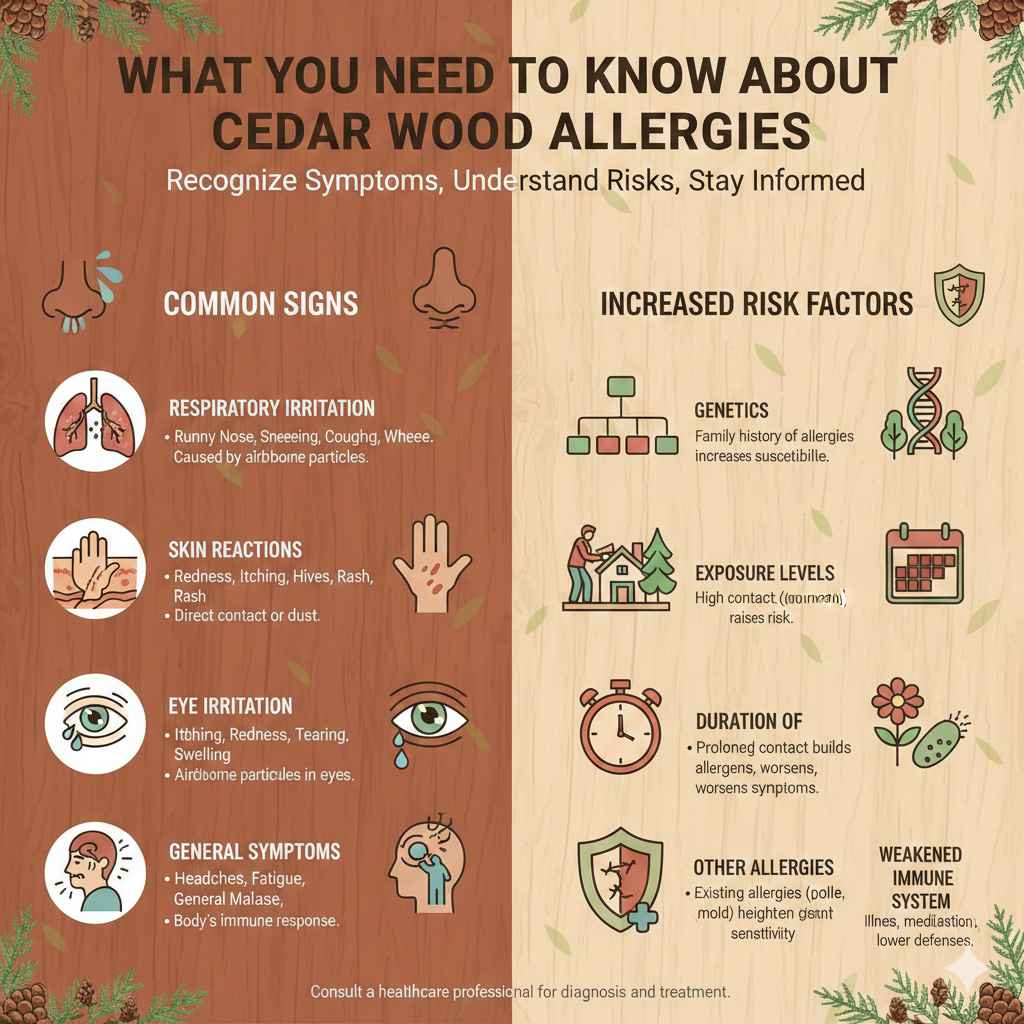
Respiratory Irritation: This is a common symptom, where the airways become inflamed. It might cause you to have a runny nose, sneezing, coughing, and wheezing. This happens because the small wood particles irritate the lining of your nose, throat, and lungs. These symptoms are similar to those of a cold or seasonal allergies, making it hard to find out what’s causing them at first.
- Skin Reactions: Direct contact with cedar wood or exposure to its dust can lead to skin reactions. Redness, itching, hives, or a rash are the most common signs. It can feel really uncomfortable, and the severity depends on how sensitive your skin is and how much you have been exposed. For some, the rash is minor, but for others, it can be severe and widespread.
- Eye Irritation: Airborne cedar wood particles can get into your eyes. This often leads to itching, redness, tearing, and swelling around your eyes. This happens as the body tries to fight off the allergens, causing the eyes to become irritated and inflamed. This can be more pronounced during times when cedar is being processed or used nearby.
- General Symptoms: Besides the more specific signs, cedar wood allergies can cause other problems. You may experience headaches, fatigue, and a general feeling of being unwell. This is the body’s overall response to the allergens, showing that your immune system is working hard. These effects can impact your daily routine and make you feel tired.
Factors That Make Cedar Wood Allergies More Likely
Several factors can increase the chances of having a reaction to cedar wood. Genetics play a part, where you may be more susceptible if other family members have allergies. High exposure levels, such as from working with cedar wood or living in areas with high cedar pollen, also raise your risk. The duration of your exposure matters as well; prolonged contact can make symptoms worse. Other allergies and a weakened immune system could also raise the risk. Understanding these factors is important for assessing your own risk and making smart decisions to lessen your exposure.
Genetics: The chance of allergies tends to run in families. If close relatives have allergies, you might be more sensitive to cedar wood. This suggests that some people are naturally more prone to developing allergic reactions due to their genetic makeup. If other allergies are common in your family, this may give you a clue.
- Exposure Levels: The more cedar wood you’re around, the more likely you are to react. This is especially true if you work with cedar on a regular basis, like in construction or woodworking. Living in areas with lots of cedar trees or using products made from cedar can boost your exposure. The amount of exposure affects how bad your reactions are.
- Duration of Exposure: The longer you’re exposed to cedar wood, the more likely you are to develop symptoms. Constant or prolonged exposure can lead to a buildup of allergens in your body, increasing the risk of allergic reactions. This also means that even brief contact can start a reaction, if you’re exposed often.
- Other Allergies: Having other allergies, like to pollen or mold, can increase your chance of reacting to cedar wood. The body’s immune system might be already on high alert, making it easier to trigger a reaction to other allergens. This can make the symptoms more severe and harder to deal with.
- Weakened Immune System: A weakened immune system can make you more vulnerable to allergies. Illness, certain medications, or other health problems can impact the immune system’s ability to respond to allergens. This can make it hard to tell the difference between what’s dangerous and what’s not, leading to more frequent or stronger allergic reactions.
Ways to Find Out If You’re Allergic
If you suspect you have a cedar wood allergy, getting a proper diagnosis is important. There are different ways a doctor can determine if you’re allergic. This process usually starts with understanding your medical history and then often involves allergy tests. A proper diagnosis can help you manage your symptoms and take steps to reduce exposure. The best approach is to consult a medical professional for accurate testing.
Skin Tests and Blood Tests
Skin tests and blood tests are the main ways to diagnose allergies. Skin tests are often done first because they are quick and give results right away. Blood tests are also an option and can be useful in certain cases. Both types of tests help identify the specific allergens causing your symptoms.
Skin Prick Test: This is a common test where a small amount of cedar extract is placed on your skin, and the skin is pricked. If you are allergic, a small, raised bump will appear at the test site. This is a quick way to find out if you react to cedar wood. The results are usually ready in about 15-20 minutes, giving you instant insight into your allergies.
Patch Test: Unlike the skin prick test, a patch test is used to identify delayed reactions. Small patches containing cedar wood extract are put on your skin, usually on your back. These patches are left in place for a few days, then taken off. Your doctor will then check for any skin reactions that might develop. This helps find out if cedar wood causes contact dermatitis or delayed reactions.
Blood Test (IgE Test): Blood tests measure the levels of specific antibodies, called IgE, in your blood. These antibodies are created by your immune system when it reacts to allergens. A blood sample is sent to a lab, where they look for IgE antibodies to cedar wood. Blood tests are used when skin tests aren’t practical.
Provocation Test: In some rare cases, a doctor may do a provocation test. This involves exposing you to a small amount of cedar wood in a controlled setting, like by breathing in cedar particles. This helps the doctor watch for reactions directly. It is typically only used when other tests aren’t clear.
When to Consult a Specialist
If you suspect you have a cedar wood allergy, it’s best to consult an allergist. An allergist is a doctor who focuses on allergies and immune system issues. They can provide an accurate diagnosis using different tests and provide guidance to manage your symptoms. They can give helpful advice on how to reduce exposure and suggest treatments to ease the discomfort.
Persistent Symptoms: If you regularly experience symptoms like sneezing, runny nose, or skin rashes when around cedar wood, it’s time to see a specialist. Don’t ignore symptoms that keep coming back or keep getting worse. A doctor can pinpoint the cause of your reactions and help you manage them effectively.
Severe Reactions: Seek medical help immediately if you experience severe symptoms, like trouble breathing or swelling. These can be signs of a serious allergic reaction, and you need to get help quickly. An allergist can give you treatment options to deal with severe reactions, such as carrying an epinephrine auto-injector.
Unclear Diagnosis: If you are unsure what causes your symptoms, get an expert opinion. An allergist has experience and equipment that help them correctly diagnose allergies. They can figure out the source of your problems and suggest ways to manage them.
Ineffective Treatments: If over-the-counter medications aren’t helping, an allergist can provide more effective treatment plans. They can prescribe stronger medications, such as antihistamines or corticosteroids, to relieve symptoms. They might also suggest allergen immunotherapy, or allergy shots, to reduce sensitivity.
How to Deal With Cedar Wood Allergies
Managing a cedar wood allergy involves a mix of avoiding exposure to cedar wood and treating your symptoms when they appear. This could involve making changes to your environment, using medications, and seeking help from medical professionals. Effective control means a better quality of life.
Avoiding Exposure and Reducing Contact
The main way to control a cedar wood allergy is to cut down on your exposure to the wood. This requires some thought about the places you visit and the things you bring into your home. When you reduce your contact with the allergen, your body is much less likely to react. This means fewer symptoms and a healthier you.
Identify Sources: Pinpoint where you encounter cedar wood. This might be in your home (furniture, paneling), at work, or even in the air outside. Knowing the sources is the first step toward reducing contact. Keep a diary of when and where your symptoms arise to help you find the problem areas.
Limit Exposure Indoors: Try to lower your exposure inside your home. This could mean replacing cedar furniture, using air purifiers, and regularly cleaning to remove dust. If you have cedar in your home, make sure the area is well-ventilated and consider covering the wood with a protective finish.
Be Careful Outdoors: Think about your outdoor activities. Avoid areas with a lot of cedar trees, especially during times of high pollen release. Keep windows closed during high-pollen times, and use air conditioning with clean filters. When outside, consider wearing a mask to lessen your contact.
Use Protective Measures: When you can’t avoid cedar, take steps to protect yourself. Use a mask when working with cedar wood or in areas where it’s present. Wear gloves and long sleeves to shield your skin from contact. If you are woodworking, ensure good ventilation in the work area.
Treatment and Symptom Management
Besides dodging cedar wood, there are treatments to manage allergy symptoms. Options can be found in over-the-counter medicines or prescription drugs. Sometimes, a doctor will recommend immunotherapy, or allergy shots, to reduce sensitivity. These treatments work to ease symptoms and help people live more comfortably.
Antihistamines: These medicines can block the effects of histamine, which your body releases during an allergic reaction. Antihistamines come as pills, liquids, or nasal sprays. They can help relieve symptoms like sneezing, runny nose, and itching. Different antihistamines work in different ways, so try to find the one that works best for you.
Nasal Corticosteroids: These nasal sprays reduce inflammation in the nasal passages. They can help with symptoms like stuffiness, sneezing, and a runny nose. Using nasal corticosteroids regularly can provide relief, and your doctor can recommend the best way to use them.
Decongestants: Decongestants can help clear a stuffy nose by shrinking the blood vessels in your nasal passages. They can be found in pills or nasal sprays, but it is important not to use nasal sprays for too long. Decongestants may not be for everyone, so check with a doctor first, especially if you have high blood pressure or other medical issues.
Eye Drops: For eye symptoms, such as itching, redness, and watery eyes, eye drops can help. You can find over-the-counter artificial tears or antihistamine eye drops. Make sure you select the correct eye drops to soothe irritated eyes and provide relief.
Allergy Shots (Immunotherapy): Allergy shots help the body get used to allergens. You get regular injections of small amounts of cedar extract over time. This can lessen the body’s reaction, so your symptoms become less severe. Immunotherapy may be recommended if your symptoms are severe or don’t improve with other treatments.

Frequently Asked Questions
Question: Can everyone get a cedar wood allergy?
Answer: No, not everyone develops a cedar wood allergy. It depends on factors like genetics, exposure levels, and overall health. Some people are more sensitive to allergens, while others may not react at all. It’s not a universal reaction.
Question: How can I tell if my symptoms are due to a cedar wood allergy?
Answer: Symptoms that appear when you’re around cedar wood, such as sneezing, runny nose, or skin reactions, could be due to a cedar wood allergy. Consulting a doctor for allergy tests will give you a specific diagnosis.
Question: Is there a cure for a cedar wood allergy?
Answer: There’s no cure, but managing the symptoms is possible. Treatments like antihistamines, nasal corticosteroids, and allergy shots can help manage your symptoms and lessen your sensitivity to cedar wood. Avoiding exposure is another main part of the strategy.
Question: Can I still enjoy my hobbies if I have a cedar wood allergy?
Answer: You can still enjoy your hobbies, but you might need to make some adjustments. If your hobby involves cedar wood, like woodworking, take precautions. Always use protective gear like masks, gloves, and ensure good ventilation to reduce contact and protect yourself.
Question: What’s the best way to clean up cedar wood dust?
Answer: Use a vacuum cleaner with a HEPA filter to clean cedar wood dust, which captures small particles. Wipe surfaces with a damp cloth instead of dry dusting, as this prevents dust from spreading. Proper cleaning reduces your contact and helps ease your symptoms.
Final Thoughts
Understanding Can You Be Allergic to Cedar Wood? Symptoms Explained is the starting point for managing the issues. Cedar wood allergies often show up as respiratory problems, skin rashes, and eye irritation. Exposure levels, personal genetics, and other environmental factors play key roles in how your body reacts. You can find out if you’re allergic through skin tests or blood tests, with the help of a specialist.
Once you know, cutting down contact and managing the symptoms with treatments such as antihistamines and nasal corticosteroids can improve your comfort. By making smart choices and seeking professional help when needed, you can take control of your allergy. Remember, knowledge and proactive steps lead to better health.