Can You Get Poison Oak During the Winter Months?
If you’re wondering, Can You Get Poison Oak in the Winter?, you’re not alone! It’s a common question, especially for people who enjoy spending time outdoors. The answer can be a bit tricky, and it’s easy to get confused about when poison oak is a threat. This post will break down the facts in a way that’s easy to follow. We’ll explore the life cycle of the plant and how it affects you. Next, we’ll look at ways to stay safe, even when the weather is cold.
Poison Oak Plant Survival Through Winter
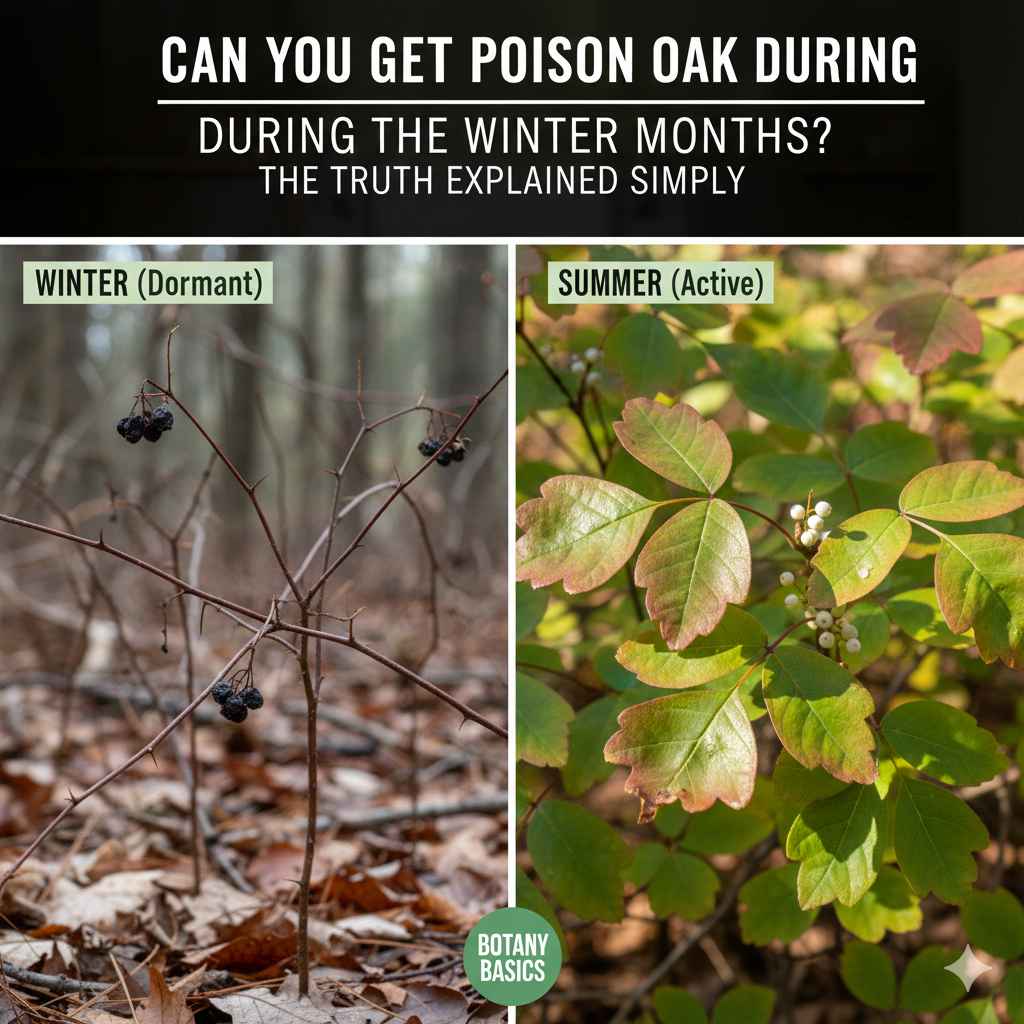
Poison oak, like many plants, goes through changes depending on the season. During the warmer months, it’s easy to spot with its characteristic leaves that come in groups of three. However, in the winter, the plant might look a bit different. Its leaves often fall off, leaving behind bare stems. However, this doesn’t mean the plant is harmless. The oils that cause the itchy rash are still present in the plant, meaning contact can lead to an outbreak. This makes it crucial to know what to look for, even when the plant appears dormant. Learn how poison oak survives the cold months, and you’ll be one step ahead of preventing any reactions.
Winter Appearance of Poison Oak
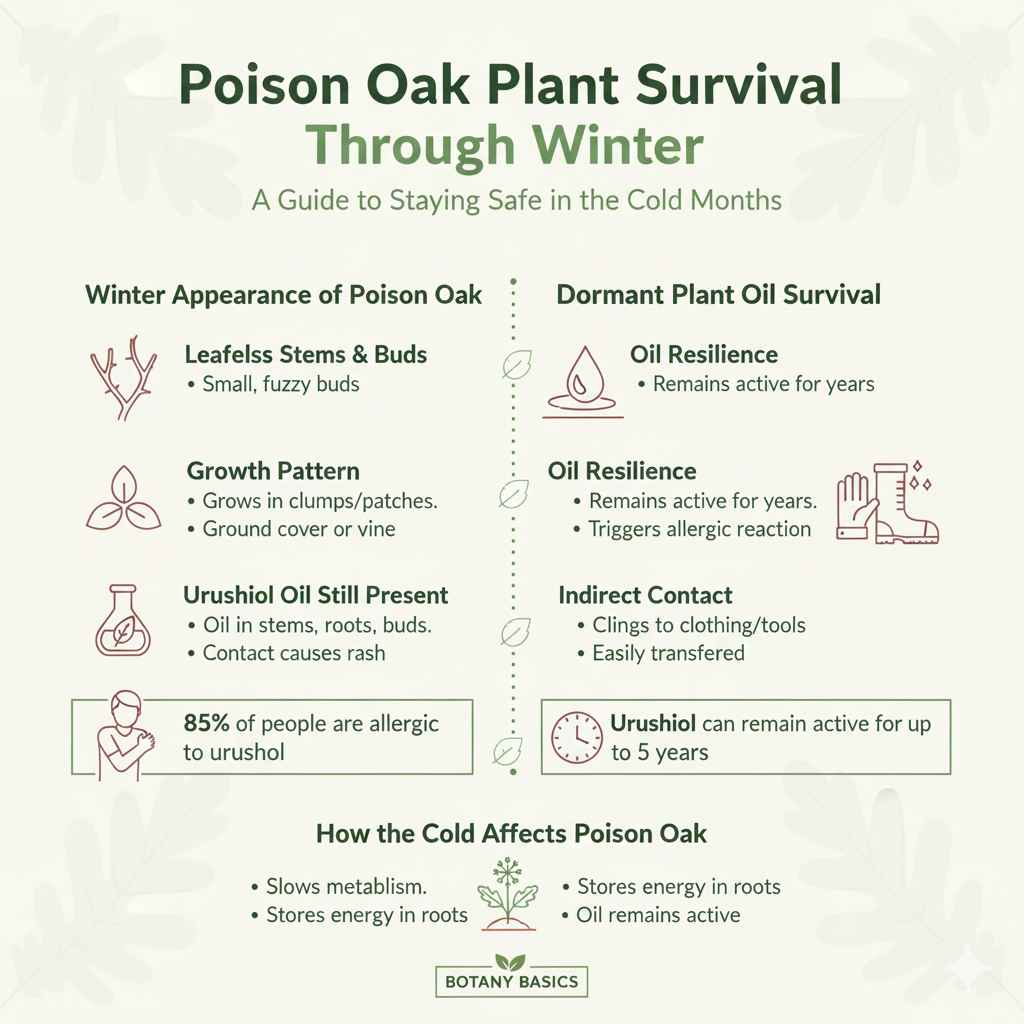
When the colder months arrive, poison oak undergoes a transformation. The plant’s leaves typically turn yellow or red and eventually fall off. You may only see the bare stems. It’s easy to assume the plant is dead or inactive. However, this is not the case. The plant’s oils, urushiol, are still present in the stems, roots, and even the dormant buds. This means you can still get a reaction from touching it. Recognizing these clues is the first step in protecting yourself.
- The appearance of leafless stems is a key identifier. These stems can be reddish-brown or gray.
- Check for small, fuzzy buds along the stems. These buds contain urushiol.
- Look for the plant’s growth pattern. Poison oak often grows in clumps or patches, even in winter.
Understanding the plant’s winter form is essential. Many people let their guard down when they don’t see leaves, increasing the chance of contact. Familiarizing yourself with these visual cues can help you identify poison oak, regardless of the season. Awareness can help you avoid unwelcome encounters. A study shows about 85% of people are allergic to urushiol, which can cause severe skin irritation. This statistic underscores the need to identify and avoid this common plant.
Dormant Plant Oil Survival
The urushiol oil in poison oak doesn’t break down quickly. It remains potent for long periods, even in winter. The oil can cling to almost anything. It can stick to clothing, tools, and even pet fur, and it is easily transferred through touch. This means that even if you don’t directly touch the plant, you can still come into contact with it. If you suspect you’ve been exposed, washing any potentially contaminated items is essential. This helps to remove the oil and prevent a reaction.
- Urushiol can remain active for years, especially on surfaces.
- Contact with the oil, even in small amounts, can trigger an allergic reaction.
- The oil can spread easily through indirect contact.
The resilience of urushiol oil underscores the need for caution. Even seemingly safe items may harbor the oil. Cleaning and preventative measures are your best defense. A research study found that urushiol can remain active on surfaces for up to five years, highlighting its persistent nature. This information is key to avoiding contact. Always err on the side of caution when you are in an area where poison oak might be present.
How the Cold Affects Poison Oak
The cold weather doesn’t necessarily kill poison oak. It simply slows down its growth and changes its appearance. The plant adapts to survive winter. It stores energy in its roots. This allows it to sprout new growth when spring arrives. Although the above-ground parts might seem inactive, the oil remains active within the plant’s tissues. This is why you must remain cautious, even during cold weather. The cold may change the plant’s look, but it doesn’t remove the hazard.
- Cold temperatures slow down plant metabolism but don’t eliminate the oils.
- The plant’s root system allows it to survive harsh conditions.
- Poison oak can thrive in many environments.
Understanding how cold affects poison oak is critical. It helps to dispel any misconception that winter offers complete safety. Keep in mind that a seemingly harmless plant can still cause a problem. A study from the American Academy of Dermatology shows that about 50 million Americans experience allergic contact dermatitis each year, with poison oak being a significant factor. Awareness and prevention are the keys to staying safe.
Risk Factors for Poison Oak Exposure in Winter
Several factors can increase your chance of coming into contact with poison oak during the winter. These include activities like outdoor work, hiking, or even just gardening. Knowing these factors can help you to take extra precautions. It is important to remember that poison oak can be hidden and challenging to spot. Being aware of the risks is the first step toward avoiding exposure.
Winter Outdoor Activities
Winter outdoor activities may expose you to poison oak more than you realize. Hiking through woods, clearing fallen branches, or working in your yard all present opportunities for contact. The lack of leaves can make the plant harder to spot, and you may unknowingly brush against stems or roots. This is particularly true in areas where poison oak is common. Understanding how these activities can lead to contact is an important safety measure.
- Hiking on trails that may have poison oak.
- Chopping wood can lead to contact with contaminated tools.
- Clearing brush or debris in your yard.
The risk from outdoor winter activities is a concern. Even routine tasks can expose you to urushiol. A study by the National Institutes of Health showed that outdoor workers often experience allergic reactions from contact with plants like poison oak. Using protective gear and paying attention to your surroundings can reduce your risk. Keep in mind that winter can be just as hazardous as summer when dealing with poison oak.
Misidentification of Poison Oak
It can be challenging to identify poison oak in winter because of its appearance. Without the familiar leaves, it can easily be mistaken for other plants or even dead branches. This misidentification can lead to unintentional contact. It is important to know the other visual clues to help recognize poison oak, even when leafless. Misidentification can lead to a false sense of security and potentially lead to a rash.
- Learning to identify the plant by its stems and buds is key.
- Consider the growth pattern.
- Practice is also essential for identification in different seasons.
This is a common issue. A survey found that many people are less skilled at identifying poison oak in the winter than in the summer. Educating yourself on the different clues to look for will help. Take the time to learn the key characteristics of poison oak. This will improve your ability to spot it during winter months. Early recognition is a crucial first step in prevention.
Indirect Contact Risks
The risk of indirect contact can be greater in winter. You can get poison oak by touching something that has the oil on it. This includes clothing, tools, or even pet fur. The oil can stay active on surfaces for extended periods, increasing the chances of accidental exposure. Understanding and being aware of how the oil spreads helps prevent contact. This can include contaminated surfaces.
- Clothing that has come into contact with the plant can spread the oil.
- Tools used for yard work can harbor urushiol.
- Pets may bring the oil into your home.
Indirect contact is a major concern. Urushiol oil is sticky and can easily attach to many surfaces. This is why you must protect yourself from all possible contact points. For example, a study showed that even washing clothes in a washing machine with contaminated items can spread the oil to other garments. Proper cleaning and taking precautions are necessary to prevent indirect contact and avoid the unpleasant side effects.
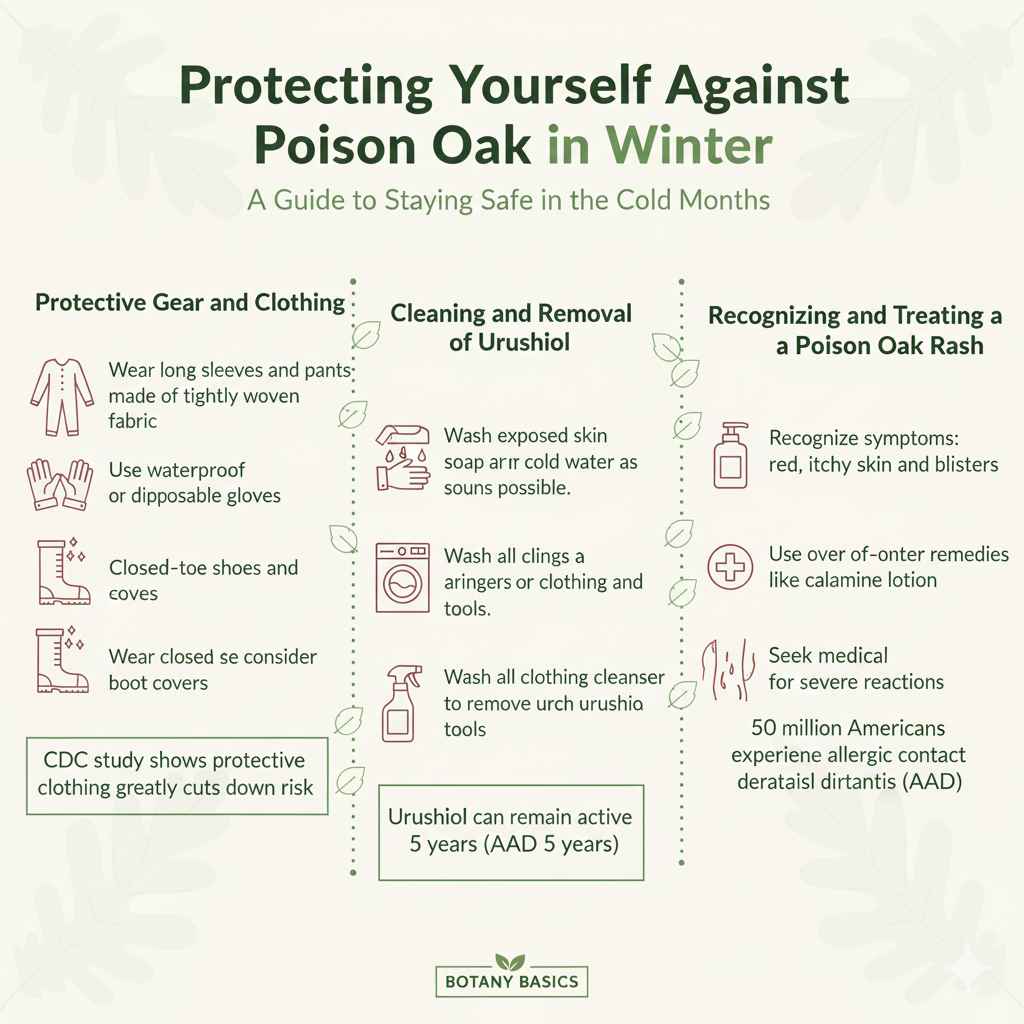
Protecting Yourself Against Poison Oak in Winter
You can take several steps to protect yourself from poison oak. By using the right protective gear, knowing how to clean contaminated items, and understanding how to recognize the symptoms, you can reduce the chance of exposure. Awareness of preventive measures is critical to ensuring your well-being. This information will help you enjoy the outdoors while protecting yourself from poison oak.
Protective Gear and Clothing
The right gear can greatly minimize the chance of contact with poison oak. Wearing long sleeves, pants, and gloves can provide a physical barrier against the plant’s oil. Consider using disposable gloves for yard work. The use of protective clothing is especially important when you expect to encounter poison oak. These measures can help to avoid skin exposure. It’s best to take precautions every time you are in an area where poison oak could be.
- Wear long sleeves and pants made of tightly woven fabric.
- Use waterproof or disposable gloves.
- Wear closed-toe shoes and consider using boot covers.
Using protective gear is a simple but essential step. A study by the Centers for Disease Control and Prevention showed that wearing protective clothing can cut down the risk of contact by a large amount. This makes a difference. Remember that the oil is sneaky and can cling to everything. So it is important to take extra precautions. Choose the right gear and wear it to reduce your chances of a reaction.
Cleaning and Removal of Urushiol
Knowing how to clean and remove urushiol is crucial if you suspect contact. Immediately washing with soap and cold water can remove the oil before it causes a reaction. You should also properly clean your tools, clothing, and anything else that might have come into contact with the plant. Proper cleaning may help prevent the spread of the oil. This will also help to avoid a rash. Taking these steps is essential for minimizing your exposure.
- Wash exposed skin with soap and cold water as soon as possible.
- Wash all clothing and tools that may have been in contact with poison oak.
- Use a specialized cleanser to remove urushiol from surfaces.
Early and thorough cleaning is key to limiting the effects of urushiol. The American Academy of Dermatology recommends washing with soap and water within the first few hours of contact. A study also found that using special cleansers, such as Tecnu, can remove the oil. Using these tips is a smart way to stop the reaction before it even starts. Removing the oil effectively can help to prevent the unpleasant symptoms of a poison oak rash.
Recognizing and Treating a Poison Oak Rash
Even with precautions, you might still develop a poison oak rash. Knowing what to look for and how to treat it can help you get relief and prevent complications. The rash typically appears as itchy, red blisters. It is very important to seek medical advice for more severe reactions. Acting fast is essential. Early treatment can help to ease discomfort. It can help you get back to your routine more quickly.
- Recognize the symptoms, which may include red, itchy skin and blisters.
- Wash the affected area with soap and water.
- Use over-the-counter remedies like calamine lotion or hydrocortisone cream.
It’s important to recognize the symptoms early. A poison oak rash typically appears within 12 to 72 hours of exposure, with symptoms such as itching, redness, and blisters. If you notice a rash, start treatment right away. A survey from the Poison Control Center showed that many people find relief from their symptoms with over-the-counter treatments. Seek medical attention if the rash is severe or widespread. This will help you get the best medical care and advice.
FAQ Section
Question: Can I get poison oak in the snow?
Answer: Yes, poison oak can still cause a reaction in snowy conditions because the oils remain potent in the plant’s stems and roots, even after the leaves have fallen and the plant appears dormant.
Question: Does poison oak stay toxic after it’s dead?
Answer: Yes, the urushiol oil in poison oak remains active for a long time, even after the plant is dead. You can get a rash from touching a dead plant or its parts.
Question: How long does it take for a poison oak rash to appear?
Answer: The poison oak rash typically appears between 12 and 72 hours after contact with the urushiol oil, and it can last for several weeks.
Question: Is poison oak contagious?
Answer: The rash itself is not contagious, but the oil that causes it is. You can spread the oil through contact with your skin, clothing, or tools.
Question: What’s the best way to get rid of urushiol oil?
Answer: Washing exposed skin with soap and cold water immediately after contact is essential. It’s also helpful to clean clothing, tools, and any surfaces that may have come into contact with the oil. Specialized cleansers can also help.
Final Thoughts
The answer to the question, Can You Get Poison Oak in the Winter? is yes, you can. Even though the plant may look different and be without leaves, the urushiol oil remains active and capable of causing a rash. Awareness is key. You can still come into contact with the oil through winter activities, indirect contact, and plant misidentification. Remember to take extra precautions. Use protective gear, wash your skin and clothes, and know how to treat a rash if one develops. By practicing these safety measures, you can enjoy the outdoors throughout the winter months. You can still keep yourself safe from this common plant.