Can You Mop Hardwood Floors With Vinegar? A Simple Guide
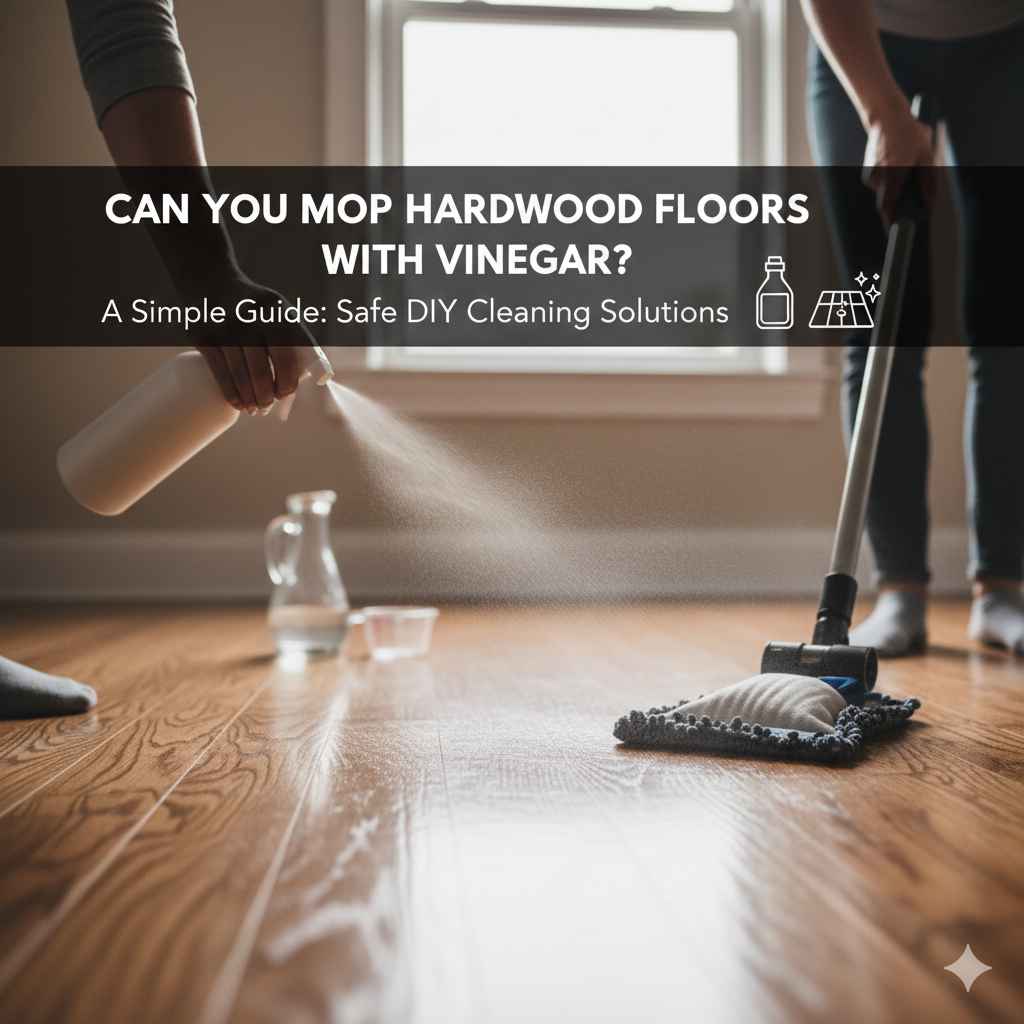
Cleaning hardwood floors can feel tricky at first. Many people wonder, Can You Mop Hardwood Floors With Vinegar? It’s a common question, especially for those new to hardwood floor care. Don’t worry, it’s simpler than you might think! This guide will break down the steps clearly, so you can clean your floors without damaging them. We’ll explore the best way to use vinegar, and what other options might work well. Let’s get started.
Is Vinegar Safe for Hardwood Floors?
The question of whether vinegar is safe for hardwood floors is a major concern. The simple answer is yes, but with a crucial caveat. Vinegar, especially white distilled vinegar, is a mild acid. This acidity is what makes it a good cleaner, as it can cut through dirt and grime. However, it’s also what can potentially cause issues if not used correctly. The key is dilution. Undiluted vinegar can damage the finish on your floors, causing them to look dull or even removing the finish over time. This section will explore the appropriate vinegar dilutions and the best approach to use vinegar safely.
Choosing the right cleaning supplies can be hard. The right balance helps prevent damage, keeping your floor’s shine. Knowing the correct vinegar-to-water ratio is the beginning of the cleaning process. This ensures your floors stay in great shape. Proper preparation is essential to prevent any mishaps while cleaning with vinegar.
How Dilution Matters
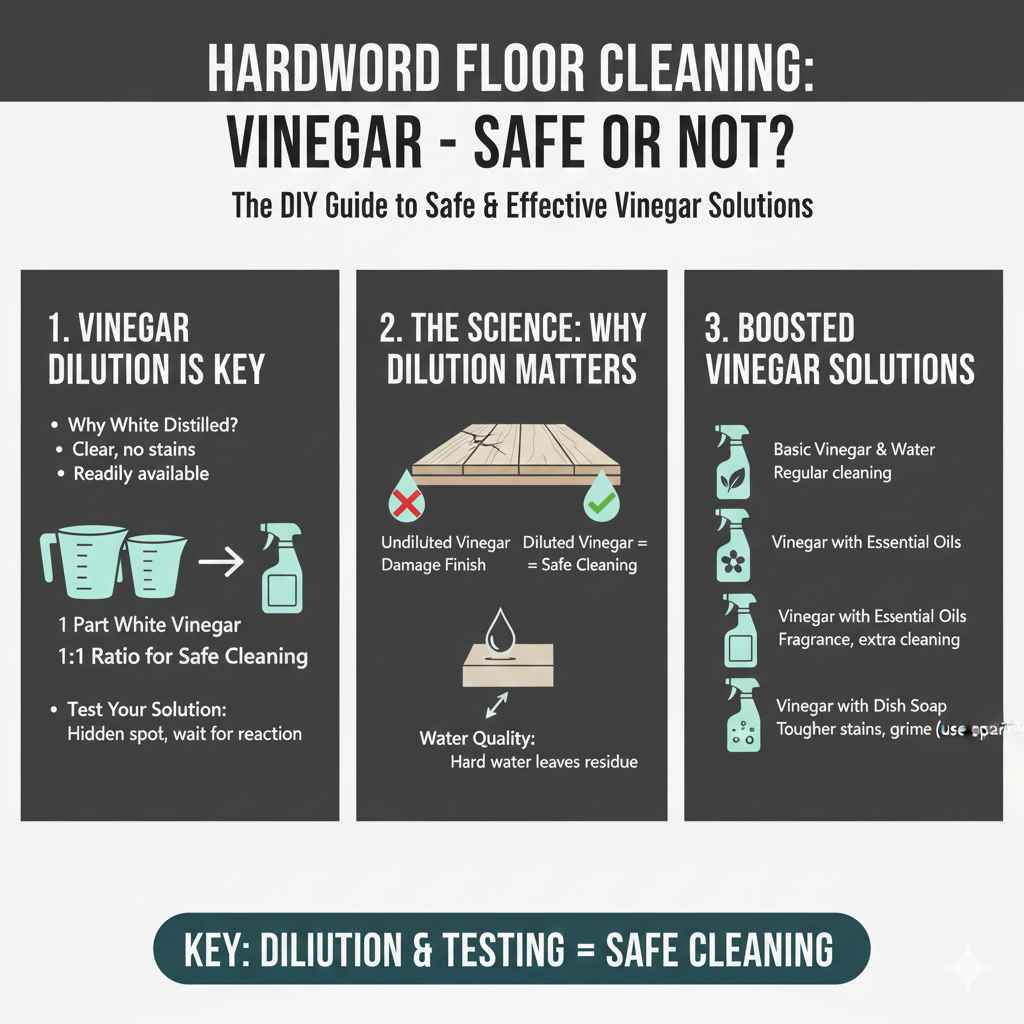
The dilution of vinegar is where the safety of your hardwood floors truly comes into play. The recommended ratio is typically a 1:1 mixture of white distilled vinegar and water. This means for every one part of vinegar, you’ll use one part of water. This ensures the acidity is diluted enough to effectively clean without being too harsh on the floor’s finish. It’s best to use a bucket or spray bottle to mix these ingredients. Mixing the solution in a spray bottle can give you more control when applying it to the floor. Always test the solution in an inconspicuous area of the floor first. This step helps ensure there’s no adverse reaction like discoloration or damage.
- Why Use White Distilled Vinegar? White distilled vinegar is preferred because it’s clear and won’t stain the wood. Other types of vinegar, like apple cider vinegar, have a color that might affect the floor. It is important to know that it is also readily available and generally inexpensive.
- Testing Your Solution: Before you mop the entire floor, test the vinegar solution in a hidden spot. This could be inside a closet or under a piece of furniture. Wait a few minutes to see if the finish changes or if the wood discolors.
- The Importance of Water Quality: Using clean water is essential. Hard water can leave mineral deposits on your floors, making them look dull. If you have hard water, consider using distilled or filtered water for your cleaning solution.
Which Vinegar Solutions Work Best?
After establishing a suitable dilution, the next step is determining the best type of vinegar solution for cleaning. While a simple vinegar and water mixture works well, you can also add a few extra ingredients to improve the cleaning power and scent. These extra additions make the cleaning process a bit better. For instance, using essential oils not only gives your house a good smell but also adds extra cleaning power.
- Basic Vinegar and Water: This is the simplest and most common solution. Mix equal parts white distilled vinegar and water in a bucket or spray bottle. It is great for regular cleaning. The acidity of the vinegar cuts through dirt and grime.
- Vinegar with Essential Oils: Add a few drops of essential oils, such as lemon or lavender, to your vinegar and water mix. This gives your floors a pleasant fragrance and adds extra cleaning benefits. Essential oils can also boost the cleaning power of the vinegar solution.
- Vinegar with Dish Soap: If you need a more powerful cleaner for grimy floors, you can add a small amount of mild dish soap to your vinegar and water mix. Dish soap can help lift tougher stains and dirt. Be sure to use a minimal amount of soap to avoid leaving residue on the floors.
The Right Way to Mop Hardwood Floors with Vinegar
Knowing how to use vinegar on hardwood floors is important. Using vinegar properly helps protect your flooring from damage and ensures your floors are clean and shiny. This part gives you a step-by-step approach. Following these steps helps make sure the cleaning process is effective and safe.
Good preparation is essential before you start mopping your floors with vinegar. Cleaning the surface first eliminates any big debris. This also ensures that the vinegar mixture can work well without anything getting in the way. It is important to use the right tools, like a microfiber mop. This type of mop is great at picking up dirt and using the right amount of cleaning solution.
Preparation for Mopping
The first step is to prepare your floors for cleaning. Start by removing any furniture, rugs, or other items from the area you plan to mop. This makes sure you have plenty of room to move around and clean every section of the floor. Always sweep or vacuum your floors before mopping. This will help remove loose dirt, dust, and debris. This step keeps the cleaning solution from spreading the dirt. For a more thorough cleaning, consider using a vacuum cleaner with a hardwood floor attachment.
- Clear the Area: Take all furniture off the floor. Then, move any rugs or mats away from the cleaning area. This helps you reach all corners.
- Sweep or Vacuum: Sweep or vacuum your hardwood floors before mopping. You want to make sure you get rid of any loose dirt or debris. A vacuum cleaner with a soft brush attachment is a good choice.
- Dust: Dust the baseboards and corners to remove any dust or cobwebs. This gives the floor a great overall look.
The Mopping Process
Once the floors are prepared, you can start mopping. Use the vinegar solution you prepared earlier. Remember the 1:1 ratio. Using the right technique and equipment will make the cleaning process easier and more effective. It also ensures the best results.
- Choose the Right Mop: Use a microfiber mop. Microfiber mops are gentle on hardwood floors. They pick up dirt very well, and they don’t leave streaks. A sponge mop or a string mop can leave too much water on the floor.
- Dip or Spray: Dip your microfiber mop into the vinegar solution and wring out any excess liquid. You don’t want the floor to get too wet. If you use a spray bottle, mist the solution directly onto the floor.
- Mop in Sections: Start mopping in one corner of the room. Work your way across the floor in small sections. Work with the wood grain for the best results. Overlapping your strokes will help make sure every part of the floor is clean.
- Rinse and Dry: Rinse your mop in clean water as needed. This will keep the water clean. After mopping, let the floor air dry. It will not take long to dry.
How Often Can You Mop Hardwood Floors With Vinegar?
Knowing how often to clean your floors with vinegar is important to make sure they stay in good condition. Too much cleaning can be hard on the finish. The amount of foot traffic and the environment your floors are in affect how often you should clean. Also, you should adjust your cleaning schedule based on the needs of your home and how your floors look.
It is also essential to know the different seasons have different impacts. During the winter, when the air is dry and the use of indoor heaters are high, your floors might get less dirty. In summer, with more outdoor activities, they may need more cleaning. Knowing these facts will help you make a good plan to keep your floors clean.
Recommended Cleaning Frequency
The ideal cleaning frequency will depend on your home and lifestyle. It is important to avoid over-cleaning, as this can affect the floor finish. A good plan will prevent any harm to the wood.
- Weekly Cleaning: For most homes, mopping your hardwood floors with vinegar once a week is enough. If you have pets, kids, or high foot traffic, you may need to clean more often. Cleaning once a week will get rid of most dirt and grime.
- Monthly Deep Cleaning: You could do a deeper clean once a month. This can involve more detailed methods. This could include using a cleaner made for hardwood floors.
- Adjust Based on Use: If your floors are often exposed to dirt, mud, or spills, you may need to clean them more often. If you have a room that’s used less often, you may be able to clean it less.
Seasonal Considerations
Seasonal changes can have a big effect on how dirty your hardwood floors get. During certain times of the year, there may be more dirt, dust, and debris. Knowing how these changes affect your cleaning schedule can help keep your floors in great condition.
- Winter Months: During the winter, indoor air can become very dry. This can make the hardwood floors look dry too. Make sure to use a humidifier. Cleaning during the winter may be less frequent because of less outdoor activity.
- Summer Months: Summer means more outdoor fun, trips to the beach, and kids playing outside. The floors might become dirty with sand, mud, and other grime. You might need to clean the floors more often during the summer months.
- Spring and Fall: The spring and fall are changing times of year. You should adjust your cleaning routine. Consider more frequent cleaning, especially during those times when leaves and rain bring extra dirt.
Avoiding Common Mistakes When Mopping
When cleaning hardwood floors, some common mistakes can damage the wood or make the floors look less clean. Knowing how to prevent these common errors is key. This helps you get the best cleaning results and prevents problems like streaks or damage to the floor. These mistakes can make your floors look dull, and they can make your job harder.
By knowing about these mistakes, you can use the right tools. Also, the proper techniques will make your cleaning work easier. Taking care of your floors well will protect your investment. Your hardwood floors will look great for years.
Over-Wetting the Floors
One of the biggest problems is over-wetting the hardwood floors. Hardwood is easily damaged by excess water. Too much water can make the wood swell and warp over time. This can cause costly repairs. It is critical to wring out the mop well. This ensures that you’re using only a slightly damp mop.
- Use a Damp Mop: Always make sure your mop is just damp, not soaking wet. Wring out excess water before mopping.
- Work in Small Sections: Mop small sections at a time. This helps prevent water from sitting on the floor too long.
- Dry Spills Immediately: If you spill water or another liquid on the floor, dry it right away. Use a soft cloth to blot the spill.
Using the Wrong Cleaning Products
Another mistake is using the wrong cleaning products. Some products are too harsh for hardwood floors. Some products leave a residue that makes the floors look dull. It is important to know about these issues. You will be able to protect your floor and make sure they stay shiny.
- Avoid Harsh Chemicals: Stay away from harsh chemicals, such as bleach and ammonia. These can damage the floor’s finish.
- Avoid Abrasive Cleaners: Avoid using abrasive cleaners, such as scouring pads. These can scratch the surface of the floor.
- Use Products Made for Hardwood: If you want to use other products, use ones made specifically for hardwood floors.
Alternative Cleaning Solutions for Hardwood Floors
While vinegar is a great option, you may want to try other cleaning solutions. Some people might not like the smell of vinegar. Other cleaners are designed for hardwood floors. Some cleaners have extra features, like cleaning and shine. Knowing about these options will help you select the best method for your needs.
These cleaners help you keep your floors looking beautiful and clean. Knowing your options will help you choose the best products. It will also help you create a cleaning plan that fits your home and lifestyle.
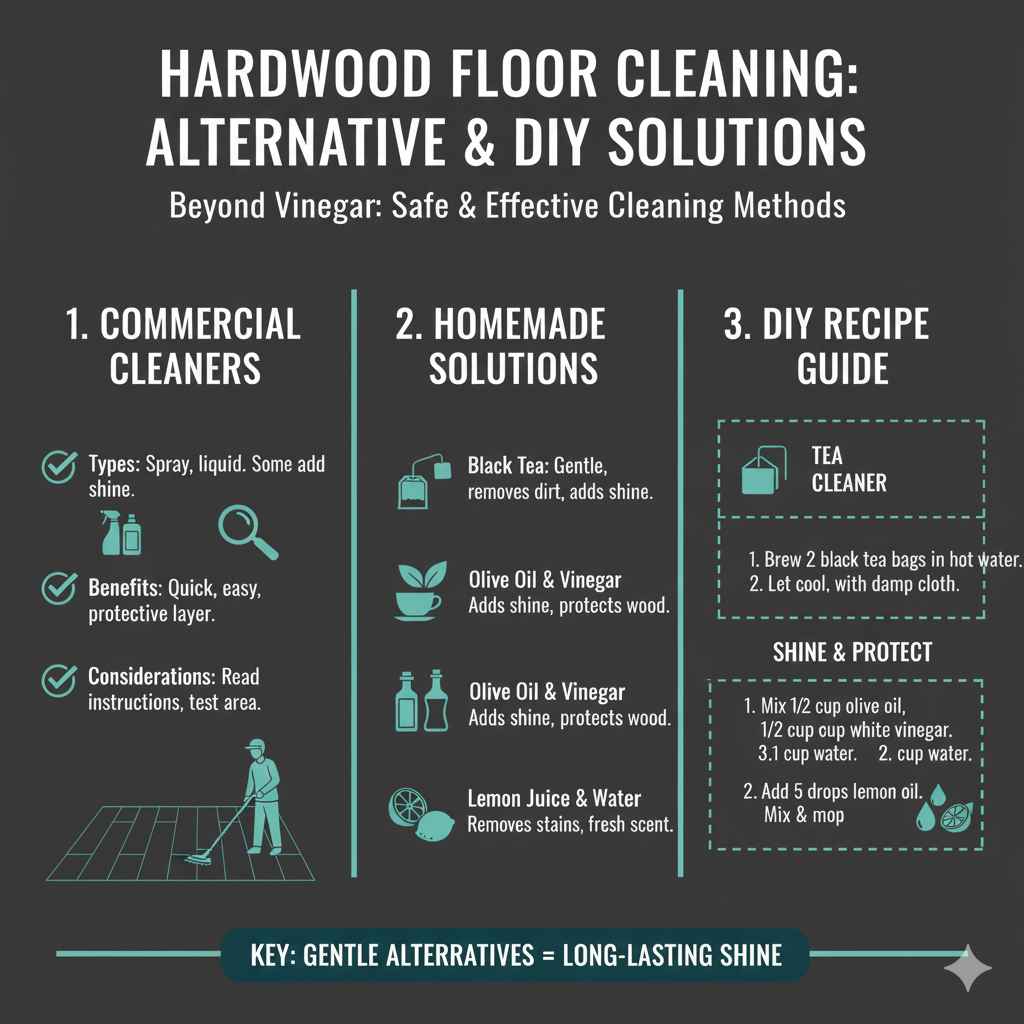
Commercial Hardwood Floor Cleaners
Many commercial cleaners are designed for hardwood floors. These cleaners often contain specific ingredients. These ingredients are safe for wood. They clean and shine the floor. They are easier to use.
- Types of Cleaners: Commercial cleaners come in spray and liquid forms. Some may provide extra care for the wood. Others might offer a fresh scent.
- Benefits: They are quick and easy. Many cleaners leave a protective layer on your floors. These products often have UV protection to prevent sun damage.
- Considerations: Always read the instructions. Make sure the cleaner is made for your type of floor finish. Test a small area before cleaning the whole floor.
Homemade Cleaning Solutions
If you prefer making your own cleaners, you have several options. Using natural ingredients can create a safe, effective cleaner. This may be better for people with allergies. You also have the freedom to customize the cleaning products.
- Black Tea: Brew strong black tea. Let it cool. This creates a gentle cleaner that removes dirt. Tea can also add shine to your floor.
- Olive Oil and Vinegar: Mix olive oil with vinegar to make a cleaning solution. Olive oil adds shine and protects the wood.
- Lemon Juice and Water: Mix lemon juice and water. Lemon juice is good at removing stains. This mixture will leave a pleasant scent.
Frequently Asked Questions
Question: Can I use vinegar on all types of hardwood floors?
Answer: It’s generally safe for sealed hardwood floors. Always test in an inconspicuous area first, and avoid using it on unsealed or waxed floors.
Question: How do I remove streaks from my hardwood floors after mopping?
Answer: Streaks are usually caused by using too much water. Make sure your mop is wrung out well. Consider using a clean, dry microfiber cloth to buff the floor after mopping.
Question: What’s the best mop to use with vinegar?
Answer: A microfiber mop is the best choice. It is gentle on hardwood floors. They are great at picking up dirt and grime. Avoid sponge mops or string mops.
Question: Can I add essential oils to my vinegar solution?
Answer: Yes, you can add a few drops of essential oils. Essential oils like lemon or lavender will add fragrance. They can also enhance the cleaning power.
Question: How do I store my vinegar cleaning solution?
Answer: Store your vinegar cleaning solution in a spray bottle or a labeled container. Store it in a cool, dark place away from children and pets.
Final Thoughts
Can You Mop Hardwood Floors With Vinegar? Absolutely! With the right approach, vinegar is a simple and effective cleaner for your hardwood floors. Diluting the vinegar properly is the most important part. A 1:1 mixture of vinegar and water is often enough to safely clean your floors. Always be sure to test the solution first, choose a gentle cleaning routine, and remember the right tools and techniques. From this point forward, you’ll be well-equipped to keep your floors clean and looking their best. Following these helpful tips will let you have beautiful floors that last.