Can You Paint Teak Furniture? Yes, But Its Oils Fight Adhesion
Yes, you can paint teak wood furniture — but its natural oils repel ordinary paint unless you strip the surface oils first with 120-grit sandpaper and a shellac- or oil-based stain-blocking primer. Skip that step and paint blisters or peels within a season, even under two coats of exterior acrylic. This guide covers the exact grit sequence, which primer actually bonds to oily teak, and how long each coat needs to cure.
Insert your Affiliate Disclosure reusable block here
Quick Answer
You can paint teak furniture, but only after removing the natural surface oils. Wash with mild soap, sand to 120-grit, then apply two coats of a stain-blocking primer (shellac-based for indoor pieces, oil-based for outdoor) before the topcoat. Let the primer cure a full 24 hours per coat — rushing it is the #1 reason painted teak peels.
Why Teak Fights Paint Adhesion
Best Stain-Blocking Primer Pick
Zinsser Cover-Stain Stain-Blocking Primer, Quart
An oil-based, high-hide primer built specifically to seal in stains and natural oils before painting.
- Best for: Sealing teak’s natural oils before any topcoat
- Why we picked it: Purpose-built stain-blocking formula, not a generic primer
- Main drawback: Strong solvent odor — use outdoors or with ventilation
Compare more teak-painting supplies
 Option 1 Odorless Oil-Base Stain Blocker Primer
|
 Option 2 Satin Exterior Latex Topcoat, Quart
|
 Option 3 120-Grit Sanding Sponges, 6-Pack
|
As an Amazon Associate we earn from qualifying purchases.
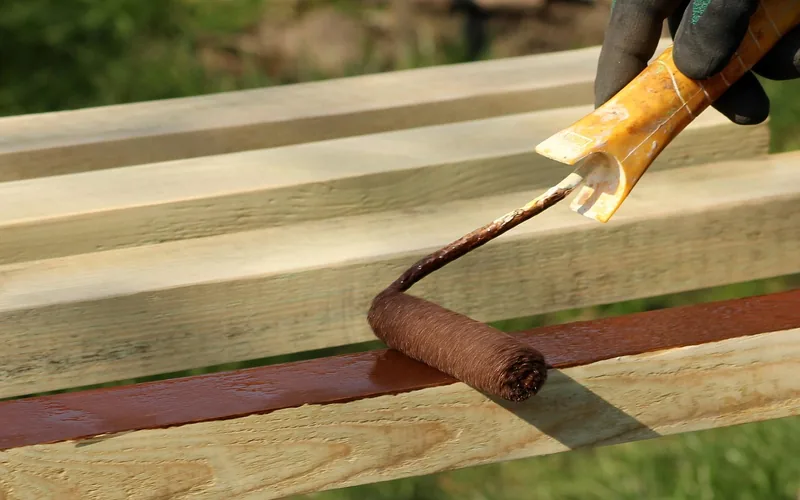
Teak is an oily hardwood that stores natural oils in its grain, which is exactly what makes it rot- and water-resistant outdoors without any finish at all. Those same oils rise to the surface and act as a release agent under paint — the paint film never actually bonds to bare wood, it sits on a thin layer of oil that eventually lets go. That’s why regular latex or spray paint applied straight onto sanded teak, with no primer, is the single most common way this project fails.
Old or weathered teak (the silver-gray look) has already lost much of its surface oil to UV exposure, so it takes paint more easily than new or oiled teak. If your piece was recently treated with teak oil, plan on extra sanding and a second primer coat — the fresh oil sits right at the surface where paint needs to grip. For more on teak’s general care needs before you decide whether to paint it at all, see our full teak wood care hub.
How to Prep Teak Wood for Paint
Prep is what separates paint that lasts from paint that peels by spring. Follow this order — skipping or reordering steps is where most of the adhesion failures start.
- Deep clean: Scrub with a mild dish-soap solution and a stiff (non-metal) brush to lift dirt, mildew, and surface grime, then rinse and let the piece dry fully — 24 to 48 hours in open air, longer if it’s humid.
- Strip old finish: If the piece has an existing sealer, oil, or varnish, remove it with a paint stripper or coarse sanding before moving to fine-grit prep.
- Sand to 120-grit: Sand every surface with 120-grit sandpaper until the wood looks consistently dull and slightly raw — this is what actually removes the oil-saturated top layer of fibers, not just the shine.
- Wipe down: Remove all dust with a tack cloth or a barely damp rag. Any dust left behind gets sealed under the primer.
- Apply stain-blocking primer: Use a shellac-based or oil-based primer made for stain-blocking on oily or resinous wood — standard latex primer will not stop teak’s oil from bleeding through. Apply two thin coats rather than one thick one.
- Let it cure: Give the primer at least 24 hours between coats and before topcoating. Rushing this step is the top cause of peeling reported by DIYers who’ve done this project.
- Scuff-sand between coats: Lightly sand with 220-grit paper between the primer and topcoat, and again between topcoats, to help each layer key into the last.
Best Primer and Paint for Teak Furniture
The primer matters more than the paint on this project — get the primer wrong and no topcoat will save it. Look for a primer labeled specifically for stain-blocking or oily/resinous wood, not a general-purpose “paint and primer in one.”
| Product Type | Best For | Cure Time |
|---|---|---|
| Shellac-based stain-blocking primer | Indoor teak furniture; fastest dry time | ~45 min tack, 24 hr before topcoat |
| Oil-based stain-blocking primer | Outdoor teak exposed to rain/humidity | 24 hr per coat |
| 100% acrylic latex exterior paint (satin/semi-gloss) | Topcoat over cured primer, indoor or outdoor | 24 hr between coats, several days before heavy use |
Should You Paint Teak, or Just Oil It?
Before you commit to painting, it’s worth asking whether teak oil or a penetrating finish gets you what you actually want — because painting trades away teak’s biggest selling point.
| Approach | Result | Maintenance |
|---|---|---|
| Paint (primed) | Any color, hides grain and natural weathering | Repaint every few years; hard to fully strip later |
| Teak oil / tung oil | Enhances natural golden-brown grain | Reapply every 3–6 months outdoors |
| Leave untreated | Weathers to a silver-gray patina | None — teak’s oils protect it on their own |
Painting is the right call when you need the piece to match a specific decor color, or you’re covering repaired or mismatched-color repairs. If you just want to refresh the wood’s look, tung oil or Danish oil gets you a “new furniture” look in under an hour with no primer, sanding-to-bare-wood, or dry-time schedule.
Common Mistakes When Painting Teak Furniture
- Skipping the sand-to-bare-wood step — painting straight over a light scuff leaves oil under the primer, and the paint releases within weeks.
- Using a generic latex primer instead of a stain-blocker — regular primer isn’t formulated to seal oil migration and will let it bleed through as yellow-brown blotches.
- Recoating before the primer fully cures — a tacky primer coat traps solvent underneath the topcoat, which shows up as bubbling later.
- Painting outdoor teak right after rain or high humidity — trapped surface moisture causes the same peeling problem as leftover oil.
How to Maintain Painted Teak Furniture
Clean painted teak with a mild soap-and-water solution and a soft cloth — skip harsh solvents or abrasive scrubbers, which dull and thin the paint film over time. Inspect outdoor pieces each season for chips or peeling at joints and edges, since that’s where flexing wood stresses the paint first. Touch up small chips as soon as you spot them; once bare wood is exposed, teak’s oils start working against the surrounding paint again. For the unpainted pieces in the same set, our guide on how to treat teak wood furniture covers the oiling routine instead.
Cleaning Painted Teak
Wipe down with a soft cloth and a mild dish-soap solution, rinse, and let it air dry. Avoid pressure washers on painted teak — the water pressure can lift paint at seams and fastener heads.
When to Repaint
Outdoor painted teak typically needs a fresh topcoat every 2–4 years depending on sun and rain exposure; indoor pieces can go much longer. A light 220-grit scuff-sand and a single fresh coat is usually enough — you don’t need to strip back to bare wood unless the primer itself has failed.
Frequently Asked Questions
What primer should I use on teak wood?
Use a shellac-based or oil-based stain-blocking primer, not a standard latex primer. These are formulated to seal in natural oils and resins so they can’t bleed through the topcoat. Apply two thin coats with at least 24 hours of cure time between them.
Can I paint weathered or silver-gray teak?
Yes — weathered teak has already lost much of its surface oil to UV exposure, so it often takes paint more readily than new teak. Still sand to 120-grit and prime with a stain-blocker first; skipping prep is the most common reason paint fails on any teak, weathered or not.
How long does teak need to dry before painting?
Let a cleaned piece air-dry 24 to 48 hours before sanding and priming, longer in humid climates. Between primer coats, wait a full 24 hours; between topcoats, the same. Rushing dry time is the single biggest cause of peeling on this project.
Does painting ruin teak’s weather resistance?
Painting doesn’t destroy teak’s structural durability, but it does cover the natural oils that give teak its rot- and water-resistance without any finish. A properly primed and sealed paint job protects the wood in its own right, but if the paint film ever chips or peels, the exposed wood underneath has less natural protection than teak left oiled or untreated.
Can you use regular spray paint on teak furniture?
Only after the same prep — clean, sand to 120-grit, and prime with a stain-blocking primer. Spray paint applied straight onto sanded teak with no primer will peel just as fast as brushed paint with no primer; the application method doesn’t change teak’s oil problem.
Conclusion
Teak wood furniture can be painted successfully, but only if you treat the prep work as the actual project and the paint as the easy part. Clean it, sand it to 120-grit, seal the natural oils with a real stain-blocking primer, and give every coat its full 24-hour cure. Skip any one of those steps and you’re repainting again within a year. If you’d rather keep teak’s natural grain, a coat of teak oil gets you a refreshed look in a fraction of the time with none of the prep.
Sponsored / affiliate links. As an Amazon Associate I earn from qualifying purchases. I may earn additional commission from eligible campaigns.