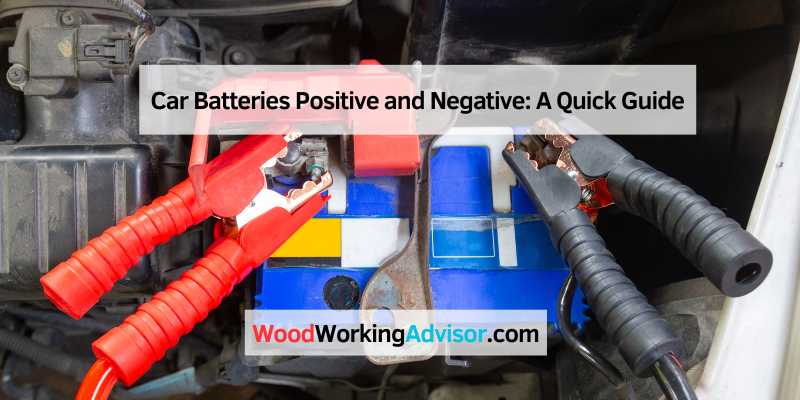
Car Batteries Positive and Negative: A Quick Guide
The positive terminal of a car battery is typically marked with a plus sign ‘+’ and a red color. The negative terminal is marked with a negative sign ‘–’ and a black color.
When connecting jumper cables or replacing a battery, it’s important to connect the positive terminal first and then the negative terminal to avoid electrical hazards. Additionally, it’s recommended to disconnect the negative terminal first and then the positive when removing the battery.
Many batteries are also color-coded, with red representing positive and black representing negative. By understanding the proper connection and identification of the positive and negative terminals, car owners can safely and effectively maintain their vehicle’s battery.
Introduction To Car Batteries
When it comes to the electrical system of your car, the battery plays a crucial role. Understanding the basics of car batteries, including the significance of battery terminals and the primary functions of a car battery, is essential for every car owner.
Significance Of Battery Terminals
The battery terminals, typically marked and color-coded, are the connection points for the electrical system of the vehicle. The positive terminal is usually indicated with a plus sign (+) and red color, while the negative terminal is marked with a minus sign (-) and black color. These terminals are where the electrical connections are made to power various components of the car.
Primary Functions Of A Car Battery
A car battery has two primary functions: providing the initial power to start the engine and supplying electrical energy to the vehicle’s systems when the engine is not running. It acts as a power reservoir for the electrical needs of the car, ensuring that all electronic components function properly.
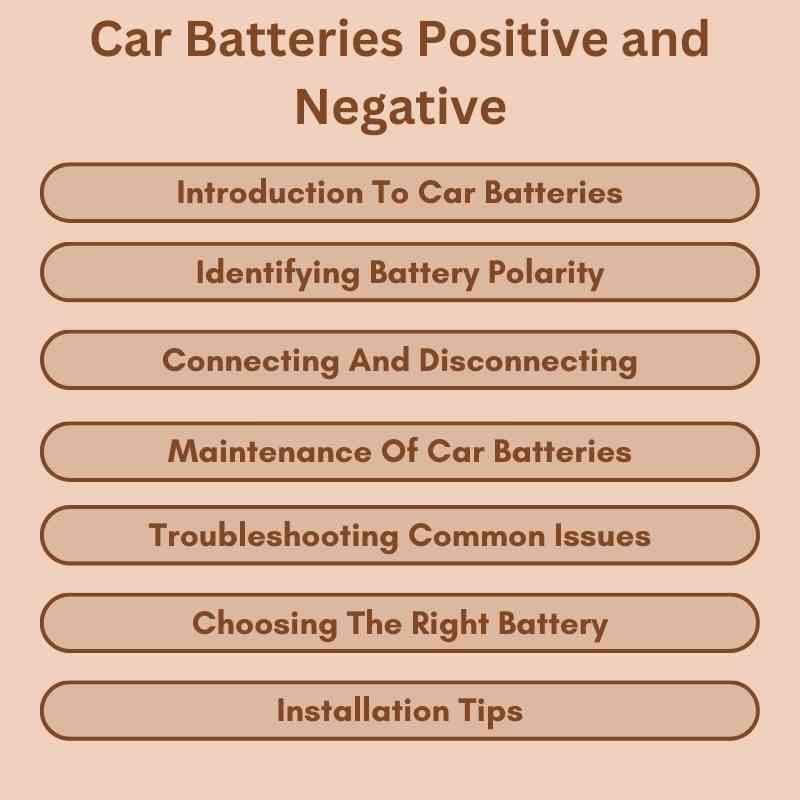
Identifying Battery Polarity
To identify the positive and negative terminals on a car battery, look for markings and color codes. The positive terminal is typically marked with a plus sign and colored red, while the negative terminal is marked with a minus sign and colored black.
It’s important to connect the red cable to the positive terminal and the black cable to the negative terminal when working with car batteries.
Color Coding And Symbols
Car batteries are designed with specific color coding and symbols to help identify the positive and negative terminals. The positive terminal is typically marked with a plus sign ‘+’ and is usually colored red. On the other hand, the negative terminal is marked with a negative sign ‘–’ and is commonly colored black. This color coding and symbol system makes it easy to determine the polarity of the battery at a glance.
Physical Inspection Tips
In addition to color coding and symbols, you can also physically inspect the battery to identify the positive and negative terminals. Here are a few tips to help you with the inspection process:
- Look for markings: Check for any labels or markings on the battery itself that indicate the positive and negative terminals. These markings are often located near the terminals or on the top of the battery.
- Follow the cable connections: Trace the cables connected to the battery. The cable connected to the positive terminal is typically thicker and may have a red covering or marking. The cable connected to the negative terminal is usually thinner and may have a black covering or marking.
- Inspect the terminal posts: The positive terminal post is usually slightly larger and may have a protrusion or bump on top. The negative terminal post is typically smaller and may be flat or recessed.
By following these physical inspection tips, you can confidently identify the positive and negative terminals of your car battery.
Remember, it is crucial to connect the cables to the correct terminals when working with car batteries. Connecting them incorrectly can result in damage to the battery or even electrical hazards. Always double-check the polarity before connecting any cables or accessories to the battery.
Now that you know how to identify battery polarity through color coding and symbols, as well as physical inspection tips, you can easily handle battery-related tasks with confidence and ensure the proper functioning of your vehicle.
Connecting And Disconnecting
When it comes to connecting and disconnecting car batteries, it is crucial to follow the correct order for safety. Understanding the positive and negative terminals and the consequences of incorrect connections is essential for maintaining safety and preventing damage to the vehicle and its electrical systems.
Correct Order For Safety
When connecting or disconnecting a car battery, it is important to follow the correct order for safety. Always start by disconnecting the negative (black) terminal first, followed by the positive (red) terminal. When connecting the battery, the reverse order should be followed: start by connecting the positive terminal first, followed by the negative terminal.
Consequences Of Incorrect Connections
Incorrectly connecting the car battery terminals can lead to various consequences, including potential damage to the vehicle’s electrical system, as well as safety hazards such as sparks and electrical shorts. Reversing the connection order can cause electrical components to receive power in reverse, potentially leading to damage or malfunction.
Maintenance Of Car Batteries
Regular check-ups and proper maintenance are essential for the longevity and performance of car batteries. By following a few simple steps, you can ensure that your car battery remains in good condition and functions optimally. In this section, we will discuss the importance of regular check-ups and cleaning the terminals of your car battery.
Regular Check-ups
Regularly checking your car battery is crucial to identify any potential issues before they become major problems. Here are a few steps to perform a thorough battery check-up:
- Inspect the battery casing for any cracks or damage.
- Check the battery terminals for corrosion or loose connections.
- Measure the voltage of the battery using a multimeter.
- Ensure that the electrolyte levels are appropriate (for non-sealed batteries).
Performing these check-ups on a regular basis will help you catch any issues early on and prevent unexpected battery failures.
Cleaning Terminals
Over time, the battery terminals can accumulate corrosion, which can hinder the flow of electricity and affect the battery’s performance. Cleaning the terminals is a simple process that can be done using a few household items. Here’s how:
- Start by disconnecting the negative terminal (marked with a “-” sign) using a wrench.
- Mix a solution of baking soda and water to create a paste.
- Apply the paste to the battery terminals and scrub gently using a wire brush.
- Rinse the terminals with water and dry them thoroughly.
- Reconnect the terminals, starting with the positive terminal (marked with a “+” sign).
Regularly cleaning the battery terminals will help maintain a strong connection and ensure optimal performance of your car battery.
Troubleshooting Common Issues
To troubleshoot common issues with car batteries’ positive and negative terminals, look for the plus sign ‘+’ and red color for the positive terminal, and a negative sign ‘–’ and black color for the negative terminal. When connecting or disconnecting, always attach the red cable to the positive terminal first and the black cable to the negative terminal.
This helps ensure proper order and safe handling.
Jumpstarting A Dead Battery
When your car battery dies, jumpstarting it may be your only option to get back on the road. To jumpstart a dead battery, you will need a set of jumper cables and another vehicle with a charged battery. First, turn off both vehicles and connect the positive (+) cable to the positive terminal on the dead battery and then to the positive terminal on the charged battery. Next, connect the negative (-) cable to the negative terminal on the charged battery and then to an unpainted metal surface on the engine block or frame of the car with the dead battery. Start the vehicle with the charged battery and let it run for a few minutes before attempting to start the other vehicle. Once the dead vehicle starts, remove the jumper cables in reverse order and let the engine run for at least 30 minutes to recharge the battery.
Measuring Voltage And Charge
To troubleshoot common issues with your car battery, it is important to know how to measure voltage and charge. You will need a multimeter, which is a device that measures electrical voltage, current, and resistance. Set the multimeter to the DC voltage setting and touch the positive (+) lead to the positive terminal on the battery and the negative (-) lead to the negative terminal on the battery. A fully charged battery should read between 12.6 and 12.8 volts. If the reading is below 12.4 volts, the battery may be low on charge and require recharging. If the reading is below 12 volts, the battery may be dead and need to be replaced.
Troubleshooting common issues with your car battery is essential to ensure your vehicle runs smoothly. By following these tips for jumpstarting a dead battery and measuring voltage and charge, you can keep your car battery in good condition and avoid unexpected breakdowns.
Choosing The Right Battery
When choosing the right battery for your car, it’s important to understand the positive and negative terminals. The positive terminal is typically marked with a plus sign ‘+’ and is colored red, while the negative terminal is marked with a negative sign ‘–’ and is colored black.
Familiarizing yourself with these markings will ensure proper connection and functionality of your car battery.
Types Of Car Batteries
Choosing the right car battery is crucial for the performance and longevity of your vehicle. There are different types of car batteries available in the market, and each one has its unique features and benefits. Some of the common types of car batteries are:
- Lead-acid batteries
- AGM (Absorbent Glass Mat) batteries
- Gel cell batteries
- Lithium-ion batteries
Compatibility And Selection
When choosing a car battery, it is essential to consider the compatibility and selection of the battery. The compatibility of the battery depends on the make and model of your car. You need to choose a battery that fits your car’s specifications and requirements. The selection of the battery depends on various factors, such as:
- The climate of your area
- The type of driving you do
- The electrical demands of your vehicle
- Your budget
It is always recommended to consult with a professional mechanic or battery expert to help you choose the right battery for your vehicle.
Additionally, it is crucial to understand the positive and negative terminals of your car battery. The positive terminal is typically marked with a plus sign (+) and is colored red. The negative terminal is marked with a minus sign (-) and is colored black. When replacing the battery, it is essential to connect the positive and negative terminals correctly to avoid damage to your vehicle’s electrical system.
It is also essential to follow the proper order for connecting and disconnecting the car battery to prevent damage or injury. Always disconnect the negative terminal first and reconnect it last. When connecting the new battery, connect the positive terminal first and then the negative terminal.
By considering the above factors, you can choose the right car battery that will provide optimal performance and longevity for your vehicle.
Installation Tips
When installing a car battery, it’s important to correctly identify the positive and negative terminals. The positive terminal is typically marked with a plus sign and colored red, while the negative terminal is marked with a minus sign and colored black.
Always connect the positive terminal first, followed by the negative terminal, to avoid electrical shock or damage to the vehicle’s electrical system.
Proper installation of car batteries is essential for their optimal performance and longevity. Follow these installation tips to ensure a secure connection and hassle-free operation.
Securing The Battery
When installing a car battery, it is crucial to secure it properly to prevent any movement or vibrations that could damage the battery or its connections. Here are some tips to ensure a secure installation:
- Choose a battery that is the correct size and type for your vehicle.
- Position the battery in the designated battery tray and make sure it fits snugly.
- Use the appropriate brackets or hold-down clamps to secure the battery in place.
- Tighten the hold-down bolts or screws securely, but be careful not to over-tighten them, as it could damage the battery.
Ensuring Proper Connection
Properly connecting the positive and negative terminals of your car battery is crucial for the electrical system to function correctly. Follow these tips to ensure a proper connection:
- Identify the positive and negative terminals on the battery. The positive terminal is usually marked with a plus sign (+) and is typically red in color. The negative terminal is marked with a minus sign (-) and is usually black.
- Connect the positive terminal first. Attach the positive (red) cable to the positive terminal of the battery.
- Next, connect the negative terminal. Attach the negative (black) cable to the negative terminal of the battery.
- Ensure the connections are tight and secure. Wiggle the cables gently to make sure they are properly attached.
- If there is any corrosion or buildup on the battery terminals, clean them using a battery terminal cleaner or a mixture of baking soda and water.
By following these installation tips, you can ensure a secure and proper connection of your car battery, which will contribute to its longevity and reliable performance. Remember to always refer to your vehicle’s owner manual for specific instructions related to your car’s battery installation.
Safety And Precautions
When handling car batteries, it is crucial to prioritize safety and take necessary precautions. Here are some essential guidelines to ensure your safety and the proper handling of car batteries.
Personal Protective Equipment
Wearing appropriate personal protective equipment (PPE) is essential when dealing with car batteries. This includes:
- Eye Protection: Safety goggles or a face shield to protect against splashes of battery acid.
- Hand Protection: Acid-resistant gloves to shield your hands from corrosive substances.
- Body Protection: Wear a long-sleeved shirt and pants to minimize skin exposure to battery acid.
Handling Battery Acid
When working with car batteries, it’s crucial to handle battery acid with extreme caution. Follow these precautions:
- Avoid Skin Contact: In case of contact, immediately flush the affected area with water and seek medical attention.
- Prevent Inhalation: Work in a well-ventilated area and wear a mask if there is a risk of inhaling battery acid fumes.
- Containment and Cleanup: Have a neutralizing agent such as baking soda on hand to manage spills and leaks.
Recycling And Disposal
When it comes to car batteries, recycling and proper disposal are crucial for environmental considerations and safety. Car batteries contain hazardous materials and toxic chemicals that can harm the environment if not handled correctly. It is important to follow safe disposal practices to prevent pollution and protect our surroundings.
Environmental Considerations
Car batteries pose a significant risk to the environment due to their lead and acid content. Lead is a toxic heavy metal that can contaminate soil and water, causing harm to plants, animals, and humans. Acid, on the other hand, can corrode metals and release harmful gases when exposed to the environment.
By recycling car batteries, we can reduce the environmental impact of these hazardous materials. Recycling not only prevents the release of toxins but also conserves valuable resources. The lead and other components in car batteries can be extracted and reused to manufacture new batteries, reducing the need for mining and refining raw materials.
Safe Disposal Practices
Proper disposal of car batteries is essential to ensure the safety of both humans and the environment. Here are some safe disposal practices to follow:
- Never throw car batteries in regular trash bins or dump them in landfills. They must be taken to designated recycling centers or collection points.
- Check with your local authorities or waste management facilities to find out the specific guidelines and locations for battery recycling in your area.
- If you are unsure about the recycling options available, contact an authorized battery retailer or automotive service provider for assistance.
- Transport used car batteries carefully, ensuring they are stored upright and securely to prevent leakage or damage.
- Do not attempt to disassemble or tamper with car batteries yourself. Leave it to professionals who are trained in handling hazardous materials.
- Consider purchasing car batteries from manufacturers that offer recycling programs to ensure proper disposal of old batteries when you need to replace them.
Remember, the responsible recycling and disposal of car batteries not only protect the environment but also contribute to a more sustainable future. By taking the necessary steps to recycle and dispose of car batteries correctly, we can minimize the negative impact on our planet and ensure the safety of future generations.
Frequently Asked Questions
Which Side Of The Car Battery Is Positive And Negative?
The positive side of a car battery is marked with a plus sign ‘+’ and a red color, while the negative side is marked with a negative sign ‘–’ and a black color. The electrode that emits electrons is the negative terminal, also known as the cathode, whereas the electrode that receives electrons is the positive terminal, also known as the anode.
When connecting jumper cables, it is recommended to attach the red cable to the positive side first and then the black cable to the negative side.
Do You Connect Red Or Black First?
Connect the red cable first. Attach one end of the red jumper cable to the positive side of the dead battery, then connect the other end to the positive side of the working battery. After that, connect the black cable to the negative side of the working battery.
Which Terminal Is Positive And Negative?
The positive terminal is usually marked with a plus sign and is red in color. The negative terminal is marked with a minus sign and is black.
What Battery Terminal Do You Connect First?
Connect the positive battery terminal first, then the negative terminal. When disconnecting, remove the negative terminal first, then the positive.
Conclusion
Understanding the positive and negative terminals of car batteries is essential for proper installation and maintenance. The positive terminal is typically marked with a plus sign and colored red, while the negative terminal is marked with a minus sign and colored black.
It is important to connect and disconnect the battery in the correct order, starting with the positive terminal. By following these guidelines, you can ensure the safe and efficient functioning of your car battery.