Difference between 1 4 Inch And 1 2 Inch Drill: Key Facts Explained
When you’re about to start a drilling project, choosing the right drill bit size can make all the difference. You might wonder, what’s the real difference between a 1/4 inch and a 1/2 inch drill bit?
It’s not just about size—this choice impacts your work’s precision, speed, and the materials you can handle. If you want to avoid mistakes, save time, and get the best results, understanding these differences is key. Keep reading to discover exactly how these two drill sizes compare and which one fits your needs perfectly.
Size Comparison
Choosing between a 1/4 inch and 1/2 inch drill bit means understanding their size differences. Size affects the type of job you can do. It also changes how the drill works. Knowing these details helps pick the right tool for your task.
Here is a clear look at how these two sizes compare and what it means for your drilling projects.
Diameter Differences
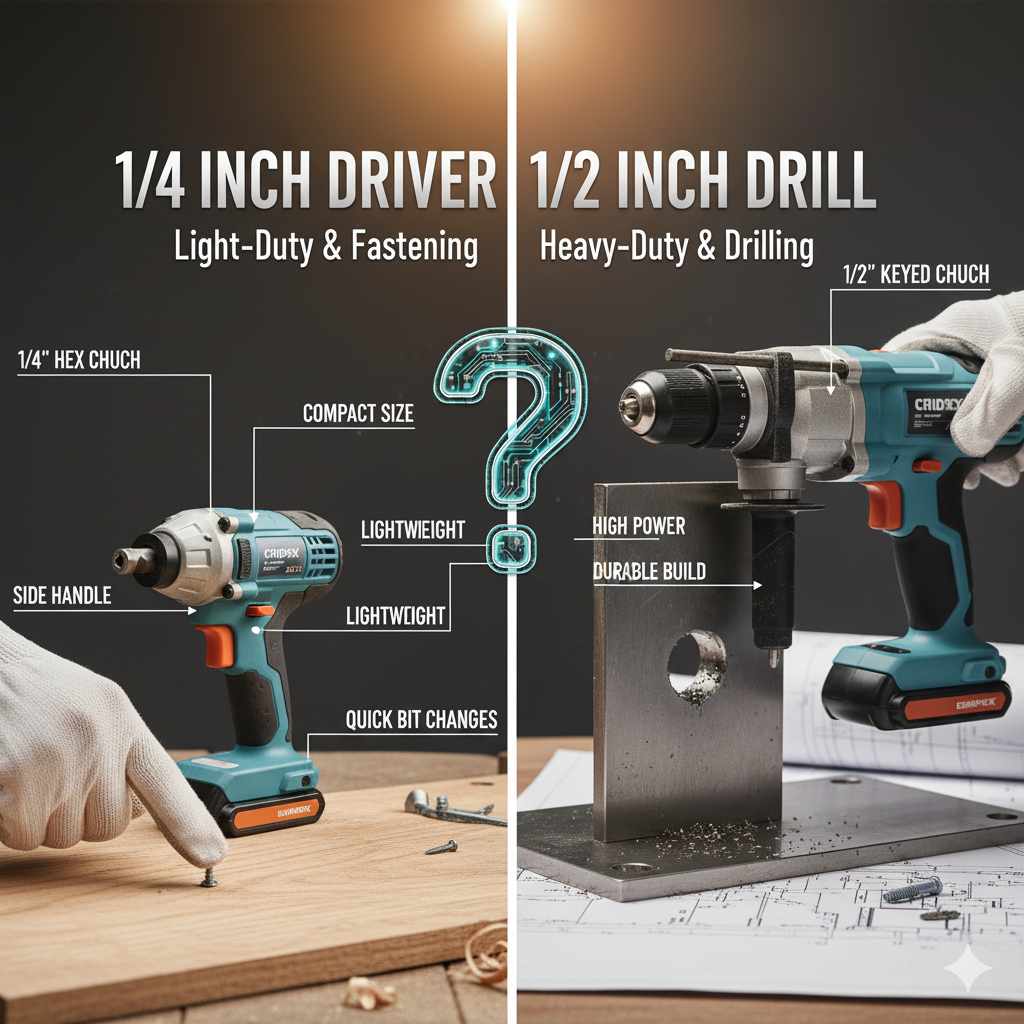
The 1/4 inch drill bit has a diameter of 0.25 inches. The 1/2 inch drill bit is twice as wide, measuring 0.5 inches. This difference affects the size of the holes they create. Smaller bits drill smaller holes, perfect for light work. Larger bits make bigger holes, needed for heavy-duty jobs.
Impact On Drill Performance
Smaller drill bits require less power and spin faster. They are easier to control and cause less strain on the drill. Larger bits need more power and spin slower to avoid damage. They put more stress on the drill motor. Using the right size keeps the drill working well and lasts longer.
Common Uses
Choosing the right drill size matters for your tasks. Both 1/4 inch and 1/2 inch drills have different strengths. Their common uses depend on the type of work you do. Understanding their applications helps you pick the best tool.
Applications Of 1/4 Inch Drill
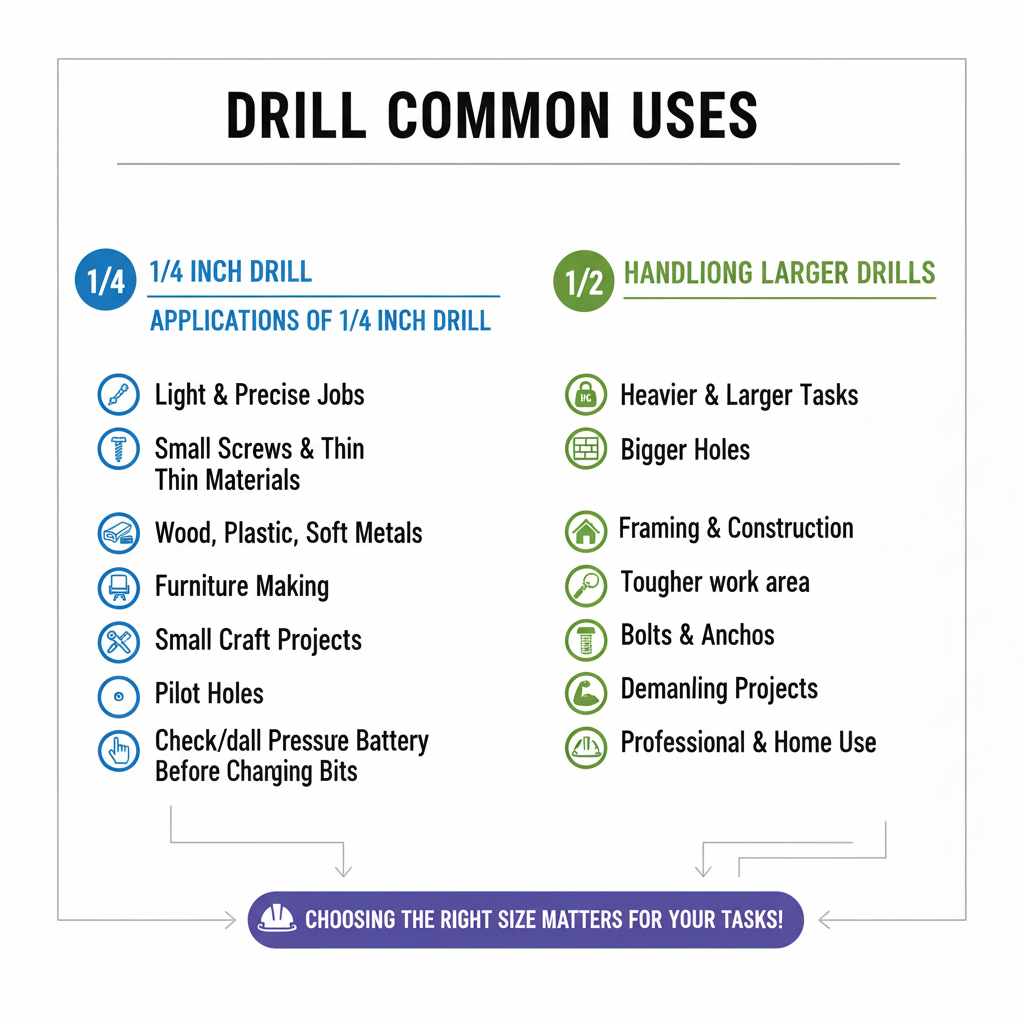
The 1/4 inch drill is perfect for light and precise jobs. It works well on small screws and thin materials. Many people use it for drilling into wood, plastic, and soft metals. It is common in furniture making and small craft projects. This drill size also fits well for pilot holes before inserting screws. Its compact size makes it easy to control and handle.
Applications Of 1/2 Inch Drill
The 1/2 inch drill suits heavier and larger tasks. It can drill bigger holes in tougher materials like thick wood and metal. Builders and contractors often use it for framing and construction work. It is strong enough for bolts and anchors installation. This drill size handles more demanding projects without much effort. Its power makes it ideal for professional and home use.
Material Compatibility
Material compatibility is key when choosing between a 1/4 inch and 1/2 inch drill. Each drill size suits different materials. Using the right drill bit size protects your tools and workpieces. It also improves efficiency and results.
Best Materials For 1/4 Inch Drill
The 1/4 inch drill is ideal for light to medium tasks. It works well on soft materials like wood and plastic. It can also handle thin metals such as aluminum sheets. This drill size is perfect for small screws and pilot holes. It offers better control on delicate surfaces. It is not suited for very hard or thick materials.
Best Materials For 1/2 Inch Drill
The 1/2 inch drill handles tougher jobs. It is great for thick wood, hardwood, and metal. It can drill through steel and other hard metals. This size is useful for larger bolts and heavy-duty anchors. It offers more power and stability. It is best for construction and industrial tasks requiring strength.
Power Requirements
Power requirements differ between 1/4 inch and 1/2 inch drills. These needs affect how drills run and what tasks they can handle. Understanding power helps in choosing the right drill for your projects. Power impacts drill speed, strength, and battery life in cordless models.
Energy Consumption
1/2 inch drills use more energy than 1/4 inch drills. They need stronger motors to handle bigger drill bits. This means 1/2 inch drills draw more power from batteries or outlets. In contrast, 1/4 inch drills consume less energy. They work well with smaller motors and lighter tasks.
Higher energy use means shorter battery life if you use cordless drills. You must charge 1/2 inch drills more often. For long jobs, this affects work time and efficiency. Choosing the right drill size helps save energy and time.
Suitability For Different Drill Types
1/4 inch drills suit light-duty work and delicate materials. They fit well with compact and cordless drill models. These drills use less power and are easier to carry. Ideal for small home repairs and crafts.
1/2 inch drills handle heavy-duty tasks and tough materials. They appear mostly in corded and high-power cordless drills. These drills require more power to turn large bits. Best for construction, metalwork, and woodworking projects.
Power needs limit drill type choice. Small drills suit light work without wasting energy. Larger drills provide strength but need more power and weight. Match drill power to your project demands for best results.
Cost And Availability
Cost and availability play a key role in choosing between 1/4 inch and 1/2 inch drills. These factors affect your budget and how quickly you can get the tool. Understanding these differences helps you make a smart purchase.
Price Differences
Generally, 1/4 inch drills cost less than 1/2 inch drills. Smaller drills use less material, lowering production costs. This makes them more affordable for simple jobs. Larger 1/2 inch drills need stronger parts and more power. These features increase their price. The price gap varies by brand and quality. Basic models of 1/4 inch drills fit tight budgets. Professionals often choose 1/2 inch drills despite higher costs. They offer more strength and durability for tough tasks.
Market Availability
1/4 inch drills are widely available in most stores. They suit common household projects and light work. Many brands offer a variety of models in this size. 1/2 inch drills are also common but appear more in professional tool shops. They target users who need heavy-duty performance. Online stores provide many options for both sizes. Local hardware stores might stock fewer 1/2 inch drills. Stock depends on the store’s customer needs and space. Both drill sizes are easy to find but differ in selection range.
Safety Considerations
Safety is the top priority when using drills. The size of the drill bit affects how you handle the tool. Different sizes need different safety steps. Knowing these steps helps avoid accidents and injuries. Both 1/4 inch and 1/2 inch drills have unique safety concerns. Follow proper handling techniques for each size.
Handling Smaller Drills
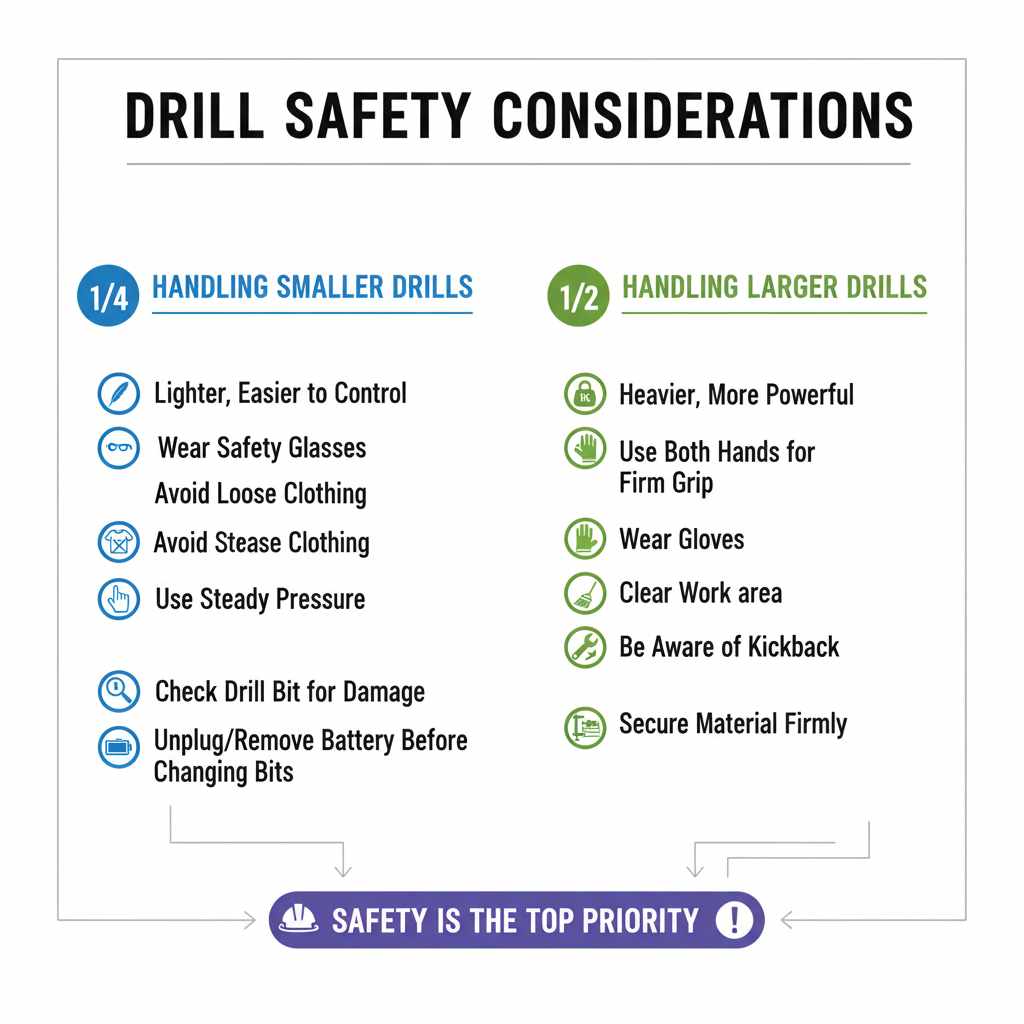
Smaller drills like 1/4 inch are lighter and easier to control. They spin faster, so keep a firm grip. Wear safety glasses to protect your eyes from flying debris. Avoid loose clothing that can catch on the drill. Use steady pressure to prevent slipping or jerking. Check the drill bit for damage before starting work. Always unplug or remove the battery before changing bits.
Handling Larger Drills
1/2 inch drills are heavier and more powerful. They require a stronger grip and careful control. Use both hands to hold the drill steady. Wear gloves to protect your hands from vibration. Keep your work area clear of obstacles to avoid tripping. Be aware of the drill’s kickback and prepare to handle it. Secure the material firmly to prevent movement while drilling.
Frequently Asked Questions
What Are The Size Differences Between 1/4 Inch And 1/2 Inch Drills?
The 1/4 inch drill bit is smaller, ideal for light tasks. The 1/2 inch drill bit is larger and suited for heavy-duty drilling and bigger holes.
Which Drill Size Is Best For Woodworking Projects?
1/4 inch drill bits work well for precise, smaller holes in wood. Use 1/2 inch bits for large dowels or bolts in woodworking.
How Does Drill Size Affect Drilling Speed And Power?
Smaller 1/4 inch bits drill faster and need less power. Larger 1/2 inch bits require more power and drill slower but create bigger holes.
Can Both 1/4 Inch And 1/2 Inch Drills Fit The Same Drill Chuck?
Most standard drill chucks fit 1/4 inch bits easily. Larger 1/2 inch bits need chucks that support wider shanks, so not all drills fit both sizes.
Conclusion
Choosing between a 1/4 inch and 1/2 inch drill depends on your task. The 1/4 inch drill suits small jobs and light materials. The 1/2 inch drill handles bigger holes and tougher materials. Size affects power, control, and drill bit options.
Knowing these differences helps you pick the right tool. Use the right drill for better results and easier work. Simple tools, smart choices.