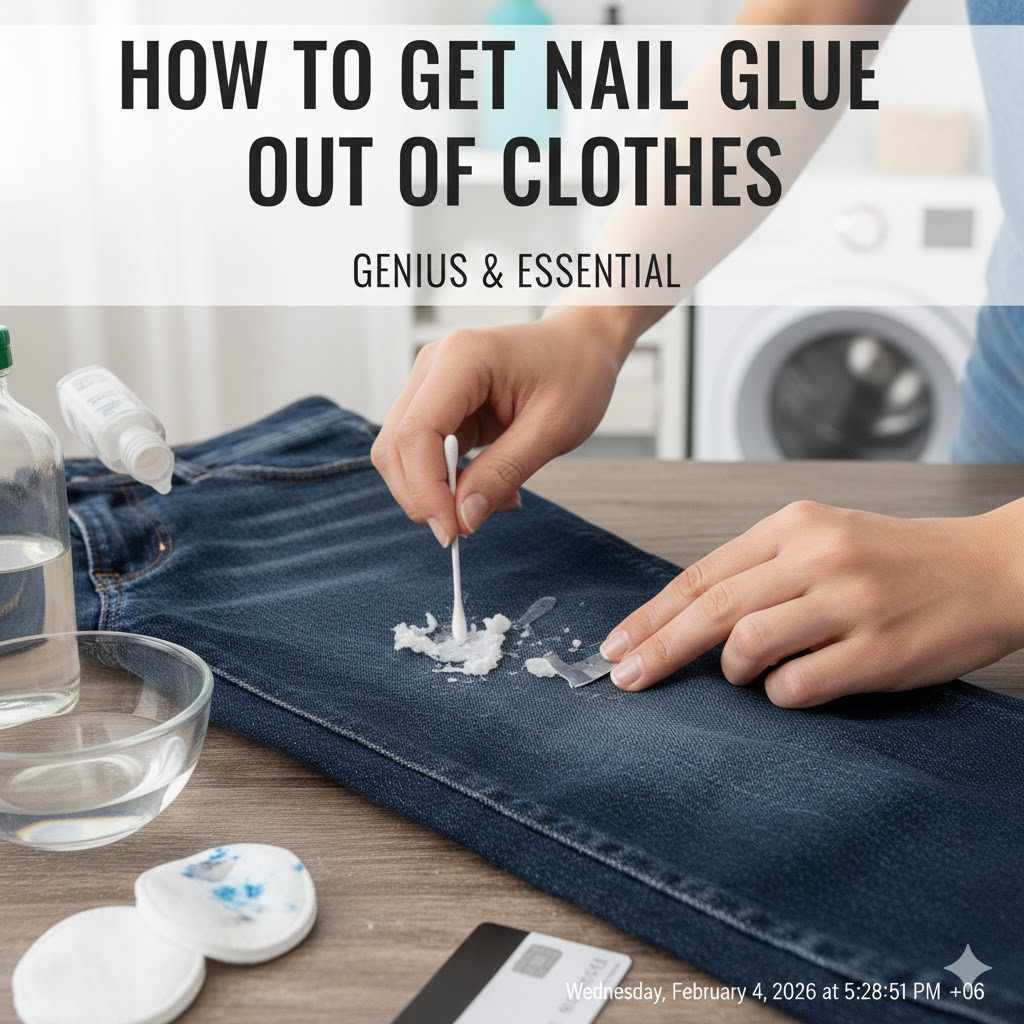
How Do You Get Nail Glue Out Of Clothes? Genius & Essential
To get nail glue out of clothes, first let the glue dry completely and scrape off any excess. Place a cotton ball soaked in acetone (nail polish remover) on the stain for a few minutes to dissolve the glue. Gently blot the area, then rinse with cool water before washing as usual. Always test acetone on a hidden spot first.
It happens to the best of us. You’re in the middle of a quick nail repair or applying a fresh set of press-ons, and a drop of nail glue lands right on your favorite shirt. Your heart sinks. That stuff is strong! It feels like the stain is permanent, but I’m here to tell you not to worry. Getting nail glue out of fabric is a problem we can absolutely solve together.
Think of it like any project in the workshop. With the right tools and a little patience, you can fix almost any mistake. This little spill is no different. We’re going to walk through the process step-by-step, using simple items you probably already have at home. Let’s get that piece of clothing back to looking great.
First, Understand What You’re Dealing With
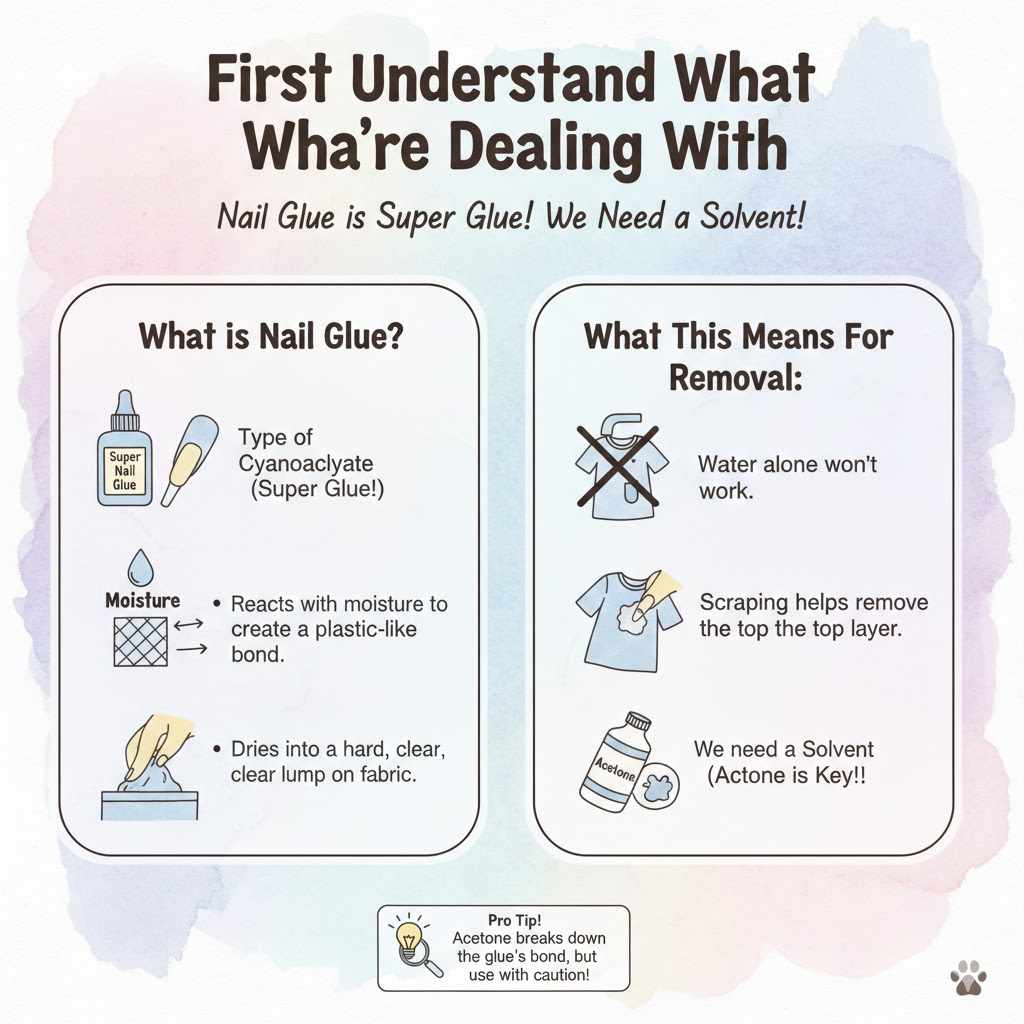
Before we start scrubbing, it’s helpful to know what nail glue actually is. Most nail glues are a type of adhesive called a cyanoacrylate. That’s a big word, but you probably know it by another name: super glue. This is why it bonds so quickly and strongly. It works by reacting with moisture in the air to create a hard, plastic-like mesh.
Knowing this tells us a few important things:
- Water alone won’t work. Because it uses moisture to cure, just washing the garment won’t remove the glue.
- Scraping is a good start. Once dry, the glue sits on top of the fabric fibers as a hard lump.
- We need a solvent. To break down the glue’s bond, we need something that can dissolve it.
Our main tool for this job will be acetone. It’s the key ingredient in most nail polish removers and is excellent at breaking down cyanoacrylate adhesives. However, it’s a strong chemical, so we need to use it safely and correctly.
Safety First: Protect Yourself and Your Clothes
Whenever you work with a chemical like acetone, safety is the most important step. It’s simple stuff, but it makes all the difference. Treat this just like you would any project involving finishes or solvents in your workshop.
Key Safety Precautions:
- Good Ventilation: Work in a well-ventilated area. Open a window or turn on a fan. Acetone fumes can be strong, and you don’t want to be breathing them in a closed room.
- Protect Your Hands: Wear rubber or nitrile gloves. Acetone can be very drying to your skin.
- Protect Your Surfaces: Place an old towel or a plastic bag under the area of the clothing you’re working on. This prevents the acetone and glue from seeping through to your table or countertop.
- The Golden Rule: Spot Test! Before you put acetone on the stain, test it on a hidden part of the garment first. Find an inside seam or a hem and apply a tiny drop with a cotton swab. Wait a few minutes to see if it causes any discoloration or damage to the fabric. If it does, you’ll need to try an alternative method.
Gather Your Simple Toolkit
You don’t need a lot of fancy supplies for this. A quick look in your bathroom cabinet or under the kitchen sink should give you everything you need. Here’s a checklist of your tools:
- Acetone: 100% pure acetone works best, but a standard nail polish remover that lists acetone as the main ingredient will also work.
- Cotton Balls or Cotton Swabs: For applying the acetone precisely.
- A Dull Edge Tool: A butter knife, an old credit card, or even the edge of a spoon. Avoid anything too sharp that could cut the fabric.
- An Old Toothbrush: For gently scrubbing the stain.
- Laundry Detergent or Stain Remover: Your regular product will do.
- An Old Towel or Rag: For blotting and protecting your work surface.
- Cool Water: For rinsing.
Once you have your supplies ready and your workspace is set up, you’re ready to tackle that stain.
Step-by-Step: Removing Nail Glue with Acetone
This is our go-to method. It’s reliable and effective on most sturdy fabrics like cotton, denim, and polyester blends. Just remember to do that spot test first! Follow these steps carefully, and don’t rush.
Let the Glue Dry Completely
This might feel wrong, but it’s the most important first step. If you try to wipe or scrub wet nail glue, you will only smear it deeper into the fabric fibers, making the stain bigger and much harder to remove. Let it air dry until it’s completely hard. If it’s a big glob, this could take 15-20 minutes.
Scrape Off the Excess
Once the glue is hard, take your dull-edged tool (like a butter knife or spoon) and gently scrape off as much of the hardened glue from the surface as you can. You are essentially “chipping” it off the top of the fabric. Be gentle to avoid damaging the fibers underneath. You won’t get all of it, but your goal is to remove the bulk of the glue blob.
Apply Acetone to the Stain
Place a folded paper towel or a piece of cardboard inside the clothing, directly behind the stain. This prevents the acetone from bleeding through to the other side. Dip a cotton ball or swab in acetone and dab it onto the remaining glue stain. Don’t pour the acetone directly on the fabric, as this can spread the stain. Apply just enough to saturate the glue.
Let the Acetone Work Its Magic
Let the acetone sit on the stain for 3-5 minutes. You should start to see the glue soften and break down. It may turn into a gooey or gelatinous substance. This is a good sign! It means the acetone is dissolving the adhesive bond.
Blot and Gently Scrub
Take your old toothbrush or a clean cloth and gently scrub the softened glue in a circular motion. You can also use your dull scraper to carefully lift the softened residue. As the glue transfers to your cloth or brush, switch to a clean section or rinse the brush to avoid reapplying the glue to the fabric. You may need to apply a little more acetone and repeat this step a few times for stubborn stains.
Rinse the Area Thoroughly
Once you’ve removed all the glue residue, take the garment to a sink and rinse the treated area with cool water. This will wash away any remaining acetone and dissolved glue, preparing the fabric for washing.
Pre-Treat and Wash
Apply a small amount of your regular laundry detergent or a pre-wash stain remover directly to the spot. Gently rub it in with your fingers. Then, wash the piece of clothing as you normally would, following the instructions on the care label. It’s best to wash it on its own or with similar items.
Air Dry to Check Your Work
After washing, do not put the clothing in the dryer! Let it air dry completely. The heat from a dryer can set any faint, remaining traces of the stain, making them nearly impossible to remove later. Once it’s dry, inspect the area in good light. If the stain is gone, you’re all done! If a faint spot remains, you can repeat the acetone process.
Alternative Methods for Delicate Fabrics or No Acetone
What if your spot test with acetone failed, or you’re working with a delicate fabric like silk, wool, or certain synthetics like rayon? Don’t worry, we have other options. These methods are generally gentler but may require more patience.
Method 1: The Freezing Technique
This method works by making the glue extremely brittle so it can be cracked off. It’s a great choice for delicate fabrics that can’t handle solvents.
- Place the garment in a plastic bag and put it in the freezer for at least an hour.
- Once the glue is frozen solid, remove the garment.
- Working quickly, use your fingernail or a dull edge to crack and flake the frozen glue off the fabric.
- If any residue remains, you can try dabbing it with a small amount of rubbing alcohol on a cotton swab (after a spot test, of course).
Method 2: Rubbing Alcohol
Isopropyl alcohol (rubbing alcohol) is a milder solvent than acetone and can be effective, especially if the glue spill is relatively fresh. It’s often safer for more types of synthetic fabrics.
- After scraping off the excess dried glue, apply rubbing alcohol to the stain with a cotton ball.
- Let it sit for about 5 minutes.
- Gently scrub with a toothbrush and blot the residue away.
- Rinse with cool water and launder as usual.
Method 3: Soap and Water (For Fresh Spills Only)
If you catch the spill the second it happens, you might be able to get it out before it cures. This only works when the glue is still wet!
- Immediately blot the wet glue with a paper towel. Do not rub!
- Mix a solution of warm water and a few drops of dish soap or laundry detergent.
- Dip a cloth in the soapy water and dab at the stain, working from the outside in.
- Rinse thoroughly. This method is a long shot, as cyanoacrylate cures very fast, but it’s worth trying if you’re quick.
Comparing Your Options
Not sure which method to choose? This table breaks it down to help you decide.
| Method | Best For | Pros | Cons |
|---|---|---|---|
| Acetone | Dried, stubborn stains on sturdy fabrics like cotton and denim. | Highly effective; works quickly. | Can damage delicate or synthetic fabrics; strong fumes. |
| Freezing | Delicate fabrics like silk, wool, and lace. | Completely chemical-free; safe for all fabrics. | May not remove all residue; works best on thick globs of glue. |
| Rubbing Alcohol | Many synthetic fabrics; less severe stains. | Gentler than acetone; less likely to cause discoloration. | Less powerful than acetone; may require multiple applications. |
| Soap and Water | Immediate, wet spills only. | Very safe; no harsh chemicals. | Ineffective once the glue starts to dry. |
Common Mistakes to Avoid
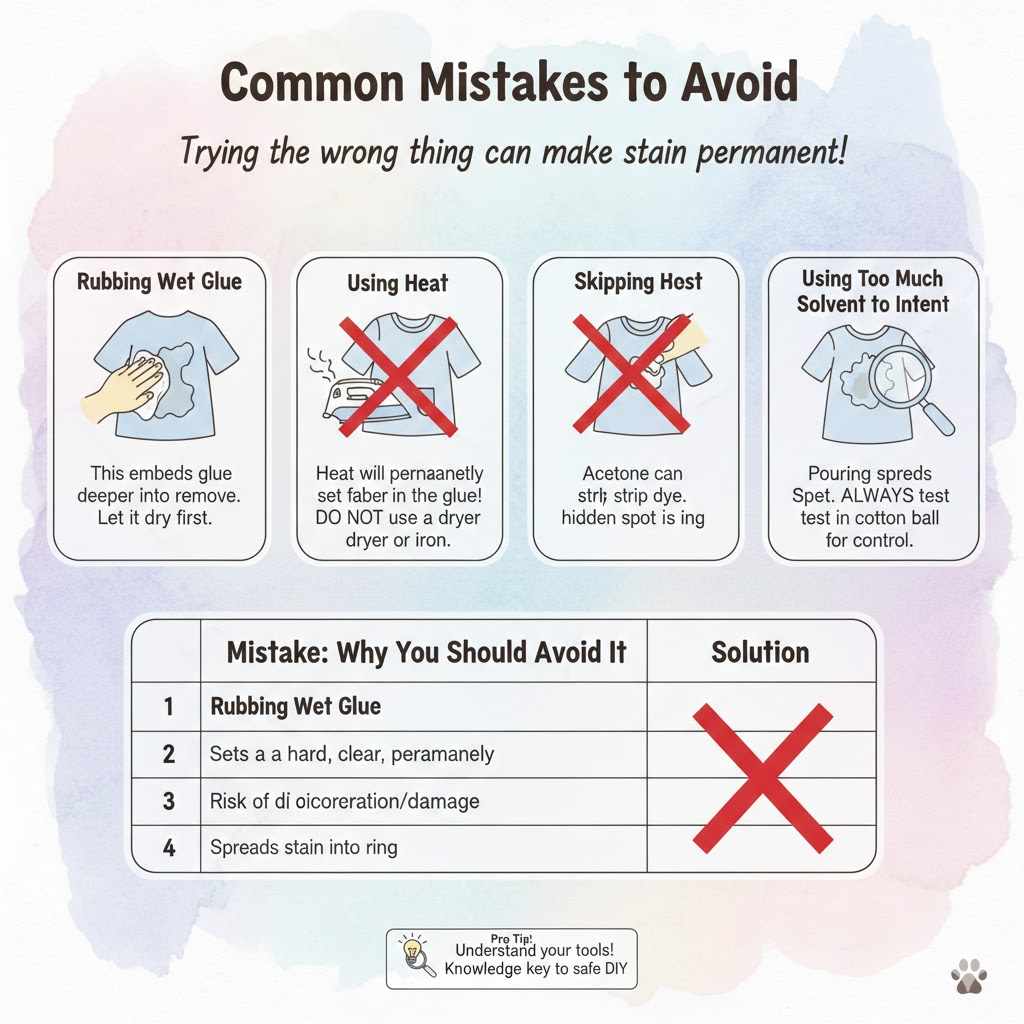
Just as important as knowing what to do is knowing what not to do. Trying the wrong thing can make the stain permanent or even ruin your clothes. Here are a few common pitfalls to steer clear of.
| Mistake | Why You Should Avoid It |
|---|---|
| Rubbing Wet Glue | This embeds the glue deeper into the fabric’s weave, making it almost impossible to remove fully. Always let it dry first. |
| Using Heat | Never use a hot dryer or an iron on the stain until you are 100% sure it is gone. Heat will permanently set the cyanoacrylate, essentially melting it into the fabric. |
| Skipping the Spot Test | This is the biggest gamble. Acetone can strip the dye from certain fabrics or even dissolve materials like acetate. A 30-second test can save your entire garment. |
| Using Too Much Solvent | Pouring acetone directly onto the clothing can cause the stain to spread into a larger, fainter ring. Use a cotton ball for precise, controlled application. |
For more detailed information on the chemical properties of acetone and its safe handling, you can refer to resources from health and safety organizations like the CDC’s Pocket Guide to Chemical Hazards. Understanding the tools you use is a cornerstone of any good DIY project.
Frequently Asked Questions (FAQ)
Will nail glue permanently ruin clothes?
Not usually! While it looks intimidating, nail glue can almost always be removed if you use the right method and act with a bit of patience. The key is using a solvent like acetone to break down the glue’s bond with the fabric rather than trying to scrub it off by force.
Can I use non-acetone nail polish remover?
No, non-acetone nail polish removers will not work. Their active ingredients (often ethyl acetate or methyl ethyl ketone) are not effective at dissolving cyanoacrylate adhesives. You need a remover where acetone is the primary ingredient, or pure acetone itself.
What fabrics should I never use acetone on?
Be very careful with acetate, triacetate, and modacrylic fabrics. Acetone will literally dissolve these materials, leaving a hole. It can also damage delicate fabrics like silk and wool. This is why the spot test on a hidden seam is non-negotiable!
Does this method work on old, set-in nail glue stains?
Yes, it does. Since the first step is to let the glue dry anyway, the process is the same for a stain that is ten minutes old or ten days old. An older stain might require a little more soaking time with the acetone and a bit more patience, but the basic technique remains the same.
What if a white stain is left behind after treatment?
A faint white residue can sometimes be leftover glue that wasn’t fully dissolved or, in some cases, a slight discoloration of the fabric dye. Try repeating the acetone and toothbrush step one more time, followed by a rinse and wash with a good stain remover. If it persists, it might be a slight color loss, which is unfortunately harder to fix.
Can I use WD-40 or oil to remove nail glue?
Some people suggest using an oil-based product like WD-40 or olive oil. While these can sometimes help loosen certain adhesives, they are less effective on cyanoacrylate. Plus, using an oil-based product means you’ll then have to deal with removing an oil stain, creating a two-step problem. It’s best to stick with acetone first.
Conclusion: Patience Makes Perfect
There you have it. That dreaded drop of nail glue on your clothes doesn’t have to mean the end of your favorite shirt or pants. Like any challenge you face on a DIY project, the solution is about having the right technique, the right tools, and a little bit of patience. By letting the glue dry, scraping the excess, and carefully using acetone, you can break down even the most stubborn stain.
Remember to always put safety first by working in a ventilated space and, most importantly, testing any solvent on a hidden spot before tackling the main event. Accidents happen, but now you’re fully equipped with the knowledge to handle this one with confidence. You’ve saved your clothes, learned a new skill, and can get back to your project—or just admiring your nails—without any worries.