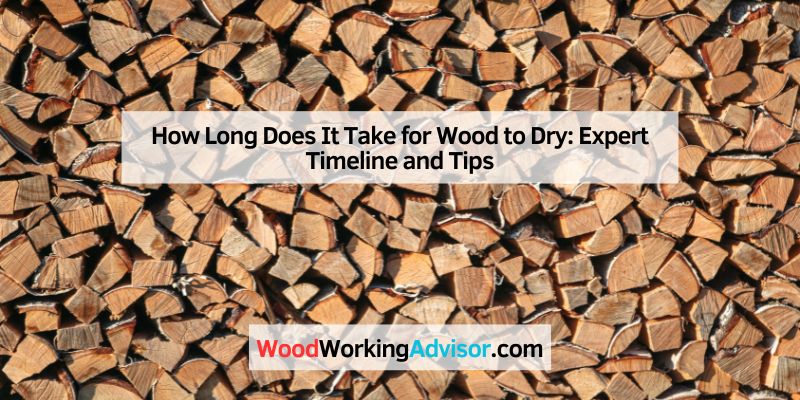
How Long Does It Take for Wood to Dry: Expert Timeline and Tips
Drying wood is a crucial step for various projects. So, how long does it take for wood to dry?
Typically, it can take from a few months to a year, depending on several factors. Understanding the drying process of wood is essential, whether you’re into woodworking, construction, or firewood preparation. Different wood types and environmental conditions significantly impact drying times.
The moisture content in the wood must reduce to a stable level to ensure durability and prevent issues like warping or cracking. This process, often referred to as seasoning, can vary. In this blog, we’ll explore the key factors influencing wood drying times and offer tips to ensure your wood dries properly. This way, you can achieve the best results for your projects.
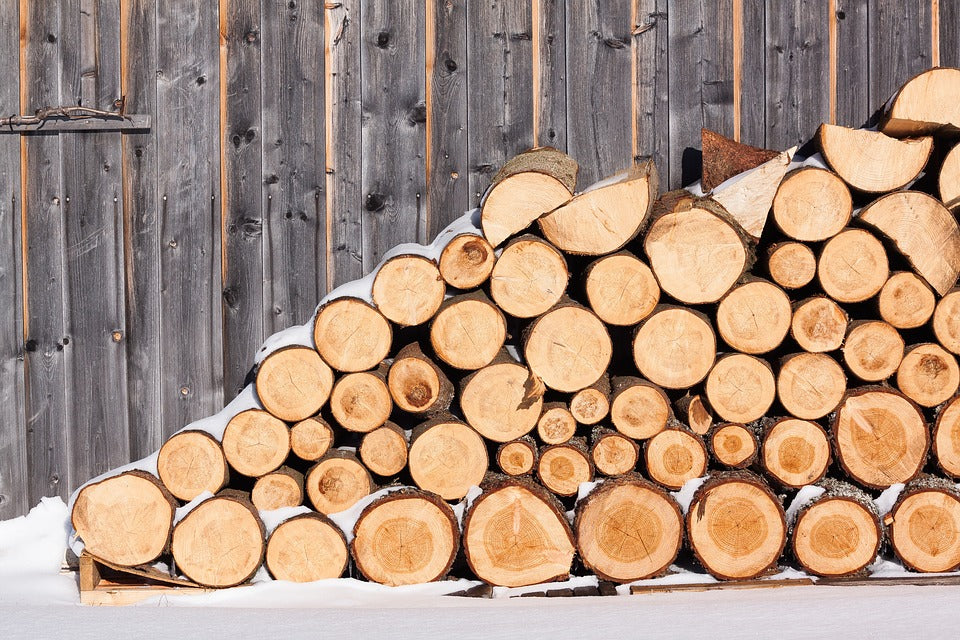
Credit: www.cuttingedgefirewood.com
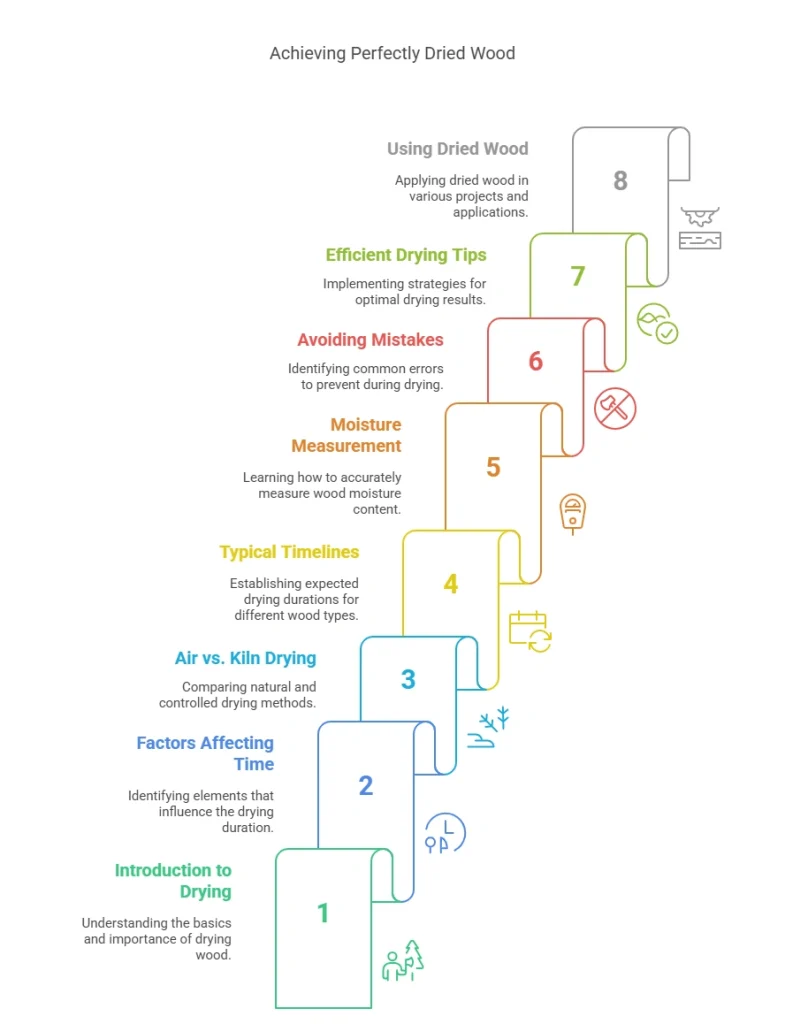
Introduction To Wood Drying
Drying wood is very important. Wet wood can rot and get moldy. It is heavy and hard to work with. Dry wood is stronger and lasts longer. Builders, carpenters, and woodworkers all need dry wood.
Importance Of Drying Wood
Dry wood is less likely to bend or crack. Furniture made from dry wood looks better and lasts longer. Wet wood can ruin tools and machines. Dry wood is also lighter, making it easier to move and handle.
Basic Principles Of Wood Drying
Wood drying involves removing water from the wood. Air drying is the simplest method. Place the wood in a dry, airy space. This can take many months. Kiln drying is faster. Wood is placed in a heated chamber. This can dry wood in a few days or weeks. Proper stacking is important. Air needs to flow around all sides of the wood. Moisture meters help check the dryness of wood.

Credit: www.youtube.com
Factors Affecting Drying Time
Different wood species dry at different rates. Hardwoods like oak take longer to dry. Softwoods like pine dry faster. Thickness also affects drying time. Thicker wood takes more time to dry. Understanding wood species helps estimate drying time.
Temperature and humidity affect drying time. Warm, dry air speeds up drying. Cold or humid air slows it down. Airflow is also important. Good airflow helps wood dry faster. Always consider the environment where the wood dries.
Air Drying Vs. Kiln Drying
Air drying is a natural way to dry wood. Wood is stacked outside. Air flows around the wood. This helps remove moisture. It takes longer than kiln drying. Months or even years to dry. Weather affects drying. Rain and humidity slow the process. Sun and wind speed it up. It’s cheap and easy. No special equipment needed. Good for small projects.
Kiln drying uses a special oven. The kiln controls temperature and humidity. Wood dries faster. Days or weeks instead of months. This method kills bugs and fungus. Wood is stable and clean. It’s great for large projects. Costs more than air drying. Needs special equipment. But saves time. Quality is consistent.
Typical Drying Timelines
Air drying wood can take a long time. Softwoods usually take around 6 to 9 months to dry. Hardwoods need more time, often 1 to 2 years. The drying time depends on the wood’s thickness and local climate. Thicker wood dries more slowly. A humid climate also slows the process.
Kiln drying is faster. Most wood dries in a few days to a week. This method uses heat to remove moisture. Softwoods dry in 1 to 3 days. Hardwoods might take up to a week. The kiln keeps a controlled environment. This speeds up drying. It also reduces the risk of wood defects.
Moisture Content And Measurement
Moisture meters are essential for checking wood’s dryness. These tools help measure the water content in wood. Pin-type meters use small needles. Pinless meters use sensors. Both types are easy to use. They give fast results. Accuracy is crucial.
Dry wood should have low moisture content. Ideal levels range from 6% to 8%. Higher moisture can cause problems. Wood might warp or decay. Always check moisture before using wood. Proper drying ensures wood lasts longer. It also makes wood stronger.
Common Mistakes To Avoid
Overdrying wood can cause many problems. The wood may crack or split. This weakens the wood. It also makes it hard to work with. Keeping an eye on drying time is important. Checking moisture levels helps too. Avoid overdrying by monitoring the wood.
Improper storage leads to issues with wood. Moisture can seep in. This causes mold and rot. Storing wood in a damp place is a bad idea. A dry and ventilated area is best. Elevate wood off the ground. This helps keep it dry. Covering wood protects it from rain. Proper storage keeps wood in good condition.
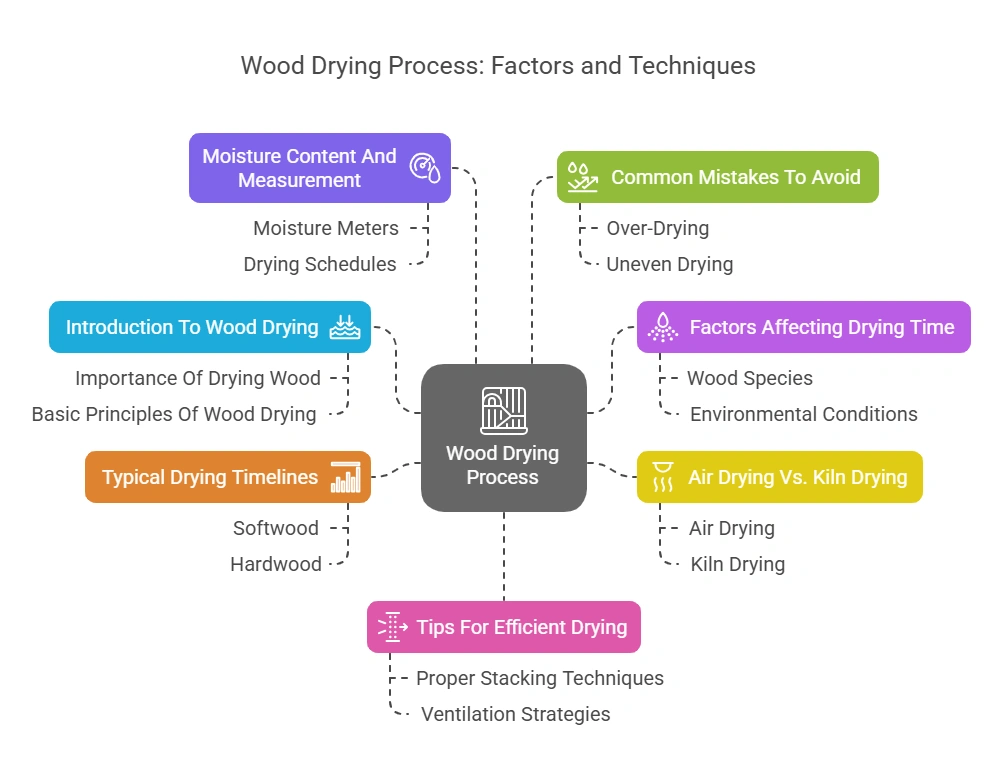
Tips For Efficient Drying
Understanding the drying time for wood helps in planning projects. Factors like wood type and moisture levels affect drying time. Proper airflow can speed up the process.
Proper Stacking Techniques
Using proper stacking techniques can help wood dry faster. Stack wood in neat rows. Keep space between pieces. This allows air to flow around each piece. Avoid stacking wood directly on the ground. Use pallets or supports. This keeps wood off damp surfaces. Arrange wood in single layers. Create small stacks rather than large piles. This helps each piece dry evenly.
Ventilation Strategies
Good ventilation is key for drying wood. Place wood in a location with lots of air movement. Outdoors, choose a spot with wind exposure. Indoors, use fans to circulate air. Open windows and doors for fresh air. Ensure wood is not covered or enclosed. Air needs to reach all surfaces. Consider using drying sheds. These structures help control airflow. Proper ventilation speeds up drying time.
Using Dried Wood
Dried wood is used in many projects. It is great for building furniture. It can be used to make strong and stable floors. Dried wood is also good for crafting. It does not warp or crack easily. This makes it perfect for fine detailing. Many homes use dried wood for structures. It lasts longer and is more durable.
Keep dried wood away from water. Moisture can damage it. Store wood in a dry place. Use protective finishes. This helps wood stay strong. Check for pests. They can harm wood. Clean wood often. Dust and dirt can cause problems. Regular care keeps wood looking good. It also keeps it functional.
Credit: www.youtube.com
Frequently Asked Questions
How Long Does It Take For Wood To Air Dry?
Wood typically takes 6-12 months to air dry. Factors like wood type, thickness, and climate affect drying time. Proper stacking and ventilation speed up the process.
How Can You Dry Out Wood Quickly?
Dry wood quickly by using a dehumidifier, placing it in a warm, dry area, or using a fan for airflow.
How Long Should I Let Wood Dry?
Let wood dry for 6-12 months. Ensure proper ventilation and stack it off the ground. Test moisture levels before use.
Is Wood Ruined If It Gets Wet?
Wood can get damaged if it stays wet for too long. Prolonged moisture leads to warping, mold, and rot. Dry it quickly to minimize damage.
Conclusion
Drying wood takes time and patience. Factors like wood type and climate matter. Typically, it takes several months to a year. Proper storage speeds up the process. Check moisture levels regularly. Use air-drying or kiln-drying methods. Both are effective and reliable.
Remember, well-dried wood burns better and lasts longer. So, be patient and careful. Follow these tips for best results. Happy drying!