Japanese Wood Burning Technique (Shou Sugi Ban): Steps and Facts
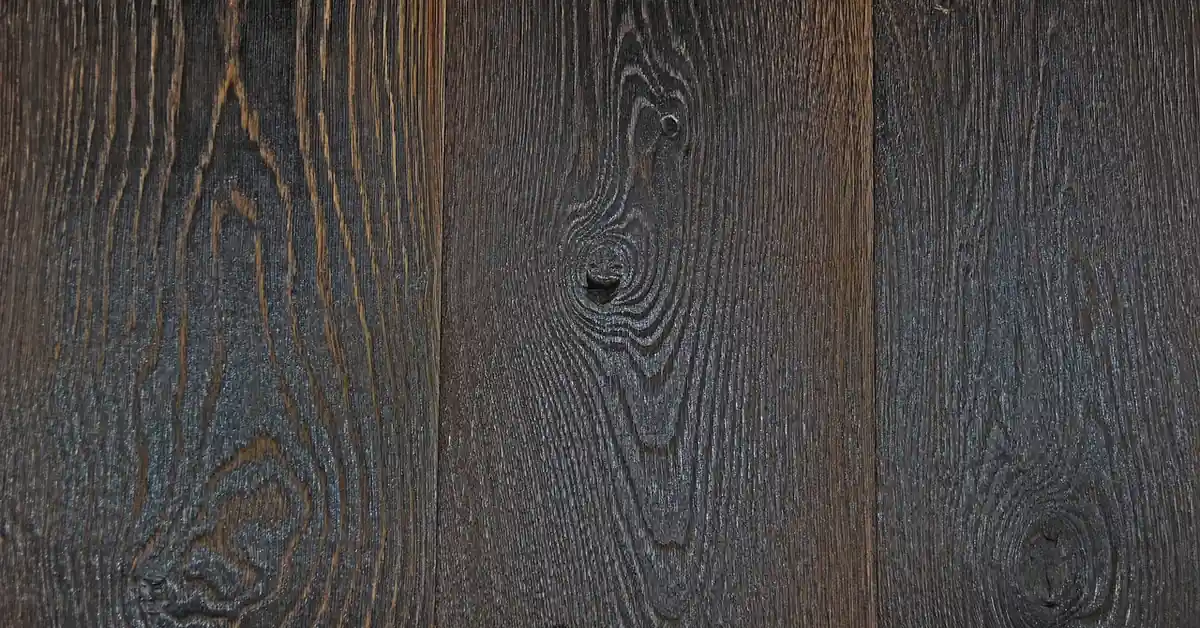
Shou sugi ban, properly called yakisugi, is the Japanese technique of charring the surface of cedar boards with fire, then brushing and oiling them. It gives a deep black, textured finish, but a 2021 USDA Forest Service study found charring did not systematically improve rot or fire resistance. This guide covers the history, the torch method, fire safety, and what the research says.
What Is Shou Sugi Ban?
Best Charring Torch Pick
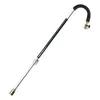 |
Bernzomatic JT850 Self-Igniting 20,000 BTU Outdoor Torch: $49.98 A trigger-start torch with an adjustable flame valve and a 36-inch reach, which keeps your hand further from the flame while you sweep the char across a board, as in the technique steps below.
|
As an Amazon Associate we earn from qualifying purchases.
Yakisugi means “burned cedar”: yaki is to heat with fire and sugi is Japanese cedar. Shou sugi ban is the name that became common in English. According to the Japan Woodcraft Association, the technique was used on exterior siding in Japan before chemical wood protection existed. It is associated with Western Japan, especially the Kyoto area, where it is also called yakiita.
The traditional method needs no torch. Three boards are bound into a triangle that works like a chimney, a fire is lit at the bottom with newspaper, and the stack effect burns the boards. The same source reports that the outer 3 to 4 mm is charred in roughly 5 minutes, with internal heat of at least 250 C and mostly above 400 C. Carpenters historically did this beside a river or on harvested rice fields, away from buildings.
One clarification for searchers: this page is about charring the surface of boards for siding and furniture. If you meant burning drawings into wood with a heated pen (pyrography), start with our free wood burning stencil patterns instead.
Why Try Wood Burning Techniques Japanese?
The Japan Woodcraft Association says the method was used to prevent decay, insect and mould infestation, make planks more dimensionally stable, and improve fire retardancy. Japan is over 66 percent forest, so timber was a standard building material for centuries. The finish also looks distinctive: black, with the grain raised after brushing.
Does Charring Actually Protect Wood? What the USDA Study Found
Most guides repeat the protection claims above as settled fact. The most direct test we found says otherwise. In 2021, researchers working with the USDA Forest Products Laboratory tested commercially available charred siding for flammability (oxygen consumption method and cone calorimeter) and decay (a soil block test with one white-rot and one brown-rot fungus). Their finding: the shou sugi ban process did not systematically improve the flammability or durability of the siding.
| Common claim | What the sources say |
|---|---|
| Char makes wood fire-proof | The USDA study found no systematic improvement in flammability. Treat charred wood as combustible. |
| Char stops rot in any species | The same study found no systematic decay protection. A search summary of the paper reports only cypress improved, and it still lost an average of 34 percent of its mass in the test. |
| It lasts 80+ years with no upkeep | We found no verified lifespan figure. Bob Vila advises reapplying drying oil every 10 to 15 years, and TerraMai notes charred siding develops a patina and needs refinishing over time. |
| It is a chemical-free finish | True: the process is fire, brushing and a drying oil such as linseed or tung. |
Data point: the 2021 paper “Durability and Fire Performance of Charred Wood Siding (Shou Sugi Ban)” is available from the USDA Forest Service research library. The practical takeaway: char for the look, and treat any protection as a bonus, not a substitute for proper detailing, drainage and maintenance.
Which Wood Species Actually Char Well?
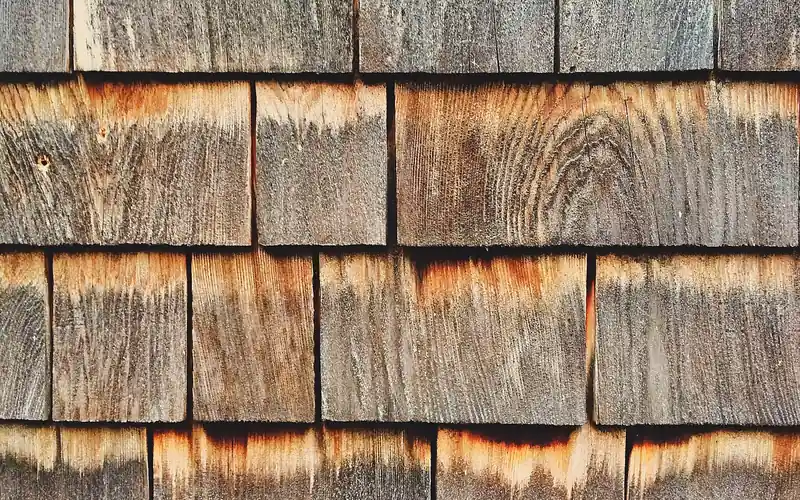
Not every wood chars equally. Cedar is the traditional choice, and TerraMai notes Japanese cedar reacts to heat in a way other woods do not, so substitutes give a different look. Bob Vila recommends the technique for softwoods only: cedar, pine and fir. It warns that hardwoods such as teak and walnut do not char as readily.
- Cedar (Japanese cedar or sugi): the traditional species and the benchmark for the look.
- Pine and fir: workable softwoods that are easier to find; test a scrap first because the char will look different from cedar.
- Hardwoods (teak, walnut, oak): char poorly and give a weaker, less even result; not recommended.
Dry the boards first. The Japan Woodcraft Association recommends about 10 to 15 percent moisture before burning for better results and less warping, so check with a moisture meter.
Tools and Materials You Need
| Item | What it does |
|---|---|
| Propane torch | Chars the surface; a flame about 1 to 2 inches long is easiest to control |
| Cedar, pine or fir boards at 10 to 15% moisture | The material being charred |
| Stiff or wire brush | Removes loose soot and raises the grain |
| Damp cloth or compressed air | Clears remaining soot and dust before oiling |
| Linseed or tung oil | Seals the char; cure fully before installing |
| Eye protection and fireproof gloves | Protect against flame and sparks |
| Fire extinguisher | Must be within reach before the torch is lit |
Step-by-Step Guide to Shou Sugi Ban
These steps follow the DIY method described by Bob Vila and Woodland Mills, combined with the safety points in the next section.
- Prepare the wood: use dry softwood at about 10 to 15 percent moisture.
- Set up outside: place the board on a concrete driveway or a metal worktop, in an open area and out of the wind.
- Char the surface: set the flame to 1 to 2 inches and hold it over each six-inch area for 5 to 10 seconds until it blackens, keeping the torch moving so you do not burn deep pockets.
- Let it cool: wait 5 to 10 minutes before touching the board.
- Brush: scrub gently with a wire brush to reveal the grain. Longer brushing gives lighter tones.
- Clean off soot: wipe with a water-saturated cloth or blow it off with compressed air.
- Oil and cure: apply linseed or tung oil, and let it cure fully (a few hours to a couple of days depending on temperature and humidity) before installing.
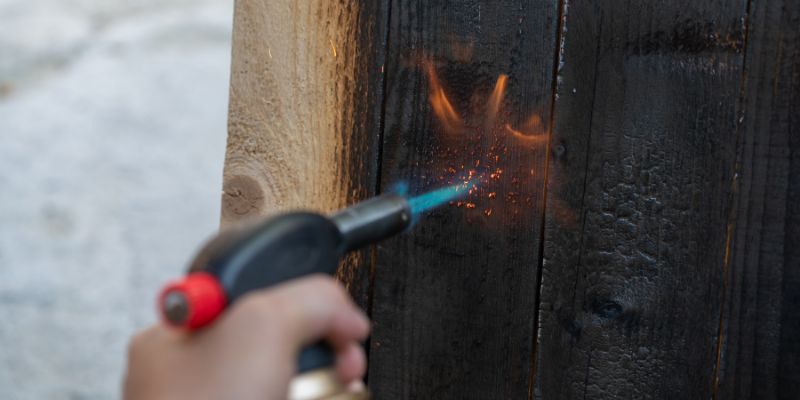
Woodland Mills calls a deeper burn, sometimes called the “alligator skin” look, the option for structural applications, although the USDA study above did not find a systematic protection gain from charring. Practice on an offcut before you commit to visible boards.
Fire and Torch Safety Before You Start
Charring is open flame on dry softwood, so treat it as a fire-risk job, not a craft detail.
- Extinguisher and water: keep a fire extinguisher within reach before you light the torch. Several DIY guides also suggest a hose or bucket of water nearby.
- Ventilation and location: work only in an open, well-ventilated, non-combustible area such as a driveway, never indoors, and avoid windy days that push the flame sideways (Bob Vila, Woodland Mills).
- Surface: rest the wood on concrete or a metal bench, not on grass, a wooden deck or near stacked lumber.
- Torch handling: keep the propane cylinder well away from the board and the hot work, and keep the flame moving. A long hose or a long-reach torch helps with this, according to the DIY guides we read.
- Protective gear: safety glasses and fireproof work gloves. TerraMai warns that flaking charred bits can be breathed in, so a dust mask while brushing is a sensible precaution.
- Local rules: check local fire by-laws before burning.
Other Ways to Burn Wood
The triangle or chimney method described above is the traditional approach and suits long boards. Modern woodworkers typically use propane torches for small jobs, since the flame is easy to aim and stop. If you only want a dark, aged tone without a flame, see our guide to darkening wood without stain. To char a single furniture piece, how to char wood furniture covers it.
Can You Shou Sugi Ban 4×4 Posts for Decking or In-Ground Use?
Yes, you can char a 4×4 post before setting it, but be realistic about the limits: the USDA study above found no systematic decay protection from charring, so treat the char layer as a bonus, not a replacement for real ground-contact protection.
- Pair it with proven methods: use pressure-treated lumber or a wood preservative on the buried section, gravel at the base for drainage, and a post anchor or concrete footing rather than direct burial when possible.
- Watch the splash zone: the section at ground level, where rain repeatedly wets and dries the wood, rots fastest, so keep finished wood clear of it where you can.
- For decking (not in-ground): char and oil suit above-grade parts such as fascia, railings and posts better than boards sitting in damp soil.
For more on what happens to charred wood in soil, see how long charred wood lasts in the ground.
Common Mistakes to Avoid
- Burning wet wood: stay near 10 to 15 percent moisture.
- Holding the flame still: keep the torch moving to avoid deep burn pockets.
- Skipping the brush and oil: loose soot rubs off; brush, clean and oil it.
- Using hardwoods: they char poorly; stick to softwoods.
- Trusting the char as fireproofing: the USDA study found no systematic flammability benefit.
Maintenance and Care
Bob Vila suggests reapplying a drying oil such as linseed or tung every 10 to 15 years. TerraMai notes charred surfaces can flake onto floors and clothes, and that the look changes into a patina as it ages, so expect to refinish or replace some boards over time. For sealer options on charred wood, our sibling guide on how to seal charred wood goes into more depth.
Frequently Asked Questions
What is shou sugi ban?
Shou sugi ban, properly called yakisugi, is a Japanese technique that chars the surface of cedar boards with fire, then brushes and oils them. It is used on siding, fences and furniture for its black, textured look.
Why did the Japanese burn wood to build houses?
According to the Japan Woodcraft Association, charring was used on exterior siding before chemical wood protection existed, to prevent decay, insects and mould and to improve dimensional stability and fire retardancy. The 2021 USDA study found those benefits are not systematic in modern tests.
Can I use any wood for shou sugi ban?
No. Stick to softwoods such as cedar, pine and fir. Hardwoods such as teak and walnut do not char as readily. Dry the wood to about 10 to 15 percent moisture first.
Is shou sugi ban safe to do at home?
It can be done at home, but it is an open-flame job. Work outdoors on concrete or metal, keep a fire extinguisher within reach, wear eye protection and fireproof gloves, avoid windy days and check local fire rules.
How long does shou sugi ban last?
There is no verified lifespan. Bob Vila advises reoiling every 10 to 15 years, and the USDA study found charring did not systematically improve decay resistance, so durability depends on the species and how the wood is detailed and maintained.
Does shou sugi ban need to be sealed?
Sealing is recommended. After brushing and cleaning, apply a drying oil such as linseed or tung oil and let it cure fully before installing. Oil also deepens the color and helps limit loose soot.
Does shou sugi ban make wood fireproof?
No. The USDA Forest Products Laboratory study found the process did not systematically improve flammability. Charred wood should still be kept away from open flames.
Where to Learn More
- USDA Forest Service: Durability and Fire Performance of Charred Wood Siding
- Japan Woodcraft Association: Yakisugi (Shou Sugi Ban)
Sponsored / affiliate links. As an Amazon Associate I earn from qualifying purchases. I may earn additional commission from eligible campaigns.